Music courses
Most music work starts with your own playing, writing or producing, and a diploma is the quickest way to train for it. To teach music in a school you need a music education degree, which takes longer. Here's what each course leads to and what it's for.
- Quickest way to start
- 3 years
- Bachelor degree, typical full time length
- What the jobs pay
- $130,900
- median pay across 1 job
Which course do you need?
It depends on the job you want.
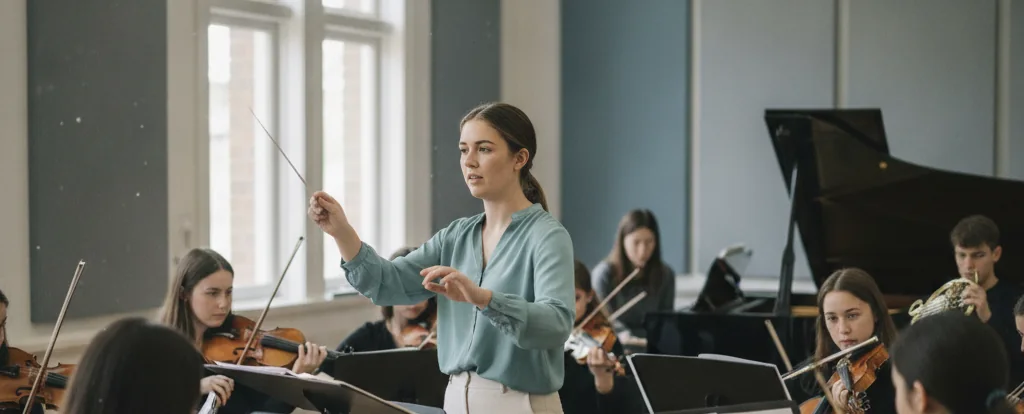
Bachelor of Music (Music Education)
Become a music teacher
Teach classroom music, choirs and instrumental lessons in primary or secondary schools.
Median pay$130,900
- How long it takes
- 3 to 4 years full time
- How you'll study
- On campus
Other university courses
- Bachelor of Music2 to 4 years. Builds your playing, writing and understanding of music, usually with a main instrument or voice. Leads towards performing, composing or teaching.
Can help with: music director, musician
- Diploma of Music1 year. A foundation year in music, focused on performance, composition or production depending on the provider. Some let you continue into a bachelor degree.
- Bachelor of Creative Arts (Music)3 years. For contemporary musicians who want to perform, compose and record, with music technology and some study of the business side.
- Bachelor of Music (Performance)2 years. For singers and instrumentalists who want to perform at a high level, with individual lessons and orchestral or chamber group work.
- Bachelor of Music Theatre3 years. Trains singers, dancers and actors for music theatre, with individual tuition and regular productions.
Can help with: dancer
- Associate Degree of Music15 to 24 months. A shorter music degree covering performance, composition, production or the music business. Some versions lead on to a bachelor degree.
- Bachelor of Music (Classical Performance)3 to 4 years. For classical singers and instrumentalists, combining individual lessons and ensembles with the history and theory behind the repertoire.
- Bachelor of Music (Composition)4 years. For people who want to write music, including for film, television and games, and to build a portfolio of their own work.
Can help with: composer
- Bachelor of Music (Jazz Performance)3 to 4 years. For jazz musicians, with ensemble playing, improvisation and lessons on your instrument aimed at developing your own sound.
- Bachelor of Music (Musicology)2 to 3 years. Studies music as part of culture and history, and suits people interested in research and writing about music.
- Bachelor of Musical Theatre2 to 3 years. Trains performers in acting, voice, singing and dance, with performance projects that build stage skills.
- Bachelor of Songwriting and Music Production2 to 3 years. For singer songwriters, composers and producers who want to write and record contemporary music in a studio setting.
Can help with: music producer, singer
- Diploma of Audio Production8 years. A practical introduction to recording, mixing and sound, and a starting point for work in music, live sound, broadcast or post production.
Can help with: dj, podcast producer, sound engineer
- Diploma of Music Production8 years. Teaches recording, mixing and producing music with digital and hardware tools. Some courses add music business or audio for screen.
Can help with: dj, sound engineer, composer
- Diploma of Musical Theatre1 year. A practical year of singing, dancing and acting, mostly classes and production projects rather than lectures.
- Undergraduate Certificate in Music2 years. Study music at university level without committing to a degree. Suits performers, composers, producers and audio engineers.
Jobs you can do with this study
Pay is the median for everyone in the job, not a starting salary.
“In demand” means the job is on the national skills shortage list. Check the course and provider are approved for the work you want, as rules differ by state.
Still not sure which one fits you?
Answer a few quick questions about your time, state and budget, and we'll show the courses that suit you.