Music Teacher
Music teachers plan and deliver lessons in performance, theory and composition, helping students build skill and confidence on an instrument or with their voice.
- Median salary
- $130,900
3.6%vs last year, before tax
- People employed
- 11,800
0.9%vs last year
- Projected growth
- +13.8%
to 2035
- AI exposure*
- Low
- automation risk
- Average hours
- 42/wk
+2h vs all jobs
- Shortage status
- Not in shortage
national
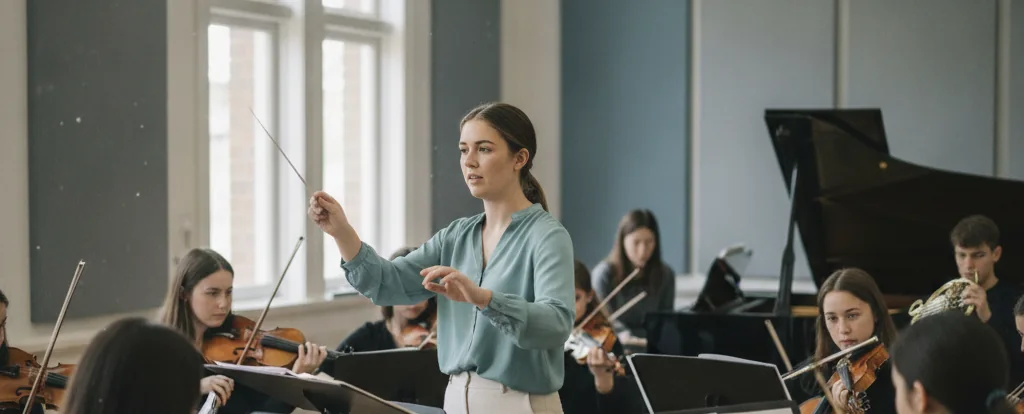
Music teachers work in primary and secondary schools, teaching classroom music and often taking individual instrument or voice lessons within the timetable. The role differs from a private instrumental tutor: a music teacher plans against a curriculum, assesses and reports on student progress, and prepares students for concerts, eisteddfods and formal exams. Most also carry the meetings, yard duty and paperwork that come with any teaching subject.
How much do music teachers earn?
The median full-time salary for a music teacher is $130,900 per annum, before tax, up $26,900 since 2018.
Public school pay is set by the state education department's enterprise agreement, while independent and Catholic schools negotiate their own, so the same role can pay differently depending on the sector. Progression follows years of service and the classification step you reach, and additional payments are common for coordinating a faculty, directing an ensemble or taking on extra instrumental tuition.
What does a music teacher do day to day?
The list below is what fills most weeks; the exact mix shifts with seniority and whatever stage the current work is at.
- Running a Year 8 classroom lesson on rhythm and notation with a mix of instruments and ability levels in the room
- Taking a Year 10 student through scales and repertoire in a short individual lesson
- Rehearsing the school concert band after school and reworking a part when a trumpet player is away
- Marking performance and theory assessments and writing reports against the curriculum
- Setting up amplification and running a final run-through before the end-of-term concert
What skills do music teachers need?
Employers look for teaching and instruction, curriculum and lesson design, classroom and behaviour management, backed by music notation software (Sibelius, MuseScore) fluency and strong written communication.
Specialist skills
- Teaching and instruction
- Curriculum and lesson design
- Classroom and behaviour management
- Student assessment and reporting
Software and tools
- music notation software (Sibelius, MuseScore)
- digital audio workstation (GarageBand, Audacity)
- learning management system (Google Classroom, Canvas)
- instrument amplification and PA systems
- video recording equipment
General skills
- Written communication
- Presenting and data storytelling
- Problem solving
- Attention to detail
Is the job growing?
About 11,800 people work as music teachers in Australia, and employment is projected to grow 13.8% over the decade to 2035. That's healthy, above-average growth, and the role should stay in solid demand.
How do you become a music teacher?
Here's the path most music teachers take, step by step.
- 1Build your music skills through school
Take music as a subject through Year 12 where it is offered, work towards graded exams on your main instrument, and play in ensembles or a band. These give you the performance background and, at some universities, the audition or portfolio material you need.
- 2Complete a teaching qualification
The usual route is a four-year Bachelor of Education (Secondary) with music as a teaching method. If you already hold a music degree, a Master of Teaching (Secondary) takes around two years and qualifies you the same way. Both include supervised placements in schools.
- 3Register as a teacher
You need registration with the teacher regulatory authority in your state or territory, such as NESA in New South Wales or the VIT in Victoria, and a Working with Children Check. Registration is renewed annually, and requirements differ between states.
- 4Start in casual or part-time work
Casual relief teaching and instrumental tuition are common first paid roles, and both build the classroom management that permanent positions ask about. Many teachers work on contract before winning a continuing appointment.
- 5Add depth where you want to specialise
Postgraduate study in music education, conducting or educational leadership opens faculty coordination or university work, while a Certificate IV in Training and Assessment (TAE40122) allows vocational teaching.
Ready to apply as a music teacher?
Whether you're working toward becoming a music teacher or already are one and want a hand with the next step (sharpening your resume for ATS screening, tightening your cover letter, or knowing what you'll actually be asked at interview), here are examples grounded in this specific role, not generic templates.
What jobs can a music teacher move to?
Moving into University Lecturer typically comes with the biggest pay rise, worth $21,100 a year more on average.
| Move to | Typical pay change | Overlap | Retraining |
|---|---|---|---|
| University Lecturer Advanced music knowledge and teaching experience support lecturing, though a research degree or academic appointment is usually required.Known move | +$21,100 | 58% | requalify |
| Secondary School Teacher Classroom and curriculum skills carry across, and music teachers move into secondary teaching with registration and subject method training.Known move | −$10,200 | 70% | requalify |
| Primary School Teacher Teaching craft and student management transfer, though primary registration and generalist classroom training are required.Known move | −$15,100 | 70% | requalify |
| VET Trainer Music teachers can deliver vocational training, adding a trainer and assessor credential to their teaching and performance expertise.Known move | −$20,200 | 100% | short course |
| Musician Performance skill and music theory carry directly into professional performance work, trading steady tuition income for freelance gigs.Known move | −$39,100 | 17% | reskill |
Moves are chosen from Jobs and Skills Australia's Data on Occupation Mobility, which follows income tax records between 2011-12 and 2020-21, together with entry requirements and skill overlap. A known move is one people were seen making in that data. Pay change compares median full-time pay for the two roles.
Who works as a music teacher?
The typical music teacher is 38 years old; 62% are women, 13% work full-time, and full-timers average 42 hours a week.
- 38
- Median age
- 62%
- Female share
- 13%
- Full-time
- +2h
- vs all-jobs avg
What's it like being a music teacher?
The work runs on the school term, so the rhythm is set by rehearsals building towards a concert or eisteddfod and by reporting deadlines landing at the same time. A music teacher might see 150 students in a week across a classroom, a small ensemble and a handful of individual lessons, which means shifting register constantly through the day. It suits someone who enjoys the craft of teaching as much as music itself, since much of the week goes on managing a room and planning for a wide spread of abilities rather than playing.
What people like
- The concert comes together. Term-long rehearsals build to a performance, and hearing a group you have coached hold its part in front of an audience is the clearest payoff of the job.
- Students who take to an instrument. Watching a student move from struggling through a scale to playing a piece they chose themselves is the moment most teachers point to.
- The subject is music. You keep playing, arranging and listening as part of the work, which is different from teaching a subject you left behind at university.
- Variety across the week. A classroom of thirty, a chamber group of eight and a single Year 11 student ask for three different kinds of teaching, which keeps the work from settling into one routine.
What people find hard
- Reporting season collides with performance season. Term 4 concerts, eisteddfods and end-of-year reports often land in the same few weeks, and the rehearsals for them sit outside school hours.
- Wide ability spread in one room. A Year 8 class can hold a Grade 7 pianist and a student who has never read a note, and planning for both at once is a constant constraint.
- Administration cuts into practice time. Meetings, yard duty, marking and paperwork are part of any teaching load and leave less time than new teachers expect for their own playing.
- Work is often casual or part-time early on. Instrumental tuition is frequently a separate hourly arrangement rather than part of the classroom load, so building a full-time position takes time.
Based on our synthesis of professional-body surveys and public accounts of the role, not first-person verified reviews.
Which industries employ music teachers?
Education and Training employs the largest share of music teachers.
Top employing industries
- 1Education and Training
Ranked by employment share; the source doesn't publish an exact percentage per industry.
| Bachelor degree | 38.9% | |
|---|---|---|
| Year 12 or below | 21.7% | |
| Postgraduate | 18.7% | |
| Diploma / Advanced Diploma | 13.4% | |
| Certificate III/IV | 4.2% |
Will AI replace music teachers?
Music teaching sits low for AI exposure, because most of the work happens live in a room with students and depends on reading a group and adjusting on the spot. Notation software, recording apps and learning management systems have been part of the job for years, and AI tools now help with arranging, transcribing and drafting resources, which saves preparation time without changing what happens in the lesson. Software can support the marking of recorded performances, but the judgement about a student's progress and what to teach next stays with the teacher.
Share of typical working time by exposure level
- Classroom music teachingRunning a Year 8 lesson on rhythm through clapping, singing and playing, and changing pace when the room loses focus, is live work software cannot take over.30%low
- Directing ensembles and rehearsalsBalancing a school band, fixing an intonation problem and keeping thirty students engaged depends on hearing the group in the moment.30%low
- Individual instrument and voice tuitionCorrecting a student's embouchure or breathing needs hands-on, in-person feedback that recordings and practice apps can only supplement.20%low
- Assessment, reporting and resource preparationNotation software and AI transcription speed up writing arrangements and parts, and some theory marking can be automated, though the teacher still sets the standard.20%moderate
Common questions about becoming a music teacher
Straight answers to the questions people ask most.
How much do music teachers earn in Australia?
Music teachers earn a median of $130,900 per year before tax. What you take home depends on your state's enterprise agreement or the independent school you work for, your years of service and the step you sit on, and how much instrumental tuition or ensemble coordination you take on top of a classroom load.
How do you become a music teacher?
Finish school with music behind you, then complete a teaching degree such as a Bachelor of Education (Secondary) with a music method, or a music degree followed by a Master of Teaching. You then register with the teacher authority in your state or territory and hold a Working with Children Check. Casual relief teaching and instrumental tuition are common ways to build classroom experience before a permanent appointment.
Are music teachers in demand?
Music teachers are currently not in shortage, and employment is projected to grow 13.8% over the decade to 2035. Positions depend on school budgets and on whether music is compulsory or elective at a given school, so openings cluster in particular sectors and locations. Being flexible about the type of school, and offering a second teaching method alongside music, widens what you can apply for.
Will AI replace music teachers?
AI is unlikely to replace music teachers, because the core of the job is live teaching and ensemble direction in a room full of students. Arranging software, transcription tools and automated theory marking cut preparation and administration time, and those hours usually go back into teaching. The parts most exposed are routine paperwork, not the lessons themselves.
What can a music teacher move into?
Classroom skills carry across to secondary or primary teaching with the right subject method and registration, and university lecturing pays $21,100 more for those who complete a research degree. Some move into vocational training, adding a trainer and assessor credential, while others take on more performance work. Running your own teaching studio is a common progression and is often where earnings grow.
Do music teachers need to be good performers?
You need solid technique on at least one instrument and enough piano to accompany a class, but the job rewards clear communication more than virtuosity. Being able to demonstrate confidently helps, particularly when you are directing an ensemble, and most teachers keep playing and performing alongside the classroom work.
Related roles
- Secondary School Teacher
- Primary School Teacher
- Musician
- VET Trainer
- University Lecturer
- Secondary School Teacher
Not sure this is you? Take the career quiz and get a ranked shortlist of roles that fit how you like to work.