Administration Officer
Administration officers keep an office running day to day, handling the correspondence, records and requests that let managers and teams get on with their own work.
- Median salary*
- $58,200
3.9%vs last year, before tax
- People employed*
- 89,000
0.0%vs last year
- Projected growth*
- +2.1%
to 2035
- AI exposure*
- Moderate
- automation risk
- Average hours*
- 37.5/wk
−2.5h vs all jobs
- Shortage status*
- Not in shortage
national
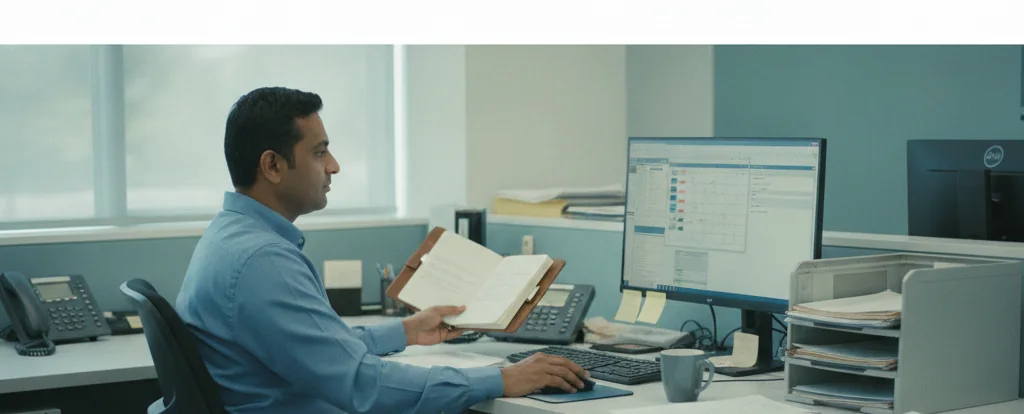
Administration officers work in the head office or branch of almost any organisation, from a government department to a school or an accounting firm, and usually report to an office manager or team leader. The role sits close to reception and personal assistant work, but where a receptionist mostly manages the front desk and a personal assistant supports one person, an administration officer supports a whole team or department. Most days mix phone and email enquiries with document processing, scheduling and the small logistical jobs that keep an office functional.
How much do administration officers earn?
The median full-time salary for an administration officer is $58,200 per annum, before tax, up $12,100 since 2018.
Most administration officers are paid under an award or enterprise agreement, so the classification level you are appointed at and the increases written into that agreement do more to move pay than performance does. Public sector and large employer roles usually come with defined bands and annual increments, while smaller private firms set pay individually. Part-time and casual work is common, and casual hours carry a loading instead of paid leave.
What does an administration officer do day to day?
The list below is what fills most weeks; the exact mix shifts with seniority and whatever stage the current work is at.
- Answering phone, email and counter enquiries, then working out who in the organisation can actually deal with each one
- Coordinating several managers' calendars when meetings clash, and rebooking rooms or attendees when they do
- Keeping physical and digital filing systems consistent enough that a colleague can find a document without having to ask
- Ordering stationery and office supplies, and chasing suppliers before something runs out
- Preparing agendas, reports and meeting papers to deadlines that someone else has set
What skills do administration officers need?
Employers look for data analysis, backed by Microsoft Office Suite fluency and strong written communication.
Specialist skills
- Data analysis
Software and tools
- Microsoft Office Suite
- Email and calendar management systems
- Document management software
- HRIS or HR information systems
- Telephone and scheduling platforms
General skills
- Written communication
- Attention to detail
- Time and deadline management
- Problem solving
- Stakeholder management
- Customer service
Is the job growing?
About 89,000 people work as administration officers in Australia, and employment is projected to grow 2.1% over the decade to 2035. That's modest growth: demand is steady rather than booming.
How do you become an administration officer?
Here's the path most administration officers take, step by step.
- 1Finish Year 12 or an equivalent qualification
Most entrants have completed secondary school, and strong written English matters because so much of the work is correspondence and minutes. You can start applying for entry-level roles straight from school and learn the office systems on the job.
- 2Complete a Certificate III in Business or Business Administration
This is the qualification employers ask for most often, taking around six to twelve months through TAFE or a private registered training organisation, and it can be done while working. It covers document production, records, customer service and basic spreadsheets.
- 3Build confidence with the software the role runs on
Word, Excel, Outlook and a document management or HR system turn up in almost every advertisement. Short courses or free vendor tutorials fill the gaps if your certificate predates the current versions.
- 4Apply through the recruitment process the sector uses
Public sector jobs are filled from formal applications against selection criteria and may include a written task, while small businesses often hire from a resume and a single interview. The work exists across government, health, education, finance and professional services, so the same skills suit several application styles.
- 5Add a Certificate IV or diploma when you want to move up
Team leader, office manager and executive assistant roles usually expect a Certificate IV, diploma or a degree, and some employers will contribute to the cost. The qualification is what opens the supervisory step rather than the work itself.
Study routes we have checked
Qualifications that are a recognised way into this role, and what else you need.
- Certificate III in Business
A recognised route into this role
An ordinary business-administration training route; job-specific systems and employer requirements vary.
Ready to apply as an administration officer?
Whether you're working toward becoming an administration officer or already are one and want a hand with the next step (sharpening your resume for ATS screening, tightening your cover letter, or knowing what you'll actually be asked at interview), here are examples grounded in this specific role, not generic templates.
What jobs can an administration officer move to?
Moving into Project Coordinator typically comes with the biggest pay rise, worth $52,600 a year more on average.
| Move to | Typical pay change | Overlap | Retraining |
|---|---|---|---|
| Project Coordinator Scheduling, records and stakeholder correspondence carry into project coordination, with further study building formal project methods.Known move | +$52,600 | 33% | reskill |
| Executive Assistant Diary, correspondence and records skills carry straight into executive support, with senior stakeholder confidentiality the main change.Known move | +$37,100 | 67% | minimal |
| Office Manager An administration officer already keeps office records and systems running, and office management adds staff, budget and supplier oversight.Known move | +$31,800 | 28% | reskill |
| Accounts Officer Records and reconciliation experience supports a move into accounts work, with a certificate building the accounting knowledge required.Known move | +$16,800 | 20% | reskill |
| Receptionist Front desk work draws on the same records and client service skills, with a short course covering phone systems and reception duties.Known move | +$5,700 | 60% | short course |
Moves are chosen from Jobs and Skills Australia's Data on Occupation Mobility, which follows income tax records between 2011-12 and 2020-21, together with entry requirements and skill overlap. A known move is one people were seen making in that data. Pay change compares median full-time pay for the two roles.
Who works as an administration officer?
The typical administration officer is 42 years old; 78% are women, 72% work full-time, and full-timers average 37.5 hours a week.
- 42
- Median age
- 78%
- Female share
- 72%
- Full-time
- −2.5h
- vs all-jobs avg
What's it like being an administration officer?
An administration officer's day is shaped by what other people need, so it moves between planned work and whatever arrives in the inbox. Records, reports and purchase orders follow their own cycles, such as month end, the start of a school term or the annual audit, and they often land in the same week. The role suits someone who likes knowing how an office really runs and doesn't mind being interrupted halfway through a task.
What people like
- You find out how the place actually works. Administration officers see more of an organisation's processes than most people at their level, from how a purchase gets approved to which form the finance team will send back.
- Much of the work finishes inside the day. Minutes circulated, a room booked, a supplier paid: the job has a steady supply of tasks that are genuinely done rather than ongoing.
- Contact across the whole organisation. The role sits between departments and often between the organisation and its clients, so the week rarely involves one team only.
- Flexible ways to work. Part-time, casual and school-hours roles are common, and because the skills transfer between industries you can change sectors without retraining from scratch.
What people find hard
- You carry other people's deadlines. Meeting papers often arrive late, but the meeting date doesn't move, so the pressure lands on whoever assembles the pack.
- Interruptions break up the day. Phone and counter enquiries come regardless of what you are in the middle of, which makes long stretches of concentrated work hard to protect.
- The work is easy to overlook. When everything runs smoothly nobody notices, and when a form goes missing the administration officer is usually the first person asked about it.
- Repetitive record keeping. Data entry and filing take up a real share of the week, and accuracy matters far more than variety in that part of the job.
Based on our synthesis of professional-body surveys and public accounts of the role, not first-person verified reviews.
Which industries employ administration officers?
Professional, Scientific & Technical Services employs the largest share of administration officers, followed by Public Administration & Defence.
Top employing industries
- 1Professional, Scientific & Technical Services
- 2Public Administration & Defence
- 3Financial & Insurance Services
- 4Health Care & Social Assistance
- 5Education & Training
Ranked by employment share; the source doesn't publish an exact percentage per industry.
| Bachelor degree | 38% | |
|---|---|---|
| Diploma / Advanced Diploma | 24% | |
| Certificate III/IV | 20% | |
| Postgraduate | 10% | |
| Other | 8% |
Will AI replace administration officers?
AI tools now draft routine letters, summarise meetings and sort documents into the right folders, so parts of this job are being handed over. What stays is the part that depends on knowing this organisation: who has to approve a purchase, which form the finance team will reject, and what a caller actually means by their question. Administration officers increasingly check and coordinate what the software produces rather than type it out from scratch.
Share of typical working time by exposure level
- Answering enquiries and working out who should handle themA chatbot can take a message, but deciding that a fee query belongs with finance and a broken door with facilities depends on local knowledge that isn't written down anywhere.30%low
- Scheduling meetings and managing diariesCalendar tools suggest times and flag double bookings, though someone still has to ring the manager who moved the meeting without updating anything.25%moderate
- Keeping records and filing systems up to dateDocument software can read and categorise files automatically, but the naming rules, retention periods and the fix when something is misfiled still sit with the officer.25%moderate
- Drafting routine correspondence, agendas and minutesStandard letters and first drafts of minutes come out of AI tools quickly from a set of notes, and a person is left checking names, figures and tone before anything is sent.20%high
Common questions about becoming an administration officer
Straight answers to the questions people ask most.
How much does an administration officer earn?
$58,200 per annum, before tax, for full-time work. Pay depends mostly on the classification level in your award or enterprise agreement, with public sector and large employer roles typically having more defined bands than small firms. Casual and part-time hours are common in this occupation, and casual rates include a loading instead of paid leave.
How do you become an administration officer?
Most people start with a Certificate III in Business (BSB30120) or Business Administration, which takes six to twelve months and can be studied while working. Strong skills in Word, Excel and Outlook matter as much as the certificate in most interviews, and public sector roles also require an application against selection criteria. Experience in reception, data entry or customer service counts towards entry, so you don't have to wait until the qualification is finished.
Are administration officers in demand?
Administration officers are currently not in shortage, and employment is projected to grow 2.1% over the decade to 2035 over the decade to 2035. Because the occupation is large and people move on regularly, most openings come from replacing staff rather than from new positions. Government, health, education and professional services employ the biggest numbers, so those sectors are where the vacancies tend to appear.
Will AI replace administration officers?
Parts of the job are already being automated: routine letters, meeting minutes and sorting incoming documents are tasks AI tools handle reasonably well. Minutes drafted from a recording still need someone who knows the agenda item numbers and can check that each action went to the right team, and a caller who types 'invoice query' into a chatbot usually needs to explain the problem out loud before it can be fixed. Administration officers increasingly spend their time checking and correcting what the software produces.
What can an administration officer move into?
Executive assistant work builds directly on diary, correspondence and records skills, and pay there is $37,100 more. Office manager roles add staff, budget and supplier oversight and pay $31,800 more, while project coordinator is a larger change, with pay at $52,600 more and further study in formal project methods behind it. Accounts officer suits anyone who enjoys the reconciliation side, with pay at $16,800 more.
Do you need a degree to be an administration officer?
No. Among people already working in the role, 38% hold a Bachelor degree, and that figure describes the current workforce rather than what employers require. Administration officer roles are also filled on experience in reception, data entry or customer service, or on a Certificate III or IV in Business Administration. Large public sector agencies may set a qualification as part of their own entry requirements.
Related roles
Not sure this is you? Take the career quiz and get a ranked shortlist of roles that fit how you like to work.