Archivist
Archivists decide which records are worth keeping permanently, then organise, describe and preserve them so people can find and use them later.
- Median salary
- $118,500
4.1%vs last year, before tax
- People employed
- 1,000
0.0%vs last year
- Projected growth
- +29.1%
to 2035
- AI exposure*
- Moderate
- automation risk
- Average hours
- 38/wk
−2h vs all jobs
- Shortage status
- Not in shortage
national
Archivists look after collections of documents, photographs, manuscripts and digital records for government agencies, libraries, museums and universities. The work differs from librarianship because the material is often unique and unlabelled, so an archivist has to establish what a record is, whether it is authentic and what condition it is in before anyone else can use it. It combines legal and historical judgement with detailed cataloguing and, increasingly, the technical work of keeping digital files readable.
How much do archivists earn?
The median full-time salary for an archivist is $118,500 per annum, before tax, up $24,800 since 2018.
Pay is set by the employer's classification structure rather than one market rate, so a state records office, a university and a museum can pay differently for similar work. Employers usually ask for a postgraduate qualification and relevant collection experience, and both affect where you sit in the band. Responsibility for a collection, a team or a digital program is what tends to move an archivist up through the bands.
What does an archivist do day to day?
The list below is what fills most weeks; the exact mix shifts with seniority and whatever stage the current work is at.
- Assessing which records are worth keeping permanently and which can be destroyed under a retention schedule
- Describing collections in finding aids and catalogue records so a single document can be located years later
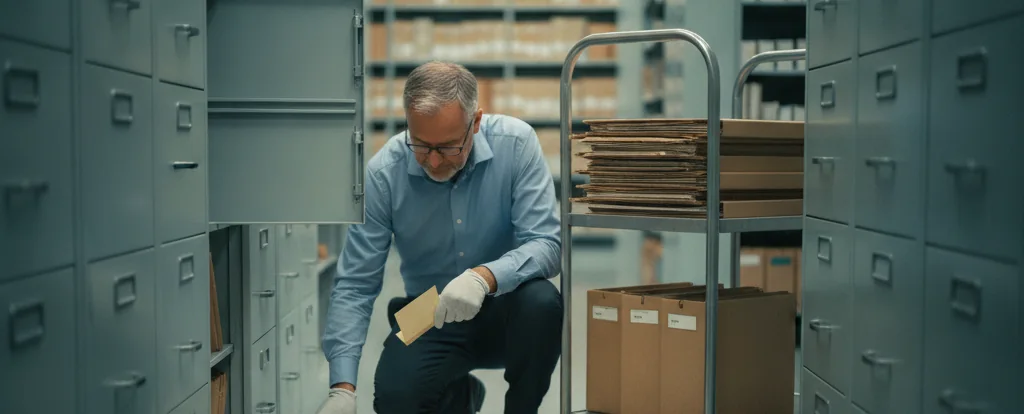
- Handling fragile originals under conservation rules, which often means gloves, low light and careful packaging
- Answering requests from researchers, government agencies and families trying to trace a particular record
- Migrating digital files to stable formats before the software needed to read them disappears
What skills do archivists need?
Employers look for data analysis, regulatory compliance, project management, backed by ArchivesSpace fluency and strong attention to detail.
Specialist skills
- Data analysis
- Regulatory compliance
- Project management
Software and tools
- ArchivesSpace
- Dublin Core metadata standards
- Digital preservation software (Archivematica)
- Full-text search indexing platforms
- Conservation assessment tools
General skills
- Attention to detail
- Written communication
- Problem solving
- Stakeholder management
Is the job growing?
About 1,000 people work as archivists in Australia, and employment is projected to grow 29.1% over the decade to 2035. That's very strong growth. Few roles in Australia are expanding this fast, and it points to solid demand for years to come.
How do you become an archivist?
Here's the path most archivists take, step by step.
- 1Study a degree that builds research skills
History, Australian studies, archaeology, English or information studies all lead into the field, and a Bachelor of Arts majoring in history is a common starting point. The degree teaches you to read documents critically and write clearly, which is most of what the work asks for.
- 2Add a postgraduate qualification in archives and records management
A graduate diploma or masters in archives and records management is the standard professional qualification, offered by a small number of Australian universities and often studied by distance. It covers appraisal, arrangement and description, preservation, and the recordkeeping standards government agencies work to.
- 3Get experience in a real collection while you study
Volunteering or working part time in a university archive, a government records office, a museum or a historical society builds the practical experience employers look for. Paid cadetships and internships in the state and national archives are advertised periodically and are worth applying for.
- 4Learn the digital preservation side
Metadata standards, file format migration and tools such as Archivematica now appear in most position descriptions, so a digital preservation subject or short course gives you something concrete to offer a first employer.
- 5Join the Australian Society of Archivists
Membership brings professional development, the society's job listings and a network of people who can tell you what a particular collection or workplace is like before you apply.
Ready to apply as an archivist?
Whether you're working toward becoming an archivist or already are one and want a hand with the next step (sharpening your resume for ATS screening, tightening your cover letter, or knowing what you'll actually be asked at interview), here are examples grounded in this specific role, not generic templates.
What jobs can an archivist move to?
None of the roles archivists typically move into pay more than the role itself. Policy Officer is the closest match. If a bigger salary is the goal, moving up into a senior or principal position within the role is usually the faster route than moving sideways.
| Move to | Typical pay change | Overlap | Retraining |
|---|---|---|---|
| Policy Officer Archivists bring research, information governance and recordkeeping expertise to policy work, moving across with minimal retraining. | −$5,500 | 81% | minimal |
| Librarian Archivists bring cataloguing, metadata and collection knowledge to library work, needing only a short course in library practice.Known move | −$22,800 | 33% | short course |
| Records Manager Archivists apply appraisal, retention and metadata skills to records management, moving across with a short course in business recordkeeping.Known move | −$24,900 | 53% | short course |
| Curator Archivists use collection and research knowledge in curatorial work, though the move usually requires further study in curatorship. | −$31,100 | 27% | requalify |
Moves are chosen from Jobs and Skills Australia's Data on Occupation Mobility, which follows income tax records between 2011-12 and 2020-21, together with entry requirements and skill overlap. A known move is one people were seen making in that data. Pay change compares median full-time pay for the two roles.
Who works as an archivist?
The typical archivist is 50 years old; 68% are women, 54% work full-time, and full-timers average 38 hours a week.
- 50
- Median age
- 68%
- Female share
- 54%
- Full-time
- −2h
- vs all-jobs avg
What's it like being an archivist?
The work runs in two modes: long stretches of quiet, detailed processing, and the interruptions of enquiries from researchers, agencies and family historians. Most archivists work in government archives, universities, libraries and museums, usually in small teams covering both physical and digital collections. The field is small, so people tend to stay in it once they are in, and the satisfactions are slow and specific rather than immediate.
What people like
- Solving what a collection actually is. An unlabelled box of papers can take weeks to make sense of, and working out whose records they are, how they got there and how they fit together is the puzzle at the centre of the job.
- A finding aid that works. A well-built finding aid means someone can walk into the reading room and find one document among thousands, and that is the visible result of months of careful describing.
- Working with the originals. Handling letters, photographs and ledgers that exist nowhere else is one of the few parts of the job that matches how people imagine it, even when the rules mean gloves and low light.
- The digital side keeps it technical. Preservation work with file formats, storage and migration has turned a historically paper-based profession into one with a real technical specialism.
What people find hard
- Backlogs that never clear. Every archive holds more material than it can process, so there is always a shelf of boxes waiting to be described and never quite enough time to finish it.
- Deciding what gets destroyed. Appraisal means recommending that some records be destroyed, and that decision often goes against the wishes of the people who created or donated them.
- Project funding and short contracts. Digitisation and cataloguing projects are frequently funded for a fixed term, so some archivists move between contracts before finding an ongoing position.
- Making the case for the collection. Archives are easy to overlook when budgets tighten, so part of the job is arguing for the service to managers who never use it themselves.
Based on our synthesis of professional-body surveys and public accounts of the role, not first-person verified reviews.
Which industries employ archivists?
Education and Training employs the largest share of archivists, followed by Information Media and Telecommunications.
Top employing industries
- 1Education and Training
- 2Information Media and Telecommunications
- 3Public Administration and Safety
Ranked by employment share; the source doesn't publish an exact percentage per industry.
| Postgraduate | 47.1% | |
|---|---|---|
| Bachelor degree | 24.4% | |
| Year 12 or below | 12.5% | |
| Diploma / Advanced Diploma | 9% | |
| Certificate III/IV | 5.9% |
Will AI replace archivists?
Archival work sits in the middle range for AI exposure. The descriptive and searchable parts of the job are the most affected, since transcription, optical character recognition and machine-generated metadata have sped up cataloguing and made digitised collections searchable in ways that once took years of manual indexing. What does not get automated is the judgement behind the collection: deciding what is worth keeping, establishing that a record is authentic, and working with the people who created or donated it.
Share of typical working time by exposure level
- Describing and cataloguing collectionsAutomated tools can draft catalogue records and pull dates, names and places from scanned documents, but someone still has to check provenance and decide how a series is arranged.30%moderate
- Digital preservationFormat migration, checksums and storage monitoring are partly automated, but an archivist sets the policy, watches for failures and decides what to keep as software changes.25%moderate
- Reference and researcher enquiriesSearch tools and digitised indexes answer straightforward requests, while a vague family history question still needs a person who knows the collection and can interpret what the researcher is describing.25%moderate
- Appraisal and retention decisionsDeciding what a government agency must keep and what can be destroyed rests on legislation and on understanding how records will be used decades later, which software can flag but not settle.20%low
Common questions about becoming an archivist
Straight answers to the questions people ask most.
How much do archivists earn in Australia?
$118,500 per year before tax is the median for full-time archivists, which means half earn more and half earn less. What you are paid depends on the employer's classification band and your qualifications, so the same job title at a university and at a government archive can sit at different points.
How do you become an archivist?
Most people start with a degree in history or a related field, then complete a postgraduate qualification in archives and records management. Practical experience in a records office, museum or historical society matters as much as the qualification, because employers want to see that you have handled a real collection.
Are archivists in demand in Australia?
Archivists are currently not in shortage. Employment is projected to grow 29.1% over the decade to 2035, and with about 1,000 people in the occupation, the number of jobs advertised in any given month is small. It pays to check the websites of the state and national archives, universities and major museums directly rather than relying on job boards alone.
Will AI replace archivists?
AI is changing parts of the work rather than replacing it. Transcription, optical character recognition and machine-generated metadata have made digitised collections far easier to search and describe, but deciding what is worth keeping, confirming that a record is authentic and working with the people who created it all remain human judgements. The technical side of digital preservation is growing, not shrinking.
What other jobs can archivists move into?
Records management uses the same appraisal, retention and metadata skills, and moving across usually means $24,900 less in pay, with a short course in business recordkeeping. Library work overlaps in cataloguing and collection care, and the pay difference there is $22,800 less. Policy work draws on the research and information governance side of the job, where the difference is $5,500 less.
Do you need a degree to work in archives?
The professional roles generally expect a degree, and about 47% of people working as archivists hold a postgraduate qualification. Technician and assistant positions in records and archives teams sometimes accept a diploma or certificate, which can be a way into the field, but progression to professional archivist work usually requires further study.
Related roles
Not sure this is you? Take the career quiz and get a ranked shortlist of roles that fit how you like to work.