Home Manufacturing & Production
Cellar Hand
Cellar hands carry out the fermentation, barrel and tank work that turns grapes into wine.
- Median salary*
- $65,000
3.7%vs last year, before tax
- People employed
- 1,800
0.0%vs last year
- Projected growth
- +2.8%
to 2035
- AI exposure*
- Low
- automation risk
- Average hours
- 39/wk
−1h vs all jobs
- Shortage status*
- In shortage (regional)
national
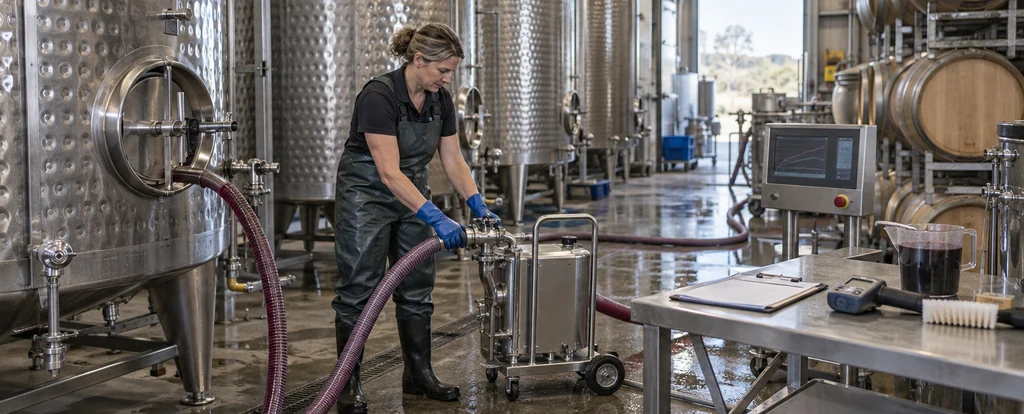
Cellar hands work on the floor of a winery, moving juice and wine between presses, tanks and barrels under a winemaker's direction. The winemaker decides what the wine should be and the cellar hand carries out the additions, transfers and cleaning that get it there, which is the clearest line between the two roles. Most work in small crews, and the pace of the job follows the vintage rather than the calendar year.
How much do cellar hands earn?
The median full-time salary for a cellar hand is $65,000 per annum, before tax, up $13,400 since 2018.
Pay varies with the size of the winery and the arrangement you are on. Larger producers and those covered by an enterprise agreement tend to sit above the award, and vintage brings overtime and shift penalties that lift earnings for a few months of the year. A permanent role on a set roster pays more evenly across the year than casual vintage work, which can leave the cellar quiet by winter.
What does a cellar hand do day to day?
The list below is what fills most weeks; the exact mix shifts with seniority and whatever stage the current work is at.
- Cleaning and sanitising tanks, barrels, hoses and presses, since a spoiled batch costs far more than the time the job takes
- Racking, pumping and transferring wine and juice between vessels
- Adding yeast, nutrients and fining agents at the volumes the winemaker specifies
- Taking fermentation temperature and density readings and recording them in Vintrace or on a tank sheet
- Running the press, crusher, filter and bottling line through vintage
What skills do cellar hands need?
Employers look for operations management, plant and equipment operation, backed by Vintrace fluency and strong attention to detail.
Specialist skills
- Operations management
- Plant and equipment operation
Software and tools
- Vintrace
- Microsoft Excel
- Tank temperature control systems
- Forklift
- Wine pump
General skills
- Attention to detail
- Physical stamina and dexterity
- Safety and compliance awareness
- Problem solving
- Written communication
Is the job growing?
About 1,800 people work as cellar hands in Australia, and employment is projected to grow 2.8% over the decade to 2035. That's modest growth: demand is steady rather than booming.
How do you become a cellar hand?
Here's the path most cellar hands take, step by step.
- 1Finish school or an equivalent
No degree or trade qualification is needed to start. Year 12, a pre-vocational course or simply turning up for a harvest is enough for many first jobs, and the skills are learned on the crush pad.
- 2Take a vintage casual role
Most cellar hands begin on a vintage crew between late summer and autumn, when wineries take on extra staff for the harvest. It is paid work, usually casual, and a good vintage is the reference that gets you the next one.
- 3Complete a Certificate III in Wine Industry Operations
TAFE and wine industry training providers offer this qualification, and many people study it while working a vintage. It covers fermentation, cellar hygiene, transfers, filtration and the safety side of tank and barrel work.
- 4Add the licences and qualifications the site requires
A forklift licence and confined space training are common requirements for cellar work, and some wineries ask for chemical handling or first aid. Having them already makes you usable on day one of a vintage rather than after induction.
- 5Move into a senior or supervisory cellar role
Experienced cellar hands who run a shift or direct casual crews through vintage are the ones considered for permanent cellar supervisor and assistant winemaker positions.
Ready to apply as a cellar hand?
Whether you're working toward becoming a cellar hand or already are one and want a hand with the next step (sharpening your resume for ATS screening, tightening your cover letter, or knowing what you'll actually be asked at interview), here are examples grounded in this specific role, not generic templates.
What jobs can a cellar hand move to?
Moving into Food Scientist typically comes with the biggest pay rise, worth $49,100 a year more on average.
| Move to | Typical pay change | Overlap | Retraining |
|---|---|---|---|
| Food Scientist A cellar hand brings practical fermentation and wine quality knowledge to food science, though a degree is required.Known move | +$49,100 | 12% | requalify |
| Winemaker A cellar hand brings fermentation, barrel and tank experience to winemaking, though a degree is required. | +$23,400 | 19% | requalify |
| Bartender A cellar hand brings wine knowledge and beverage handling to bartending, though hospitality training is needed.Known move | +$13,000 | 9% | reskill |
| Waiter A cellar hand brings wine knowledge and cellar experience to waiting, though hospitality service training is needed.Known move | +$5,000 | 14% | reskill |
Moves are chosen from Jobs and Skills Australia's Data on Occupation Mobility, which follows income tax records between 2011-12 and 2020-21, together with entry requirements and skill overlap. A known move is one people were seen making in that data. Pay change compares median full-time pay for the two roles.
Who works as a cellar hand?
The typical cellar hand is 38 years old; 80% are men, 80% work full-time, and full-timers average 39 hours a week.
- 38
- Median age
- 20%
- Female share
- 80%
- Full-time
- −1h
- vs all-jobs avg
What's it like being a cellar hand?
The job runs at two speeds. Through vintage the cellar keeps going around the clock, with fruit arriving faster than tanks can be emptied, and the rest of the year settles into barrel work, filtration, topping, cleaning and bottling runs. The work suits people who are comfortable on their feet, careful with equipment and happy to do the unglamorous parts of the process properly.
What people like
- You follow the wine from fruit to bottle. A cellar hand is present at nearly every stage, from receiving the grapes to the final filtration, so you see how each decision shows up in the finished wine.
- The work changes through the week. Tank work, barrel work, machinery, sampling and cleaning all sit in the same job, so the days are rarely identical outside vintage.
- Vintage pulls a small crew together. Harvest teams are tight, the stakes are high and the season is short, which is why so many cellar hands come back to the same winery each year.
- Wine knowledge builds steadily. Tasting through fermentation and barrel ageing teaches your palate as well as your hands, and that knowledge travels into other wine and beverage roles.
What people find hard
- Vintage hours are punishing. Shifts stretch well beyond a normal day, often across six or seven days a week for several weeks, and the roster is set by the fruit rather than by preference.
- Cleaning takes up much of the job. Sanitation comes before everything else in a winery, so a large share of the week is spent with a hose, a brush and caustic or acid wash.
- The conditions are cold, wet and chemical heavy. Cellars are damp and cool by design, and the work involves confined space entry, hoses under pressure and cleaning agents that need proper protective gear.
- The work is seasonal and regional. A lot of cellar positions are casual harvest jobs in wine regions away from the cities, so steady full-time work usually means living where the vineyards are.
Based on our synthesis of professional-body surveys and public accounts of the role, not first-person verified reviews.
Which industries employ cellar hands?
Manufacturing employs the largest share of cellar hands.
Top employing industries
- 1Manufacturing
Ranked by employment share; the source doesn't publish an exact percentage per industry.
| Year 12 or below | 51.9% | |
|---|---|---|
| Certificate III/IV | 27.7% | |
| Bachelor degree | 8.1% | |
| Diploma / Advanced Diploma | 4.9% | |
| Postgraduate | 2.8% |
Will AI replace cellar hands?
Cellar hand work has low exposure to AI and automation. Winery software such as Vintrace, programmable presses and tank sensors have taken over much of the measuring and logging, but cleaning vessels, running hoses and making a call on a sluggish ferment still happen by hand and by eye.
Share of typical working time by exposure level
- Cleaning and sanitising tanks, barrels and equipmentCleaning is done by hand with hoses, brushes and caustic or acid wash, and no system can enter a tank, scrub a barrel or check a valve for residue.35%low
- Pumping, racking and additionsHoses, pumps and additions still need someone on the floor to set them up, watch the levels and follow the winemaker's instruction on volumes.30%low
- Fermentation monitoring and record keepingTank sensors and Vintrace log temperature and density automatically, though a cellar hand still takes samples and works out whether a ferment needs warming, cooling or nutrients.20%moderate
- Running the press, filter and bottling lineProgrammable presses and bottling lines run their cycles themselves, so the operator sets them up, loads them and watches for faults rather than driving every step.15%moderate
Common questions about becoming a cellar hand
Straight answers to the questions people ask most.
How much does a cellar hand earn?
Full-time cellar hands earn a median of $65,000 per year before tax. Vintage overtime, shift penalties and enterprise agreements at larger wineries push earnings up during harvest, while casual work outside vintage can be quieter.
How do you become a cellar hand?
Most people start by taking a casual job on a vintage crew and learning the cellar from the inside. A Certificate III in Wine Industry Operations (FBP30921) helps for permanent roles, and a forklift licence or confined space training makes you easier to put on a roster.
Are cellar hands in demand?
Cellar hands are currently in shortage in regional areas, and employment is projected to grow 2.8% over the decade to 2035. The workforce is small at about 1,800 people, so openings mostly come from experienced staff moving on and from wineries rehiring harvest crews each year.
Will automation replace cellar hands?
Not to any great extent. Programmable presses, tank sensors and winery software such as Vintrace already handle much of the measuring and record keeping, but cleaning vessels, connecting hoses and judging a ferment still need someone in the cellar.
What can a cellar hand move on to?
Winemaking is the step many cellar hands aim for, and it pays $23,400 more, but it requires an oenology or viticulture degree. Food science pays $49,100 more and uses the same fermentation knowledge, while bartending pays $13,000 more and draws on the wine knowledge built in the cellar.
What are the hours like?
Full-time cellar hands average around 39 hours a week across the year, but that average hides the vintage. Harvest brings long shifts and six-day weeks for a few months, then the cellar returns to something closer to ordinary hours.
Related roles
Not sure this is you? Take the career quiz and get a ranked shortlist of roles that fit how you like to work.