Cricket Coach
Cricket coaches build the batting, bowling and fielding skills of players, from junior pathway squads through to senior representative sides.
- Median salary*
- $65,000
3.7%vs last year, before tax
- People employed*
- 3,200
0.0%vs last year
- Projected growth*
- +5%
to 2035
- AI exposure*
- Moderate
- automation risk
- Average hours*
- 42/wk
+2h vs all jobs
- Shortage status*
- Not in shortage
national
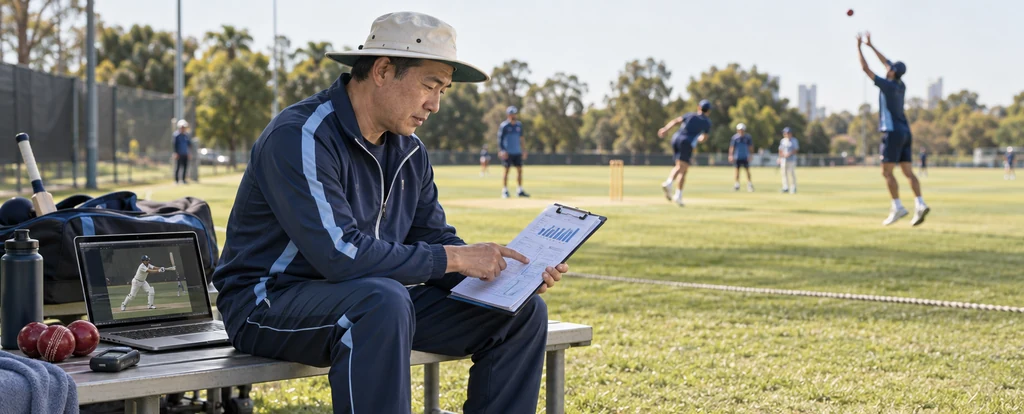
Cricket coaches plan and deliver training that improves individual technique and team tactics, working across club, school, association and elite pathway settings. Many combine coaching with playing, teaching or another job, so the role is often part-time or seasonal rather than a full-time post. Unlike a physical education teacher, who covers a broad curriculum, a cricket coach is judged on how individual players and the team develop across a season, and accreditation runs through Cricket Australia's coach pathway.
How much do cricket coachs earn?
The median full-time salary for a cricket coach is $65,000 per annum, before tax, up $13,400 since 2018.
Who employs you matters more than your accreditation level: state associations and elite pathway programs pay best, while school and club roles pay less and are frequently part-time or seasonal. Casual and hourly arrangements are common outside the top tiers, so what a coach earns in a year depends on how many squads and programs they pick up. Higher accreditation and specialist skills such as strength and conditioning tend to open the better-paid roles.
What does a cricket coach do day to day?
The list below is what fills most weeks; the exact mix shifts with seniority and whatever stage the current work is at.
- Planning and running training sessions built around batting, bowling, fielding and wicketkeeping technique
- Reviewing match footage in Hudl Sportscode or PitchVision to find technical faults before the next session
- Setting match tactics such as the batting order, bowling plans and field placements for the coming fixture
- Tracking player workload and injury risk alongside physiotherapists and strength and conditioning staff
- Talking players through the mental side of the game, from innings preparation to handling a run of low scores
What skills do cricket coachs need?
Employers look for fitness coaching and instruction, teaching and instruction, strategy development, backed by Hudl Sportscode fluency and strong written communication.
Specialist skills
- Fitness coaching and instruction
- Teaching and instruction
- Strategy development
- Data analysis
Software and tools
- Hudl Sportscode
- PitchVision
- CricHQ
- Catapult GPS vests
- Hawk-Eye
General skills
- Written communication
- People leadership
- Safety and compliance awareness
- Stakeholder management
Is the job growing?
About 3,200 people work as cricket coachs in Australia, and employment is projected to grow 5% over the decade to 2035. That's modest growth: demand is steady rather than booming.
How do you become a cricket coach?
Here's the path most cricket coachs take, step by step.
- 1Take an entry-level coaching course
Cricket Australia's community coach course is a short online module plus a practical session, and it is the usual starting point. You will also need a Working with Children Check before coaching junior teams, so most people sort that out before their first volunteer role.
- 2Coach a junior or club side, usually as a volunteer
Practical hours are what higher accreditation levels ask for, and club committees are used to taking on parents, former players and keen university students. This is where you learn to run a session and manage a group.
- 3Add a qualification if you want school or pathway work
A Certificate III or IV in sport coaching, a diploma, or a teaching or sports science degree opens doors in schools and academies. The most common qualification among cricket coaches is a Bachelor degree, held by about 38% of them, though club and junior coaching often runs on accreditation and experience alone.
- 4Work up the accreditation levels
Level 2 and Level 3 coaching accreditation requires logged hours, assessment and often a mentor, and it is what state associations and talent pathway programs look for when appointing coaches.
- 5Specialise
Batting, bowling, fielding or wicketkeeping coaching, strength and conditioning, or high performance roles all follow from there, and each narrows the skills you are expected to bring.
Ready to apply as a cricket coach?
Whether you're working toward becoming a cricket coach or already are one and want a hand with the next step (sharpening your resume for ATS screening, tightening your cover letter, or knowing what you'll actually be asked at interview), here are examples grounded in this specific role, not generic templates.
What jobs can a cricket coach move to?
Moving into Strength and Conditioning Coach typically comes with the biggest pay rise, worth $25,000 a year more on average.
| Move to | Typical pay change | Overlap | Retraining |
|---|---|---|---|
| Strength and Conditioning Coach A cricket coach brings athlete development and session planning to strength and conditioning, though a sports science degree is needed to specialise. | +$25,000 | 61% | requalify |
| Netball Coach A cricket coach brings session design and player feedback to netball coaching, though a short sport-specific accreditation is required. | +$0 | 55% | short course |
| Basketball Coach A cricket coach brings structured training and player development to basketball coaching, with the same coaching certificate applying across sports. | −$5,200 | 71% | minimal |
| Football Coach A cricket coach brings tactical instruction and team management to football coaching, and the coaching credential transfers between sports. | −$5,200 | 65% | minimal |
Moves are chosen from Jobs and Skills Australia's Data on Occupation Mobility, which follows income tax records between 2011-12 and 2020-21, together with entry requirements and skill overlap. A known move is one people were seen making in that data. Pay change compares median full-time pay for the two roles.
Who works as a cricket coach?
The typical cricket coach is 37 years old; 78% are men, 54% work full-time, and full-timers average 42 hours a week.
- 37
- Median age
- 22%
- Female share
- 54%
- Full-time
- +2h
- vs all-jobs avg
What's it like being a cricket coach?
The week has a shape: training sessions in the middle of it, a match at the weekend, and video review squeezed in between, which means evenings and weekends are the normal working hours. Summer is heavy and winter is quieter, so many coaches piece together club, school and private work to fill a year. It suits someone who enjoys explaining the same technique repeatedly and watching a player's game change over months rather than days.
What people like
- You see the change in a player. A batter who has been falling over to the off side for a month starts holding their shape, and the work done in the nets shows up in the scorebook.
- Most of the job happens on the field. Training, matches and the occasional video session make up the week, so it suits someone who would rather be outside than at a desk.
- You do not need a degree to start. Entry-level accreditation through Cricket Australia's coach pathway, plus a Working with Children Check, is enough to take charge of a junior side.
- Players turn up because they want to be there. Unlike a compulsory classroom, the squad has chosen the sport, which makes the coaching conversations easier to have.
What people find hard
- Evenings and weekends are the shift. Training sits after school and work, and matches take up Saturdays, so the job fits around another career more easily than it replaces one.
- You rarely control the result. You can set the perfect field and the ball still goes to the boundary, and a well-coached batter still nicks off first ball.
- Income is often part-time and seasonal. Many club and school roles are hourly or seasonal, so coaches commonly hold down teaching, playing or another job alongside.
- Selection brings outside pressure. Parents, players and committee members all have a view on who should be in the side, and the coach is the one who answers for it.
Based on our synthesis of professional-body surveys and public accounts of the role, not first-person verified reviews.
Which industries employ cricket coachs?
Sports and Physical Recreation Activities employs the largest share of cricket coachs, followed by Sports and Physical Recreation Support Services.
Top employing industries
- 1Sports and Physical Recreation Activities
- 2Sports and Physical Recreation Support Services
- 3School Education
- 4Higher Education
Ranked by employment share; the source doesn't publish an exact percentage per industry.
| Bachelor degree | 38% | |
|---|---|---|
| Diploma / Advanced Diploma | 24% | |
| Certificate III/IV | 20% | |
| Postgraduate | 10% | |
| Other | 8% |
Will AI replace cricket coachs?
Video and data tools have taken over much of the analysis work, with PitchVision and Hawk-Eye tagging deliveries and Hudl Sportscode cutting clips automatically, so a coach spends less time logging footage and more time deciding what to do with it. The coaching itself, reading a player's technique and getting them to change it, stays a person-to-person job. That keeps the overall exposure moderate.
Share of typical working time by exposure level
- Planning and running training sessionsDrills still need someone on the field watching a batter's front foot and adjusting the session on the spot.35%low
- Match-day tactics and in-game decisionsA win-probability model can suggest a bowling change, but the call depends on who is tiring, who is bowling well and what the pitch is doing.25%moderate
- Reviewing match and training footagePitchVision and Hawk-Eye already produce the delivery data and wagon wheels, so the coach's work is interpreting the numbers rather than compiling them.20%high
- Player feedback, mentoring and selection conversationsExplaining to a player why they have been dropped, or rebuilding confidence after a run of low scores, is a conversation no tool can hold.20%low
Moves least exposed to AI
These career moves from cricket coach work are rated low for AI exposure:
- Basketball Coach
High skill overlap (71%), little retraining to get there, and a low automation-risk profile.
- Strength and Conditioning Coach
High skill overlap (61%), requalify to get there, and a low automation-risk profile.
- Netball Coach
Solid skill overlap (55%), short course to get there, and a low automation-risk profile.
Common questions about becoming a cricket coach
Straight answers to the questions people ask most.
How much do cricket coaches earn?
Cricket coaches earn a median of $65,000 per year before tax, based on full-time workers. Much of the coaching workforce is part-time or seasonal, so the figure is a marker rather than the rate for a particular job. State pathway and full-time academy roles sit above it, and club and school coaching usually sits below.
How do you become a cricket coach?
Start with Cricket Australia's entry-level coach accreditation and a Working with Children Check, then coach a club or junior side, often as a volunteer, to build the practical hours higher levels require. A Certificate III or IV in sport coaching, or a teaching or sports science degree, helps if you want school, academy or pathway work.
Are cricket coaches in demand?
Cricket coaches are currently not in shortage, and employment is projected to grow 5% over the decade to 2035. Because so much of the work is part-time, seasonal or volunteer, the number of advertised roles matters less than how many club, school and pathway programs run near you.
Will AI replace cricket coaches?
AI has absorbed much of the video and data work, with PitchVision and Hawk-Eye tagging deliveries automatically and Hudl Sportscode cutting clips that once took an evening to compile. It cannot stand at the nets and change a player's technique or judge how a squad is handling a losing streak. Coaches who learn the analysis tools tend to spend their time on the parts of the job that need a person.
What other jobs can a cricket coach move into?
The coaching certificate and session planning carry across sports, so basketball and football coaching are realistic moves, paying $5,200 less and $5,200 less respectively. Strength and conditioning pays $25,000 more, though it needs a sports science degree to specialise. Many coaches also build a private academy or one-to-one coaching business over time, and that is often where earnings grow.
Do you need to have played cricket at a high level to coach?
No, though elite playing experience helps with credibility and reading the game. Most coaches come through club cricket, teaching or a sports science background, and accreditation, session planning and the ability to explain a technique clearly count for more than an old scorebook.
Related roles
- Basketball Coach
- Football Coach
- Strength and Conditioning Coach
- Netball Coach
- Professional Cricketer
- Basketball Coach
Not sure this is you? Take the career quiz and get a ranked shortlist of roles that fit how you like to work.