Customs Officer
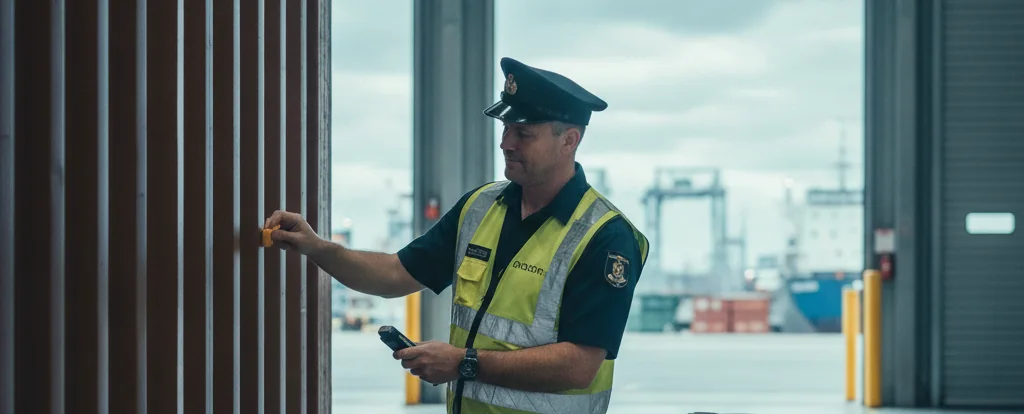
Customs officers check the goods, cargo and travellers crossing Australia's border, making sure what enters and leaves is legal, declared and taxed correctly.
- Median salary
- $96,800
4.3%vs last year, before tax
- People employed
- 970
3.0%vs last year
- Projected growth
- +7%
to 2035
- AI exposure*
- Moderate
- automation risk
- Average hours
- 41/wk
+1h vs all jobs
- Shortage status
- Not in shortage
national
Customs officers work for the Australian Border Force at international airports, seaports, mail centres and cargo terminals, screening passengers and freight for prohibited goods, undeclared cash and biosecurity risks. A shift can move from routine clearance to a seizure, so the job mixes steady procedural work with decisions that carry legal weight. It is different from a customs broker, who is hired by importers and freight forwarders to clear their goods through the border, rather than enforcing the law on the government's side.
How much do customs officers earn?
The median full-time salary for a customs officer is $96,800 per annum, before tax, up $20,400 since 2018.
Customs officers are covered by the Australian Border Force enterprise agreement, so pay follows a classification scale rather than anything you negotiate yourself. Shift penalties and overtime are the main variation, because airports and seaports run around the clock and nights, weekends and public holidays attract higher rates. Moving up a classification level usually lifts pay more than any single allowance.
What does a customs officer do day to day?
The list below is what fills most weeks; the exact mix shifts with seniority and whatever stage the current work is at.
- Screening passengers and their baggage at an international terminal, checking declarations against what the scanner and a physical search turn up
- Inspecting cargo, containers and mail items against import documentation and working out the duty owed
- Using X-ray and scanning equipment to look inside pallets and luggage, then opening anything that does not match the paperwork
- Questioning travellers and freight forwarders about goods that look misdescribed, undervalued or restricted
- Recording seizures, infringements and referrals in enough detail to support a prosecution or survive an appeal
What skills do customs officers need?
Employers look for regulatory compliance, risk and internal controls, data analysis, backed by X-ray and scanning equipment fluency and strong attention to detail.
Specialist skills
- Regulatory compliance
- Risk and internal controls
- Data analysis
Software and tools
- X-ray and scanning equipment
- ASYCUDA (customs management system)
- Border management IT systems
- Standard inspection kits
- Cargo documentation software
General skills
- Attention to detail
- Problem solving
- Written communication
- Stakeholder management
Is the job growing?
About 970 people work as customs officers in Australia, and employment is projected to grow 7% over the decade to 2035. That's modest growth: demand is steady rather than booming.
How do you become a customs officer?
Here's the path most customs officers take, step by step.
- 1Finish Year 12 or an equivalent
Entry-level Border Force recruitment expects it, though people arrive from trades, logistics and retail work as well. A certificate or diploma in customs, logistics or border studies can strengthen an application at this stage but is not the gate.
- 2Apply through the Australian Border Force recruitment process
This is the real hurdle: an online application, aptitude testing, interviews, police and background checks, a medical and fitness assessment, and eligibility for a security clearance. You generally need to be an Australian citizen.
- 3Complete the training program
Recruits are paid while they train, combining a course at the Border Force college with supervised work at a port or airport. The training covers customs legislation, officer powers and examination techniques.
- 4Build experience across the barrier
New officers usually rotate through passenger, cargo, maritime or postal areas before settling into one. That breadth is what makes later moves into investigations, intelligence or trade compliance possible.
- 5Add a qualification for specialist or supervisory work
A diploma or degree in customs, logistics, law or security studies helps for analyst, supervisor and broker-adjacent roles, and some officers study while working.
Ready to apply as a customs officer?
Whether you're working toward becoming a customs officer or already are one and want a hand with the next step (sharpening your resume for ATS screening, tightening your cover letter, or knowing what you'll actually be asked at interview), here are examples grounded in this specific role, not generic templates.
What jobs can a customs officer move to?
Moving into Intelligence Analyst typically comes with the biggest pay rise, worth $16,200 a year more on average.
| Move to | Typical pay change | Overlap | Retraining |
|---|---|---|---|
| Intelligence Analyst Customs officers bring risk assessment and border intelligence experience to intelligence analyst work, which requires a relevant degree.Known move | +$16,200 | 81% | requalify |
| Project Coordinator Customs officers bring compliance, coordination and stakeholder skills to project coordinator roles, with retraining in project management methods.Known move | +$14,000 | 20% | reskill |
| Border Force Officer Customs officers bring border control, inspection and compliance skills directly to border force officer roles, needing little extra training. | +$0 | 63% | minimal |
| Customs Broker Customs officers can specialise as customs brokers, using classification and quarantine expertise, though a diploma and licensing are required. | −$17,800 | 100% | reskill |
| Import Export Clerk Customs officers bring tariff, clearance and inspection knowledge to import export clerk work, with further study in trade documentation.Known move | −$21,400 | 44% | reskill |
Moves are chosen from Jobs and Skills Australia's Data on Occupation Mobility, which follows income tax records between 2011-12 and 2020-21, together with entry requirements and skill overlap. A known move is one people were seen making in that data. Pay change compares median full-time pay for the two roles.
Who works as a customs officer?
The typical customs officer is 45 years old; 52% are men, 79% work full-time, and full-timers average 41 hours a week.
- 45
- Median age
- 48%
- Female share
- 79%
- Full-time
- +1h
- vs all-jobs avg
What's it like being a customs officer?
The job runs on shifts, teams and written procedure: you work a barrier with a supervisor nearby, apply legislation you can point to, and hand the interesting cases to investigators. Most of a roster is clearance and documentation, punctuated by finds that are the reason many officers stay. It suits people who are comfortable with clear rules, rotating hours and a role where you are often the face of a decision someone does not want to hear.
What people like
- Rules you can point to. Customs work runs on legislation and procedure, so when you stop a shipment or a traveller, the grounds are written down. That suits people who would rather apply a clear standard than rely on instinct alone.
- Finds that matter. Most shifts are routine, but every so often a search turns up something serious, such as an undeclared firearm, a quantity of drugs or a container of goods described as something else entirely.
- Working as a team at the barrier. Inspection is done in pairs or small teams with a supervisor close by, so you are rarely making an enforcement call entirely on your own.
- You learn how trade actually works. Officers pick up the practical detail of tariffs, quarantine rules and freight movement, knowledge that transfers to customs broking and trade compliance later.
What people find hard
- Round-the-clock rosters. Airports and seaports operate every day of the year, so nights, weekends and public holidays sit in the roster, and the pattern rotates rather than staying fixed.
- Hostility from people you stop. A missed connection or a bag search can bring genuine anger, and you absorb it without returning it. Training covers how to handle it, but it remains a steady part of the work.
- The gaps between the finds. Clearance and documentation fill most of a shift, and the cases that stick in the memory are occasional, which is what some people find hardest.
- You rarely see the end of it. Once goods are seized or a traveller is referred, the matter moves to investigators or the courts, and the officer who found it may never learn the outcome.
Based on our synthesis of professional-body surveys and public accounts of the role, not first-person verified reviews.
Which industries employ customs officers?
Public Administration and Safety employs the largest share of customs officers, followed by Transport, Postal and Warehousing.
Top employing industries
- 1Public Administration and Safety
- 2Transport, Postal and Warehousing
Ranked by employment share; the source doesn't publish an exact percentage per industry.
| Year 12 or below | 27.2% | |
|---|---|---|
| Bachelor degree | 24.3% | |
| Certificate III/IV | 19.8% | |
| Diploma / Advanced Diploma | 16.9% | |
| Postgraduate | 7% |
Will AI replace customs officers?
AI has reached the document side of customs work and the first pass of image screening, and that is where most of the change is happening. Inspecting goods by hand, questioning travellers and making decisions with legal consequences stay with officers, which keeps the role's overall exposure moderate.
Share of typical working time by exposure level
- Checking declarations and cargo documentationBorder systems already match entries against manifests and pre-fill most of the comparison, so officers spend their time on the mismatches and the unusual classifications rather than every line.30%high
- Interviewing travellers and inspecting goods by handOpening a container, examining a package and reading how someone answers a question are immediate physical and human judgements that no system performs.30%low
- Screening baggage and cargo through X-ray and scanning equipmentAutomated detection now flags shapes and densities for attention, but an officer still decides what to open and what the image actually shows.25%moderate
- Writing up seizures, infringements and incident reportsTemplates and dictation tools speed up the drafting, but the officer still records the evidence, the legal grounds and the chain of custody.15%moderate
Common questions about becoming a customs officer
Straight answers to the questions people ask most.
How much do customs officers earn?
$96,800 per year before tax is the median for full-time customs officers. Because pay sits under the Border Force enterprise agreement, your classification level and shift penalties move it more than anything you negotiate. Treat the figure as a guide, since it blends entry-level officers with senior specialists across different ports.
How do you become a customs officer in Australia?
Most people enter through the Australian Border Force's own recruitment rounds rather than a course, with Year 12 or an equivalent as the usual starting point. You sit aptitude testing and interviews, pass police, medical and background checks, then complete paid training before working a barrier. A qualification in customs, logistics or border studies can help your application, but the recruitment process itself is the gate.
Are customs officers in demand?
Customs officers are currently not in shortage, and employment is projected to grow 7% over the decade to 2035. Only about 970 people work in the role nationally, so openings come through Border Force intake rounds rather than constant turnover. Watching the ABF careers site for recruitment windows is more useful than waiting for vacancies to appear at one port.
Will AI replace customs officers?
Parts of the job are already automated: cargo and declaration data is matched by system, and image recognition flags anomalies in X-ray scans before an officer looks. Physical inspection, questioning travellers and the statutory decisions that follow a seizure still need a person with legal powers. The work is shifting toward reviewing and acting on what the systems flag rather than checking every entry by hand.
What can customs officers move into?
A border force officer role uses the same inspection and compliance skills with minimal retraining, and the pay difference is about the same. Customs broking draws on the same classification knowledge but needs a diploma and licensing, and the pay difference is $17,800 less. Officers who hold a degree often move into intelligence analysis, where the pay difference is $16,200 more.
Do customs officers have police powers?
Customs officers hold specific powers under customs and border legislation, which allow them to search people, goods and vessels, seize prohibited items and require documents. Those powers come with strict procedures, and using them outside the rules can undermine a case. They are not general police powers, so serious matters are referred to the Australian Federal Police.
Related roles
- Import Export Clerk
- Border Force Officer
- Customs Broker
- Project Coordinator
- Intelligence Analyst
- Import Export Clerk
Not sure this is you? Take the career quiz and get a ranked shortlist of roles that fit how you like to work.