Biosecurity Officer
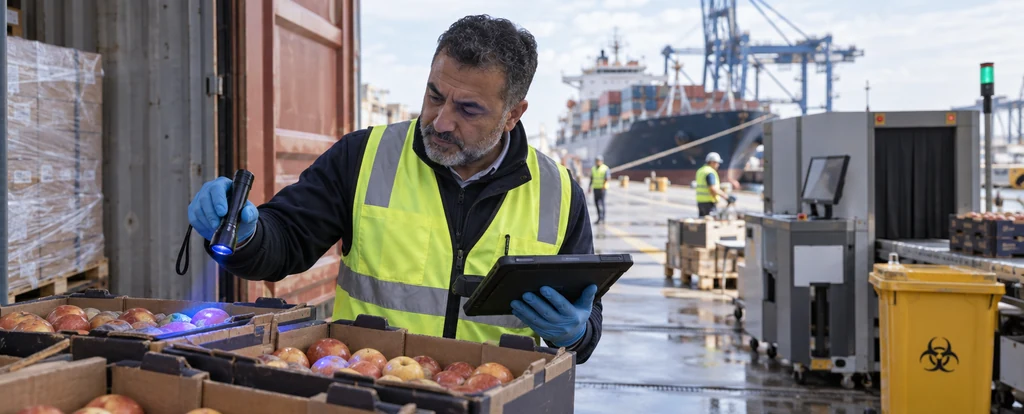
Biosecurity officers inspect cargo, mail, plants and animals to keep pests and diseases out of Australia and to contain the ones already here.
- Median salary*
- $91,000
3.5%vs last year, before tax
- People employed
- 1,100
0.0%vs last year
- Projected growth
- +5.4%
to 2035
- AI exposure*
- Moderate
- automation risk
- Average hours
- 41/wk
+1h vs all jobs
- Shortage status
- Not in shortage
national
Most biosecurity officers work for the federal Department of Agriculture, Fisheries and Forestry or for state and territory agencies, based at airports, ports, mail centres and regional field offices. The role is often confused with customs work, but the subject is different: customs officers assess duties and prohibited goods, while biosecurity officers deal with pests, weeds and diseases. A week can move between a shipping container, a laboratory sample and a stack of compliance reports.
How much do biosecurity officers earn?
The median full-time salary for a biosecurity officer is $91,000 per annum, before tax, up $19,400 since 2018.
Pay follows the public service classification you are appointed at, so your level and years of service matter more than negotiation. Federal and state agencies operate separate enterprise agreements, and airport and port rosters can attract shift loadings, overtime and penalty rates. Remote and regional postings sometimes carry additional allowances.
What does a biosecurity officer do day to day?
The list below is what fills most weeks; the exact mix shifts with seniority and whatever stage the current work is at.
- Inspecting incoming cargo, mail and baggage for prohibited plant and animal material, often while a shipment waits
- Sampling and testing produce, livestock and soil for pests and diseases, then tracking results through laboratory systems
- Issuing import permits, directions and compliance notices, and explaining the conditions to the people who have to meet them
- Investigating reported biosecurity breaches, gathering evidence and writing it up for enforcement action
- Advising importers, producers and travellers on biosecurity requirements
What skills do biosecurity officers need?
Employers look for regulatory compliance, field inspection and testing, data analysis, backed by Integrated Cargo System (ICS) fluency and strong attention to detail.
Specialist skills
- Regulatory compliance
- Field inspection and testing
- Data analysis
Software and tools
- Integrated Cargo System (ICS)
- ArcGIS
- Microsoft Excel
- Field inspection tablet apps
- Laboratory sample tracking systems
General skills
- Attention to detail
- Written communication
- Stakeholder management
- Problem solving
Is the job growing?
About 1,100 people work as biosecurity officers in Australia, and employment is projected to grow 5.4% over the decade to 2035. That's modest growth: demand is steady rather than booming.
How do you become a biosecurity officer?
Here's the path most biosecurity officers take, step by step.
- 1Finish Year 12 or an equivalent
Biology, chemistry or agricultural science subjects help, but they are not required everywhere. Entry expectations differ between the federal agency and the states and territories.
- 2Take a degree or a vocational pathway
A bachelor degree in agricultural science, environmental science or biology is common, and about 26% of people in the role hold one. Certificates and diplomas in agriculture, horticulture or conservation also lead into the work, particularly through state agency intakes.
- 3Apply through a government recruitment round
Federal and state agencies recruit in scheduled rounds and assess written applications and interviews, sometimes with a medical or fitness check. Federal roles also require a security clearance.
- 4Complete on-the-job accreditation
New officers are trained and accredited in inspection procedures, sampling and evidence handling before working unsupervised, which can take several months.
Ready to apply as a biosecurity officer?
Whether you're working toward becoming a biosecurity officer or already are one and want a hand with the next step (sharpening your resume for ATS screening, tightening your cover letter, or knowing what you'll actually be asked at interview), here are examples grounded in this specific role, not generic templates.
What jobs can a biosecurity officer move to?
Moving into Quality Manager typically comes with the biggest pay rise, worth $56,900 a year more on average.
| Move to | Typical pay change | Overlap | Retraining |
|---|---|---|---|
| Quality Manager Inspection and compliance experience carries into quality management, though formal quality systems study is needed.Known move | +$56,900 | 41% | reskill |
| Work Health and Safety Officer Compliance and inspection background suits work health and safety, with a short course adding the required credential. | +$27,800 | 63% | short course |
| Project Coordinator Regulatory and investigative experience supports project coordination, but formal project management study is required.Known move | +$19,800 | 20% | reskill |
| Customs Officer Biosecurity inspection and border compliance skills transfer directly to customs work, with little extra training required. | +$5,800 | 63% | minimal |
| Transport Operations Inspector Regulatory inspection skills transfer to transport operations, with a short course covering the transport rules. | −$2,600 | 59% | short course |
Moves are chosen from Jobs and Skills Australia's Data on Occupation Mobility, which follows income tax records between 2011-12 and 2020-21, together with entry requirements and skill overlap. A known move is one people were seen making in that data. Pay change compares median full-time pay for the two roles.
Who works as a biosecurity officer?
The typical biosecurity officer is 48 years old; 55% are men, 73% work full-time, and full-timers average 41 hours a week.
- 48
- Median age
- 45%
- Female share
- 73%
- Full-time
- +1h
- vs all-jobs avg
What's it like being a biosecurity officer?
The work runs on a mix of scheduled inspections and unplanned reports, so a day can be reshuffled when a detection comes in. Much of it is evidence: taking samples correctly, recording what was seen and writing it up so it holds if a case goes to court. People who enjoy the role tend to like the split between field and desk work, and are comfortable telling an importer or a traveller something they do not want to hear.
What people like
- Real variety across the week. One day is a container inspection at a port, the next is a surveillance round on farmland or a run of permit applications, which keeps the job from settling into a desk routine.
- Results that connect to something specific. A detection of fruit fly larvae or an infected plant sample has direct consequences for growers and for trade, and officers see that link in the outcome of their inspections.
- Powers set in legislation. Directions and notices issued under biosecurity law have to be followed, which gives the role an authority that advisory jobs do not carry.
- Specialist knowledge that accumulates. Plant, animal and cargo inspection each build their own expertise, and experienced officers become the people others call when a consignment is unclear.
What people find hard
- Difficult conversations at the counter. Travellers and importers sometimes push back when goods are seized or a shipment is held, and the officer is the one delivering that news.
- Investigations that move slowly. A case can run for months through evidence files and legal review before any outcome, which frustrates people who want matters closed quickly.
- Rosters and weather. Ports, airports and mail centres operate around the clock, so shifts include nights and weekends, and field surveillance happens in whatever conditions the day brings.
- The reporting load. Every inspection generates records, permits and case notes, and the administrative side can take as long as the inspection itself.
Based on our synthesis of professional-body surveys and public accounts of the role, not first-person verified reviews.
Which industries employ biosecurity officers?
Public Administration and Safety employs the largest share of biosecurity officers, followed by Agriculture, Forestry and Fishing.
Top employing industries
- 1Public Administration and Safety
- 2Agriculture, Forestry and Fishing
Ranked by employment share; the source doesn't publish an exact percentage per industry.
| Bachelor degree | 26.1% | |
|---|---|---|
| Year 12 or below | 22% | |
| Certificate III/IV | 20.4% | |
| Diploma / Advanced Diploma | 16.8% | |
| Postgraduate | 9.1% |
Will AI replace biosecurity officers?
AI reaches parts of this job rather than the whole of it. Image recognition and cargo risk profiling flag which consignments to examine, and document tools draft routine permits and notices, but the physical inspection, sampling and evidence work is done by hand under legislation. That keeps the exposure moderate, with the paperwork-heavy side changing fastest.
Share of typical working time by exposure level
- Inspecting cargo, mail and baggageX-ray and image recognition systems point to suspicious consignments, but an officer still opens, handles and decides what happens to what is inside.30%moderate
- Sampling and laboratory workCollecting samples, maintaining chain of custody and interpreting test results remain manual and tightly regulated.25%low
- Permits, notices and compliance recordsStandard conditions and notices are increasingly generated from templates and import data, though an officer still signs off on what they say.25%high
- Surveillance data, mapping and reportingMapping and spreadsheet analysis of detection records are partly automated, so the time goes into interpreting patterns and writing them up.20%high
Common questions about becoming a biosecurity officer
Straight answers to the questions people ask most.
How much do biosecurity officers earn?
Biosecurity officers earn a median of $91,000 per year before tax. The figure is for full-time workers and moves with the classification level you are appointed at, your years of service and any shift loadings.
How do you become a biosecurity officer?
Most entrants complete a science or agriculture degree or a relevant certificate or diploma, then apply in a government recruitment round. Federal and state agencies run their own intakes and require a police check, with a security clearance for Commonwealth roles.
Are biosecurity officers in demand?
Biosecurity officers are currently not in shortage. Employment is projected to grow 5.4% over the decade to 2035, and about 1,100 people work in the role, so openings tend to arrive in scheduled rounds rather than continuously.
Will AI replace biosecurity officers?
The desk side of the job is changing faster than the field side. Image recognition and cargo risk profiling now flag which consignments to examine and permit drafting is increasingly automated, while physical inspection, sampling and evidence gathering stay in human hands.
Where can biosecurity officers move next?
Customs officer is a close move, using the same border compliance skills and paying $5,800 more. Work health and safety officer pays $27,800 more and shares the inspection and compliance base, with a short course adding the required credential. Quality manager is a bigger step that needs formal quality systems study and pays $56,900 more.
Do you need a degree to be a biosecurity officer?
Not always. About 26% of people in the role hold a bachelor degree, and about 22% finished school at Year 12 or below, with vocational qualifications covering much of the rest.
Related roles
- Customs Officer
- Quality Manager
- Project Coordinator
- Work Health and Safety Officer
- Transport Operations Inspector
- Administration Officer
Not sure this is you? Take the career quiz and get a ranked shortlist of roles that fit how you like to work.