Delivery Driver
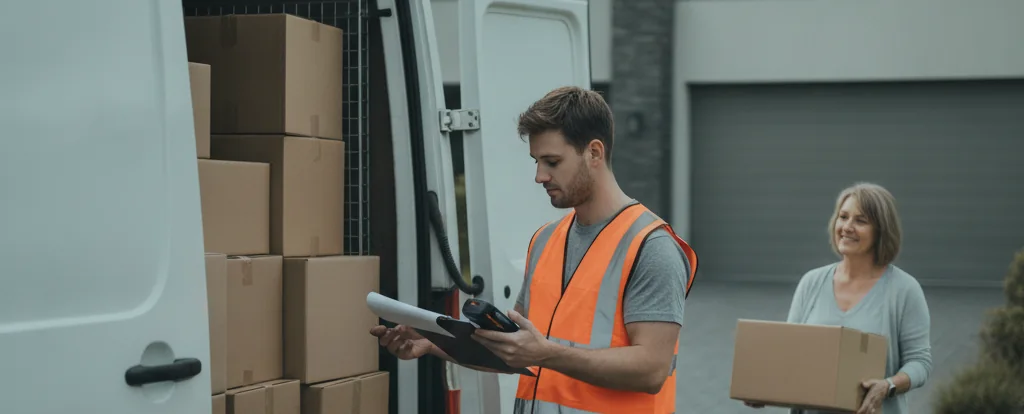
Delivery drivers load a van or small truck and work through a run of drops, getting parcels, groceries or meals to customers inside their delivery windows.
- Median salary
- $68,000
3.7%vs last year, before tax
- People employed
- 85,500
1.5%vs last year
- Projected growth
- +21.3%
to 2035
- AI exposure*
- Moderate
- automation risk
- Average hours
- 43/wk
+3h vs all jobs
- Shortage status
- Not in shortage
national
Delivery drivers start from a depot, warehouse or restaurant and cover a set run of addresses in a car, van or small truck. Delivery software builds the route and sets a time window for each drop, so the job is as much about keeping to a schedule as it is about driving. It is close to courier work, but delivery drivers more often run a fixed route for a retailer or logistics contractor rather than taking jobs one at a time through an app.
How much do delivery drivers earn?
The median full-time salary for a delivery driver is $68,000 per annum, before tax, up $14,500 since 2018.
How a driver is paid shapes the take-home figure as much as the hours do. Employees of large carriers and supermarkets are usually covered by an award or enterprise agreement with penalty rates for evenings and weekends, while owner-drivers and per-drop contractors are paid per parcel and carry their own fuel, insurance and maintenance. Vehicle class matters too, since a medium rigid run usually pays more than a car or van round.
What does a delivery driver do day to day?
The list below is what fills most weeks; the exact mix shifts with seniority and whatever stage the current work is at.
- Loading the van in the order the drops come off it, before the run starts
- Working through a list of drops against a clock, finding parking where there is any
- Getting a signature or photo proof at the door, sometimes after waiting for someone to answer
- Checking tyres, lights and load restraints before a full day on the road
- Calling customers to reroute or explain a delay when traffic puts the schedule behind
What skills do delivery drivers need?
Employers look for driving and transport operations, inventory management, backed by GPS/Navigation system fluency and strong customer service.
Specialist skills
- Driving and transport operations
- Inventory management
Software and tools
- GPS/Navigation system
- Delivery management software (e.g. Sennder, OneFleet)
- Mobile device/scanner
- Vehicle maintenance tools
General skills
- Customer service
- Attention to detail
- Problem solving
- Time and deadline management
- Safety and compliance awareness
Is the job growing?
About 85,500 people work as delivery drivers in Australia, and employment is projected to grow 21.3% over the decade to 2035. That's very strong growth. Few roles in Australia are expanding this fast, and it points to solid demand for years to come.
How do you become a delivery driver?
Here's the path most delivery drivers take, step by step.
- 1Hold a full car licence
Most delivery work uses a car, van or small truck under 4.5 tonnes, which a standard C class licence covers. Employers and their insurers usually want a year or two of driving history and a clean record, so a provisional licence is rarely enough on its own.
- 2Upgrade to a light or medium rigid licence
An LR or MR licence lets you drive heavier vans and small trucks and opens better-paid runs. It takes a knowledge test, a hazard perception test and a practical driving test, and most states set a minimum age and a period on your car licence before you can sit them.
- 3Arrange a police check and any site clearances
Parcel, grocery and pharmacy work usually needs a national police check, and some contracts add a working with children check or a food handling certificate. These are quick and inexpensive, and employers often arrange them.
- 4Apply to carriers, retailers or labour hire firms
There is no formal qualification for the job, and 52% of the people in it hold Year 12 or below as their highest level of study. Large carriers, supermarket online divisions and courier companies hire drivers directly, while labour hire firms place people into ongoing runs.
- 5Learn the run and the delivery software
New drivers usually start on an easier route and build up local knowledge of parking, loading zones and building access, while picking up the app that scans parcels and captures proof of delivery.
Ready to apply as a delivery driver?
Whether you're working toward becoming a delivery driver or already are one and want a hand with the next step (sharpening your resume for ATS screening, tightening your cover letter, or knowing what you'll actually be asked at interview), here are examples grounded in this specific role, not generic templates.
What jobs can a delivery driver move to?
Moving into Truck Driver typically comes with the biggest pay rise, worth $33,900 a year more on average.
| Move to | Typical pay change | Overlap | Retraining |
|---|---|---|---|
| Truck Driver Driving experience and route knowledge carry into heavier vehicle work, with a truck licence upgrade required.Known move | +$33,900 | 83% | short course |
| Bus Driver Driving experience and route discipline translate to passenger transport, with a bus licence and endorsement needed.Known move | +$25,300 | 44% | reskill |
| Courier Parcel and door-to-door delivery experience transfers directly into courier work, needing little more than local knowledge.Known move | +$10,200 | 83% | minimal |
| Forklift Operator Logistics experience helps in warehouse yards, though a forklift ticket and safety training are required.Known move | +$1,700 | 17% | reskill |
| Warehouse Storeperson Loading and dispatch experience suits warehouse work, though stock systems and forklift tickets need further training.Known move | +$1,100 | 33% | reskill |
Moves are chosen from Jobs and Skills Australia's Data on Occupation Mobility, which follows income tax records between 2011-12 and 2020-21, together with entry requirements and skill overlap. A known move is one people were seen making in that data. Pay change compares median full-time pay for the two roles.
Who works as a delivery driver?
The typical delivery driver is 38 years old; 85% are men, 51% work full-time, and full-timers average 43 hours a week.
- 38
- Median age
- 15%
- Female share
- 51%
- Full-time
- +3h
- vs all-jobs avg
What's it like being a delivery driver?
The work has a steady rhythm: load, drive, deliver, repeat until the run is clear. Most of it happens alone, and the pressure comes from things the driver cannot control, so it suits people who stay calm and work around small problems without much fuss. The trade-off is physical wear from constant stops and getting in and out of the vehicle.
What people like
- The day has a clear shape. You load, drive and deliver, and the run is finished when the last parcel is off the van. That suits people who like completing a defined piece of work each day.
- You work on your own. Most of the shift is spent alone in the vehicle, with a dispatcher at the end of the phone rather than a supervisor watching over your shoulder.
- The route keeps changing. Even a regular run shifts with traffic, weather, roadworks and what is on the list that morning, so the day rarely plays out exactly as planned.
- You can start without a qualification. A licence, a police check and a clean record are most of what is needed, which makes it a practical first job or a change of direction.
What people find hard
- The clock is not yours to control. A blocked street, a full loading zone or a customer who is not home can wipe out the buffer you had for the next four drops, and the delivery window does not move.
- It is hard on the body. A driver climbs in and out of the vehicle dozens of times a shift and carries boxes, crates and the occasional heavy item to a door or up a set of stairs.
- The weather comes with the job. The run goes ahead in rain, heat and hail, and the cab is the only real shelter between stops.
- Pay arrangements cut both ways. Owner-drivers and per-drop contractors cover fuel, insurance, registration and repairs themselves, so a rate that looks generous per parcel can shrink over a full year.
Based on our synthesis of professional-body surveys and public accounts of the role, not first-person verified reviews.
Which industries employ delivery drivers?
Transport, Postal and Warehousing employs the largest share of delivery drivers, followed by Accommodation and Food Services.
Top employing industries
- 1Transport, Postal and Warehousing
- 2Accommodation and Food Services
- 3Retail Trade
Ranked by employment share; the source doesn't publish an exact percentage per industry.
| Year 12 or below | 52.2% | |
|---|---|---|
| Certificate III/IV | 15% | |
| Bachelor degree | 12.7% | |
| Diploma / Advanced Diploma | 8.6% | |
| Postgraduate | 6.7% |
Will AI replace delivery drivers?
Delivery driving is moderately exposed to AI, not because the driving can be automated, but because the planning and paperwork around it already are. Dispatch systems build the route, order the drops and recalculate when a run falls behind, while delivery apps capture signatures and photos with no input from the driver. A person still has to read the road, find the door and deal with whatever is waiting there.
Share of typical working time by exposure level
- Driving the vehicle through trafficReading the road, judging a gap and deciding whether a drop is quicker on foot than by van all stay with the driver.35%low
- Loading and unloading at the kerbLarge depots can automate sorting and dock loading, but carrying an awkward or heavy parcel from the van to a front door does not change.25%low
- Planning the route and sequencing dropsDispatch software orders the run and reorders it when a driver falls behind, so most of the sequence arrives as a list rather than something the driver works out.20%high
- Proof of delivery and customer contactPhoto and signature capture is largely automatic, though explaining a missed drop or agreeing on a safe place still needs the driver.20%moderate
Moves least exposed to AI
These career moves from delivery driver work are rated low for AI exposure:
- Forklift Operator
Some skill overlap (17%), reskill to get there, and a low automation-risk profile.
Common questions about becoming a delivery driver
Straight answers to the questions people ask most.
How much do delivery drivers earn?
Delivery drivers earn a median of $68,000 per year before tax. That covers full-time workers across very different arrangements, from hourly employees to owner-drivers paid per parcel, so treat it as a starting point rather than a set rate.
How do you become a delivery driver?
Start with a full car licence, a police check and a clean driving record, then apply to carriers, retailers or labour hire firms, since no formal qualification is required. A light or medium rigid licence opens heavier vehicles and better-paid runs. Most new drivers learn the delivery software and the local area on the job.
Are delivery drivers in demand in Australia?
Delivery drivers are currently not in shortage, and employment is projected to grow 21.3% over the decade to 2035. The projection covers a decade, so the work actually available in any one year moves with retail and parcel volumes, and openings turn over quickly across many employers.
Will AI replace delivery drivers?
Parts of the job are already automated: routing software sequences the drops and recalculates when a run falls behind, and apps capture signatures and photos without help. Driving, loading at the kerb and the conversation at the door are much harder to automate, and the last few metres to a front door remain a person's problem. Expect planning and paperwork to keep shifting to software rather than the driving itself.
What can a delivery driver move into?
Courier work uses the same parcel handling and local route knowledge, and the median pay difference is $10,200 more. A truck licence upgrade opens heavier vehicle work at $33,900 more, and a bus licence leads into passenger transport at $25,300 more, though both need extra endorsements. Some drivers also go out on their own as owner-drivers, contracting a van to a courier or logistics company, which is often where earnings grow.
How many hours do delivery drivers work?
Full-time drivers average 43 hours a week, and 51% of the workforce is full time. Shifts often begin early for depot loading, and grocery, supermarket and meal delivery includes evening and weekend work.
Related roles
Not sure this is you? Take the career quiz and get a ranked shortlist of roles that fit how you like to work.