Earthmoving Plant Operator
Earthmoving plant operators drive excavators, dozers and loaders to move soil and rock on civil, building and mining sites, preparing the ground for roads, structures and resource projects.
- Median salary*
- $103,000
4.4%vs last year, before tax
- People employed
- 3,700
0.0%vs last year
- Projected growth
- +4.3%
to 2035
- AI exposure*
- Moderate
- automation risk
- Average hours
- 49/wk
+9h vs all jobs
- Shortage status
- In shortage
national
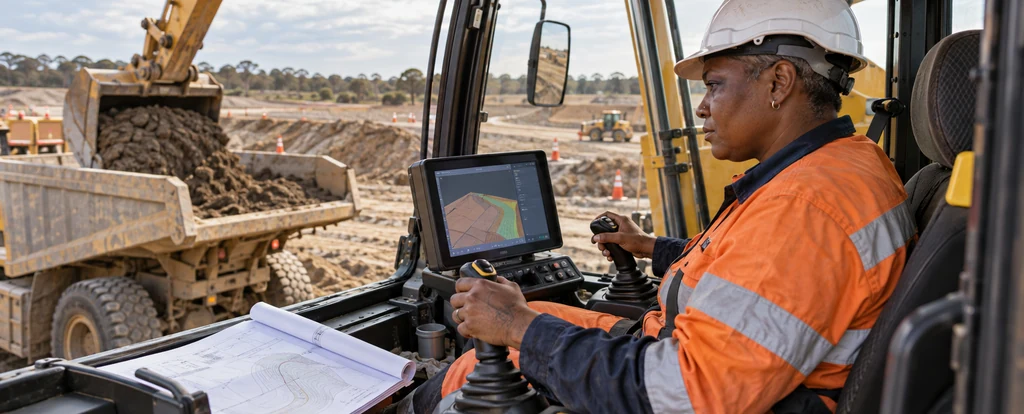
Earthmoving plant operators run the machines that shift ground on civil, building and mining sites, including excavators, bulldozers, front-end loaders, graders and skid steers. They cut, fill, trench and stockpile material to the levels set out in site plans, working alongside surveyors, labourers and other trades. The title covers operators who work across several machine types, which is what separates it from specialist roles such as excavator operator or grader operator.
How much do earthmoving plant operators earn?
The median full-time salary for an earthmoving plant operator is $103,000 per annum, before tax, up $21,800 since 2018.
Pay moves with the sector and the roster: civil projects under enterprise agreements pay differently from mining work, where site allowances and camp rosters add to the base. Overtime, night shift and the size of the machine you are signed off on all change the figure, and operators who contract their own machine set their own rates.
What does an earthmoving plant operator do day to day?
The list below is what fills most weeks; the exact mix shifts with seniority and whatever stage the current work is at.
- Operating excavators, dozers, loaders and graders to shift soil, rock and debris
- Reading site plans, levels and pegging, then cutting and filling to specification
- Running pre-start checks and routine servicing on plant and attachments
- Loading trucks and stockpiling or spreading material across the site
- Working around underground services and other workers under spotter direction
What skills do earthmoving plant operators need?
Employers look for plant and equipment operation, worksite safety management, reading plans and specifications, backed by Trimble Earthworks fluency and strong safety and compliance awareness.
Specialist skills
- Plant and equipment operation
- Worksite safety management
- Reading plans and specifications
Software and tools
- Trimble Earthworks
- Topcon 3D-MC
- Leica iCON
- Cat GRADE with 3D
- Sitech machine control
General skills
- Safety and compliance awareness
- Physical stamina and dexterity
- Attention to detail
- Problem solving
Is the job growing?
About 3,700 people work as earthmoving plant operators in Australia, and employment is projected to grow 4.3% over the decade to 2035. That's modest growth: demand is steady rather than booming.
How do you become an earthmoving plant operator?
Here's the path most earthmoving plant operators take, step by step.
- 1Get your construction induction card
A White Card is required before you can set foot on a construction site in any state, and it is usually the first thing an employer checks. The course takes about a day.
- 2Hold a driver licence, and often a heavy vehicle licence
You need at least a car licence to get to site. An HR or HC licence helps if the job involves moving or towing plant between jobs, and some employers ask for it.
- 3Complete plant operation units or a civil construction traineeship
A Certificate III in Civil Construction (Plant Operations) covers machine operation, site plans and safety, and single machines can be learned through short RII courses. A traineeship is the most common way in because you earn while you learn.
- 4Build verified competency on the machines employers use
Supervisors usually ask for a verification of competency for each machine type, assessed on site rather than in a classroom. Being signed off on excavator, loader and dozer work makes you far more employable than holding one machine.
- 5Add machine control experience
Learning GPS and 3D machine control systems such as Trimble or Topcon makes you more useful on civil projects where grade is set digitally rather than with pegs.
Ready to apply as an earthmoving plant operator?
Whether you're working toward becoming an earthmoving plant operator or already are one and want a hand with the next step (sharpening your resume for ATS screening, tightening your cover letter, or knowing what you'll actually be asked at interview), here are examples grounded in this specific role, not generic templates.
What jobs can an earthmoving plant operator move to?
Moving into Driller typically comes with the biggest pay rise, worth $48,200 a year more on average.
| Move to | Typical pay change | Overlap | Retraining |
|---|---|---|---|
| Driller Operators move into drilling, applying heavy machinery skills to operate drill rigs on mining and civil projects.Known move | +$48,200 | 53% | short course |
| Miner Operators move into mining roles, using heavy machinery experience on resource sites and completing mining inductions.Known move | +$48,200 | 36% | reskill |
| Bulldozer Operator Operators specialise as bulldozer operators, applying earthmoving skills to clearing, pushing and bulk levelling on civil and mining sites. | +$3,600 | 75% | minimal |
| Grader Operator Operators move into grader operating, using their earthmoving experience for final trim, road grading and site levelling.Known move | −$1,600 | 79% | minimal |
| Excavator Operator Operators specialise as excavator operators, applying their machine control skills to digging, trenching and detailed excavation work.Known move | −$4,200 | 58% | short course |
Moves are chosen from Jobs and Skills Australia's Data on Occupation Mobility, which follows income tax records between 2011-12 and 2020-21, together with entry requirements and skill overlap. A known move is one people were seen making in that data. Pay change compares median full-time pay for the two roles.
Who works as an earthmoving plant operator?
The typical earthmoving plant operator is 49 years old; 97% are men, 90% work full-time, and full-timers average 49 hours a week.
- 49
- Median age
- 3%
- Female share
- 90%
- Full-time
- +9h
- vs all-jobs avg
What's it like being an earthmoving plant operator?
The job has a rhythm set by the site: a run of long shifts, then a break, with the pace changing between bulk earthworks and final trim. Most of the pressure comes from grade tolerance, the machines working around you and the cost of standing still, since idle plant is expensive. Operators who stay with it tend to like the machine itself, the visible progress of a day's work and the fact that a good operator is judged by what they leave behind.
What people like
- The progress is visible. By the end of a shift the ground has changed shape, and you can see exactly what you did.
- The machine is the craft. Running a large machine smoothly and to tolerance takes years to learn, and other operators notice when someone has it.
- Working outdoors, away from a desk. The cab is your workspace, the weather is part of the job, and no two sites are laid out the same.
- Small crews and clear roles. You usually work with the same few people, and everyone knows what their job is.
What people find hard
- Long days and time away from home. Full-time operators average 49 hours a week, and mining and remote civil jobs often mean camp rosters and a flight or a long drive to work.
- Weather, dust and noise. You work through heat, rain and dust, and the cab is loud and vibrating for most of the shift.
- Waiting on someone else. When a surveyor, service locator or concrete pour holds up the site, the machine sits still, and idle plant is the thing a supervisor notices most.
- Tolerance and rework. Cutting to a tight grade on final trim can mean going back over the same patch, which is hard on the machine and on your patience.
Based on our synthesis of professional-body surveys and public accounts of the role, not first-person verified reviews.
Which industries employ earthmoving plant operators?
Construction employs the largest share of earthmoving plant operators, followed by Public Administration and Safety.
Top employing industries
- 1Construction
- 2Public Administration and Safety
Ranked by employment share; the source doesn't publish an exact percentage per industry.
| Year 12 or below | 46.3% | |
|---|---|---|
| Certificate III/IV | 40.8% | |
| Diploma / Advanced Diploma | 5.5% | |
| Bachelor degree | 2.7% | |
| Postgraduate | 0.6% |
Will AI replace earthmoving plant operators?
This is a moderately exposed job. Machine control systems such as Trimble Earthworks, Topcon 3D-MC and Cat GRADE now hold grade automatically on many civil sites, which removes a lot of the checking and reduces the skill needed for bulk earthworks. The operator still decides how to work around services, other trades and changing ground, and an excavator on a tight suburban block is a long way from running itself.
Share of typical working time by exposure level
- Cutting and filling to design levelsOn sites running 3D machine control, the system sets the blade or bucket height for you, so you watch the screen and the ground rather than the pegs.30%high
- Operating the machine around the siteAutomation handles the grade, but choosing where to dig, tracking a machine through soft ground and loading a truck efficiently are still decisions you make.30%moderate
- Working around services and other workersSpotting underground services and keeping clear of labourers, surveyors and trucks relies on your judgement and line of sight, which sensors assist but do not replace.25%low
- Pre-start checks and routine servicingWalk-around inspections, greasing, checking tracks and topping up fluids are hands-on, though some machines now log faults and hours automatically.15%low
Moves least exposed to AI
These career moves from earthmoving plant operator work are rated low for AI exposure:
- Bulldozer Operator
High skill overlap (75%), little retraining to get there, and a low automation-risk profile.
Common questions about becoming an earthmoving plant operator
Straight answers to the questions people ask most.
How much do earthmoving plant operators earn?
$103,000 per year before tax for full-time operators. The sector you work in and the shift roster you take on move that figure as much as the machines you are qualified to run.
How do you become an earthmoving plant operator?
The usual route is a White Card, a driver licence, then a civil construction traineeship or short RII courses for each machine, building verified competency on site. Many operators start as labourers or offsiders and move into the seat once a supervisor has assessed them.
Are earthmoving plant operators in demand?
Earthmoving plant operators are currently in shortage nationally, and employment is projected to grow 4.3% over the decade to 2035. Hiring follows civil infrastructure and resources projects, so being willing to travel or work on remote sites widens what is available to you.
Will AI or automation replace earthmoving plant operators?
It is changing how the machine is driven rather than removing the operator. GPS and 3D machine control now set grade automatically on many civil sites, which takes much of the checking out of bulk earthworks, while site conditions, services and safety still depend on the person in the seat.
What can earthmoving plant operators move into?
Specialising is the usual move: grader operating uses much of the same skill set, though the median is $1,600 less, while the median for a driller is $48,200 more. Experienced operators also buy their own machine and contract their services to earthmoving and civil companies on a project basis, which is often where earnings grow.
Is earthmoving plant operation physically demanding?
It is less about lifting and more about the body's response to sitting, vibration and long shifts in a cab. Pre-start checks, greasing and track maintenance still involve hands-on work, and the heat, dust and noise of a site add to the day.
Specialisations
Related roles
Not sure this is you? Take the career quiz and get a ranked shortlist of roles that fit how you like to work.