Truck Driver
Truck drivers hold a heavy vehicle licence and move freight between depots, warehouses and customers, often on long regional or interstate runs.
- Median salary
- $101,900
4.1%vs last year, before tax
- People employed
- 195,800
0.4%vs last year
- Projected growth
- +4%
to 2035
- AI exposure*
- Moderate
- automation risk
- Average hours
- 49/wk
+9h vs all jobs
- Shortage status
- In shortage
national
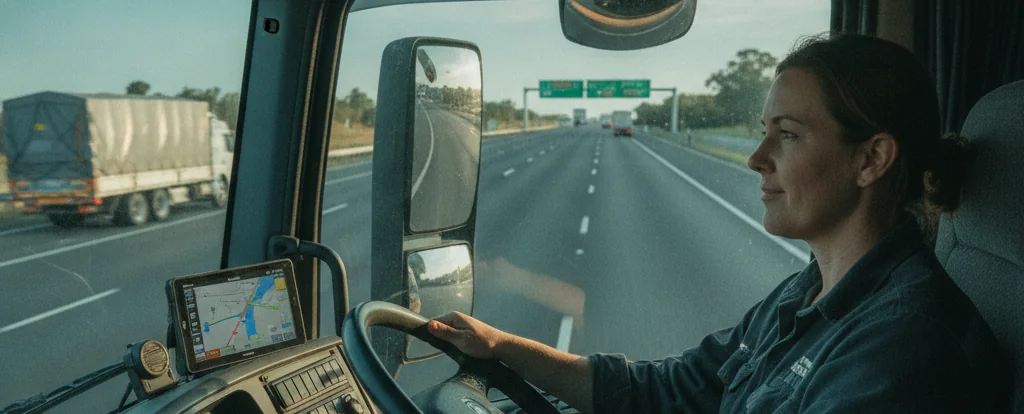
Truck drivers haul freight in rigid or articulated trucks, often over long distances between capital cities or regional centres. Most work for transport and logistics companies, though some own and operate their own truck under contract to a freight operator. The role differs from a delivery driver's, which usually involves a smaller vehicle on local runs rather than long-haul or interstate work.
How much do truck drivers earn?
The median full-time salary for a truck driver is $101,900 per annum, before tax, up $21,300 since 2018.
The award or enterprise agreement covering your employer sets a floor, and long-haul, night and weekend runs usually carry loadings on top of it. The licence class matters too, with multi-combination work paying more than a rigid truck on local runs. Owner-drivers earn by the load or the kilometre rather than by the hour, which can pay better but leaves fuel, maintenance and registration with them.
What does a truck driver do day to day?
The list below is what fills most weeks; the exact mix shifts with seniority and whatever stage the current work is at.
- Running through a pre-trip inspection and the paperwork before pulling out of the yard
- Spending long stretches alone behind the wheel on regional or interstate runs, watching driving hours and rest breaks closely
- Loading, securing and weighing cargo so nothing shifts or breaks the rules on the road
- Coordinating with dispatch and customers by phone to adjust routes, delays and delivery windows
- Managing waits at loading docks and distribution centres, where a delay pushes the rest of the day's schedule
What skills do truck drivers need?
Employers look for driving and transport operations, inventory management, backed by Tachograph and electronic logbook systems fluency and strong attention to detail.
Specialist skills
- Driving and transport operations
- Inventory management
Software and tools
- Tachograph and electronic logbook systems
- GPS navigation and route planning software
- Two-way radio and mobile communication
- Vehicle maintenance diagnostic tools
- Weighbridge and load-securing equipment
General skills
- Attention to detail
- Time and deadline management
- Safety and compliance awareness
- Problem solving
- Written communication
Is the job growing?
About 195,800 people work as truck drivers in Australia, and employment is projected to grow 4% over the decade to 2035. That's modest growth: demand is steady rather than booming.
How do you become a truck driver?
Here's the path most truck drivers take, step by step.
- 1Start with a car licence
You need to hold a car licence before you can upgrade, and most states require a set period on the lower class before each step up through medium rigid, heavy rigid, heavy combination and multi-combination.
- 2Complete heavy vehicle training
Training with a registered provider covers vehicle control, load limits and pre-trip checks, and you then pass a practical assessment to have the new class added to your licence.
- 3Pass the medical and background checks
Heavy vehicle licences require a medical and eyesight assessment, with more frequent checks as you get older, and employers usually ask for a national police check as well.
- 4Build on-road experience
Many drivers start on local delivery runs before moving to long-haul, which builds the dock, loading and paperwork experience an employer wants to see before handing over an interstate run.
- 5Add the qualifications the work needs
A dangerous goods licence, forklift licence or White Card opens up particular freight and sites, and a Certificate III in Driving Operations (TLI31222) is recognised by some employers and insurers.
Ready to apply as a truck driver?
Whether you're working toward becoming a truck driver or already are one and want a hand with the next step (sharpening your resume for ATS screening, tightening your cover letter, or knowing what you'll actually be asked at interview), here are examples grounded in this specific role, not generic templates.
What jobs can a truck driver move to?
Moving into Miner typically comes with the biggest pay rise, worth $49,300 a year more on average.
| Move to | Typical pay change | Overlap | Retraining |
|---|---|---|---|
| Miner Truck drivers bring heavy vehicle operation to mining haul trucks, but need site induction and safety training.Known move | +$49,300 | 8% | short course |
| Transport Manager Truck drivers bring route and freight knowledge to transport management, but need study in logistics and business management.Known move | +$36,000 | 8% | reskill |
| Earthmoving Plant Operator Truck drivers bring heavy vehicle control and site awareness to plant operation, but need plant operator certification.Known move | +$1,100 | 14% | reskill |
| Bus Driver Truck drivers bring heavy vehicle skills and road experience to bus driving, but need a passenger transport endorsement.Known move | −$8,600 | 44% | short course |
| Waste Collector Truck drivers bring heavy vehicle skills to waste collection, but need training in waste vehicle operation.Known move | −$25,900 | 19% | short course |
Moves are chosen from Jobs and Skills Australia's Data on Occupation Mobility, which follows income tax records between 2011-12 and 2020-21, together with entry requirements and skill overlap. A known move is one people were seen making in that data. Pay change compares median full-time pay for the two roles.
Who works as a truck driver?
The typical truck driver is 45 years old; 94% are men, 87% work full-time, and full-timers average 49 hours a week.
- 45
- Median age
- 6%
- Female share
- 87%
- Full-time
- +9h
- vs all-jobs avg
What's it like being a truck driver?
The day runs to a schedule that rarely belongs to the driver, with early starts, tight delivery windows and hours at a loading dock that nobody can hurry along. Most of the work is solo, which suits people who like their own company and a clear task, but it also means long stretches away from home on interstate runs. Drivers who stay with it tend to be comfortable with routine, careful about the rules and able to keep going through a slow afternoon.
What people like
- Your own cab and your own routine. Once the load is on, much of the day is yours to manage, with nobody looking over your shoulder between stops.
- A clear result at the end of the run. The freight either arrives on time or it doesn't, and the paperwork at the gate closes the job out.
- You see the country. Long-haul runs cross ground most people only fly over, and repeating a route builds a mental map of depots, roadhouses and the best places to pull up.
- Skills that carry across industries. Heavy vehicle experience is wanted in freight, construction, waste and mining, and it is the usual starting point for drivers who later buy their own truck.
What people find hard
- Long days and time away from home. Interstate runs can keep you away for several nights at a time, which is hard on family life and on any regular commitment outside work.
- Waiting you can't control. A backed-up dock or a late unloading slot can add hours to a day and push you into a compulsory rest break before you have finished.
- The physical toll of the seat. Hours behind the wheel are hard on your back, hips and circulation, and staying alert late in a shift takes deliberate effort.
- Rules and paperwork that change at the border. Work diary requirements, load limits and road rules differ between states, and a mistake in the wrong jurisdiction costs money.
Based on our synthesis of professional-body surveys and public accounts of the role, not first-person verified reviews.
Which industries employ truck drivers?
Transport, Postal and Warehousing employs the largest share of truck drivers, followed by Construction.
Top employing industries
- 1Transport, Postal and Warehousing
- 2Construction
- 3Electricity, Gas, Water and Waste Services
Ranked by employment share; the source doesn't publish an exact percentage per industry.
| Year 12 or below | 59.2% | |
|---|---|---|
| Certificate III/IV | 24.8% | |
| Diploma / Advanced Diploma | 6% | |
| Bachelor degree | 3.8% | |
| Postgraduate | 1.3% |
Will AI replace truck drivers?
Parts of this job are already handled by software, but the driving itself is not one of them. Dispatch systems, electronic work diaries and telematics now plan routes, log hours and flag fuel use, which takes paperwork off a driver's plate while leaving the physical work, the road judgement and the contact with customers in place.
Share of typical working time by exposure level
- Driving and handling the truck in trafficSteering, braking and judging gaps still need a person at the wheel, and highway automation remains limited to driver-assist features that monitor lane position and following distance.45%low
- Work diaries, hours and compliance recordsElectronic work diaries and telematics log driving hours automatically and warn before a breach, replacing much of the paper diary work drivers used to do.20%high
- Pre-trip checks, load securing and dock workWalking the truck, checking tyres and straps, and reversing into a tight dock are hands-on tasks that no system currently performs.20%low
- Route planning and load schedulingDispatch and GPS software work out the most efficient route and flag delays, though drivers still adjust on the ground when a dock is closed or a road is cut.15%moderate
Common questions about becoming a truck driver
Straight answers to the questions people ask most.
How much do truck drivers earn?
Full-time truck drivers earn a median of $101,900 per year before tax. What you actually take home depends on the licence class you hold, the freight you carry and whether you are paid by the hour or by the load, with long-haul, night and weekend work paying more than local daytime runs.
How do you become a truck driver?
You start with a car licence, then upgrade through the heavy vehicle classes by training with a registered provider and passing a practical assessment. Because most employers want on-road experience, local delivery work or a stint as a truck offsider is a common way in.
Are truck drivers in demand?
Truck drivers are currently in shortage nationally, and employment is projected to grow 4% over the decade to 2035. Freight, construction and waste all draw on the same licence classes, so the class you hold decides which of those jobs you can apply for.
Will AI replace truck drivers?
The driving itself is difficult to automate, because a truck still has to be loaded, secured, reversed into a tight dock and unloaded by someone. What is moving faster is the administration, with electronic work diaries, telematics and dispatch software handling hours, routes and fuel data that drivers once tracked on paper.
What can truck drivers move into later?
Many experienced drivers buy their own truck and work as owner-drivers under contract to a freight company, which is often where earnings grow. Others move into transport management, which needs study in logistics and business management, or across to mining haul trucks, where pay is $49,300 more. Bus driving uses the same heavy vehicle skills but pays $8,600 less.
Is truck driving a good fit for someone who likes working alone?
Much of the day is solo, which suits drivers who are happy with their own company and a routine they set themselves. It is harder if you want company through the day or need to be home every night, since that rules out most long-haul work.
Related roles
Not sure this is you? Take the career quiz and get a ranked shortlist of roles that fit how you like to work.