Driving Examiner
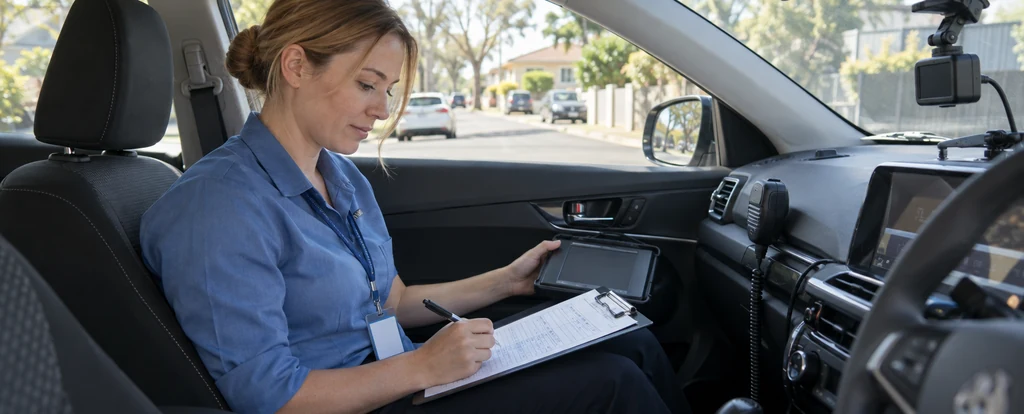
Driving examiners sit in the passenger seat while learner and experienced drivers take their licence test, and decide whether the drive meets the standard.
- Median salary*
- $72,800
3.6%vs last year, before tax
- People employed
- 1,600
0.0%vs last year
- Projected growth
- +7%
to 2035
- AI exposure*
- Moderate
- automation risk
- Average hours
- 39/wk
−1h vs all jobs
- Shortage status
- Not in shortage
national
Most driving examiners work for a state or territory licensing authority, either from a testing centre or in a marked vehicle on the roads around it, and some states contract the work to private providers. It is assessment rather than teaching: a driving instructor coaches someone towards the test, while an examiner marks the same drive against a fixed checklist and signs off the result. The day is a run of short appointments, each with a different candidate and a different set of nerves.
How much do driving examiners earn?
The median full-time salary for a driving examiner is $72,800 per annum, before tax, up $15,500 since 2018.
Pay comes from the state or territory authority's classification structure or enterprise agreement, so the same job can pay differently depending on where you work and who employs you. Testing heavy vehicle or motorcycle classes, shift rosters, weekend appointments and penalty rates all push it up, and private contractors set their own rates.
What does a driving examiner do day to day?
The list below is what fills most weeks; the exact mix shifts with seniority and whatever stage the current work is at.
- Riding along on practical tests through suburban streets, main roads and car parks
- Marking vehicle control, observation and road rule compliance against the test checklist
- Settling a nervous candidate enough to see how they really drive, without coaching them through a mistake
- Checking identity documents and confirming the candidate holds the right class of licence for the test
- Recording the result on the licensing database and writing up any safety concerns or irregularities
What skills do driving examiners need?
Employers look for regulatory compliance, driving and transport operations, backed by Licensing authority database fluency and strong attention to detail.
Specialist skills
- Regulatory compliance
- Driving and transport operations
Software and tools
- Licensing authority database
- Mobile test assessment app
- In-vehicle camera system
- Two-way radio
- Digital signature pad
General skills
- Attention to detail
- Written communication
- Customer service
- Safety and compliance awareness
- Problem solving
Is the job growing?
About 1,600 people work as driving examiners in Australia, and employment is projected to grow 7% over the decade to 2035. That's modest growth: demand is steady rather than booming.
How do you become a driving examiner?
Here's the path most driving examiners take, step by step.
- 1Hold a full licence in the class you want to test
Authorities generally want a full, unrestricted licence for the relevant class, held for several years, with a clean driving record. Your own history on the road is part of the application, and rules differ between states.
- 2Apply to the state or territory licensing authority
Recruitment runs through the authority itself or the contractor delivering testing in that state, and usually includes a police check, a working with children check where testing involves younger candidates, a medical and a review of your driving record.
- 3Complete the examiner training program
Assessment method is taught in-house: the test routes, the marking criteria, how to conduct yourself with candidates and a period of supervised tests before you assess on your own. Some entrants bring a certificate IV in transport and logistics or a background in driver training, but it is not the usual way in.
- 4Add endorsements for other licence classes
Once you are assessing car tests, heavy vehicle, motorcycle and heavy combination endorsements let you test more classes. Extra classes widen the roster you can be assigned to and generally lift your classification.
Ready to apply as a driving examiner?
Whether you're working toward becoming a driving examiner or already are one and want a hand with the next step (sharpening your resume for ATS screening, tightening your cover letter, or knowing what you'll actually be asked at interview), here are examples grounded in this specific role, not generic templates.
What jobs can a driving examiner move to?
Moving into Driving Instructor typically comes with the biggest pay rise, worth $42,800 a year more on average.
| Move to | Typical pay change | Overlap | Retraining |
|---|---|---|---|
| Driving Instructor Driving examiners bring road rule expertise and assessment experience; instructor work needs a certificate in driving instruction. | +$42,800 | 33% | reskill |
| Truck Driver Driving examiners bring road rules knowledge and safe driving habits; truck driving needs heavy vehicle licensing and load restraint training. | +$29,100 | 47% | short course |
| Bus Driver Driving examiners bring road safety knowledge and vehicle operation skills; bus driving needs a heavy vehicle licence and passenger endorsement. | +$20,500 | 53% | short course |
| Sheriff's Officer Driving examiners bring compliance and public contact experience; sheriff duties require court and legal procedure training. | +$18,200 | 57% | short course |
| Council Ranger Driving examiners bring regulatory knowledge and public interaction skills; ranger roles need local law enforcement and animal handling training. | +$2,600 | 57% | short course |
Moves are chosen from Jobs and Skills Australia's Data on Occupation Mobility, which follows income tax records between 2011-12 and 2020-21, together with entry requirements and skill overlap. A known move is one people were seen making in that data. Pay change compares median full-time pay for the two roles.
Who works as a driving examiner?
The typical driving examiner is 44 years old; 62% are women, 69% work full-time, and full-timers average 39 hours a week.
- 44
- Median age
- 62%
- Female share
- 69%
- Full-time
- −1h
- vs all-jobs avg
What's it like being a driving examiner?
The rhythm comes from appointments rather than projects: each test is a short, self-contained drive with a clear end point, and the scoring is the same every time. The pressure sits in the passenger seat, where you are managing a nervous person and a live vehicle at once while staying consistent with every candidate before them. It suits someone who likes road rules, is comfortable delivering an unwelcome answer plainly, and does not need variety in their scenery.
What people like
- Every test has a definite answer. The criteria are fixed and the drive ends, so you know where a candidate stands by the time you pull back into the centre.
- The explanation is often the useful part. Candidates usually want to know exactly what cost them the pass, and a specific answer about one habit or one intersection is something they can act on.
- The hours stay at work. Testing runs to appointments, so the day ends with the last candidate and the paperwork that goes with them.
- You spend the day on the road without driving every kilometre yourself. You are watching how someone reads traffic, checks mirrors and handles a merge, which is a different kind of attention from steering the car.
What people find hard
- Failing someone who drove well apart from one mistake. A single unsafe habit can end an otherwise solid test, and you are the one who delivers that result in the car park.
- Nerves are pointed at you. Some candidates arrive wound up and a few take a fail personally, so the same sentence has to land the same way with everyone.
- The same routes, day after day. Knowing each roundabout and merge intimately is what makes the assessment consistent, and it is also what makes the job repetitive.
- Keeping current with rule and standard changes. Road rule changes, new vehicle technology and updated assessment criteria arrive as extra training and refreshers on top of a full testing schedule.
Based on our synthesis of professional-body surveys and public accounts of the role, not first-person verified reviews.
Which industries employ driving examiners?
Public Administration and Safety employs the largest share of driving examiners, followed by Transport, Postal and Warehousing.
Top employing industries
- 1Public Administration and Safety
- 2Transport, Postal and Warehousing
- 3Retail Trade
Ranked by employment share; the source doesn't publish an exact percentage per industry.
| Year 12 or below | 37.3% | |
|---|---|---|
| Certificate III/IV | 25.3% | |
| Diploma / Advanced Diploma | 14.4% | |
| Bachelor degree | 12.9% | |
| Postgraduate | 6% |
Will AI replace driving examiners?
Exposure is moderate: the administrative half of the job is already partly automated, while the assessment itself still needs a person in the car. Test assessment apps and in-vehicle cameras now log speed, lane position and observation checks, which takes some of the record keeping and evidence gathering off the examiner. Deciding whether a drive is safe, and handling the person behind the wheel while you do it, remains manual work.
Share of typical working time by exposure level
- Scoring the drive on the test routeCamera systems can flag speeding or a missed head check, but judging whether a candidate read a busy intersection safely is still the examiner's call.40%moderate
- Recording the result and completing the paperworkResults captured on a mobile assessment app and pushed straight to the licensing database have already replaced much of the paper marking sheet.25%high
- Managing a nervous candidate in the carGiving clear directions to someone who is tense, and keeping the test fair when they make a mistake, is not something an app does.20%low
- Checking identity, licence eligibility and the vehicleDigital licence lookups and automated document checks speed this up, though an examiner still confirms the vehicle is registered and roadworthy before getting in.15%moderate
Moves least exposed to AI
These career moves from driving examiner work are rated low for AI exposure:
- Driving Instructor
Some skill overlap (33%), reskill to get there, and a low automation-risk profile.
Common questions about becoming a driving examiner
Straight answers to the questions people ask most.
How much does a driving examiner earn?
A driving examiner earns $72,800 per year before tax in full-time work. Pay follows the state or territory authority's classification and enterprise agreement, so it varies between jurisdictions and rises with additional licence class endorsements and shift penalties.
How do I become a driving examiner?
You apply to the licensing authority or contractor that runs testing in your state, usually with a full licence held for several years and a clean driving record. From there you pass the checks and complete the authority's in-house training, including supervised tests, before assessing candidates on your own.
Are driving examiners in demand?
Driving examiners are currently not in shortage, and employment is projected to grow 7% over the decade to 2035. About 1,600 people work in the role nationally, so openings tend to appear when examiners retire or an authority adds testing capacity, and vacancies are advertised by the authority rather than through a broad job market.
Will AI or automation replace driving examiners?
The judgement is still made by a person, though parts of the process are already automated. In-vehicle camera systems and test assessment apps record speed, lane position and mirror checks, and some jurisdictions are trialling camera-based scoring, but a live drive in traffic with a nervous candidate is not something the current technology handles on its own.
What can a driving examiner move into?
Driving instructor work uses the same road rule knowledge and test routes and pays $42,800 more, though you need a certificate in driving instruction first. Council ranger roles pay $2,600 more and draw on the same regulatory and public contact skills, while bus driving pays $20,500 more and needs a heavy vehicle licence and passenger endorsement.
What are the hours like?
Full-time driving examiners average 39 hours a week, usually across a roster of test appointments at a centre or from a depot. Some authorities run Saturday or evening testing, so weekend work comes with the roster in those states.
Related roles
Not sure this is you? Take the career quiz and get a ranked shortlist of roles that fit how you like to work.