Parking Inspector
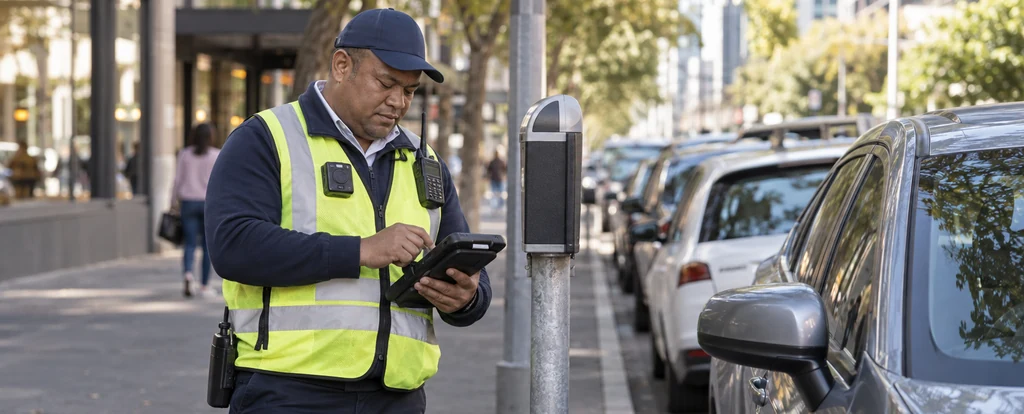
Parking inspectors patrol streets and car parks for councils and other authorities, checking that vehicles are parked legally and issuing infringements when they are not.
- Median salary*
- $65,000
4.3%vs last year, before tax
- People employed
- 840
5.0%vs last year
- Projected growth
- −1.5%
to 2035
- AI exposure*
- Moderate
- automation risk
- Average hours
- 40/wk
matches all-jobs average
- Shortage status*
- Not in shortage
national
Most work for local councils, though some are employed by state agencies or contractors running parking on a council's behalf. The job sits close to that of a council ranger, but the focus stays on parking: rangers also handle animal control, noise complaints and broader local law enforcement. Inspectors move between timed zones, permit areas, loading zones and event precincts, so they learn their patch street by street.
How much do parking inspectors earn?
The median full-time salary for a parking inspector is $65,000 per annum, before tax, up $13,700 since 2018.
Pay depends a good deal on who employs you. Councils and state agencies pay under a local government award or enterprise agreement that sets the base rate and adds penalties for weekend, public holiday and night work, while private contractors may pay differently for the same patrols. Inspectors who take on senior compliance or team leader duties move further up the banding.
What does a parking inspector do day to day?
The list below is what fills most weeks; the exact mix shifts with seniority and whatever stage the current work is at.
- Patrolling streets, car parks and restricted zones on foot or in a council vehicle, working through a beat that covers meters, time limits and permit areas
- Issuing infringement notices from a handheld device, photographing the vehicle and checking the details before the notice is served
- Checking permits, paid parking areas and time limits, including accessible spaces, and noting vehicles that have overstayed
- Directing traffic and managing parking around events, roadworks and school zones, where the flow of cars changes hour by hour
- Writing up notes and evidence for drivers contesting a fine, and giving evidence if a matter goes further
What skills do parking inspectors need?
Employers look for regulatory compliance, backed by Handheld infringement devices fluency and strong written communication.
Specialist skills
- Regulatory compliance
Software and tools
- Handheld infringement devices
- Parking management software (e.g., PayStay)
- Body-worn cameras
- Two-way radios
- GPS-enabled patrol apps
General skills
- Written communication
- Attention to detail
- Customer service
- Problem solving
- Digital literacy
- Safety and compliance awareness
Is the job growing?
About 840 people work as parking inspectors in Australia, and employment is projected to decline 1.5% over the decade to 2035. That's a real decline, worth weighing carefully before training into the role.
How do you become a parking inspector?
Here's the path most parking inspectors take, step by step.
- 1Finish Year 12 or equivalent
Most councils list it as the usual minimum. It is also the most common level of study in the job, with 35% of parking inspectors holding Year 12 or below as their highest qualification, and some councils will consider applicants without it if they have customer service or security experience.
- 2Hold a full driver's licence and clear the checks
Patrols are often run from a council vehicle, so a current licence is standard, and employers run a national police check. Some also ask for a working with children check or a pre-employment medical, and the requirements differ by state and council.
- 3Learn the parking rules and the enforcement process
Councils provide induction training on their local laws, the state road rules and the handheld infringement system. A certificate III or IV in local government or in regulatory services is useful for permanent roles and for moving into other compliance work, and TAFE offers these in most states.
- 4Apply to councils, state agencies or contractors
Vacancies are advertised on council websites and state government job boards, and training is paid once you start. Casual and part-time event and patrol work is one way in, and some councils use it to fill permanent rosters.
Ready to apply as a parking inspector?
Whether you're working toward becoming a parking inspector or already are one and want a hand with the next step (sharpening your resume for ATS screening, tightening your cover letter, or knowing what you'll actually be asked at interview), here are examples grounded in this specific role, not generic templates.
What jobs can a parking inspector move to?
Moving into Sheriff's Officer typically comes with the biggest pay rise, worth $26,000 a year more on average.
| Move to | Typical pay change | Overlap | Retraining |
|---|---|---|---|
| Sheriff's Officer Parking inspectors bring enforcement and conflict management to sheriff's officer roles, which add court security and document service duties requiring a short course. | +$26,000 | 67% | short course |
| Transport Revenue Officer Parking inspectors bring infringement and public contact skills to transport revenue work, where fare compliance and patrol duties need a short course. | +$14,000 | 58% | short course |
| Council Ranger Parking inspectors bring local government enforcement, public contact and parking knowledge to council ranger work, which adds broader local law and community safety duties. | +$10,400 | 67% | minimal |
| Driving Examiner Parking inspectors bring road rule knowledge and public assessment to driving examiner work, which requires examiner accreditation through a short course. | +$7,800 | 67% | short course |
Moves are chosen from Jobs and Skills Australia's Data on Occupation Mobility, which follows income tax records between 2011-12 and 2020-21, together with entry requirements and skill overlap. A known move is one people were seen making in that data. Pay change compares median full-time pay for the two roles.
Who works as a parking inspector?
The typical parking inspector is 49 years old; 76% are men, 80% work full-time, and full-timers average 40 hours a week.
- 49
- Median age
- 24%
- Female share
- 80%
- Full-time
- +0h
- vs all-jobs avg
What's it like being a parking inspector?
The work has a steady rhythm, with long stretches outdoors and short, sharp interactions with drivers. Inspectors cover their own patch with little supervision most of the day, which suits someone comfortable being the person who applies a rule to a stranger. The pressure comes from those interactions: most people take a fine quietly, but a few do not.
What people like
- The job is outdoors, not at a desk. You walk or drive the same streets every day, so the work keeps you moving rather than sitting in an office.
- The rules are clear cut. Parking rules are written down and change slowly, which means you know what applies in each zone and can explain it when asked.
- You work with little supervision. Once you know your route and the local rules, you plan your own patrol, manage your own time and keep your own records.
- Problem parking gets fixed. A blocked loading zone or a car left in an accessible space is resolved while you are standing there, and the result is visible.
What people find hard
- Angry drivers are part of the day. Some people take a fine personally, and inspectors cop abuse for decisions that come from the rules rather than from them.
- The job carries a reputation. Public opinion of parking enforcement has little to do with how the work is actually done, and that can wear on you over time.
- Weather and shift work. You patrol in heat, rain and cold, and many rosters include weekends, public holidays and late shifts to cover events and night parking.
- The route repeats. It is the same streets and the same zones week after week, and the work changes little unless you move into a different area or a broader compliance role.
Based on our synthesis of professional-body surveys and public accounts of the role, not first-person verified reviews.
Which industries employ parking inspectors?
Public Administration and Safety employs the largest share of parking inspectors, followed by Other Services.
Top employing industries
- 1Public Administration and Safety
- 2Other Services
Ranked by employment share; the source doesn't publish an exact percentage per industry.
| Year 12 or below | 35.4% | |
|---|---|---|
| Certificate III/IV | 26.5% | |
| Diploma / Advanced Diploma | 14.9% | |
| Bachelor degree | 14% | |
| Postgraduate | 6% |
Will AI replace parking inspectors?
Computer vision and camera cars already handle time limit and permit checks, and infringement processing runs through software, so parts of this job are exposed to automation. The patrol itself, deciding what to do about a driver who is parked badly for a reason, and giving evidence when a fine is contested are not automated, which keeps the overall exposure moderate.
Share of typical working time by exposure level
- Patrolling streets, car parks and restricted zonesA camera car can spot an expired meter, but someone still has to walk the beat, check permits against the vehicles present and notice problems a camera is not looking for.38%low
- Issuing infringements and handling the paperworkHandheld devices and infringement management systems generate most notices, though the inspector still decides whether a notice is warranted and checks the vehicle details before it is served.27%moderate
- Checking meters, permits and time limitsLicence plate recognition and in-ground sensors can log how long a car has been parked and flag an overstay without an inspector present.20%high
- Dealing with drivers and directing traffic at eventsExplaining a fine to an upset driver, redirecting cars around roadworks and giving evidence at a review hearing all rely on a person reading the situation.15%low
Common questions about becoming a parking inspector
Straight answers to the questions people ask most.
How much do parking inspectors earn?
$65,000 per annum, before tax, for full-time work. What you actually take home depends on the council or contractor and the award or enterprise agreement covering you, with penalty rates usually applying to weekend, public holiday and night shifts. Treat the figure as a guide rather than a rate for any particular job.
How do you become a parking inspector?
Apply directly to a council, a state agency or a parking contractor, usually with Year 12 or equivalent, a full driver's licence and a clear police check. Councils train new inspectors on their local parking rules and their handheld systems, so no prior enforcement qualification is needed for most entry roles.
Are parking inspectors in demand?
Parking inspectors are currently not in shortage, and employment is projected to decline 1.5% over the decade to 2035. That points to a small, fairly stable workforce where openings mostly come from people leaving or retiring rather than from new positions, so watch council and contractor listings rather than expecting a large intake.
Will AI replace parking inspectors?
Parts of the job are already automated: camera cars and licence plate recognition can detect an expired meter or an overstayed vehicle without an inspector standing there, and infringement paperwork is processed electronically. The physical patrol, the conversation with a driver and the decision about what is fair in a particular spot still need a person, which keeps the role only partly exposed.
What can parking inspectors move on to?
Council ranger work is a close fit because it uses the same local government enforcement skills, and it pays $10,400 more. Transport revenue officers, who handle fare compliance, and sheriff's officers, who serve court documents, are also common moves and pay $14,000 more and $26,000 more respectively. People also come into parking inspection from security guard and car park attendant roles, which share the patrol and customer contact side of the job.
Do you need a qualification to be a parking inspector?
No. Most entry roles ask for Year 12 or equivalent, a driver's licence and a police check, with training provided on the job. A certificate III or IV in local government or regulatory services helps if you want a permanent position or a move into broader compliance work.
Related roles
- Council Ranger
- Transport Revenue Officer
- Sheriff's Officer
- Driving Examiner
- Car Park Attendant
- Security Guard
Not sure this is you? Take the career quiz and get a ranked shortlist of roles that fit how you like to work.