Electrical Engineering Technician
Electrical engineering technicians help design, test and maintain the electrical systems behind power supply, control equipment and building services.
- Median salary*
- $91,500
4.2%vs last year, before tax
- People employed
- 6,800
1.5%vs last year
- Projected growth
- +11.9%
to 2035
- AI exposure*
- Moderate
- automation risk
- Average hours
- 46/wk
+6h vs all jobs
- Shortage status
- Not in shortage
national
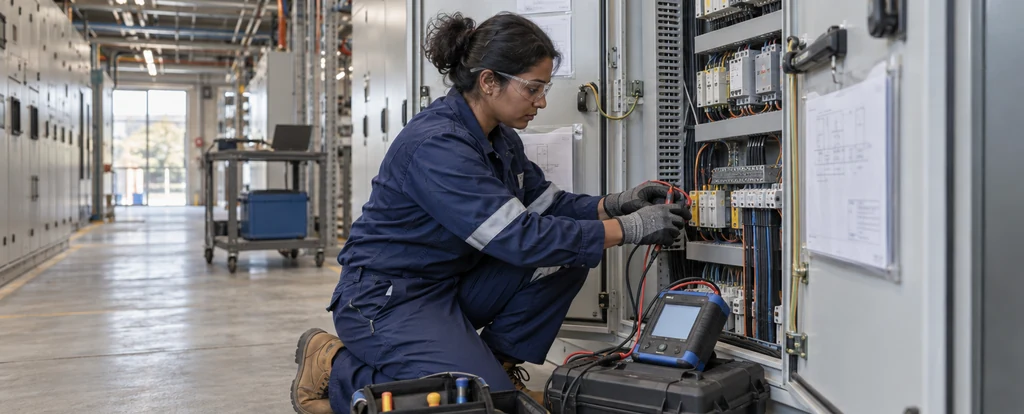
Electrical engineering technicians work alongside electrical engineers and electricians, preparing drawings and specifications and then testing and maintaining the equipment those designs call for. They are often the ones who turn a design into a working installation, wiring control panels, commissioning switchboards and tracing faults on site, while the fixed wiring that needs a state electrical licence stays with a licensed electrician. Their work sits mostly in construction, utilities and manufacturing, with power authorities, engineering consultancies and large plant operators among the main employers.
How much do electrical engineering technicians earn?
The median full-time salary for an electrical engineering technician is $91,500 per annum, before tax, up $19,200 since 2018.
Pay follows the sector and the site more than the job title, with utilities, mining and heavy manufacturing generally paying above construction and consultancy work, and remote placements adding allowances on top. Shift rosters, overtime and penalty rates make a real difference because many technicians work well beyond standard hours during shutdowns and commissioning. Holding an electrical licence alongside your technician qualification can also open up work that pays at a higher rate, though licensing rules differ by state.
What does an electrical engineering technician do day to day?
The list below is what fills most weeks; the exact mix shifts with seniority and whatever stage the current work is at.
- Preparing electrical drawings, schematics and specifications for power and control systems, usually in AutoCAD Electrical or similar software
- Assembling, installing and wiring switchgear, control panels and related equipment to the design
- Testing and commissioning new installations before handover, working through protection, relay and control loop checks
- Diagnosing faults and carrying out repairs or modifications, sometimes on live plant during a shutdown window
- Recording test results, as-built drawings and material estimates so maintenance crews have an accurate record to work from
What skills do electrical engineering technicians need?
Employers look for engineering design and analysis, cAD and technical drawing, installation and maintenance, backed by AutoCAD Electrical fluency and strong problem solving.
Specialist skills
- Engineering design and analysis
- CAD and technical drawing
- Installation and maintenance
- Software testing and QA
- Reading plans and specifications
- Worksite safety management
Software and tools
- AutoCAD Electrical
- ETAP
- MATLAB and Simulink
- Siemens TIA Portal
- SCADA and PLC software
General skills
- Problem solving
Is the job growing?
About 6,800 people work as electrical engineering technicians in Australia, and employment is projected to grow 11.9% over the decade to 2035. That's healthy, above-average growth, and the role should stay in solid demand.
How do you become an electrical engineering technician?
Here's the path most electrical engineering technicians take, step by step.
- 1Finish Year 12 with maths and physics if you can
These subjects underpin the load, protection and circuit calculations the work involves. If you left school early, a Certificate II in Electrotechnology at TAFE is the usual starting point and often helps you win an apprenticeship.
- 2Complete a Certificate III in Electrotechnology as an apprentice electrician
This is a paid four-year apprenticeship that combines TAFE study with supervised site work, and it is the route most current technicians took. It gives you the wiring, installation and fault finding experience that technician roles build on.
- 3Add a Certificate IV or Diploma of Electrical Engineering
One to two years at TAFE, often part time while you keep working, covering power systems, control and protection. The diploma is the qualification most technician job ads ask for, and it is what separates the role from straight electrical trades work.
- 4Check the licensing rules where you plan to work
Electrical licensing sits with state and territory regulators and the requirements differ, so confirm what is needed before you take on fixed wiring work.
- 5Build experience in the sector you want to stay in
Power authorities, mining, manufacturing and building services each value different systems knowledge, and a couple of years of testing and commissioning makes switching between them easier later.
Ready to apply as an electrical engineering technician?
Whether you're working toward becoming an electrical engineering technician or already are one and want a hand with the next step (sharpening your resume for ATS screening, tightening your cover letter, or knowing what you'll actually be asked at interview), here are examples grounded in this specific role, not generic templates.
What jobs can an electrical engineering technician move to?
Moving into Engineering Manager typically comes with the biggest pay rise, worth $91,500 a year more on average.
| Move to | Typical pay change | Overlap | Retraining |
|---|---|---|---|
| Engineering Manager Technical project experience and systems knowledge support management of engineering teams, though a degree and management study are required.Known move | +$91,500 | 12% | requalify |
| Mechatronics Engineer Practical knowledge of control systems and electrical panels carries into mechatronics design, but a degree is needed to work as an engineer.Known move | +$52,100 | 22% | requalify |
| Electrical Engineer Hands-on testing and installation experience supports design work, though an engineering degree is required to practise as an electrical engineer.Known move | +$41,300 | 22% | requalify |
| Electrician Wiring and installation experience is already familiar, but completing an electrical apprenticeship is required to work as a licensed electrician.Known move | +$22,400 | 34% | requalify |
| Electronic Engineering Technician Circuit testing and diagnostic skills transfer directly to electronics work, with a short course covering the specialist theory.Known move | +$19,900 | 42% | reskill |
Moves are chosen from Jobs and Skills Australia's Data on Occupation Mobility, which follows income tax records between 2011-12 and 2020-21, together with entry requirements and skill overlap. A known move is one people were seen making in that data. Pay change compares median full-time pay for the two roles.
Who works as an electrical engineering technician?
The typical electrical engineering technician is 43 years old; 94% are men, 85% work full-time, and full-timers average 46 hours a week.
- 43
- Median age
- 6%
- Female share
- 85%
- Full-time
- +6h
- vs all-jobs avg
What's it like being an electrical engineering technician?
The job splits between the office and the site, which suits people who like seeing a drawing turn into working equipment. The rhythm is set by projects: stretches of documentation and design support, then long days during installation, testing and commissioning, with shutdowns that often run through nights or weekends. The pressure sits in getting systems back online safely, because a fault can halt production or leave a building without power.
What people like
- Drawings that become working plant. You can walk up to the switchboards, panels and machines your work produced, which is not true of every engineering support role.
- Faults that make you think. Tracing an intermittent fault through a control circuit draws on knowledge built over years, and the answer is rarely sitting on the surface.
- Different sites and systems. One project might be a substation, the next a food plant or a mine, which keeps the work from settling into a single routine.
- Sitting between design and trades. You work closely with engineers and with electricians, so you learn how decisions get made as well as how equipment actually behaves on site.
What people find hard
- Time away from home. Remote and mine site rosters can mean weeks away at a time, and those placements come up often in this line of work.
- Overtime lands when a plant stops. Shutdowns and commissioning run to a schedule that does not move, so evenings, nights and weekends are part of the job in those periods.
- Working within someone else's design. When a system trips or a panel does not perform, the technician on site is often the one who has to make it work within the design and the budget.
- Records that have to be right. Test results, as-built drawings and compliance documentation take a genuine share of the week, and errors surface later during audits or the next fault.
Based on our synthesis of professional-body surveys and public accounts of the role, not first-person verified reviews.
Which industries employ electrical engineering technicians?
Construction employs the largest share of electrical engineering technicians, followed by Electricity, Gas, Water and Waste Services.
Top employing industries
- 1Construction
- 2Electricity, Gas, Water and Waste Services
- 3Manufacturing
Ranked by employment share; the source doesn't publish an exact percentage per industry.
| Certificate III/IV | 54.5% | |
|---|---|---|
| Diploma / Advanced Diploma | 19.7% | |
| Year 12 or below | 10.1% | |
| Bachelor degree | 9.9% | |
| Postgraduate | 3.5% |
Will AI replace electrical engineering technicians?
This is a moderately exposed job. Software already turns a design brief into first-pass schematics, load calculations and documentation, which trims the drafting side of the role, but the work that happens on site is much harder to automate: installing and wiring a panel, commissioning a switchboard and tracing a fault through live plant all need hands, tools and judgement about what the equipment is actually doing. AI changes the design and documentation tools a technician works with more than it changes the job itself.
Share of typical working time by exposure level
- Installing and wiring panels and switchgearTerminating cables, mounting switchgear and working to a wiring schedule is physical work in real site conditions, and robotics is a long way from doing it in existing plant rooms.30%low
- Testing and commissioning installationsAutomated test equipment and digital protection relays record and report results, but someone still has to set up the test, interpret readings and sign off that the installation is safe.25%moderate
- Fault finding and repairDiagnostic software points to likely causes on networked plant, though confirming a fault on a panel or motor still means testing circuits by hand.25%moderate
- Drafting drawings, schematics and as-built recordsAutoCAD Electrical and similar packages already generate much of a first-pass drawing from a design brief, so this time is shifting towards checking, annotating and correcting output.20%high
Moves least exposed to AI
These career moves from electrical engineering technician work are rated low for AI exposure:
- Electrician
Some skill overlap (34%), requalify to get there, and a low automation-risk profile.
Common questions about becoming an electrical engineering technician
Straight answers to the questions people ask most.
How much do electrical engineering technicians earn?
The median full-time pay for an electrical engineering technician is $91,500 per year before tax, which is the midpoint across all full-time workers in the role, so half earn more and half earn less. What you actually take home depends most on sector and site, since utilities, mining and heavy industry pay above construction and consultancy work, and shift work and remote allowances lift the total further.
How do you become an electrical engineering technician?
Most people come through a Certificate III in Electrotechnology apprenticeship and then add a Certificate IV or Diploma of Electrical Engineering (UEE50420) at TAFE. The apprenticeship gives you the hands-on wiring and testing experience, and the diploma supplies the power systems, control and protection theory that technician job ads ask for. Studying the diploma part time while you work is common.
Are electrical engineering technicians in demand?
Electrical engineering technicians are currently not in shortage, and employment is projected to grow 11.9% over the decade to 2035. For someone looking for work, the openings tend to sit with power authorities, engineering consultancies and large plant operators, and the growth reflects grid upgrades, renewable energy projects and building services work rather than a single industry.
Do electrical engineering technicians need a licence?
Only if the job involves fixed electrical wiring, which requires an electrical licence from the regulator in your state or territory. Many technician roles focus on design support, testing and commissioning rather than installation, and employers usually state which licence they expect. Rules differ between states, so check before you enrol in a qualification.
Will AI replace electrical engineering technicians?
Parts of the drafting and documentation work are already automated, with software producing first-pass schematics and load calculations from a design brief. The physical side is far less exposed, because installing and wiring a panel, commissioning a switchboard and tracing a fault through live plant need hands, tools and judgement about what the equipment is doing. The practical effect is that AI changes the design tools a technician uses more than it removes the work.
Where can an electrical engineering technician go next?
Moving into electrical engineering is a common goal, and electrical engineers earn $41,300 more on the median figures, but the move requires an engineering degree because the role is registered and degree qualified. Electronic engineering technician is a shorter step, since circuit testing and diagnostic skills transfer directly and a short course covers the specialist theory. Both moves build on the systems knowledge you already use day to day.
Related roles
- Electrical Engineer
- Mechatronics Engineer
- Engineering Manager
- Electronic Engineering Technician
- Electrician
- Electrician
Not sure this is you? Take the career quiz and get a ranked shortlist of roles that fit how you like to work.