Engraver
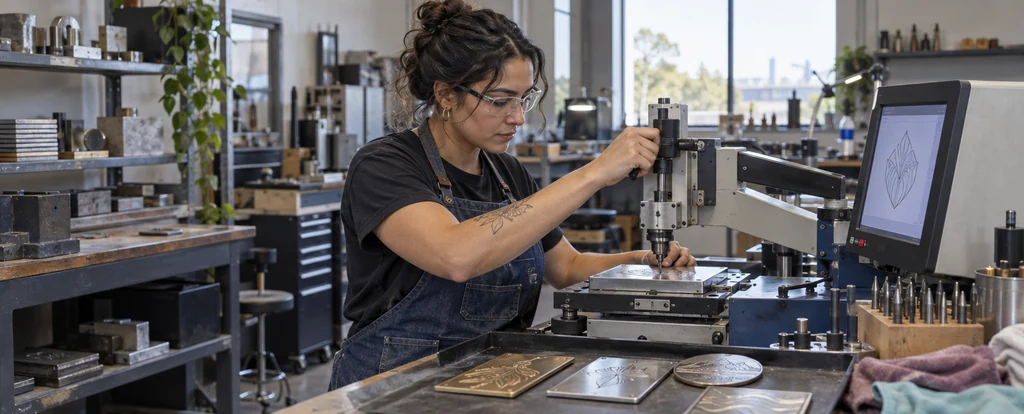
Engravers cut lettering, logos and decorative patterns into metal, glass, timber and plastic for awards, signage, jewellery and industrial parts.
- Median salary*
- $65,000
4.2%vs last year, before tax
- People employed
- 460
8.0%vs last year
- Projected growth
- +8%
to 2035
- AI exposure*
- Moderate
- automation risk
- Average hours
- 37/wk
−3h vs all jobs
- Shortage status
- In shortage
national
Engravers work in small workshops, trophy and awards businesses, jewellers' studios and manufacturing plants, usually on one-off jobs or short runs rather than production lines. The cut is made into the material and is permanent, which separates the trade from sign writing or printing, where lettering sits on the surface. Many engravers run their own workshop and take briefs directly from the public as well as from businesses.
How much do engravers earn?
The median full-time salary for an engraver is $65,000 per annum, before tax, up $13,600 since 2018.
Pay depends heavily on whether you work for an employer or run your own workshop, because self-employed engravers set their own rates and carry the cost of machines and materials. In a job, earnings follow the award or enterprise agreement covering the workplace and rise as you add skills, particularly computer-controlled laser work. Specialising in a material or a market, such as industrial part marking or bespoke hand engraving, is the usual way to move above the award.
What does an engraver do day to day?
The list below is what fills most weeks; the exact mix shifts with seniority and whatever stage the current work is at.
- Reading briefs and artwork to work out lettering, sizing and layout before any cutting starts
- Setting up pantographs, rotary cutters and laser engravers, including test cuts on scrap material
- Engraving lettering, logos and decorative patterns into metal, glass, timber, acrylic and plastic
- Checking finished pieces for depth, alignment, spelling and surface finish, then cleaning or polishing them
- Sharpening cutting tools and keeping machines, lenses and fixtures in working order
What skills do engravers need?
Employers look for craft and handmade production, visual design, creative software production, backed by CorelDRAW fluency and strong attention to detail.
Specialist skills
- Craft and handmade production
- Visual design
- Creative software production
- Hand and power tool work
- Plant and equipment operation
Software and tools
- CorelDRAW
- Adobe Illustrator
- LightBurn
- AutoCAD
- Adobe Photoshop
General skills
- Attention to detail
- Customer service
Is the job growing?
About 460 people work as engravers in Australia, and employment is projected to grow 8% over the decade to 2035. That's modest growth: demand is steady rather than booming.
How do you become an engraver?
Here's the path most engravers take, step by step.
- 1Finish school or a pre-vocational course
There is no formal entry requirement, and about 46% of engravers hold Year 12 or below as their highest qualification. A design, art or technology subject at school is useful because layout and letterform come up constantly.
- 2Start in a workshop and learn the craft
Most engravers learn on the job in a trophy, sign or jewellery business, picking up lettering, layout, machine setup and material behaviour under supervision. A traineeship in engineering, manufacturing or sign writing can formalise the same skills while you are paid.
- 3Add the computer and laser side
Courses in CorelDRAW, Illustrator or LightBurn, and short laser engraving courses at TAFE or private providers, cover file preparation, machine settings and safety. This is the part of the trade most employers now expect.
- 4Specialise in a material or market
Engravers who concentrate on one area, such as awards and giftware, signage, industrial marking or hand engraving on precious metal, can charge more than generalists and waste less material learning a new stock.
- 5Set up your own workshop
With a few years of experience, a client list and enough capital for a laser or rotary machine, many engravers open their own premises and deal with customers directly. This is often where the work becomes more varied and better paid.
Ready to apply as an engraver?
Whether you're working toward becoming an engraver or already are one and want a hand with the next step (sharpening your resume for ATS screening, tightening your cover letter, or knowing what you'll actually be asked at interview), here are examples grounded in this specific role, not generic templates.
What jobs can an engraver move to?
Moving into Jewellery Designer typically comes with the biggest pay rise, worth $5,200 a year more on average.
| Move to | Typical pay change | Overlap | Retraining |
|---|---|---|---|
| Jewellery Designer An engraver can move into jewellery design using fine detail and material knowledge, with design training adding drawing and portfolio skills. | +$5,200 | 45% | reskill |
| Sign Writer An engraver brings precise lettering and layout skills to sign writing, though learning vinyl, paint and installation takes further study. | +$3,600 | 43% | reskill |
| Metal Polisher An engraver can specialise in metal finishing, applying an eye for surface detail, with a short course covering polishing and buffing. | +$0 | 50% | short course |
| Jeweller An engraver already understands metal and precision tools, but becoming a jeweller requires the full trade apprenticeship in jewellery manufacture. | −$5,200 | 50% | requalify |
Moves are chosen from Jobs and Skills Australia's Data on Occupation Mobility, which follows income tax records between 2011-12 and 2020-21, together with entry requirements and skill overlap. A known move is one people were seen making in that data. Pay change compares median full-time pay for the two roles.
Who works as an engraver?
The typical engraver is 50 years old; 63% are men, 57% work full-time, and full-timers average 37 hours a week.
- 50
- Median age
- 37%
- Female share
- 57%
- Full-time
- −3h
- vs all-jobs avg
What's it like being an engraver?
Engraving is bench work with a deadline attached: jobs are small and individual, often promised to a customer for a particular date, so the pressure sits on accuracy and finish rather than volume. The week mixes machine time with artwork and customer conversation, and most engravers work alone or in very small teams. It suits people who like precision, quiet concentration and seeing a job through from file to polished piece.
What people like
- One-off pieces you can hold. Much of the work is a single award, ring or plaque for a named person, so you see the finished piece leave the bench and know exactly where it went.
- Materials that keep the work varied. Brass, glass, acrylic, timber and stainless steel each cut differently, so the week rarely settles into one repetitive process.
- Quiet, focused work. Most of the day is spent at a bench or a machine with the job in front of you, which suits people who would rather deal with detail than with meetings.
- Skills you can use for yourself. Engravers can take on their own commissions and set up a workshop, so the craft can become a business rather than only a job.
What people find hard
- A slip shows on the finished piece. Cutting too deep or off-centre usually means refinishing or remaking the item, and a customer spots a spelling mistake the moment they open the box.
- The awards season rush. Trophy and presentation work arrives in a heap at the end of the year, and the dates on those orders do not move.
- Fumes, dust and machine noise. Laser cutting, etching and polishing produce fumes and fine dust, so workshops depend on extraction and ear protection is part of the job.
- Small teams, few rungs to climb. Most engraving businesses have only a handful of staff, so getting ahead usually means broadening your skills, going out on your own or moving into a related trade.
Based on our synthesis of professional-body surveys and public accounts of the role, not first-person verified reviews.
Which industries employ engravers?
Manufacturing employs the largest share of engravers, followed by Retail Trade.
Top employing industries
- 1Manufacturing
- 2Retail Trade
- 3Other Services
Ranked by employment share; the source doesn't publish an exact percentage per industry.
| Year 12 or below | 45.8% | |
|---|---|---|
| Certificate III/IV | 25.4% | |
| Diploma / Advanced Diploma | 10.9% | |
| Bachelor degree | 9.6% | |
| Postgraduate | 2.8% |
Will AI replace engravers?
Exposure here is moderate because the machines were computerised long before AI arrived: a laser or rotary engraver has always followed a digital file. What AI changes is the front end, where artwork is generated, cleaned up and laid out, and some production polishing and inspection. Cutting, fixturing, setting depth for a particular material and the final hand finish stay with the engraver, especially on one-off jobs.
Share of typical working time by exposure level
- Cutting lettering and logos into metal, glass or timberThe machine follows the file, but holding the workpiece steady, setting depth and reading how each material cuts is still done by eye and hand.35%low
- Machine setup, test cuts and tool sharpeningGetting a laser's focus and power right, or a cutter's angle sharp for brass rather than acrylic, is physical work no software does for you.25%low
- Preparing artwork and layout in CorelDRAW or IllustratorAI tools can generate and tidy vector artwork and suggest letter spacing, although the engraver still decides what will actually cut cleanly.20%high
- Finishing, polishing and checking completed piecesProduction runs can be partly automated, but custom orders are still inspected and hand finished piece by piece before they go to the customer.20%moderate
Moves least exposed to AI
These career moves from engraver work are rated low for AI exposure:
- Jeweller
Solid skill overlap (50%), requalify to get there, and a low automation-risk profile.
Common questions about becoming an engraver
Straight answers to the questions people ask most.
How much do engravers earn?
Full-time engravers earn a median of $65,000 per year before tax, and what you take home varies with the award or agreement, the sector and whether the work is hand or machine based. Self-employed engravers set their own rates, so their income depends on the clients and the jobs they take on.
How do you become an engraver?
There is no single entry requirement. Many engravers start in a trophy, sign or jewellery business and learn lettering, layout and machine setup on the job, then add a TAFE or private course in design software or laser engraving. A traineeship in engineering, manufacturing or sign writing covers much the same ground.
Are engravers in demand?
Engravers are currently in shortage nationally, and employment is projected to grow 8% over the decade to 2035. With about 460 people in the trade, most openings come from replacing engravers who retire or leave, so experience with laser equipment and design software is what makes an applicant stand out.
Will AI replace engravers?
Laser and rotary engravers have been computer controlled for years, and AI mostly reaches the artwork side, generating and tidying vector files and suggesting layouts. Setting up a job, fixing the workpiece, judging depth for a particular brass or acrylic and finishing the piece are still hands-on, which is why exposure sits in the middle rather than at either end.
What can an engraver move into?
Sign writing is a close move, because lettering and layout carry over and training covers vinyl, paint and installation, and sign writers earn $3,600 more. Jewellery design uses the same fine detail and material knowledge with drawing and portfolio training added, and jewellery designers earn $5,200 more. Many engravers stay in the trade and open their own workshop instead, building a client list from trophy shops, jewellers and local businesses, which is often where earnings grow.
Do engravers need a licence?
General engraving work does not require a licence, and employers hire on demonstrated skill rather than a particular certificate. Some work is regulated, such as marking firearms, and the rules differ by state, so check with the relevant state authority before taking that kind of job.
Related roles
Not sure this is you? Take the career quiz and get a ranked shortlist of roles that fit how you like to work.