Home Manufacturing & Production
Wood Turner
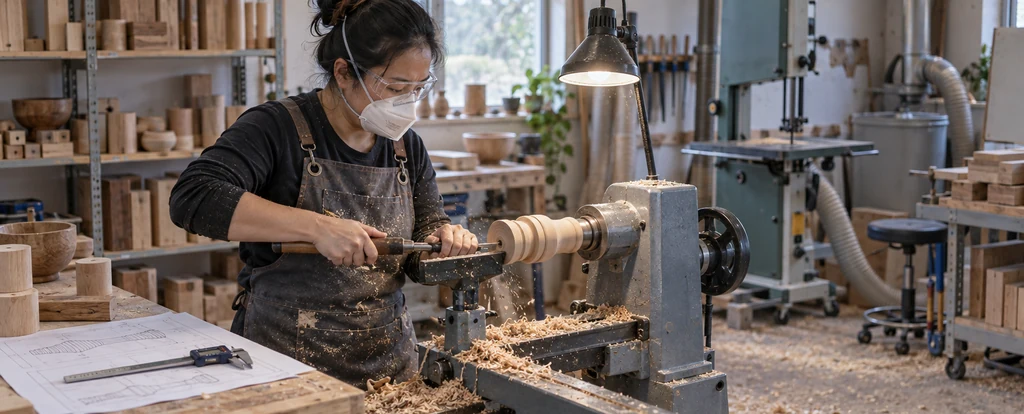
Wood turners shape timber on a lathe into bowls, spindles, legs and decorative parts, working to a drawing or a sample.
- Median salary*
- $65,000
3.8%vs last year, before tax
- People employed
- 80
20.0%vs last year
- Projected growth
- +6.1%
to 2035
- AI exposure*
- Low
- automation risk
- Average hours
- 27/wk
−13h vs all jobs
- Shortage status
- Not in shortage
national
Wood turners usually work in furniture and wood product workshops, and some run a small studio turning bowls and craft pieces for galleries and markets. The work is one piece at a time by hand, which separates it from wood machining, where shaping is set up on a machine and run in batches. Common products include stair spindles, table legs, chair components, tool handles and bowls.
How much do wood turners earn?
The median full-time salary for a wood turner is $65,000 per annum, before tax, up $13,500 since 2018.
What you take home depends on whether you're employed in a workshop or selling your own work. Manufacturing employers pay under the timber and wood products award or an enterprise agreement, so pay moves with the classification level and any shift loadings. Self-employed turners earn from what they sell through galleries, markets and commissions, and many in the trade work part time, so annual earnings often reflect fewer hours rather than a low rate.
What does a wood turner do day to day?
The list below is what fills most weeks; the exact mix shifts with seniority and whatever stage the current work is at.
- Reading drawings or working from a sample to plan the sequence of cuts
- Selecting timber and preparing blanks, checking grain direction, knots and moisture
- Mounting blanks between centres or on a chuck and shaping them with gouges, skews and scrapers
- Turning runs of spindles, legs or handles to a consistent profile
- Sharpening tools through the day, then sanding, finishing and checking each piece against the drawing
What skills do wood turners need?
Employers look for craft and handmade production, hand and power tool work, plant and equipment operation, backed by Wood lathe (Vicmarc, Teknatool) fluency and strong attention to detail.
Specialist skills
- Craft and handmade production
- Hand and power tool work
- Plant and equipment operation
- Reading plans and specifications
Software and tools
- Wood lathe (Vicmarc, Teknatool)
- Bowl gouge and skew chisel set
- Bandsaw
- Dial calipers
- SketchUp
General skills
- Attention to detail
- Problem solving
- Safety and compliance awareness
Is the job growing?
About 80 people work as wood turners in Australia, and employment is projected to grow 6.1% over the decade to 2035. That's modest growth: demand is steady rather than booming.
How do you become a wood turner?
Here's the path most wood turners take, step by step.
- 1Try it on a short course
Introductory turning courses run through TAFE, community colleges and woodworking clubs, and a term of evening classes is usually enough to tell whether you enjoy the time at the lathe.
- 2Train through a certificate III or an apprenticeship
A Certificate III in cabinet making, furniture making or timber machining covers the timber knowledge and machine skills employers look for, and an apprenticeship with a furniture or joinery business is paid and takes about three to four years.
- 3Build a portfolio of finished work
Employers and galleries both want to see pieces, so keep photographs, dimensions and notes on the finishes you used for bowls, spindles and anything else you have turned.
- 4Learn the safety and business side
There's no licence needed to turn wood, but workplaces require dust extraction, guarding and hearing protection, and turners who sell their own work need to handle pricing, insurance and the commission galleries charge.
Ready to apply as a wood turner?
Whether you're working toward becoming a wood turner or already are one and want a hand with the next step (sharpening your resume for ATS screening, tightening your cover letter, or knowing what you'll actually be asked at interview), here are examples grounded in this specific role, not generic templates.
What jobs can a wood turner move to?
Moving into Cabinet Maker typically comes with the biggest pay rise, worth $7,800 a year more on average.
| Move to | Typical pay change | Overlap | Retraining |
|---|---|---|---|
| Cabinet Maker Wood turner's timber shaping and joinery awareness suit cabinet making, requiring cabinet making training to build furniture and fitted pieces. | +$7,800 | 52% | reskill |
| Joiner Wood turner's precision and timber knowledge transfer to joinery work, needing joinery training for structural timber components and assemblies. | +$7,800 | 42% | reskill |
| Wood Machinist Wood turner's lathe skills and timber knowledge transfer to wood machining, with reskilling in machine setup and production shaping. | +$5,200 | 62% | reskill |
| Cooper Wood turner's hand tool and timber shaping skills suit cooperage, with reskilling in barrel making and cask assembly. | +$2,600 | 52% | reskill |
| Furniture Finisher Wood turner's eye for timber grain and surface quality suits furniture finishing, with reskilling in stains, lacquers and finishing techniques. | +$0 | 61% | reskill |
Moves are chosen from Jobs and Skills Australia's Data on Occupation Mobility, which follows income tax records between 2011-12 and 2020-21, together with entry requirements and skill overlap. A known move is one people were seen making in that data. Pay change compares median full-time pay for the two roles.
Who works as a wood turner?
The typical wood turner is 52 years old; 93% are men, 62% work full-time, and full-timers average 27 hours a week.
- 52
- Median age
- 7%
- Female share
- 62%
- Full-time
- −13h
- vs all-jobs avg
What's it like being a wood turner?
Turning is quiet, focused work with a sharp tool held in your hands and the lathe setting the pace. The day is a loop of sharpening, cutting, checking against the drawing and finishing, and small differences in profile are what separate a piece that sells from one that gets re-turned. It suits someone who likes working alone, has patience for repetition and notices grain and surface quality.
What people like
- The finished piece is in your hands. Unlike work that disappears into a production line, a turner can point to the bowl or spindle they made and see whether it came out right.
- The skills show up immediately. A sharp edge and a controlled cut are visible in the surface of the timber, so improvement is easy to see and the feedback comes straight from the work.
- Every species behaves differently. Timber varies in grain, figure and hardness, so choosing and reading a blank is part of the job rather than a fixed setting.
- Quiet, independent work. Most of the day is spent alone at the lathe, which suits people who prefer their own company and some control over their own pace.
What people find hard
- Dust and noise are constant. Turning and sanding produce fine wood dust, so extraction, a respirator and hearing protection are part of every shift rather than optional extras.
- Few dedicated turning jobs. Turning is often one skill inside a furniture, joinery or wood product business rather than a role on its own, so vacancies are scattered and frequently combined with machining work.
- Production runs get repetitive. A long run of identical spindles is a different job from a one-off bowl, and much of the paid work is the batch kind.
- Income is uneven when you sell your own work. Craft sales follow markets and the Christmas season, and galleries take a commission, so self-employed turners can have lean months between orders.
Based on our synthesis of professional-body surveys and public accounts of the role, not first-person verified reviews.
Which industries employ wood turners?
Manufacturing employs the largest share of wood turners, followed by Wholesale Trade.
Top employing industries
- 1Manufacturing
- 2Wholesale Trade
- 3Agriculture, Forestry and Fishing
Ranked by employment share; the source doesn't publish an exact percentage per industry.
| Year 12 or below | 42.2% | |
|---|---|---|
| Certificate III/IV | 34.9% | |
| Diploma / Advanced Diploma | 9.6% | |
| Bachelor degree | 4.8% | |
| Postgraduate | 0% |
Will AI replace wood turners?
Wood turning is one of the less exposed trades. The lathe is guided by hand, and reading grain, moisture and figure to decide a cut is judgement that stays with the turner. CAD and SketchUp help with drawings and CNC lathes handle long production runs, but neither replaces the hand work on one-off and restoration pieces.
Share of typical working time by exposure level
- Shaping and finishing pieces on the latheHolding a gouge through a cut and sanding to a finish depends on feel and eye, so a machine can copy a profile but can't judge when the timber is cutting cleanly.50%low
- Reading drawings and planning the cut sequenceSketchUp and CAD can model a bowl or spindle profile before you cut, but the sequence still follows the grain and the blank you actually have.20%moderate
- Setting up and sharpening toolsGrinding an edge and setting up a chuck or between centres is hands-on work that changes with the timber and the piece in front of you.15%low
- Quoting, invoicing and selling finished workSoftware can draft a listing or an invoice, while photographing and pricing craft work for a gallery or market still takes a person's judgement.15%moderate
Common questions about becoming a wood turner
Straight answers to the questions people ask most.
How much do wood turners earn?
The median for wood turners is $65,000 per year before tax. Pay depends on whether you work for a manufacturer under an award or enterprise agreement, or sell your own pieces, and part-time hours are common in this trade.
How do you become a wood turner?
Most people start with a short course or club workshop to get time on a lathe, then build the trade through a Certificate III in cabinet making, furniture making or timber machining, often as an apprenticeship. A portfolio of finished pieces matters as much as the certificate when you're applying for work.
Are wood turners in demand?
Wood turners are currently not in shortage, and employment is projected to grow 6.1% over the decade to 2035. The occupation is small, so openings mostly come from replacing people who leave or retire, which makes it worth knowing the local furniture, joinery and wood product businesses that do turning work.
Will AI replace wood turners?
Not the hand work. CNC and copy lathes have handled long production runs for years, but one-off pieces and restoration depend on reading grain and cutting by feel, so exposure is low and the design and quoting side of the job is affected more than the lathe.
What else can a wood turner do?
Wood machining is a close move, because lathe setup and tool skills carry across and pay is $5,200 more. Cabinet making and joinery take the same timber knowledge into fitted and assembled work, at $7,800 more. Some experienced turners set up their own studio selling bowls, spindles and commissions, which is often where earnings grow.
Do you need a qualification to work as a wood turner?
There's no licence to turn wood in Australia, but employers in furniture and joinery businesses usually expect a trade qualification. 35% of people working as wood turners hold a certificate III or IV, which describes the workforce rather than a formal requirement.
Related roles
Not sure this is you? Take the career quiz and get a ranked shortlist of roles that fit how you like to work.