Firefighter
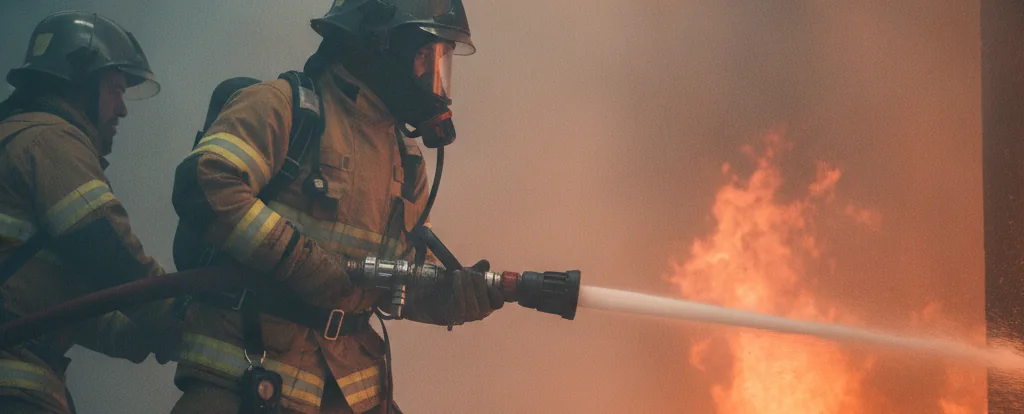
Firefighters respond to fires, car crashes, hazardous material spills and medical emergencies, usually as part of a crew based at a fire station.
- Median salary
- $128,600
4.3%vs last year, before tax
- People employed
- 13,300
1.5%vs last year
- Projected growth
- +11.4%
to 2035
- AI exposure*
- Low
- automation risk
- Average hours
- 47/wk
+7h vs all jobs
- Shortage status
- Not in shortage
national
Firefighters work from a fire station as part of a set crew, turning out to whatever comes through on the alarm, which in most services is more often a car crash, medical call or hazardous spill than a structure fire. Most career firefighters are employed by a state or territory fire authority on rotating shifts that cover nights, weekends and public holidays, while volunteer brigades cover much of regional and rural Australia. The role is often confused with the State Emergency Service, but SES volunteers deal mainly with storm and flood damage rather than fire suppression and structural rescue.
How much do firefighters earn?
The median full-time salary for a firefighter is $128,600 per annum, before tax, up $27,100 since 2018.
Pay comes from a state or territory enterprise agreement, so the rate for the same rank differs between services and shifts each time an agreement is renewed. Within a service, pay steps up with rank and years of service, and shift penalties, public holiday rates and overtime make up a meaningful share of what firefighters actually take home. Specialist roles such as aviation or rescue work can carry extra allowances, while volunteer firefighters are not paid a salary, though some receive compensation for lost income.
What does a firefighter do day to day?
The list below is what fills most weeks; the exact mix shifts with seniority and whatever stage the current work is at.
- Suiting up in full protective clothing and breathing apparatus within minutes of an alarm sounding
- Operating pumps, hoses and hydraulic rescue tools at whatever scene the call turns out to be
- Attending far more car crashes, medical calls and hazardous material spills than structure fires
- Running equipment checks, rescue drills and fitness training between callouts at the station
- Living, cooking and training alongside the same crew through a long shift
What skills do firefighters need?
Employers look for emergency response, worksite safety management, backed by Fire hoses and nozzles fluency and strong safety and compliance awareness.
Specialist skills
- Emergency response
- Worksite safety management
Software and tools
- Fire hoses and nozzles
- Breathing apparatus (SCBA)
- Hydraulic rescue tools
- Thermal imaging cameras
- Incident management software
General skills
- Safety and compliance awareness
- Physical stamina and dexterity
- Problem solving
- Written communication
- Attention to detail
Is the job growing?
About 13,300 people work as firefighters in Australia, and employment is projected to grow 11.4% over the decade to 2035. That's healthy, above-average growth, and the role should stay in solid demand.
How do you become a firefighter?
Here's the path most firefighters take, step by step.
- 1Finish Year 12 or an equivalent qualification
Most state and territory fire services ask for Year 12, though some accept Year 10 with relevant work or volunteer experience. No previous firefighting experience is needed to apply, and services select on aptitude and fitness rather than prior training.
- 2Build the fitness and certificates the tests measure
You need a current first aid certificate and CPR, a full driver's licence, and the fitness to pass a physical aptitude test that typically includes a shuttle run, grip strength, a ladder raise and a casualty drag. Train for those specific tasks, because the test is pass or fail.
- 3Apply during a recruitment round
Career fire services hire in rounds that can open only once every year or two, so it pays to watch your state or territory service's website for dates. Selection runs through aptitude testing, a physical assessment, medical and psychological checks, interviews and referee checks, and some services require you to live within a set distance of a station. Volunteering with a rural fire service or brigade is a common way to test whether you like the work, and some services give it weight in selection.
- 4Complete the paid recruit course
Recruits are employed and paid during training, which runs about 12 to 16 weeks at the service's training college and covers fire behaviour, breathing apparatus, rescue, hazardous materials and emergency medical care. Most graduates come out with a Certificate III in Public Safety (Firefighting and Emergency Operations) (PUA30622).
- 5Work through your probationary year on station
New firefighters join a crew and complete competency assessments and further training over their first year or so before confirming as a fully qualified firefighter. Much of that year is spent learning how your station does things, from pump operation to the paperwork that follows a call.
Ready to apply as a firefighter?
Whether you're working toward becoming a firefighter or already are one and want a hand with the next step (sharpening your resume for ATS screening, tightening your cover letter, or knowing what you'll actually be asked at interview), here are examples grounded in this specific role, not generic templates.
What jobs can a firefighter move to?
None of the roles firefighters typically move into pay more than the role itself. Emergency Management Officer is the closest match. If a bigger salary is the goal, moving up into a senior or principal position within the role is usually the faster route than moving sideways.
| Move to | Typical pay change | Overlap | Retraining |
|---|---|---|---|
| Emergency Management Officer Firefighters bring incident command, emergency response and coordination experience to emergency management officer roles, with a short course covering planning.Known move | +$0 | 24% | short course |
| Work Health and Safety Inspector Firefighters bring hazard assessment, safety training and incident investigation skills to work health and safety inspector roles, though regulatory study is needed.Known move | −$4,700 | 12% | reskill |
| Public Relations Officer Firefighters bring public safety communication and community engagement experience to public relations roles, though media writing and campaign skills require study. | −$22,200 | 15% | reskill |
| Park Ranger Firefighters bring outdoor emergency response, hazard reduction and public safety skills to park ranger roles, with further study in conservation.Known move | −$27,000 | 23% | reskill |
| Fire Protection Technician Firefighters bring fire behaviour, safety systems and emergency response knowledge to fire protection technician work, though trade certification and systems training are needed.Known move | −$45,400 | 19% | reskill |
Moves are chosen from Jobs and Skills Australia's Data on Occupation Mobility, which follows income tax records between 2011-12 and 2020-21, together with entry requirements and skill overlap. A known move is one people were seen making in that data. Pay change compares median full-time pay for the two roles.
Who works as a firefighter?
The typical firefighter is 43 years old; 92% are men, 93% work full-time, and full-timers average 47 hours a week.
- 43
- Median age
- 8%
- Female share
- 93%
- Full-time
- +7h
- vs all-jobs avg
What's it like being a firefighter?
Firefighting runs on a shift roster, so the job shapes your week rather than fitting around it: crews work blocks of day and night shifts with several days off in between, and a lot of that time is spent waiting, training and keeping equipment ready. The work swings between routine and high pressure, and it suits people who are physically capable, comfortable in a team that lives closely together, and steady when a call turns out to be serious. Calls involving deaths or badly injured children accumulate over a career, and services run peer support and counselling programs because of it.
What people like
- The crew you work with. You eat, train and sleep alongside the same people shift after shift, and that closeness is a large part of why firefighters stay in the job.
- No two shifts look the same. The alarm decides your day, and a quiet morning of equipment checks can turn into a house fire or a rescue within minutes.
- Working with serious equipment. You drive heavy appliances, wear breathing apparatus, use thermal imaging cameras and hydraulic rescue tools, and keep your skills current through regular drills and courses.
- Being useful on someone's worst day. Firefighters are often the first trained help to arrive, and the practical work of getting someone out of a car or away from a fire is immediate and visible.
What people find hard
- Traumatic calls stay with you. Road crashes, house fires and medical calls involving children are a regular part of the work, and the cumulative effect is real even for experienced crews.
- The gear is genuinely heavy. Protective clothing and breathing apparatus add a lot of weight, and you wear it in heat, smoke and confined spaces where you can't see much.
- Broken sleep and long shifts. Night shifts and interrupted sleep are built into the roster, which can be hard on your body and on family life.
- Quiet hours are still work. Between calls you clean, cook, check equipment and complete paperwork, and some people find the waiting harder than the action.
Based on our synthesis of professional-body surveys and public accounts of the role, not first-person verified reviews.
Which industries employ firefighters?
Public Administration and Safety employs the largest share of firefighters.
Top employing industries
- 1Public Administration and Safety
Ranked by employment share; the source doesn't publish an exact percentage per industry.
| Certificate III/IV | 39.5% | |
|---|---|---|
| Diploma / Advanced Diploma | 18.9% | |
| Bachelor degree | 15.8% | |
| Year 12 or below | 14.7% | |
| Postgraduate | 5.2% |
Will AI replace firefighters?
Firefighting has little exposure to automation because the core of the job is physical work in unpredictable, dangerous settings. Dispatch systems, incident management software, thermal imaging cameras and drones have changed how crews locate a fire, track crew movements and coordinate a scene, and those tools keep improving. What hasn't changed is that a person still has to enter the building, force the door, cut someone out of a car and carry them to safety.
Share of typical working time by exposure level
- Firefighting and rescue at the sceneEntering a burning building, using breathing apparatus and cutting a casualty free with hydraulic tools all happen in conditions no machine handles reliably yet.40%low
- Station duties, equipment checks and drillsScheduling, equipment logs and training records are increasingly tracked in station management systems, but you still physically test hoses, pumps, ladders and breathing apparatus.25%moderate
- Emergency medical responseMost calls are medical, and assessing a patient, performing CPR and handing over to paramedics is hands-on work guided by clinical protocols rather than software.20%low
- Incident reporting and administrationWriting up incident reports, logging hazardous materials exposure and completing community safety paperwork are the parts of the job most affected by automation, with templates and dictation tools already doing much of the drafting.15%high
Common questions about becoming a firefighter
Straight answers to the questions people ask most.
How much do firefighters get paid in Australia?
Full-time firefighters earn a median of $128,600 per annum, before tax. Treat that as a broad guide, because pay is set by state and territory enterprise agreements and rises with rank and years of service, so it differs between services. Shift penalties, public holiday rates and overtime add to the base rate in most services.
How do you become a firefighter in Australia?
You generally need Year 12 or equivalent, a full driver's licence and a current first aid certificate, then you apply during a recruitment round and pass aptitude testing, a physical assessment, medical and psychological checks, and interviews. Successful applicants complete a paid recruit course of about 12 to 16 weeks, usually finishing with a Certificate III in Public Safety (Firefighting and Emergency Operations) (PUA30622). No prior firefighting experience is required, though volunteer brigade experience can help your application.
Are firefighters in demand in Australia?
Firefighters are currently not in shortage. Employment is projected to grow 11.4% over the decade to 2035. Recruitment rounds are competitive and often run only once every year or two, so it pays to watch your state or territory service's website for opening dates.
Will AI replace firefighters?
No. Firefighting is one of the least exposed jobs to automation, because the core of it is physical work in unpredictable, dangerous settings. Dispatch systems, incident management software, thermal imaging cameras and drones have changed how crews locate a fire, track each other and coordinate a scene, and those tools keep improving. What hasn't changed is that someone still has to enter the building, force the door, cut a person out of a car and carry them to safety.
What can firefighters move into later in their career?
One move that keeps you close to the work is emergency management officer, where your incident command and coordination experience carries across and pay is about the same. Work health and safety inspector roles draw on hazard assessment and incident investigation, though pay is $4,700 less and you need regulatory study to move across. Park ranger and fire protection technician roles also attract former firefighters, drawing on hazard reduction and fire systems knowledge, but both require further study.
Do firefighters work night shifts and weekends?
Yes. Full-time firefighters average 47 hours a week, and the roster includes nights, weekends and public holidays, usually as blocks of day and night shifts followed by several days off. Shift patterns differ between services, and some use longer rosters where crews stay at the station overnight.
Related roles
- Work Health and Safety Inspector
- Emergency Management Officer
- Fire Protection Technician
- Park Ranger
- Public Relations Officer
- Defence Force Member
Not sure this is you? Take the career quiz and get a ranked shortlist of roles that fit how you like to work.