Emergency Management Officer
Emergency management officers plan how a community or organisation will respond to floods, fires and other disasters, then coordinate the agencies involved when one happens.
- Median salary
- $128,600
4.1%vs last year, before tax
- People employed
- 1,600
0.0%vs last year
- Projected growth
- +11.4%
to 2035
- AI exposure*
- Moderate
- automation risk
- Average hours
- 59/wk
+19h vs all jobs
- Shortage status
- Not in shortage
national
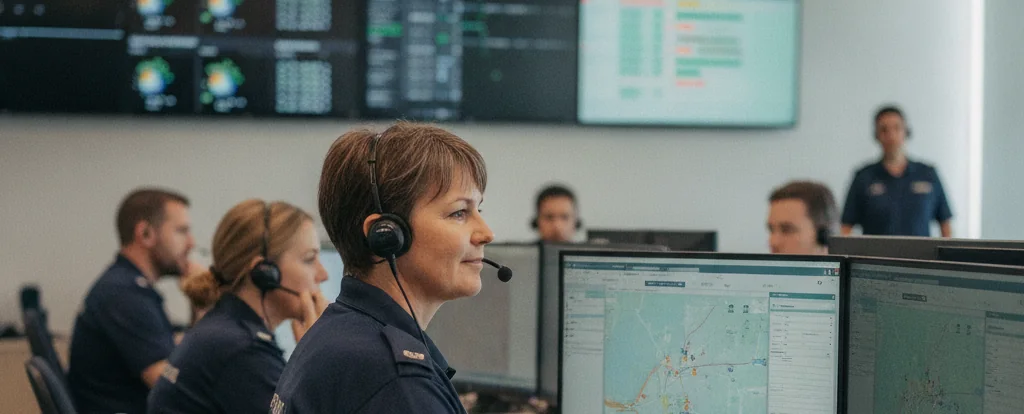
Emergency management officers work in local councils, state emergency services, government departments and organisations with major sites, such as mines, hospitals and ports. Unlike a firefighter or a paramedic, they are rarely the person handling the incident itself; the job is the planning, training and control room coordination that lets frontline agencies work as one. Most sit alongside police, health and fire services rather than replacing them, and the role leans as heavily on relationships and sign-off as it does on the response.
How much do emergency management officers earn?
The median full-time salary for an emergency management officer is $128,600 per annum, before tax, up $26,900 since 2018.
Pay is set by public sector enterprise agreements, so the classification level you are appointed at and the years you spend in the role matter more than performance. Where you work changes the range again, because a local council, a state agency and a mine site each have their own scales, and roles that carry an incident roster can add on-call allowances, overtime or penalty rates during activations.
What does an emergency management officer do day to day?
The list below is what fills most weeks; the exact mix shifts with seniority and whatever stage the current work is at.
- Writing and updating emergency plans with the agencies, councils and site operators who would carry them out
- Running exercises and training so volunteers and staff know their role before an incident, not during one
- Watching weather warnings, river gauges and hazard feeds for the early signs of an unfolding event
- Taking a seat in the control room during an activation to coordinate resources and keep agencies working from the same picture
- Reviewing what happened after an event and rewriting the parts of the plan that did not hold up
What skills do emergency management officers need?
Employers look for emergency response, policy analysis and advice, project management, backed by GIS mapping software fluency and strong stakeholder management.
Specialist skills
- Emergency response
- Policy analysis and advice
- Project management
- Regulatory compliance
Software and tools
- GIS mapping software
- Emergency management information systems (EMIS)
- Incident command system (ICS) software
- Microsoft Office Suite
- Hazard analysis tools
General skills
- Stakeholder management
- Written communication
- Problem solving
Is the job growing?
About 1,600 people work as emergency management officers in Australia, and employment is projected to grow 11.4% over the decade to 2035. That's healthy, above-average growth, and the role should stay in solid demand.
How do you become an emergency management officer?
Here's the path most emergency management officers take, step by step.
- 1Volunteer with an emergency service or start in a frontline role
State emergency services, rural fire brigades and surf lifesaving all take volunteers, and the incident experience is the same work employers later ask about. Defence, policing and communications roles offer a similar grounding, and the volunteering itself is unpaid.
- 2Complete a certificate IV or diploma in emergency management
These are delivered through TAFE and registered training organisations, usually over a year or two, and cover risk assessment, incident management and planning. About 35% of people already working as emergency management officers list Certificate III/IV as their highest qualification, which describes who is in the field rather than what every employer requires.
- 3Apply for entry roles in councils, state agencies or large sites
Local government, state emergency management agencies, mining companies and health services all employ officers, often under titles such as emergency management coordinator or resilience officer. Entry positions usually ask for relevant experience, a current driver licence and a police check.
- 4Build incident management qualifications
AIIMS training, delivered through the state agencies, and courses in incident control and recovery are what move you from supporting the planning to coordinating a control room during an activation.
- 5For career changers, add a graduate qualification
If you already hold a degree, a graduate certificate or diploma in emergency management or disaster resilience is a shorter route into the field than starting again, and most people study it while working.
Ready to apply as an emergency management officer?
Whether you're working toward becoming an emergency management officer or already are one and want a hand with the next step (sharpening your resume for ATS screening, tightening your cover letter, or knowing what you'll actually be asked at interview), here are examples grounded in this specific role, not generic templates.
What jobs can an emergency management officer move to?
Moving into Paramedic typically comes with the biggest pay rise, worth $19,700 a year more on average.
| Move to | Typical pay change | Overlap | Retraining |
|---|---|---|---|
| Paramedic Emergency management officers bring disaster response and interagency coordination experience to paramedic work, though registration requires a new degree.Known move | +$19,700 | 18% | requalify |
| Firefighter Emergency management officers bring interagency planning and hazard coordination skills to firefighting, though operational training is required.Known move | +$0 | 24% | reskill |
| Safety Consultant Emergency management officers bring risk assessment, emergency planning and compliance knowledge to safety consulting roles.Known move | −$9,800 | 43% | reskill |
| Policy Officer Emergency management officers bring frontline disaster expertise and operational insight to policy development and government planning. | −$15,600 | 63% | minimal |
Moves are chosen from Jobs and Skills Australia's Data on Occupation Mobility, which follows income tax records between 2011-12 and 2020-21, together with entry requirements and skill overlap. A known move is one people were seen making in that data. Pay change compares median full-time pay for the two roles.
Who works as an emergency management officer?
The typical emergency management officer is 43 years old; 75% are men, 88% work full-time, and full-timers average 59 hours a week.
- 43
- Median age
- 25%
- Female share
- 88%
- Full-time
- +19h
- vs all-jobs avg
What's it like being an emergency management officer?
The work runs on a cycle of preparation and interruption: months of plan writing, training and committee meetings, then long shifts and changing rosters when a flood, fire or storm is declared. Most of your time goes on persuading agencies and councils to act on a plan they did not write, because an emergency management officer coordinates rather than commands. It suits people who are comfortable with process, can stay steady in a control room, and can keep a clear head when an incident takes over the week.
What people like
- Plans that turn out to matter. The test of the job arrives when a fire or flood hits, and a plan that gets people out safely or keeps a hospital running gives unusually visible feedback.
- You work across the whole system. Police, health, utilities, councils and volunteer brigades all pass through the role, so your network and your view of how a region actually runs build quickly.
- The quiet stretches are real work. Between activations the job is planning, training and review, which suits people who prefer project work to constant adrenaline.
- Structured public sector conditions. Most roles sit under government enterprise agreements, which bring defined classifications, leave and super alongside the incident rosters.
What people find hard
- You coordinate without commanding. Agencies keep their own chains of command, so a plan only holds together if you have built the relationships beforehand and can persuade people to follow it.
- Plans can go stale on the shelf. A plan may sit untested for years, and updating it competes with whatever else has become urgent that week.
- Activation means long days and cancelled leave. Once an incident is declared the roster changes, evenings and weekends go, and the work continues until the event is over and the debriefs are done.
- Committee work and approvals. Getting a plan signed off means moving through councils, agencies and funding processes, which can take longer than writing the plan in the first place.
Based on our synthesis of professional-body surveys and public accounts of the role, not first-person verified reviews.
Which industries employ emergency management officers?
Mining employs the largest share of emergency management officers, followed by Public Administration and Safety.
Top employing industries
- 1Mining
- 2Public Administration and Safety
- 3Health Care and Social Assistance
Ranked by employment share; the source doesn't publish an exact percentage per industry.
| Certificate III/IV | 35.2% | |
|---|---|---|
| Diploma / Advanced Diploma | 26.9% | |
| Bachelor degree | 14.8% | |
| Year 12 or below | 13.8% | |
| Postgraduate | 6.3% |
Will AI replace emergency management officers?
The planning, mapping and reporting side of this job is already partly automated, with GIS software drafting hazard maps and AI tools able to summarise weather feeds, river gauges and fire danger ratings into an early picture of an unfolding event. What stays with people is the judgement about what to warn, when to escalate and who to call, along with the work of getting agencies with their own priorities to act together. The rating is moderate because the documentation is exposed and the decisions and relationships are not.
Share of typical working time by exposure level
- Coordinating agencies in a control roomDuring an activation, calls about evacuations, road closures and resource priorities are made between people under time pressure, often by phone and face to face.35%low
- Drafting and updating emergency plansTemplates, mapping and plan libraries are increasingly automated, which speeds up the first draft but leaves the local detail, such as who runs the evacuation centre, to be worked out with the people involved.25%high
- Monitoring hazards and issuing warningsSoftware reads river gauges and fire danger ratings far faster than a person can, but an officer still decides whether a watch and act message goes out and what it says.20%high
- Running exercises and debriefsScenario generators can build exercise injects and transcribe a debrief, but the value comes from the discussion about what the room would actually do.20%moderate
Moves least exposed to AI
These career moves from emergency management officer work are rated low for AI exposure:
- Firefighter
Some skill overlap (24%), reskill to get there, and a low automation-risk profile.
- Paramedic
Some skill overlap (18%), requalify to get there, and a low automation-risk profile.
Common questions about becoming an emergency management officer
Straight answers to the questions people ask most.
How much do emergency management officers earn?
Full-time emergency management officers earn a median of $128,600 per year before tax. Pay follows government classification levels and differs between employers, and roles carrying an on-call or incident roster may pay allowances on top.
How do you become an emergency management officer?
Most entrants combine a certificate IV or diploma in emergency management with experience in an emergency service, a council, defence or a communications role. Volunteering with a state emergency service or rural fire brigade is the common starting point, because it gives you incident experience before you apply.
Are emergency management officers in demand?
Emergency management officers are currently not in shortage, and employment is projected to grow 11.4% over the decade to 2035. The work sits mostly with government and large site-based employers, so openings appear on council, state agency and company career pages rather than general job boards.
Is emergency management a stressful job?
The job has two modes, and only one of them is intense. Between incidents it is planning, meetings and training on ordinary hours, while an activation can mean long shifts, interrupted leave and decisions that affect people's safety.
Will AI replace emergency management officers?
AI is changing the documentation side of the job more than the response side. Hazard mapping, weather monitoring and the first draft of plans are increasingly automated, while decisions about warnings, evacuations and how agencies work together still sit with people.
What can emergency management officers move into?
The closest moves are into policy work, where the briefing and government process skills carry across, and into safety consulting, which leans on the same hazard and risk assessment ($15,600 less and $9,800 less respectively). Paramedic work pays $19,700 more but requires a new degree and registration, so it suits people prepared to retrain. The move also runs the other way, with firefighters, defence force members and communications operators bringing frontline incident experience into these roles.
Related roles
Not sure this is you? Take the career quiz and get a ranked shortlist of roles that fit how you like to work.