Gastroenterologist
Gastroenterologists are specialist physicians who investigate and treat conditions of the gut, liver, pancreas and biliary tract, combining clinic work with procedures such as gastroscopy and colonoscopy.
- Median salary*
- $218,400
4.1%vs last year, before tax
- People employed
- 570
5.0%vs last year
- Projected growth
- +32.8%
to 2035
- AI exposure*
- Low
- automation risk
- Average hours
- 47/wk
+7h vs all jobs
- Shortage status
- In shortage
national
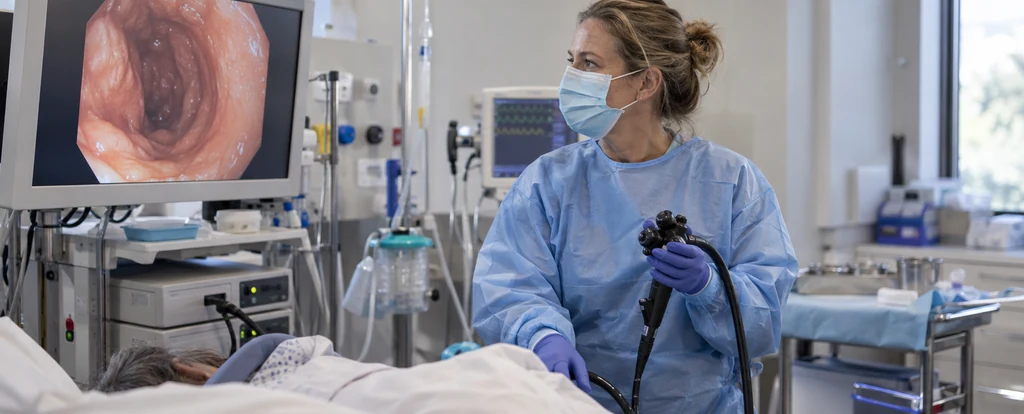
Gastroenterologists work in public hospitals, private consulting rooms and day-procedure centres, splitting the week between endoscopy lists, outpatient clinics and ward rounds. The role sits between general medicine and surgery: they manage digestive and liver disease with medication, diet and endoscopic procedures, and hand a patient to a surgeon when an operation is the better treatment. Most also take part in an acute on-call roster for problems such as gastrointestinal bleeding.
How much do gastroenterologists earn?
The median full-time salary for a gastroenterologist is $218,400 per annum, before tax, up $45,800 since 2018.
Where you work matters more than almost anything else: a hospital staff specialist is paid under a state award with defined on-call loading, while private practice income follows procedural volume, consultation billing and the arrangements you have with the rooms or day hospital you use. Subspecialty demand, rural and remote appointments, and the share of your week spent on procedures all move the figure. Procedural work usually pays better than clinic work, which is one reason many gastroenterologists build a mixed public and private week.
What does a gastroenterologist do day to day?
The list below is what fills most weeks; the exact mix shifts with seniority and whatever stage the current work is at.
- Running outpatient clinics for reflux, inflammatory bowel disease, irritable bowel syndrome and chronic liver disease
- Performing gastroscopy, colonoscopy and ERCP on day procedure lists, including polyp removal and biopsy
- Taking calls for acute gastrointestinal bleeding, obstruction and liver failure, and admitting patients from the emergency department
- Reviewing blood tests, imaging, stool studies and biopsy results, then adjusting treatment or surveillance intervals
- Supervising registrars on the ward and in endoscopy, and presenting complex cases at multidisciplinary meetings with surgeons, oncologists and dietitians
What skills do gastroenterologists need?
Employers look for patient care and support, clinical assessment and treatment, medication management, backed by Olympus endoscopy systems fluency and strong written communication.
Specialist skills
- Patient care and support
- Clinical assessment and treatment
- Medication management
- Care planning and coordination
- Health education and advice
Software and tools
- Olympus endoscopy systems
- Provation MD
- Epic
- Cerner Millennium
- Dragon Medical One
General skills
- Written communication
- Problem solving
- Attention to detail
Is the job growing?
About 570 people work as gastroenterologists in Australia, and employment is projected to grow 32.8% over the decade to 2035. That's very strong growth. Few roles in Australia are expanding this fast, and it points to solid demand for years to come.
How do you become a gastroenterologist?
Here's the path most gastroenterologists take, step by step.
- 1Complete a medical degree
Entry is either undergraduate (usually five to six years) or graduate entry (four years plus a prior degree). All Australian medical degrees lead to provisional registration with AHPRA and a hospital internship.
- 2Finish internship and prevocational years
One intern year plus one or more resident medical officer years in a teaching hospital, rotating through general medicine, surgery and emergency. This is when most people decide whether physician training is for them.
- 3Complete RACP Basic Training in adult medicine
Three years of core general medicine with the Royal Australasian College of Physicians, including the written and clinical examinations. Passing the clinical exam is the main hurdle before specialty training.
- 4Complete Advanced Training in gastroenterology
Three years of accredited advanced training covering endoscopy, hepatology and inpatient gastroenterology, with a research or quality improvement component. Trainees build procedure numbers across gastroscopy, colonoscopy and, in some posts, ERCP.
- 5Take up a fellowship or subspecialty post
Many do a further year in inflammatory bowel disease, hepatology, advanced endoscopy or transplant medicine before applying for a hospital staff specialist role or joining a private practice.
Ready to apply as a gastroenterologist?
Whether you're working toward becoming a gastroenterologist or already are one and want a hand with the next step (sharpening your resume for ATS screening, tightening your cover letter, or knowing what you'll actually be asked at interview), here are examples grounded in this specific role, not generic templates.
What jobs can a gastroenterologist move to?
We don't list lateral moves for gastroenterologists: leaving means a full new qualification rather than a career move, and the realistic routes in are covered under how to become one.
Who works as a gastroenterologist?
The typical gastroenterologist is 45 years old; 69% are men, 78% work full-time, and full-timers average 47 hours a week.
- 45
- Median age
- 31%
- Female share
- 78%
- Full-time
- +7h
- vs all-jobs avg
What's it like being a gastroenterologist?
The week is a mix of procedure lists, clinics, ward rounds and paperwork, with the on-call roster cutting across all of it. Gastroenterology rewards people who like both the technical side of endoscopy and the slow work of managing a chronic condition over years. The training is long, and the mood of a list can change quickly when a routine colonoscopy turns up something serious.
What people like
- Procedures that settle the question. A colonoscopy can find a polyp and remove it in the same session, so the patient often leaves with the problem already dealt with rather than waiting on a referral.
- Looking after people across years. Conditions such as inflammatory bowel disease and chronic hepatitis need regular review, so you build a long clinical relationship rather than a single consultation.
- The breadth of the specialty. A single week can touch immunology, nutrition, cancer surveillance, liver transplant and mental health, which keeps the medicine varied.
- Teaching the next group through. Registrars learn endoscopy at the table, so consultants spend a real part of the week supervising procedures and clinics rather than only seeing patients themselves.
What people find hard
- The length of the road in. Medical degree, basic physician training and advanced training add up to well over a decade before you work as a consultant, and the exams sit in the middle of that.
- Lists run to volume. Surveillance colonoscopies and public waiting lists mean some days are a steady sequence of similar procedures with limited time between them.
- Bleeding does not keep office hours. The acute on-call roster brings calls at night and on weekends, and an unstable patient can pull you out of a clinic at short notice.
- Some conversations have no good answer. Advanced liver disease and newly diagnosed cancers mean regular discussions with patients and families where the news is serious and the options are limited.
Based on our synthesis of professional-body surveys and public accounts of the role, not first-person verified reviews.
Which industries employ gastroenterologists?
Health Care and Social Assistance employs the largest share of gastroenterologists.
Top employing industries
- 1Health Care and Social Assistance
Ranked by employment share; the source doesn't publish an exact percentage per industry.
| Postgraduate | 51.1% | |
|---|---|---|
| Bachelor degree | 43.9% | |
| Diploma / Advanced Diploma | 0% | |
| Certificate III/IV | 0% |
Will AI replace gastroenterologists?
Gastroenterology is one of the less exposed specialties, largely because the central tasks happen at the bedside and at the end of a scope. Computer-aided detection systems now highlight possible polyps during colonoscopy, and documentation tools draft procedure reports and clinic letters, which takes time off paperwork without changing who makes the call. Diagnosis, procedural skill and long-term management of chronic disease still rest with the clinician.
Share of typical working time by exposure level
- Performing gastroscopy and colonoscopyAI overlays can flag a suspicious area on screen, but steering the scope, removing a polyp safely and managing sedation stay with the endoscopist.35%low
- Clinic consultations and ongoing disease managementDecision support can suggest a surveillance interval for a patient with inflammatory bowel disease, while the conversation about changing treatment remains clinical work.30%moderate
- Writing procedure reports and clinic lettersSpeech recognition and drafting tools already turn a dictated colonoscopy into a structured report, which a consultant then reviews and corrects.20%high
- Supervising registrars and running multidisciplinary meetingsTeaching a trainee to recognise a subtle lesion, and agreeing a plan with surgeons and oncologists, depends on presence and judgement rather than software.15%low
Common questions about becoming a gastroenterologist
Straight answers to the questions people ask most.
How much do gastroenterologists earn?
Full-time gastroenterologists earn a median of $218,400 per year before tax, which makes this one of the better paid specialties in medicine. Whether you work as a hospital staff specialist or in private practice, and how much of your week is procedural, is what separates the top and bottom of that range.
How do you become a gastroenterologist?
You complete a medical degree, an intern year, around three years of basic physician training with the Royal Australasian College of Physicians, then three years of advanced training in gastroenterology. Most people take a further fellowship year in a subspecialty before applying for a consultant post.
Are gastroenterologists in demand?
Gastroenterologists are currently in shortage nationally, and employment is projected to grow 32.8% over the decade to 2035. The workforce is small and grows mainly through accredited training positions, so entry depends on getting a specialist training place rather than on how many job ads are open.
Will AI replace gastroenterologists?
No. Exposure is low because the work is hands-on and judgement-based: artificial intelligence tools already flag polyps during colonoscopy and draft parts of procedure reports, but someone still has to drive the scope, decide what to do with a finding and manage the patient afterwards.
What can a gastroenterologist move into?
The usual path is from resident medical officer into accredited physician training and then into gastroenterology, and resident medical officers earn $114,400 more than gastroenterologists while they are still in training. From consultant level, many move toward private practice or subspecialise in hepatology, inflammatory bowel disease or advanced endoscopy. Running your own rooms or joining a private practice is a common long-term step, and it is often where earnings grow.
How many hours do gastroenterologists work?
Full-time gastroenterologists average around 47 hours a week, above the standard full-time week. Procedure lists, clinics and on-call combine, and the hours are often managed by negotiating how much on-call and how many private lists you take on.
Related roles
- Resident Medical Officer
- Endocrinologist
- Nephrologist
- Haematologist
- Neurologist
- Clinical Immunologist and Allergist
Not sure this is you? Take the career quiz and get a ranked shortlist of roles that fit how you like to work.