Haematologist
Haematologists diagnose and treat diseases of the blood, bone marrow and lymphatic system, from leukaemia and lymphoma to anaemia and bleeding disorders.
- Median salary*
- $208,000
4.5%vs last year, before tax
- People employed
- 180
10.0%vs last year
- Projected growth
- +32.8%
to 2035
- AI exposure*
- Low
- automation risk
- Average hours
- 51/wk
+11h vs all jobs
- Shortage status
- In shortage
national
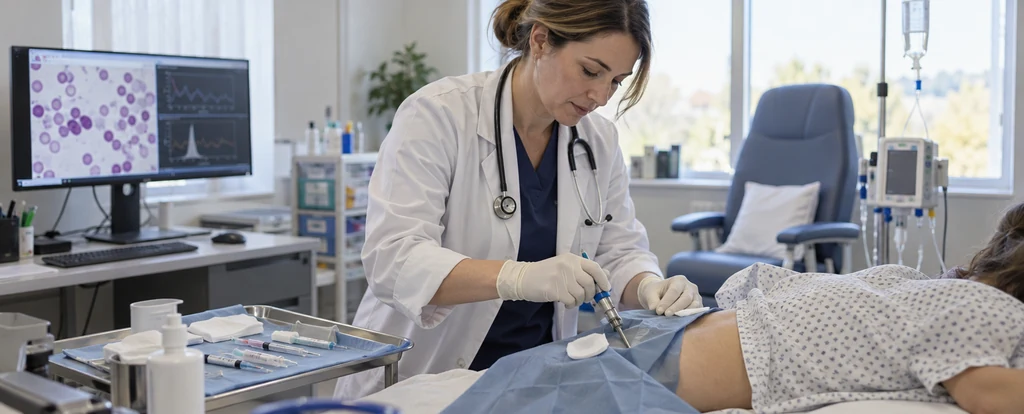
Most haematologists work in hospital cancer centres or larger private practices, splitting the week between outpatient clinics, ward rounds, the laboratory and an on-call roster. The role sits close to medical oncology, but the blood, marrow and lymphatic system is the whole of its territory, which takes in benign conditions such as clotting and bleeding disorders that never involve cancer. Haematologists also report on blood films and bone marrow samples themselves, so the laboratory half of the job belongs to them as much as the clinical half.
How much do haematologists earn?
The median full-time salary for a haematologist is $208,000 per annum, before tax, up $44,200 since 2018.
Specialist pay depends mostly on how the week is divided: salaried hospital consultants are paid under state health department agreements that set a base plus on-call and other allowances, while private practice income reflects how many patients you bill. Laboratory reporting arrangements can add a further stream for consultants who hold them. Part-time public appointments, which many consultants keep alongside private work, also change total earnings.
What does a haematologist do day to day?
The list below is what fills most weeks; the exact mix shifts with seniority and whatever stage the current work is at.
- Running outpatient clinics for people with leukaemia, lymphoma, myeloma and anaemia
- Reviewing full blood counts, coagulation studies and bone marrow samples under the microscope
- Performing bone marrow aspirates and trephine biopsies, usually with sedation
- Prescribing and adjusting chemotherapy, immunotherapy and targeted therapies
- Coordinating transplant and cellular therapy patients with nursing, pharmacy and pathology teams
What skills do haematologists need?
Employers look for clinical assessment and treatment, patient care and support, medication management, backed by Electronic medical records (e.g., Cerner, Epic) fluency and strong written communication.
Specialist skills
- Clinical assessment and treatment
- Patient care and support
- Medication management
- Care planning and coordination
- Health education and advice
Software and tools
- Electronic medical records (e.g., Cerner, Epic)
- Laboratory information systems
- Bone marrow biopsy equipment
- Chemotherapy prescribing systems
- Microscope imaging software
General skills
- Written communication
- Attention to detail
- Problem solving
Is the job growing?
About 180 people work as haematologists in Australia, and employment is projected to grow 32.8% over the decade to 2035. That's very strong growth. Few roles in Australia are expanding this fast, and it points to solid demand for years to come.
How do you become a haematologist?
Here's the path most haematologists take, step by step.
- 1Complete a medical degree
Entry is through an accredited medical program, usually a five or six year undergraduate degree or a four year graduate entry course, followed by internship in a hospital.
- 2Train in adult medicine
Basic physician training with the Royal Australasian College of Physicians takes about three years and includes rotations across general medicine, so you see a wide range of patients before settling on a specialty.
- 3Complete advanced training in haematology
Advanced training runs about three years and covers clinical haematology plus laboratory work, with assessments and examinations set by the relevant colleges. Some trainees extend it for a research year or a sub-specialty such as transplantation.
- 4Get specialist registration
Fellowship of the Royal Australasian College of Physicians is the qualification employers ask for, and specialist registration with AHPRA is required to practise unsupervised. Haematologists who concentrate on laboratory work may also train through the Royal College of Pathologists of Australasia.
Ready to apply as a haematologist?
Whether you're working toward becoming a haematologist or already are one and want a hand with the next step (sharpening your resume for ATS screening, tightening your cover letter, or knowing what you'll actually be asked at interview), here are examples grounded in this specific role, not generic templates.
What jobs can a haematologist move to?
We don't list lateral moves for haematologists: leaving means a full new qualification rather than a career move, and the realistic routes in are covered under how to become one.
Who works as a haematologist?
The typical haematologist is 43 years old; 60% are men, 78% work full-time, and full-timers average 51 hours a week.
- 43
- Median age
- 40%
- Female share
- 78%
- Full-time
- +11h
- vs all-jobs avg
What's it like being a haematologist?
The week usually splits between clinic, ward and laboratory, and an urgent referral for suspected acute leukaemia cuts across whatever was planned. That unpredictability suits doctors who like the breadth, because the same day can hold a marrow biopsy, a hard conversation with a transplant patient and a report on a routine blood count. Much of the work is long-term, since many blood conditions are managed for years rather than cured and discharged.
What people like
- Diagnosis you can see under the microscope. Blood and marrow samples often give a clear answer, and haematologists are trained to read them rather than wait on someone else's report.
- Care that runs for years. Conditions such as myeloma and chronic leukaemia are managed over a long stretch, so you get to know patients and their families and adjust treatment as it changes.
- Science that keeps moving. Targeted therapies, CAR-T cell treatment and genetic testing have changed what is possible in the specialty within a single career.
- Decisions made as a team. Haematology is consultative work, and you rely on pathology, pharmacy, nursing and transplant coordinators to reach most calls.
What people find hard
- Giving bad news is routine. You will tell people they have a blood cancer, and relapse after a good response is part of the work rather than an exception.
- On-call and interrupted nights. Acute leukaemia and transplant patients need a consultant reachable at short notice, so rosters shape family life and holidays.
- Procedures patients dread. Bone marrow biopsies are uncomfortable even with sedation, and someone has to sit down and do them well.
- A long, exam-heavy path. Fellowship examinations, research requirements and years of shift work come before the consultant title.
Based on our synthesis of professional-body surveys and public accounts of the role, not first-person verified reviews.
Which industries employ haematologists?
Health Care and Social Assistance employs the largest share of haematologists.
Top employing industries
- 1Health Care and Social Assistance
Ranked by employment share; the source doesn't publish an exact percentage per industry.
| Postgraduate | 47.3% | |
|---|---|---|
| Bachelor degree | 46.7% | |
| Diploma / Advanced Diploma | 0% | |
| Certificate III/IV | 0% |
Will AI replace haematologists?
Haematology carries a low overall exposure to AI. Pattern-recognition tools already help screen blood films and flag abnormal results, and they will get better at it, but they hand work back to a specialist who has to weigh the clinical picture, choose treatment and explain it to a patient. Biopsies, on-call decisions and the long-term care of transplant patients remain human work.
Share of typical working time by exposure level
- Choosing and adjusting treatmentDeciding between chemotherapy, targeted therapy, immunotherapy and transplant turns on genetics, fitness, prior treatment and what the patient wants, which is not a call software makes.30%low
- Clinic consultations and long-term careTalking someone through a new diagnosis, or reworking the plan after a relapse, depends on a relationship built over months and years of appointments.30%low
- Reading blood films and bone marrow samples under the microscopeDigital imaging and pattern-recognition software flag suspicious cells and sort slides faster than a manual scan, but a haematologist still confirms the finding against the patient's history.25%moderate
- Results reporting, letters and documentationDictation, structured reports and referral letters are already partly drafted by templates and language tools, and that share of the week is likely to shrink further.15%high
Common questions about becoming a haematologist
Straight answers to the questions people ask most.
How much do haematologists earn?
Haematologists earn a median of $208,000 per year before tax. That figure covers full-time specialist work, and it shifts with how much of the week is public hospital sessions, private consulting or laboratory reporting.
How do you become a haematologist?
You complete a medical degree, then basic physician training with the Royal Australasian College of Physicians, then about three years of advanced training in haematology. Fellowship and specialist registration with AHPRA follow, and only then can you practise unsupervised.
Are haematologists in demand in Australia?
Haematologists are currently in shortage nationally, and employment is projected to grow 32.8% over the decade to 2035 over the decade to 2035. The training pathway is long and the number of advanced training places is limited, so the workforce grows slowly whatever demand does.
Will AI replace haematologists?
No, and the specialty's overall exposure is low. Pattern-recognition tools already screen blood films and flag abnormal results, but they feed a specialist who still weighs the clinical picture, chooses treatment and talks it through with a patient. Procedures, on-call decisions and the long-term care of transplant patients stay with the doctor.
What can haematologists move into later?
Most stay inside the specialty and build a practice around an area such as leukaemia, myeloma, haemostasis or transplantation, moving between public hospital posts and private consulting over a career. The role most specialists come through first is resident medical officer, and haematologists earn $104,000 more than that. Private practice, often alongside laboratory reporting, is a common long-term destination and is usually where earnings grow.
Related roles
- Resident Medical Officer
- Gastroenterologist
- Endocrinologist
- Nephrologist
- Neurologist
- Clinical Immunologist and Allergist
Not sure this is you? Take the career quiz and get a ranked shortlist of roles that fit how you like to work.