Lagger
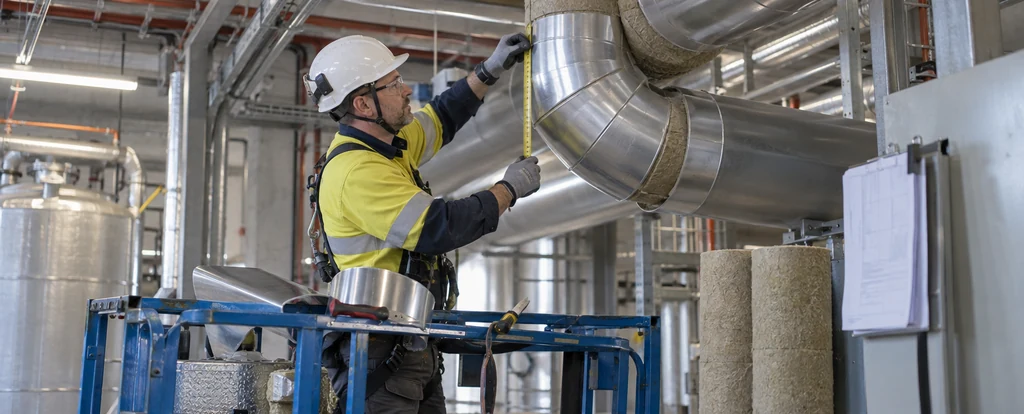
Laggers insulate pipework, ducts, tanks and vessels in industrial and commercial buildings, then clad and seal the result so heat stays in and surfaces stay safe to touch.
- Median salary*
- $78,000
4.0%vs last year, before tax
- People employed
- 380
5.0%vs last year
- Projected growth
- +1%
to 2035
- AI exposure*
- Low
- automation risk
- Average hours
- 43/wk
+3h vs all jobs
- Shortage status
- Not in shortage
national
Lagging is a small trade: about 380 people work as laggers in Australia, mostly on commercial, industrial and resources construction sites. It is often confused with building insulation installation, but laggers work on pipes, tanks, ducts and vessels that have to hold their temperature rather than on ceilings and walls. The job is physical, and much of it happens at heights, in plant rooms or in tight spaces.
How much do laggers earn?
The median full-time salary for a lagger is $78,000 per annum, before tax, up $16,300 since 2018.
Lagging pay tracks the project more than the trade: rates on resources and heavy industrial work are usually higher than on commercial fitouts, particularly where an enterprise agreement sets the site rate. Subcontractors price a job rather than earning an hourly rate, so their income depends on how quickly they work and what work they can win. Licences for elevating work platforms and confined space entry are part of why one lagger is worth more on a crew than another.
What does a lagger do day to day?
The list below is what fills most weeks; the exact mix shifts with seniority and whatever stage the current work is at.
- Measuring pipework and vessels, then cutting insulation to fit
- Fitting lagging around valves, flanges, bends and pipe supports, where the shapes get awkward
- Cladding finished work in metal sheet and sealing it against weather and damage
- Reading plans and insulation schedules to work out the material and thickness each system needs
- Setting up a scissor lift or scaffold and working along a pipe run in a plant room or on a rooftop
What skills do laggers need?
Employers look for hand and power tool work, reading plans and specifications, installation and maintenance, backed by Sheet metal shears fluency and strong attention to detail.
Specialist skills
- Hand and power tool work
- Reading plans and specifications
- Installation and maintenance
- Worksite safety management
- Fabrication and finishing
- Plant and equipment operation
Software and tools
- Sheet metal shears
- Lagging knives
- Insulation cutting machines
- Scissor lifts
- Measuring tapes
General skills
- Attention to detail
Is the job growing?
About 380 people work as laggers in Australia, and employment is projected to grow 1% over the decade to 2035. That's modest growth: demand is steady rather than booming.
How do you become a lagger?
Here's the path most laggers take, step by step.
- 1Get a White Card
The general construction induction course is a one-day requirement for anyone working on an Australian construction site, and each state and territory runs its own version. Without it you cannot be signed in to a site.
- 2Start as a trades assistant on a lagging crew
Many laggers learn the trade this way, carrying material, measuring and cutting for qualified hands. It is paid work, and it is the quickest way to find out whether the heights, dust and site conditions suit you.
- 3Take on an apprenticeship or traineeship
A Certificate III in Engineering - Fabrication Trade (MEM31925) or a related qualification is what larger contractors and industrial projects look for, and it can be completed while you are working. Apprenticeships usually run for three to four years.
- 4Add the site licences you need
A high risk work licence for a boom-type elevating work platform, plus working at heights and confined space entry training, opens up more of the work. The rules vary by state, so check what your state regulator issues before booking a course.
Ready to apply as a lagger?
Whether you're working toward becoming a lagger or already are one and want a hand with the next step (sharpening your resume for ATS screening, tightening your cover letter, or knowing what you'll actually be asked at interview), here are examples grounded in this specific role, not generic templates.
What jobs can a lagger move to?
None of the roles laggers typically move into pay more than the role itself. Insulation Installer is the closest match. If a bigger salary is the goal, moving up into a senior or principal position within the role is usually the faster route than moving sideways.
| Move to | Typical pay change | Overlap | Retraining |
|---|---|---|---|
| Insulation Installer Laggers bring insulation cutting, fitting and thermal knowledge to insulation installer work, though building insulation practices may need reskilling.Known move | −$9,400 | 43% | reskill |
Moves are chosen from Jobs and Skills Australia's Data on Occupation Mobility, which follows income tax records between 2011-12 and 2020-21, together with entry requirements and skill overlap. A known move is one people were seen making in that data. Pay change compares median full-time pay for the two roles.
Who works as a lagger?
The typical lagger is 42 years old; 99% are men, 80% work full-time, and full-timers average 43 hours a week.
- 42
- Median age
- 1%
- Female share
- 80%
- Full-time
- +3h
- vs all-jobs avg
What's it like being a lagger?
Lagging runs to the construction program, because pipework has to be insulated before services are closed up, so the work comes in pushes with quieter gaps between jobs. It suits people who like hands-on fitting, are comfortable at heights and in plant rooms, and take satisfaction from a neat, weather-tight finish. The trade is small, so how steady the work feels often depends on the contractor you are with and where the industrial projects are.
What people like
- A finish you can see. The cladding goes on last, so neat work on a plant room or rooftop is visible to everyone who walks past it for the next twenty years.
- Something different every run. Bends, valves, offsets and supports mean each section is measured and cut on its own, rather than repeating one shape all day.
- Working on your own. Laggers often work alone or in twos along a stretch of pipe, with the supervisor checking in at the end of the run.
- Active work. You are on your feet, up a lift or on a scaffold most of the day, which suits people who would rather not sit at a desk.
What people find hard
- Awkward places. Much of the work is above head height, in ceiling spaces, plant rooms or confined areas, and holding those positions for long stretches is tiring.
- Dust, fibres and protective gear. Cutting insulation means masks, gloves and eye protection most of the day, and the material itches if it works its way under your collar.
- Weather and site conditions. Outdoor pipe racks and rooftops mean heat, cold and wind, and lifts stop when it is too wet or too windy to use them safely.
- Work follows the construction cycle. When industrial and resources projects slow down, lagging crews are cut back quickly because the trade is small and much of it is subcontracted.
Based on our synthesis of professional-body surveys and public accounts of the role, not first-person verified reviews.
Which industries employ laggers?
Construction employs the largest share of laggers, followed by Manufacturing.
Top employing industries
- 1Construction
- 2Manufacturing
Ranked by employment share; the source doesn't publish an exact percentage per industry.
| Year 12 or below | 58.6% | |
|---|---|---|
| Certificate III/IV | 22.7% | |
| Diploma / Advanced Diploma | 5.3% | |
| Bachelor degree | 5% | |
| Postgraduate | 0% |
Will AI replace laggers?
Lagging is low exposure overall. Take-off software, cutting machines and drawing models speed up the preparation and the cutting, but someone still has to climb to the pipe, measure what is actually there and fit insulation and cladding around every valve, bend and support. The awkward, physical part of the job is what stays with people.
Share of typical working time by exposure level
- Fitting lagging to pipes, vessels and ductsWrapping, taping and securing material around supports, flanges and awkward shapes needs hands on the pipe.35%low
- Cladding, sealing and finishingCutting and fixing metal sheet so that it sheds water and looks tidy is skilled manual work that no machine does on site.30%low
- Measuring pipework and cutting insulationTake-off software and cutting machines can size straight runs, but bends, valves and offsets are still measured against the pipe on site.20%moderate
- Reading plans, specifications and insulation schedulesDigital models and specification software now carry the thicknesses and materials, so this part of the job is increasingly screen-based.15%high
Common questions about becoming a lagger
Straight answers to the questions people ask most.
How much does a lagger earn?
The median for full-time laggers is $78,000 per annum, before tax. Enterprise agreements on large industrial and resources jobs, site allowances and overtime push that higher, and so does holding an elevating work platform or confined space licence. Treat it as a guide, since rates vary by employer, project and state.
How do you become a lagger?
Most people start as a trades assistant on a lagging crew, which is paid work and needs only a White Card to get on site. From there you can take on a Certificate III in Engineering - Fabrication Trade (MEM31925) or a related qualification through an apprenticeship, and add the licences for elevating work platforms and confined space entry that industrial sites ask for.
Are laggers in demand?
Laggers are currently not in shortage, and employment is projected to grow 1% over the decade to 2035. The occupation is small, so openings mostly appear when experienced laggers leave the trade, and hiring follows activity in industrial, resources and maintenance construction.
Will AI or automation replace laggers?
Automation has limited reach into this work. Take-off software, cutting machines and digital drawings change the preparation, but measuring against the pipe, fitting insulation around awkward shapes and fixing cladding are done by hand in places a machine cannot reach. What shifts is the paperwork and the cutting, not the trade itself.
What can a lagger move into?
Insulation installers move in both directions, because both roles handle and fit insulation materials, although industrial pipe and vessel work takes some reskilling. Sheet metal workers come across with cladding and fabrication skills, and they earn about $6,200 more than laggers at the median. Experienced laggers often go out on their own as subcontractors running a small crew, and that is often where earnings grow.
Do you need a qualification to start as a lagger?
No, you can start without one, and plenty of laggers learn the trade on the job. A Certificate III is what larger contractors and industrial projects ask for, and it usually lifts pay and keeps you working when crews are cut back.
Related roles
- Insulation Installer
- Insulation Installer
- Sheet Metal Worker
- Pressure Welder
- Electrical Trades Assistant
- Steel Fixer
Not sure this is you? Take the career quiz and get a ranked shortlist of roles that fit how you like to work.