Medical Physicist
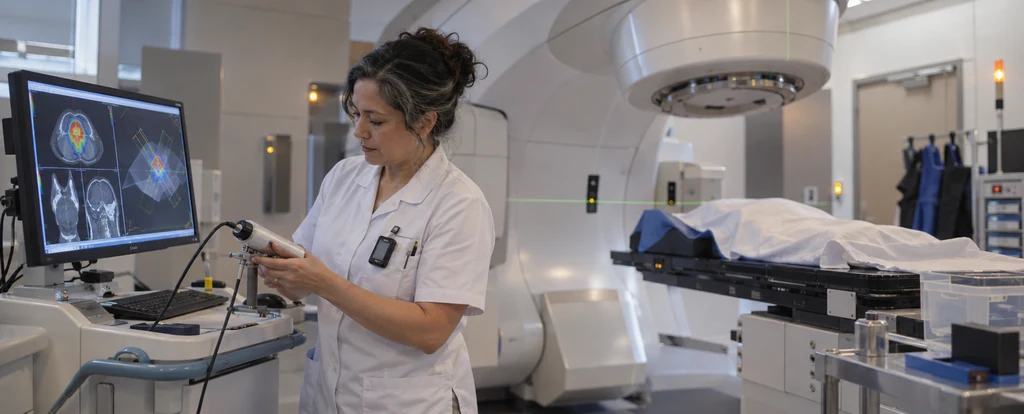
Medical physicists apply physics and engineering to medicine, checking that the radiation used to diagnose and treat patients is measured accurately and delivered safely.
- Median salary*
- $117,000
3.9%vs last year, before tax
- People employed
- 980
2.0%vs last year
- Projected growth*
- +8%
to 2035
- AI exposure*
- Moderate
- automation risk
- Average hours*
- 40/wk
matches all-jobs average
- Shortage status*
- In shortage
national
Medical physicists work in hospital radiotherapy, imaging and nuclear medicine departments, and in the workshops, labs and equipment suppliers that support them. The role sits between physics and clinical care: they are the people who confirm that a treatment machine delivers the dose it claims to, and that a plan produced by software is right for the patient. It is a small occupation, with about 980 people working in it nationally, and most roles sit in larger hospital departments and cancer centres.
How much do medical physicists earn?
The median full-time salary for a medical physicist is $117,000 per annum, before tax, up $24,300 since 2018.
Pay comes from the relevant state health service award or enterprise agreement, so scales differ between states and between public and private employers. On-call and after-hours work for treatment machines adds loadings, and accreditation level and seniority move pay more than anything else in this field.
What does a medical physicist do day to day?
The list below is what fills most weeks; the exact mix shifts with seniority and whatever stage the current work is at.
- Calibrating and commissioning linear accelerators, imaging systems and nuclear medicine equipment
- Checking treatment plans with radiation oncologists and radiation therapists before a patient is treated
- Measuring radiation doses to patients, staff and equipment, and investigating any result that looks wrong
- Running the quality assurance schedule, from daily machine checks through to annual surveys
- Advising on shielding, room design and compliance with state radiation regulations
What skills do medical physicists need?
Employers look for data analysis, regulatory compliance, risk and internal controls, backed by Varian Eclipse fluency and strong problem solving.
Specialist skills
- Data analysis
- Regulatory compliance
- Risk and internal controls
- Statistical modelling
Software and tools
- Varian Eclipse
- RayStation
- MOSAIQ
- MATLAB
- Python
General skills
- Problem solving
- Attention to detail
- Written communication
Is the job growing?
About 980 people work as medical physicists in Australia, and employment is projected to grow 8% over the decade to 2035. That's modest growth: demand is steady rather than booming.
How do you become a medical physicist?
Here's the path most medical physicists take, step by step.
- 1Complete a physics, engineering or physical science degree
A three or four year bachelor degree gives you the mathematics and radiation physics the postgraduate courses assume. Some students choose a degree with a medical physics major so they can test their interest before committing to the clinical route.
- 2Finish an accredited master's in medical physics
The master's covers radiotherapy physics, imaging and radiation protection, and is the qualification hospital departments expect. A PhD suits research and academic work, but it does not replace clinical training.
- 3Work through the ACPSEM clinical training program
The Australasian College of Physical Scientists and Engineers in Medicine accredits medical physicists through its training and education program. You complete supervised clinical training and assessments over several years, usually while employed in a hospital department.
- 4Meet your state or territory radiation licensing requirements
Working with radiation apparatus and sources is regulated under state and territory radiation safety legislation, and the licensing and registration arrangements differ between jurisdictions. Check the rules where you plan to work, because accreditation alone may not be enough.
- 5Settle into a specialty
Most physicists specialise in radiotherapy, diagnostic imaging or nuclear medicine, and later move into radiation safety officer roles, equipment commissioning, teaching or departmental leadership.
Ready to apply as a medical physicist?
Whether you're working toward becoming a medical physicist or already are one and want a hand with the next step (sharpening your resume for ATS screening, tightening your cover letter, or knowing what you'll actually be asked at interview), here are examples grounded in this specific role, not generic templates.
What jobs can a medical physicist move to?
Moving into Work Health and Safety Officer typically comes with the biggest pay rise, worth $1,800 a year more on average.
| Move to | Typical pay change | Overlap | Retraining |
|---|---|---|---|
| Work Health and Safety Officer A medical physicist brings radiation safety and risk assessment to work health and safety, needing a short course to apply it in general workplaces. | +$1,800 | 75% | short course |
| Environment, Health and Safety Manager A medical physicist brings radiation protection and compliance knowledge to environment, health and safety management, needing further study in broader workplace safety. | −$20,800 | 65% | reskill |
| Physicist A medical physicist can move into general physics research, carrying advanced physics and modelling skills but needing to rebuild a research profile. | −$20,900 | 33% | reskill |
| Quality Engineer A medical physicist's calibration, testing and quality assurance experience suits quality engineering in medical devices, though an engineering qualification is required. | −$38,000 | 67% | requalify |
Moves are chosen from Jobs and Skills Australia's Data on Occupation Mobility, which follows income tax records between 2011-12 and 2020-21, together with entry requirements and skill overlap. A known move is one people were seen making in that data. Pay change compares median full-time pay for the two roles.
Who works as a medical physicist?
The typical medical physicist is 40 years old; 72% are men, 87% work full-time, and full-timers average 40 hours a week.
- 40
- Median age
- 28%
- Female share
- 87%
- Full-time
- +0h
- vs all-jobs avg
What's it like being a medical physicist?
The rhythm of the job follows the treatment machines: daily checks before the first patient, scheduled testing through the year, and long commissioning projects whenever new equipment arrives. Much of the work is methodical and documented, and the pressure comes from knowing that a missed fault affects real patients, so the role suits people who like physics but want a defined clinical purpose for it.
What people like
- Your measurements back up what the machine claims. A treatment plan is only as good as the machine delivering it, and the calibration and quality assurance you run are what confirm the dose reaching the patient is the dose that was planned.
- Physics with a clinical purpose. The problems are concrete ones: why a beam profile drifted, whether a new planning algorithm is safe to use, how much shielding a new treatment room needs.
- Long projects with a clear finish. Commissioning a new linear accelerator or imaging system takes months of testing and ends with a machine in clinical use.
- A specialist voice in the clinical team. Physicists work alongside radiation oncologists, radiation therapists and engineers, and their assessment of whether a plan or a machine is safe carries weight in treatment decisions.
What people find hard
- The testing never stops. Daily, monthly and annual quality assurance cycles run whatever else is happening, and every result has to be recorded and kept.
- Few employers, mostly large hospitals. Roles are concentrated in bigger hospital departments, imaging services and equipment suppliers, so there is less choice about where you live and work than in nursing or allied health.
- You carry the sign-off. When a plan or a machine is wrong, the physicist is one of the people answerable for it, and radiation incidents attract close regulatory scrutiny.
- Pressure when a machine goes down. A linear accelerator that stops mid-week leaves a waiting list of patients, and physicists are the ones called to work out what failed and get it running.
Based on our synthesis of professional-body surveys and public accounts of the role, not first-person verified reviews.
Which industries employ medical physicists?
Hospitals employs the largest share of medical physicists, followed by Medical and diagnostic imaging services.
Top employing industries
- 1Hospitals
- 2Medical and diagnostic imaging services
- 3Specialist medical services
- 4Medical equipment manufacturing and supply
- 5University and research institutions
Ranked by employment share; the source doesn't publish an exact percentage per industry.
| Bachelor degree | 52% | |
|---|---|---|
| Postgraduate | 26% | |
| Diploma / Advanced Diploma | 13% | |
| Other | 9% |
Will AI replace medical physicists?
Automation and AI reach the analytical half of this job, not the hands-on half. Treatment planning systems such as Varian Eclipse and RayStation include automated planning and contouring, and machine learning helps predict dose distributions, which speeds up work that once took a physicist hours. Calibration and commissioning have barely changed, because checking a linear accelerator means putting detectors in a beam and confirming what comes back, and someone still has to decide whether the result is good enough to treat patients with.
Share of typical working time by exposure level
- Routine quality assurance testingDaily and monthly machine checks still involve ionisation chambers, phantoms and manual measurement, and software only records the results.30%low
- Treatment planning and dose calculationsAutomated planning and dose prediction tools generate candidate plans quickly, so the physicist spends more time reviewing and adjusting than building plans from scratch.25%high
- Commissioning and calibration of new equipmentAcceptance testing a new linear accelerator is physical work, setting up geometry, taking beam measurements and confirming the vendor's specifications on site.25%low
- Data analysis, reporting and compliance recordsPython and MATLAB scripts now assemble audit reports and trend data automatically, leaving the physicist to interpret what the trends mean.20%high
Moves least exposed to AI
These career moves from medical physicist work are rated low for AI exposure:
- Environment, Health and Safety Manager
High skill overlap (65%), reskill to get there, and a low automation-risk profile.
Common questions about becoming a medical physicist
Straight answers to the questions people ask most.
How much do medical physicists earn?
Median full-time pay is $117,000 per year before tax, and it sits in a fairly narrow band because most physicists work under state health awards. On-call duties, accreditation level and seniority shift it most. Treat the figure as a median rather than a starting rate, since the award covering you sets the actual scale.
How do you become a medical physicist?
The usual Australian route is a physics, engineering or physical science degree, then an accredited master's in medical physics, then supervised clinical training and accreditation through ACPSEM. About 26% of people in the role hold a postgraduate qualification, and hospitals look for that plus the clinical accreditation, not the undergraduate degree alone.
Are medical physicists in demand?
Medical physicists are currently in shortage nationally, and employment is projected to grow 8% over the decade to 2035. Because the occupation is small, the number of openings in any year depends on retirements and on hospitals replacing or expanding treatment equipment, so vacancies tend to appear in ones and twos rather than in batches.
Will AI replace medical physicists?
Parts of the work are already automated, and planning systems such as Varian Eclipse and RayStation now include automated planning and contouring tools, while machine learning helps predict dose distributions. What has not moved is the measurement itself, calibrating machines and commissioning new equipment, or the professional judgement that a plan is safe to deliver. Scripts in MATLAB and Python handle the data and audit records, but a physicist still decides whether the numbers are acceptable.
Where can medical physicists move to?
Radiation safety and risk assessment transfer directly to work health and safety, and a move into a work health and safety officer role needs only a short course, with pay around $1,800 more. Calibration and testing experience suits quality engineering in medical devices, though an engineering qualification is required and pay is around $38,000 less. Moving into general physics research is harder: the modelling skills carry across, but you would need to rebuild a research profile.
Do medical physicists work with patients?
Most of the time goes on machines, measurements and data rather than direct patient contact, although physicists do take part in brachytherapy procedures, patient-specific dose measurements and investigations when a treatment goes wrong. If regular contact with patients is what you want, radiation therapy or medical imaging work sits closer to that side of care.
Related roles
- Work Health and Safety Officer
- Quality Engineer
- Physicist
- Environment, Health and Safety Manager
- Physicist
- Laboratory Technician
Not sure this is you? Take the career quiz and get a ranked shortlist of roles that fit how you like to work.