Mine Deputy
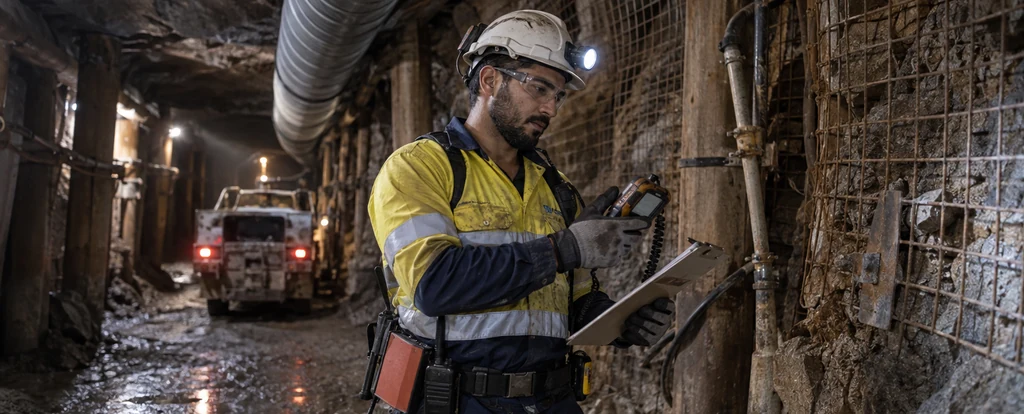
Mine deputies are the statutory safety supervisors of an underground mine district, taking a crew through a production shift and inspecting the workings for gas, ventilation and ground hazards.
- Median salary*
- $150,800
3.5%vs last year, before tax
- People employed
- 7,400
0.0%vs last year
- Projected growth
- +11.7%
to 2035
- AI exposure*
- Low
- automation risk
- Average hours
- 63/wk
+23h vs all jobs
- Shortage status
- Not in shortage
national
Deputies work underground in coal and metalliferous mines, covering a district of the mine and the crew working in it. What sets the role apart from other supervisory jobs is the statutory appointment: a deputy holds a certificate of competency from the state mining regulator and carries legal responsibility for safe work practices in the district. It is a promotion from the crew rather than an entry-level job, and most deputies are employed directly by the mine operator.
How much do mine deputys earn?
The median full-time salary for a mine deputy is $150,800 per annum, before tax, up $32,100 since 2018.
Pay comes mainly from the enterprise agreement covering the mine, so two deputies with the same certificate can be on different rates depending on the operator. The commodity mined, the roster and site allowances all differ between operations, and each one moves the package. Overtime across long swings adds to the total.
What does a mine deputy do day to day?
The list below is what fills most weeks; the exact mix shifts with seniority and whatever stage the current work is at.
- Inspecting the district for ground support, ventilation, gas and equipment hazards before the crew starts work
- Directing and supervising a crew through production, support and haulage activities
- Testing for methane, carbon monoxide and other gases, and recording the readings against statutory limits
- Enforcing statutory rules, issuing permits and controlling isolations on equipment
- Responding to incidents and running emergency and evacuation procedures underground
What skills do mine deputys need?
Employers look for worksite safety management, operations management, regulatory compliance, backed by Draeger gas detection instruments fluency and strong safety and compliance awareness.
Specialist skills
- Worksite safety management
- Operations management
- Regulatory compliance
- Risk and internal controls
Software and tools
- Draeger gas detection instruments
- VentSim ventilation modelling software
- INX InControl safety management system
- Underground leaky feeder radio systems
- MICROMINE Pitram
General skills
- Safety and compliance awareness
- People leadership
- Problem solving
- Written communication
Is the job growing?
About 7,400 people work as mine deputys in Australia, and employment is projected to grow 11.7% over the decade to 2035. That's healthy, above-average growth, and the role should stay in solid demand.
How do you become a mine deputy?
Here's the path most mine deputys take, step by step.
- 1Work underground first
Deputy certificates require a set number of hours of underground experience, so most people spend several years as a miner, operator or driller before they can apply. The hours and the type of experience required differ between states and between coal and metalliferous mines.
- 2Complete a statutory deputy course
Registered training organisations deliver the deputy course, usually at certificate IV level, covering ventilation, gas, ground control, mining legislation and emergency response. Employers often arrange and fund it for crew members they see moving into supervision.
- 3Pass the examination and gain your certificate of competency
The mining regulator in your state issues the certificate after an examination and a check of your underground experience. The certificate is what makes you appointable as a deputy, and it is specific to the state and, in some cases, to the type of mine.
- 4Start as a relief deputy, then hold a district
New deputies usually cover shifts and leave before they are given a regular district, which is where the full statutory responsibility for a crew sits. From there, further study leads towards undermanager and mine management roles.
Ready to apply as a mine deputy?
Whether you're working toward becoming a mine deputy or already are one and want a hand with the next step (sharpening your resume for ATS screening, tightening your cover letter, or knowing what you'll actually be asked at interview), here are examples grounded in this specific role, not generic templates.
What jobs can a mine deputy move to?
Moving into Construction Manager typically comes with the biggest pay rise, worth $44,300 a year more on average.
| Move to | Typical pay change | Overlap | Retraining |
|---|---|---|---|
| Construction Manager Supervisory experience and safety enforcement transfer to construction management, with further study in construction planning and contracts.Known move | +$44,300 | 19% | reskill |
| Open Cut Examiner Statutory inspection and crew supervision carry into open cut examination, with additional registration and open cut mining study required. | +$15,600 | 63% | reskill |
| Production Manager Mine deputies bring crew supervision and safety leadership to production management, though formal production planning study is needed.Known move | −$31,300 | 24% | reskill |
| Maintenance Planner Underground equipment knowledge and safety planning suit maintenance scheduling, with training in planning systems and maintenance strategy.Known move | −$51,000 | 17% | reskill |
Moves are chosen from Jobs and Skills Australia's Data on Occupation Mobility, which follows income tax records between 2011-12 and 2020-21, together with entry requirements and skill overlap. A known move is one people were seen making in that data. Pay change compares median full-time pay for the two roles.
Who works as a mine deputy?
The typical mine deputy is 45 years old; 93% are men, 95% work full-time, and full-timers average 63 hours a week.
- 45
- Median age
- 7%
- Female share
- 95%
- Full-time
- +23h
- vs all-jobs avg
What's it like being a mine deputy?
The job runs on a roster, with long shifts underground, a handover at each end and a swing off afterwards. Deputies spend most of the shift moving through the district, checking conditions and coordinating the crew, then completing a statutory record of what they found. Full-time hours average 63 a week, and the work suits people who are comfortable making a call on their own, because there is no one closer to the face to check it for you.
What people like
- Real statutory authority. Your inspection and your signature decide whether the district is safe to work, and mining law backs the call you make when conditions are not right.
- Leading a crew you already know. Deputies come up through the crew, so you usually know the people you are directing and can see a shift go well because of how you set it up.
- Conditions change and so does the problem. Ground behaviour, ventilation and gas readings move from shift to shift, so there is a technical judgement to work through most days.
- A clear route into mine management. The certificate and the supervisory record are what mine operators look at when they promote into production management or other statutory roles.
What people find hard
- The legal liability is personal. If something goes wrong in your district, your inspections, records and directions are the first things examined, and a deputy can be prosecuted under mining law.
- Long shifts and time away. Underground rosters mean long shifts, night work and, on many sites, fly-in fly-out swings away from home.
- You have to stop the job. Enforcing rules and holding work back against people you work with every day is the harder half of the role, particularly when production targets are pressing.
- The paperwork follows every inspection. Gas readings, hazard reports and statutory records have to be completed for each inspection and each shift, and gaps in the record become a liability in themselves.
Based on our synthesis of professional-body surveys and public accounts of the role, not first-person verified reviews.
Which industries employ mine deputys?
Mining employs the largest share of mine deputys, followed by Manufacturing.
Top employing industries
- 1Mining
- 2Manufacturing
Ranked by employment share; the source doesn't publish an exact percentage per industry.
| Certificate III/IV | 48.7% | |
|---|---|---|
| Year 12 or below | 27.3% | |
| Diploma / Advanced Diploma | 12% | |
| Bachelor degree | 5.6% | |
| Postgraduate | 1.8% |
Will AI replace mine deputys?
Mine deputies rate low for AI exposure. The job turns on physically inspecting an underground district and making statutory decisions about gas, ventilation and ground conditions that change through a shift and carry legal weight. Monitoring and reporting software gathers more of the data than it used to, but it does not walk the district or order a crew out.
Share of typical working time by exposure level
- Statutory district inspections and gas testingDeputies still walk the district with a Draeger detector in hand, and VentSim models the ventilation between inspections rather than replacing the physical check.30%low
- Supervising and directing the crewRostering and task allocation in Pitram can help plan a shift, but directing people at the face happens face to face and over the leaky feeder radio.25%moderate
- Incident response and emergency coordinationGas monitoring and the leaky feeder network feed information in as it happens, but the decision to withdraw the crew rests with the deputy.25%low
- Permits, records and shift reportsINX InControl and Pitram capture statutory records, permits and shift reports, which cuts the writing time but not the deputy's sign-off on what they record.20%high
Common questions about becoming a mine deputy
Straight answers to the questions people ask most.
How much do mine deputies earn?
Mine deputies earn a median of $150,800 per annum, before tax. The enterprise agreement covering the mine sets the base rate, and the roster, commodity and shift allowances move it from there.
How do you become a mine deputy?
You need underground experience first, usually several years on a mining crew, then a statutory deputy course and a certificate of competency from your state mining regulator. Employers often put experienced miners through the course, so it is worth asking your supervisor or the site training department about the pathway where you work.
Are mine deputies in demand?
Mine deputies are currently not in shortage, and employment across the occupation is projected to grow 11.7% over the decade to 2035. For someone already working underground, the certificate is what makes you appointable to statutory roles that mines are required to fill.
Will AI or automation replace mine deputies?
The role rates low for AI exposure, because the core of the job is walking the district, judging ground and gas conditions, and giving directions to people underground. Monitoring systems, ventilation modelling and safety software increasingly collect the readings a deputy relies on, but the statutory decisions and the sign-off stay with a person.
What can mine deputies move into?
Deputy experience often leads to production manager or open cut examiner roles, where crew supervision and statutory inspection carry over, though production management needs formal planning study and open cut examination needs its own registration. Median pay for production managers is $31,300 less than for mine deputies, and for open cut examiners $15,600 more. Construction management takes the same safety leadership into a different industry at $44,300 more, with study in planning and contracts.
Do you need a degree to become a mine deputy?
Among people working as mine deputies, Certificate III/IV is the most common qualification, held by 49%. A degree is not required for the statutory certificate, though a diploma or degree helps later if you move into mine management.
Related roles
Not sure this is you? Take the career quiz and get a ranked shortlist of roles that fit how you like to work.