Model
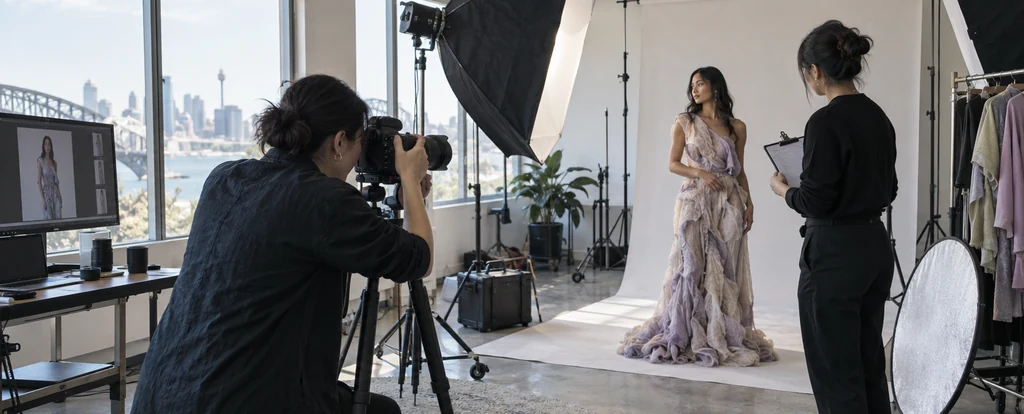
Models wear and present clothing, accessories and products for photographers, brands and live audiences, and the job is to make the look work on camera or on the runway.
- Median salary*
- $57,200
4.2%vs last year, before tax
- People employed
- 610
1.7%vs last year
- Projected growth
- +4.6%
to 2035
- AI exposure*
- Moderate
- automation risk
- Average hours
- 32/wk
−8h vs all jobs
- Shortage status*
- Not in shortage
national
Most modelling happens in photographers' studios, at brand showrooms and on location, with runway and event work filling out the calendar. The role is different from content creation: a model is hired to present a specific product under a client's direction, not to build and own an audience. Work is usually freelance through an agency, so models juggle castings, fittings and shoot days across several clients at once.
How much do models earn?
The median full-time salary for a model is $57,200 per annum, before tax, up $12,000 since 2018.
Day rates vary widely with the client and the job: test shoots and small editorial work pay little or nothing, while national campaigns pay the most. Usage fees and buyouts, which cover how long and where the images can be used, can be worth more than the shoot day itself, and agency commission comes out of your fee before you are paid. Because bookings come and go, annual earnings depend on how much work you string together across the year.
What does a model do day to day?
The list below is what fills most weeks; the exact mix shifts with seniority and whatever stage the current work is at.
- Posing for photographers and videographers on editorial, e-commerce and campaign shoots
- Walking in runway shows and showroom presentations, often in garments you have only tried once at the fitting
- Attending castings, self-tapes and agency meetings, which is where much of the unpaid work sits
- Standing through hair, makeup and styling sessions, sometimes for hours before a shoot begins
- Promoting brands at launches and trade events, and posting agreed content on your own channels
What skills do models need?
Employers look for personal care services, backed by Adobe Lightroom fluency and strong presenting and data storytelling.
Specialist skills
- Personal care services
Software and tools
- Adobe Lightroom
- Adobe Photoshop
- TikTok
- Canva
General skills
- Presenting and data storytelling
- Physical stamina and dexterity
- Attention to detail
- Written communication
- Client relationships and advisory
- Customer service
Is the job growing?
About 610 people work as models in Australia, and employment is projected to grow 4.6% over the decade to 2035. That's modest growth: demand is steady rather than booming.
How do you become a model?
Here's the path most models take, step by step.
- 1Build a small portfolio with test shoots
Book a photographer for a few unpaid shoots and keep six to ten recent, clean images, mixing catalogue-style frames with a couple that show your personality. Agents want to see how you look on camera, not a long list of courses.
- 2Approach reputable agencies
Legitimate agencies earn commission from the work they book you, so treat upfront registration, portfolio or training fees as a warning sign. Check the contract length, the commission rate and how you can leave.
- 3Learn posing, runway and camera craft
Short courses and workshops cover walking, posing and working to a brief, and they speed up the early learning. Roughly 47% of the models working today have Year 12 or below as their highest qualification, so there is no set degree or certificate to complete.
- 4Take paid entry-level work
Online catalogue and e-commerce shoots, student and emerging designer shows, and promotional work pay something while you build a client list. Avoid any arrangement where you pay a photographer or brand to appear.
- 5Set up as a sole trader
Most models invoice clients directly, so an ABN, records of income and expenses, and a plan for tax and super are part of the job. Bookings thin out without that administration in place.
Ready to apply as a model?
Whether you're working toward becoming a model or already are one and want a hand with the next step (sharpening your resume for ATS screening, tightening your cover letter, or knowing what you'll actually be asked at interview), here are examples grounded in this specific role, not generic templates.
What jobs can a model move to?
Moving into Actor typically comes with the biggest pay rise, worth $30,800 a year more on average.
| Move to | Typical pay change | Overlap | Retraining |
|---|---|---|---|
| Actor Performance presence and comfort before a camera carry into acting, though formal training builds character and script technique.Known move | +$30,800 | 10% | reskill |
| Makeup Artist A model's styling awareness, camera experience and client-facing poise transfer to makeup work, with a short course covering products and application. | −$7,800 | 47% | short course |
Moves are chosen from Jobs and Skills Australia's Data on Occupation Mobility, which follows income tax records between 2011-12 and 2020-21, together with entry requirements and skill overlap. A known move is one people were seen making in that data. Pay change compares median full-time pay for the two roles.
Who works as a model?
The typical model is 26 years old; 81% are women, 17% work full-time, and full-timers average 32 hours a week.
- 26
- Median age
- 81%
- Female share
- 17%
- Full-time
- −8h
- vs all-jobs avg
What's it like being a model?
The work runs on short bursts: a casting, a fitting, then a shoot day that can start before dawn and finish late. Between bookings there can be quiet weeks, so most models combine modelling with study, hospitality work or another income stream. It suits people who are comfortable being looked at and directed, and who can keep their energy up through repetition on set.
What people like
- Working with creative teams. A shoot day puts you alongside photographers, stylists, hair and makeup artists and designers, and the collaboration is often the best part of the job.
- A different brief every few days. One week might be swimwear on a beach, the next a winter coat campaign in a studio, which keeps the work from settling into a routine.
- Seeing the finished image. The campaign, catalogue or runway moment is a visible result, and it becomes part of a portfolio you can show the next client.
- Control over your own calendar. Freelance modelling leaves room to study, travel or hold another job between bookings, as long as you can manage the gaps.
What people find hard
- Most castings lead nowhere. You may attend many castings for every booking, and the answer often never comes back at all.
- Income that arrives unevenly. Payments can take weeks to land, quiet months follow busy ones, and there is no sick leave or paid holiday to fall back on.
- Physical and appearance pressure. Long days standing, early call times and garments that fit badly or suit the wrong season are normal, and clients comment on your body and look as part of the job.
- Unpaid work at the start. Test shoots, some editorial features and student shows commonly pay nothing, so early on you are working for images and experience rather than money.
Based on our synthesis of professional-body surveys and public accounts of the role, not first-person verified reviews.
Which industries employ models?
Arts and Recreation Services employs the largest share of models, followed by Administrative and Support Services.
Top employing industries
- 1Arts and Recreation Services
- 2Administrative and Support Services
- 3Professional, Scientific and Technical Services
Ranked by employment share; the source doesn't publish an exact percentage per industry.
| Year 12 or below | 47.2% | |
|---|---|---|
| Bachelor degree | 20.6% | |
| Diploma / Advanced Diploma | 12.3% | |
| Certificate III/IV | 10% | |
| Postgraduate | 6.9% |
Will AI replace models?
AI sits in the middle of this job: it generates fashion imagery, retouches at scale and powers virtual try-on for online retail, which has taken over some catalogue work that used to be shot with a model. Live runway shows, fittings and campaigns built around a particular person or a real garment still need someone in front of the camera or on the catwalk. The technology changes who shoots standard product images, not what a good model does on a set.
Share of typical working time by exposure level
- Posing for photo and video shootsStandard catalogue and packshot work is increasingly produced with AI-generated or virtual try-on imagery, so fewer of those days are booked.35%high
- Castings and self-tapesClients often shortlist from video submissions and digital portfolios first, which speeds up screening but means your tape has to stand out without a room to read.25%moderate
- Runway and live event appearancesA show or launch needs a person walking, standing and moving in the garment in front of an audience, and that cannot be generated.20%low
- Fittings and garment checksDesigners still need a body in the sample to see how a garment falls and moves before a shoot, which is hands-on work.20%low
Moves least exposed to AI
These career moves from model work are rated low for AI exposure:
- Makeup Artist
Solid skill overlap (47%), short course to get there, and a low automation-risk profile.
- Actor
Some skill overlap (10%), reskill to get there, and a low automation-risk profile.
Common questions about becoming a model
Straight answers to the questions people ask most.
How much do models earn in Australia?
Full-time models earn a median of $57,200 per year before tax. Day rates, usage fees and how often you book work move that figure far more than experience alone, and agency commission comes out of each fee.
How do you become a model?
Build a short portfolio through test shoots, then apply to agencies that take commission rather than upfront fees. Formal qualifications are not required, and portfolio quality and reliability matter more than any certificate.
Are models in demand in Australia?
Models are currently not in shortage, and employment is projected to grow 4.6% over the decade to 2035. Demand is concentrated in campaign, e-commerce and runway work, so a portfolio that matches what brands are shooting now gives you the best chance of regular bookings.
Will AI replace models?
AI already generates fashion imagery and virtual try-on for online catalogues, and some product photography that once needed a model no longer does. Campaigns, editorials and runway work still depend on a real person wearing the garment, especially where fit, fabric and a specific look are the point.
What can models move into?
Makeup artistry is a common move, since styling awareness and camera experience transfer directly and a short course covers products and application, though makeup artists typically earn $7,800 less than models. Acting is a bigger step that usually means formal training, but the comfort in front of a camera carries over.
Do you need an agency to get modelling work?
No, but an agency brings access to clients that is hard to build alone, and it handles negotiation and invoicing. Direct approaches work best for promotional, e-commerce and social media jobs where the client already knows your work.
Related roles
Not sure this is you? Take the career quiz and get a ranked shortlist of roles that fit how you like to work.