Oral Medicine Specialist
Oral medicine specialists are the dentists who diagnose and manage diseases of the mouth that a filling or a crown will not fix, from persistent ulcers and dry mouth to oral conditions tied to illness elsewhere in the body.
- Median salary*
- $156,000
3.9%vs last year, before tax
- People employed*
- 250
25.0%vs last year
- Projected growth
- +35.8%
to 2035
- AI exposure*
- Low
- automation risk
- Average hours*
- 40/wk
matches all-jobs average
- Shortage status
- In shortage
national
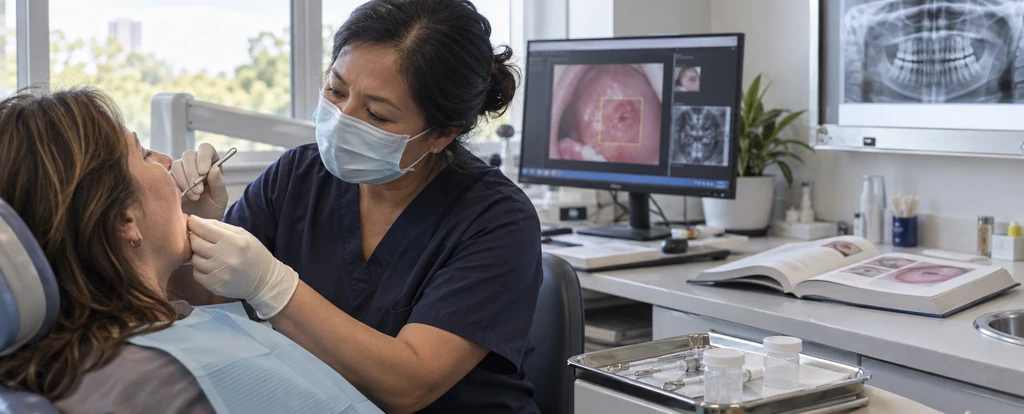
They work mainly in hospital dental departments, university clinics and specialist practices, seeing patients referred by general dentists and doctors. What separates them from a general dentist is the medical side of the mouth: they take full health histories, order tests and manage conditions over months rather than restoring a tooth in one visit. They also differ from oral surgeons, who handle the operations, though oral medicine specialists do take biopsies themselves.
How much do oral medicine specialists earn?
The median full-time salary for an oral medicine specialist is $156,000 per annum, before tax, up $32,500 since 2018.
Pay depends heavily on where you work: salaried hospital and university posts sit on enterprise agreements with set increments, while private specialist practice is fee for service and varies with referrals and how many sessions you run. Part-time clinical work mixed with teaching or research is common in this specialty, which affects total earnings more than seniority does. Almost all of these roles sit in capital cities, so location matters less than the sector you choose.
What does an oral medicine specialist do day to day?
The list below is what fills most weeks; the exact mix shifts with seniority and whatever stage the current work is at.
- Assessing patients referred with persistent mouth ulcers, burning mouth, dry mouth or unusual changes in the soft tissues
- Taking medical histories, ordering blood tests and imaging, and working out whether an oral problem reflects a condition elsewhere in the body
- Performing and interpreting biopsies of the oral mucosa and arranging follow-up on the results
- Prescribing and adjusting medications for chronic conditions such as oral lichen planus, and reviewing how patients respond over time
- Writing back to the referring dentist or GP and coordinating care with oncologists, rheumatologists or immunologists
What skills do oral medicine specialists need?
Employers look for patient care and support, clinical assessment and treatment, medication management, backed by Dentally fluency and strong empathy and interpersonal care.
Specialist skills
- Patient care and support
- Clinical assessment and treatment
- Medication management
- Care planning and coordination
- Infection control and hygiene
- Health education and advice
Software and tools
- Dentally
- Praktika
- Carestream Dental
- Microsoft Office
General skills
- Empathy and interpersonal care
- Attention to detail
Is the job growing?
About 250 people work as oral medicine specialists in Australia, and employment is projected to grow 35.8% over the decade to 2035. That's very strong growth. Few roles in Australia are expanding this fast, and it points to solid demand for years to come.
How do you become an oral medicine specialist?
Here's the path most oral medicine specialists take, step by step.
- 1Complete a dental degree and register as a dentist
This is a five-year Bachelor of Dental Surgery, or a four-year graduate-entry Doctor of Dental Medicine if you already hold a degree. Registration with the Dental Board of AHPRA is what allows you to practise.
- 2Work as a dentist for several years
Specialist training programs expect clinical experience first, and general practice is where you learn to spot the mouth conditions that need referring on rather than treating yourself.
- 3Complete accredited specialist training in oral medicine
This is normally a three-year Doctor of Clinical Dentistry at a university with an accredited oral medicine stream. It combines hospital clinics, biopsy lists, management of medically complex patients and a research project.
- 4Apply for specialist registration with AHPRA
Specialist registration with the Dental Board is what lets you use the title and bill as a specialist. It follows completion of an accredited program, and requirements are set nationally through AHPRA.
Ready to apply as an oral medicine specialist?
Whether you're working toward becoming an oral medicine specialist or already are one and want a hand with the next step (sharpening your resume for ATS screening, tightening your cover letter, or knowing what you'll actually be asked at interview), here are examples grounded in this specific role, not generic templates.
What jobs can an oral medicine specialist move to?
We don't list lateral moves for oral medicine specialists: leaving means a full new qualification rather than a career move, and the realistic routes in are covered under how to become one.
Who works as an oral medicine specialist?
The typical oral medicine specialist is 48 years old; 55% are men, 80% work full-time, and full-timers average 40 hours a week.
- 48
- Median age
- 45%
- Female share
- 80%
- Full-time
- +0h
- vs all-jobs avg
What's it like being an oral medicine specialist?
The rhythm of the job is consultative rather than procedural: longer appointments, full medical histories, tests that come back days later and patients you keep seeing for years. Much of the pressure comes from uncertainty, because the conditions are often chronic and the aim is control rather than cure. It suits people who enjoy diagnostic puzzles, are comfortable working alongside physicians, and prefer talking a patient through a long-term plan to finishing a list of treatments.
What people like
- Conditions that do not fit a dental explanation. A patient arrives with burning mouth or ulcers that no restoration will help, and the work is tracing the cause through their history, medications and test results.
- Long-term relationships with patients. Chronic oral conditions such as lichen planus or Sjogren's syndrome are managed over years, so you get to know the people behind the referrals and see whether a change in treatment is working.
- A foot in both dentistry and medicine. You sit in clinics with oncologists, rheumatologists and immunologists, and the conversations are as much about the patient's overall health as their mouth.
- Teaching and research time. Many hospital and university posts include supervising registrars and dental students, and some specialists carry a research or clinical leadership role alongside their clinics.
What people find hard
- A very small specialty. Only about 250 people work in this occupation nationally, so positions come up rarely and are concentrated in hospital departments and university clinics in the capital cities.
- Waiting lists on both sides. Referrals can take months to reach you and public clinic appointments are often booked out well ahead, so patients sometimes arrive frustrated before the consultation has begun.
- Managing rather than curing. For many of the conditions you see there is no single fix, and the honest conversation about controlling symptoms long term is one you have repeatedly.
- Admin that follows the patient. Every consultation produces a letter to the referrer, test results to chase and follow-up to arrange, and that paperwork grows with the caseload.
Based on our synthesis of professional-body surveys and public accounts of the role, not first-person verified reviews.
Which industries employ oral medicine specialists?
Dental services employs the largest share of oral medicine specialists, followed by Hospitals.
Top employing industries
- 1Dental services
- 2Hospitals
- 3Specialist medical services
- 4Education and training
Ranked by employment share; the source doesn't publish an exact percentage per industry.
| Bachelor degree | 52% | |
|---|---|---|
| Postgraduate | 26% | |
| Diploma / Advanced Diploma | 13% | |
| Other | 9% |
Will AI replace oral medicine specialists?
AI exposure here is low. The job turns on examining a patient's mouth, taking a history that spans their whole health and deciding whether a change needs a biopsy, none of which happens without a clinician present. Digital records, referral software and imaging tools take some of the administration, but they do not make the diagnosis.
Share of typical working time by exposure level
- Examining and diagnosing oral mucosal diseaseDeciding whether a white patch is lichen planus, a reaction to a medication or something that needs urgent referral comes from looking, feeling and asking, not from a system reading a photo.35%low
- Biopsies and minor oral proceduresTaking a tissue sample from the right site, handling the patient and judging what the result means for their management all stay with the specialist.25%low
- Prescribing and monitoring medicationsSoftware can flag interactions and track repeat scripts, but choosing a topical steroid or immunosuppressant and adjusting it as symptoms change is a clinical judgement made with the patient.20%moderate
- Referral letters, results follow-up and clinic recordsDrafting correspondence, chasing pathology results and keeping clinic notes current is the part most exposed to automation, and it already absorbs a slice of every week.20%high
Common questions about becoming an oral medicine specialist
Straight answers to the questions people ask most.
How much do oral medicine specialists earn?
Oral medicine specialists earn a median of $156,000 per annum, before tax. The sector moves that figure more than experience does: hospital and university salaries follow enterprise agreements, while private practice income depends on referrals and how many clinical sessions you run. Treat it as a broad guide rather than a fixed rate.
How do you become an oral medicine specialist?
You complete a dental degree, register with AHPRA and work as a dentist, then finish accredited specialist training in oral medicine, usually a three-year Doctor of Clinical Dentistry. Specialist registration with the Dental Board of AHPRA follows, and that is what allows you to practise under the specialist title.
Are oral medicine specialists in demand?
Oral medicine specialists are currently in shortage nationally, and employment is projected to grow 35.8% over the decade to 2035. The occupation is very small, with about 250 people in it, so a percentage change translates into a limited number of new positions rather than a steady flow. Openings come up mainly through hospital dental departments, universities and specialist practices, and often through people already known to those services.
Will AI replace oral medicine specialists?
Not in the parts of the job that carry the diagnosis. Software already helps with appointment records, referral letters and reading some imaging, but the assessment comes from examining the mouth, taking a history across the patient's whole health and deciding whether a change needs a biopsy, and that needs a clinician in the room.
What can oral medicine specialists move into?
The main route in is from dentistry: dentists bring the clinical foundation and then requalify through specialist training, and median pay for oral medicine specialists is currently $12,100 less than for dentists. From there, many combine hospital or university sessions with a private specialist practice of their own, which is often where earnings grow. Others head towards academic posts, research or running a hospital dental department.
What are the hours like?
Full-time oral medicine specialists work about 40 hours a week, close to standard clinical hours, with the time split between clinics, biopsy lists, reporting and correspondence. Hospital posts can include teaching, research and on-call commitments, so the spread of the week varies more than the total.
Specialisation of
Related roles
Not sure this is you? Take the career quiz and get a ranked shortlist of roles that fit how you like to work.