Dentist
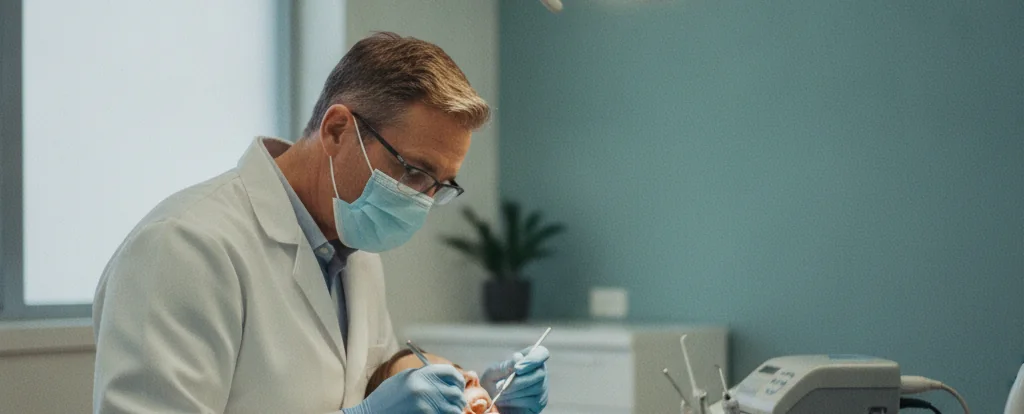
Dentists examine, diagnose and treat problems with teeth, gums and mouths, from a routine check-up to a root canal.
- Median salary
- $168,100
4.1%vs last year, before tax
- People employed
- 14,200
3.6%vs last year
- Projected growth
- +35.8%
to 2035
- AI exposure*
- Low
- automation risk
- Average hours
- 41/wk
+1h vs all jobs
- Shortage status
- In shortage
national
Dentists examine teeth, gums and mouths, diagnose problems and carry out treatments such as fillings, root canals, extractions and cosmetic work. Unlike a dental assistant or a dental hygienist, who support the clinical work, a dentist is the one who diagnoses the problem, performs the procedure and carries the legal responsibility for it. Most work in private practice, some are employed in public health services or hospitals, and registration with the Dental Board of Australia is required before treating patients.
How much do dentists earn?
The median full-time salary for a dentist is $168,100 per annum, before tax, up $35,200 since 2018.
How you work matters more than the headline figure. Associates are often paid a percentage of what they bill, sometimes with a guaranteed base for the first few months, so earnings follow how full the appointment book stays, while practice owners carry the rent, equipment and indemnity insurance and keep what's left. Specialist registration, public or private sector and how far the practice sits from a capital city all move the number too.
What does a dentist do day to day?
The list below is what fills most weeks; the exact mix shifts with seniority and whatever stage the current work is at.
- Working through a booked list of check-ups, fillings and root canals, usually with a dental assistant passing instruments alongside you
- Talking a nervous patient through what the drill will feel like before you start, because plenty of people arrive expecting the worst
- Taking and reading X-rays and intraoral scans to work out whether a tooth needs a filling, a root canal or to come out
- Holding the same bent-forward position over the chair for hours at a time, which shows up later as neck, shoulder and hand problems
- Sterilising instruments between patients and keeping the infection control records the practice has to be able to produce
What skills do dentists need?
Employers look for clinical assessment and treatment, patient care and support, infection control and hygiene, backed by dental drill fluency and strong written communication.
Specialist skills
- Clinical assessment and treatment
- Patient care and support
- Infection control and hygiene
- Regulatory compliance
- Hand and power tool work
Software and tools
- dental drill
- intraoral camera
- X-ray equipment
- ultrasonic scaler
- practice management software
General skills
- Written communication
- Attention to detail
- Problem solving
Is the job growing?
About 14,200 people work as dentists in Australia, and employment is projected to grow 35.8% over the decade to 2035. That's very strong growth. Few roles in Australia are expanding this fast, and it points to solid demand for years to come.
How do you become a dentist?
Here's the path most dentists take, step by step.
- 1Complete an accredited dental degree
Entry is usually through a five-year Bachelor of Dental Surgery or Bachelor of Dental Science, or a graduate-entry Doctor of Dental Medicine if you already hold a degree. Places are competitive and most programs require chemistry or biology at Year 12 level, plus a strong academic record.
- 2Register with the Dental Board of Australia
You cannot treat patients until you hold registration through AHPRA. Registration requires the accredited qualification, an English language standard, a criminal history check and professional indemnity insurance, and it is renewed each year with continuing professional development.
- 3Build speed in your first years of practice
New graduates most often start as associates in private practice or in the public dental system, where the caseload is steady and experienced dentists are nearby to ask. Expect your appointment times to run long at first and to shorten as the procedures become routine.
- 4Specialise, if you want to
Specialist practice requires a further doctoral-level training program of about three years in fields such as orthodontics, endodontics, periodontics, prosthodontics or oral surgery, followed by specialist registration with the Dental Board. Most dentists stay in general practice instead.
- 5Consider buying into a practice
Many dentists move from associate to part-owner or owner once they have a patient base and a feel for the business side. That step brings responsibility for staff, equipment leases, compliance and marketing as well as clinical work.
Study routes we have checked
Qualifications that are a recognised way into this role, and what else you need.
- Bachelor of Dental Surgery
A recognised route into this role
Complete a Board-approved professional dentistry programme and satisfy dental registration requirements. Oral-health, hygiene, dental-assistance and dental-technology awards are different routes. This catalogue groups awards: verify the chosen provider, programme and intake; the family-level link is not confirmation that every offering is approved.
Ready to apply as a dentist?
Whether you're working toward becoming a dentist or already are one and want a hand with the next step (sharpening your resume for ATS screening, tightening your cover letter, or knowing what you'll actually be asked at interview), here are examples grounded in this specific role, not generic templates.
What jobs can a dentist move to?
Moving into Oral and Maxillofacial Surgeon typically comes with the biggest pay rise, worth $65,900 a year more on average.
| Move to | Typical pay change | Overlap | Retraining |
|---|---|---|---|
| Oral and Maxillofacial Surgeon A dentist brings oral diagnosis and treatment skills, but needs specialist surgical training and medical qualifications to practise as an oral and maxillofacial surgeon.Known move | +$65,900 | 45% | requalify |
| Prosthodontist A dentist brings restorative and prosthetic dental skills, but requires specialist prosthodontic training to practise as a prosthodontist.Known move | +$13,900 | 57% | requalify |
| Orthodontist A dentist brings patient assessment and dental treatment skills, but requires specialist orthodontic training to practise as an orthodontist.Known move | −$1,700 | 41% | requalify |
| Endodontist A dentist brings root canal and pulp diagnosis skills, but requires specialist endodontic training to practise as an endodontist.Known move | −$1,700 | 57% | requalify |
| Periodontist A dentist brings gum disease and oral health skills, but requires specialist periodontal training to practise as a periodontist.Known move | −$1,700 | 44% | requalify |
Moves are chosen from Jobs and Skills Australia's Data on Occupation Mobility, which follows income tax records between 2011-12 and 2020-21, together with entry requirements and skill overlap. A known move is one people were seen making in that data. Pay change compares median full-time pay for the two roles.
Who works as a dentist?
The typical dentist is 39 years old; 51% are men, 48% work full-time, and full-timers average 41 hours a week.
- 39
- Median age
- 49%
- Female share
- 48%
- Full-time
- +1h
- vs all-jobs avg
What's it like being a dentist?
Dentistry is precise, hands-on work done at close range on people who are often apprehensive, and the pace rarely lets up between patients. It suits someone who likes solving physical problems with their hands, is comfortable talking constantly, and can stay calm with someone who is frightened or in pain. The trade-off is physical: the posture is awkward, the equipment is expensive and the appointment book drives the day.
What people like
- You take people out of pain. Someone arrives with a toothache that has kept them awake and leaves comfortable, often within the same appointment. That immediate result is a large part of why people stay in the job.
- Predictable hours compared with hospital medicine. Most dentists work weekday office hours rather than shifts or an on-call roster. Practices that open evenings and Saturdays tend to share those sessions across the team.
- Flexibility in how you work. You can work part time, locum across several practices, move between public and private settings, or narrow your focus to an area you enjoy without leaving the profession.
- The work is varied within a day. A single list can hold a child's check-up, a crown preparation and an extraction, each needing different tools, timing and explanations. Diagnosis is part of the craft rather than a separate task.
What people find hard
- The posture takes a toll. Hours spent bent over a patient in a small field of view load the neck, back and hands, and many dentists manage ongoing pain or reduce their clinical days later in their career.
- Patients bring their fear with them. Some people are anxious, some are in pain and some are angry about the cost, and you are the person in front of them. Handling that well is a skill built over years, not something that comes automatically.
- Practice costs sit on top of the clinical work. Rent, equipment, sterilisation, indemnity insurance and staff wages are real money, and cancellations or no-shows leave an empty chair that still has to be paid for.
- The day runs to the appointment book. Running late for one patient pushes every later appointment back, so the work rewards people who can stay on schedule without appearing to rush.
Based on our synthesis of professional-body surveys and public accounts of the role, not first-person verified reviews.
Which industries employ dentists?
Health Care and Social Assistance employs the largest share of dentists.
Top employing industries
- 1Health Care and Social Assistance
Ranked by employment share; the source doesn't publish an exact percentage per industry.
| Bachelor degree | 70% | |
|---|---|---|
| Postgraduate | 25.4% | |
| Year 12 or below | 1.3% | |
| Diploma / Advanced Diploma | 0.8% | |
| Certificate III/IV | 0.5% |
Will AI replace dentists?
Dentistry sits at low exposure to AI because the core of the job is physical and immediate: examining a mouth, deciding what a tooth needs and carrying out the procedure with your hands inside a small, wet, moving space. Software already assists with reading X-rays, flagging decay and drafting clinical notes, and it will keep taking over more of that paperwork. What it does not change is the part where you sit with a nervous person, explain the options and take responsibility for the result.
Share of typical working time by exposure level
- Examining and diagnosing patientsReading a mouth means probing, feeling and watching how a tooth responds, which an imaging algorithm can flag but not assess on its own.35%low
- Carrying out restorative and surgical treatmentPreparing a crown or clearing a root canal depends on hand control and constant adjustment to what the tooth actually does under the drill.35%low
- Explaining treatment and settling anxious patientsDeciding what to recommend for someone who cannot afford everything at once is a conversation about their life, not a matching exercise.15%low
- Clinical notes, X-ray reporting and practice adminPractice management software already drafts recall reminders, schedules appointments and files claims, and imaging tools increasingly draft the first read of an X-ray.15%high
Common questions about becoming a dentist
Straight answers to the questions people ask most.
How much does a dentist earn?
Dentists earn a median of $168,100 per annum, before tax. What moves that figure is how you are paid: associates often take a percentage of what they bill, salaried public sector dentists are on an enterprise agreement, and practice owners carry their own costs.
How do you become a dentist in Australia?
You complete an accredited dental degree, usually a five-year bachelor program or a graduate-entry Doctor of Dental Medicine, then register with the Dental Board of Australia through AHPRA before you can treat anyone. Registration also requires an English language standard, a criminal history check and professional indemnity insurance, and it is renewed annually with continuing professional development.
Are dentists in demand?
Dentists are currently in shortage nationally, and employment is projected to grow 35.8% over the decade to 2035. Because every part of the field requires the same registration, that growth translates into openings across private practices, public dental services and regional clinics rather than in one type of employer.
Will AI replace dentists?
No, and the exposure is low. Software already helps read X-rays, flag decay and draft clinical notes, which saves time on paperwork, but the diagnosis, the drill work and the judgement about what a patient can tolerate all happen in the mouth and with the person in the chair.
What can a dentist move into?
Most dentists who change direction specialise rather than leave the field. Orthodontists, endodontists and periodontists all begin as dentists and then complete specialist training of about three years, and pay differences in specialist practice are modest, with an orthodontist earning $1,700 less and a prosthodontist $13,900 more. Others stay in general practice and buy into or open their own practice, which is often where earnings grow.
Do dentists work long hours?
Full-time dentists average about 41 hours a week, and 48% of them work full time. The hours are usually regular office hours rather than hospital shifts, though many practices run evening and Saturday sessions to suit working patients.
Specialisations
Related roles
Not sure this is you? Take the career quiz and get a ranked shortlist of roles that fit how you like to work.