Product Grader
Product graders sort and classify fruit, vegetables, meat, grain and seafood against the quality standards that decide what a consignment is worth.
- Median salary*
- $59,800
4.2%vs last year, before tax
- People employed
- 2,000
0.0%vs last year
- Projected growth*
- −2%
to 2035
- AI exposure*
- High
- automation risk
- Average hours*
- 38/wk
−2h vs all jobs
- Shortage status*
- Not in shortage
national
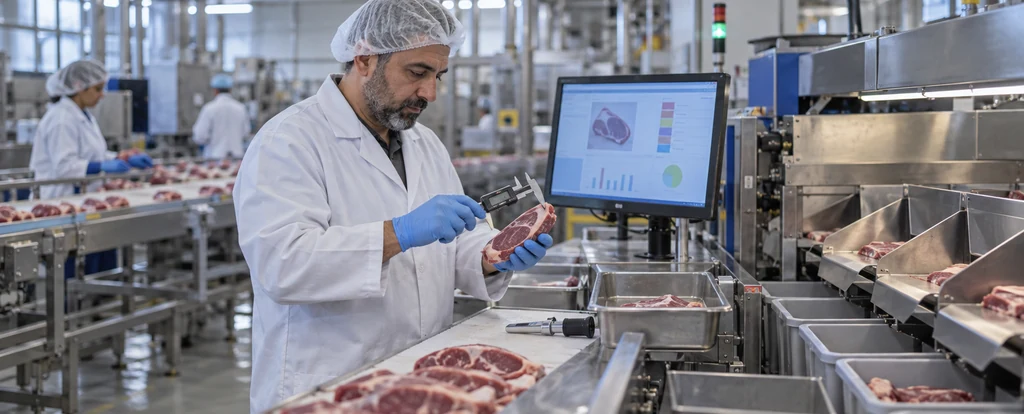
Most product graders work in processing plants, packing sheds and cool stores, checking produce as it comes off the line or arrives from growers. The job sits between the people who grow or harvest the product and the buyers who set the specifications, and it carries the authority to reject a batch. In meat plants the role usually requires accreditation before someone can grade carcases, while fruit and vegetable grading leans more on sample testing and the settings of optical sorting equipment.
How much do product graders earn?
The median full-time salary for a product grader is $59,800 per annum, before tax, up $12,600 since 2018.
Pay depends heavily on the award or enterprise agreement covering the plant, so a meatworks running shifts with penalty rates can pay well above a seasonal packing shed. Graders who hold accreditation or supervise a line usually earn more than those doing entry-level sorting, and some sites pay loadings for afternoon or night work. Fruit and vegetable grading follows the harvest, which affects annual earnings even when the hourly rate is similar.
What does a product grader do day to day?
The list below is what fills most weeks; the exact mix shifts with seniority and whatever stage the current work is at.
- Inspecting fruit, vegetables, meat, grain or seafood for defects, blemishes and damage
- Measuring size, weight, colour and ripeness against the grade specifications a buyer has set
- Sorting product into grade categories and pulling substandard items off the line
- Recording results and completing the quality assurance paperwork that travels with a consignment
- Calibrating and monitoring automated sorters so the machine's settings match the current grade standard
What skills do product graders need?
Employers look for food safety and hygiene, operations management, regulatory compliance, backed by TOMRA optical sorting systems fluency and strong attention to detail.
Specialist skills
- Food safety and hygiene
- Operations management
- Regulatory compliance
- Plant and equipment operation
Software and tools
- TOMRA optical sorting systems
- Compac Spectrim grading software
- Refractometer (Brix meter)
- Digital calipers
- Excel-based quality records
General skills
- Attention to detail
- Physical stamina and dexterity
- Written communication
Is the job growing?
About 2,000 people work as product graders in Australia, and employment is projected to decline 2% over the decade to 2035. That's a real decline, worth weighing carefully before training into the role.
How do you become a product grader?
Here's the path most product graders take, step by step.
- 1Start on a packing or processing line
Most graders begin as sorters, packers or process workers and learn the grade standards on the job, so no prior qualification is needed to get the first role.
- 2Complete a Certificate III in food processing
A Certificate III in Food Processing, or the meat processing equivalent, covers food safety, hygiene and quality assurance, and gives you the record-keeping habits grading work runs on. It can be done while you are working.
- 3Earn accreditation for the product you grade
Meat grading requires accreditation through AUS-MEAT, and grain and wool have their own industry standards and assessment courses, so the credential depends on the sector.
- 4Move into a senior or quality assurance role
A Certificate IV or diploma in food science, food technology or quality management opens up senior grader, quality assurance officer and shift supervisor positions, which is where the pay steps up.
Ready to apply as a product grader?
Whether you're working toward becoming a product grader or already are one and want a hand with the next step (sharpening your resume for ATS screening, tightening your cover letter, or knowing what you'll actually be asked at interview), here are examples grounded in this specific role, not generic templates.
What jobs can a product grader move to?
Moving into Wool Buyer typically comes with the biggest pay rise, worth $26,000 a year more on average.
| Move to | Typical pay change | Overlap | Retraining |
|---|---|---|---|
| Wool Buyer Product graders move into wool buying, using their grading judgement to value fleeces and negotiate purchases with growers and brokers. | +$26,000 | 20% | reskill |
| Wool Classer Product graders apply their eye for quality to wool, learning fleece assessment and classing standards to sort clips by fibre. | +$13,000 | 12% | reskill |
| Grain Inspector Product graders bring sampling and quality standards to grain inspection, gaining grain-specific testing and classification skills through further study. | +$10,400 | 20% | reskill |
Moves are chosen from Jobs and Skills Australia's Data on Occupation Mobility, which follows income tax records between 2011-12 and 2020-21, together with entry requirements and skill overlap. A known move is one people were seen making in that data. Pay change compares median full-time pay for the two roles.
Who works as a product grader?
The typical product grader is 41 years old; 63% are women, 60% work full-time, and full-timers average 38 hours a week.
- 41
- Median age
- 63%
- Female share
- 60%
- Full-time
- −2h
- vs all-jobs avg
What's it like being a product grader?
The work follows the season and the shift: long stretches of repetitive checking in a cold packing shed, broken up by sample tests, calibration and the occasional difficult call on a borderline batch. It suits people who like working to a standard that is written down and either met or not, and who can hold concentration through repetition. It also asks for someone comfortable making a decision that costs a grower or a processor money.
What people like
- Your call sets the price. A grade determines what a grower or processor gets paid, and that judgement is yours to make rather than something that disappears into a report.
- The standard is concrete. Specifications cover size, colour, blemish counts and sugar levels, so there is little ambiguity about whether you got the call right.
- You can learn it on the job. People start without a qualification and pick up the standards, tools and accreditation as they go, which keeps the entry cost low.
- A short step into quality assurance. Grading experience feeds directly into quality assurance, food safety and supervisory roles that come with more variety and better pay.
What people find hard
- Cold rooms and repetition. Much of the work happens in chilled sheds, standing for a full shift while you check item after item against the same standard.
- Seasonal contracts. Fruit and vegetable grading follows the harvest, so jobs can be short and move between regions as the season shifts.
- Borderline calls put you in the middle. Downgrading or rejecting a batch means telling a grower or a supervisor something they do not want to hear, and the decision is often contested.
- Early starts and shift work. Processing plants start before dawn and run late in peak, so rosters can include weekends and night shift when the product is coming in fast.
Based on our synthesis of professional-body surveys and public accounts of the role, not first-person verified reviews.
Which industries employ product graders?
Meat and meat product manufacturing employs the largest share of product graders, followed by Fruit and vegetable processing and packing.
Top employing industries
- 1Meat and meat product manufacturing
- 2Fruit and vegetable processing and packing
- 3Seafood processing
- 4Dairy product manufacturing
- 5Agriculture support services
Ranked by employment share; the source doesn't publish an exact percentage per industry.
| Certificate III/IV | 34% | |
|---|---|---|
| Diploma / Advanced Diploma | 26% | |
| Bachelor degree | 20% | |
| Year 12 or below | 20% |
Will AI replace product graders?
Product grading is highly exposed to automation, because so much of it is visual inspection against a fixed standard, which is exactly what camera and optical sorting systems do well. TOMRA sorters and Compac Spectrim graders now handle most surface defect detection and size sorting on high-volume lines, at speeds no person can match. What stays human is setting and recalibrating the machines, cut tests and sampling for internal quality, and being answerable for the grade a consignment is sold on.
Share of typical working time by exposure level
- Sorting product by size, colour and surface defectsOptical sorters and machine vision reject blemished fruit or misshapen vegetables on the line faster than anyone can check by hand, and their accuracy improves with each generation.35%high
- Running cut tests and sampling for internal qualityChecking sugar levels with a refractometer, cutting fruit open for internal defects and assessing texture still need hands and eyes, even though the readings are logged automatically.25%moderate
- Recording grades and completing quality assurance paperworkResults feed straight into plant software and consignment records, so most of the writing up is data entry the system does from the line.20%high
- Calibrating sorters and setting grade parametersSomeone has to turn a buyer's specification into settings on a TOMRA or Compac line and adjust them when the variety or the weather changes the product.20%moderate
Common questions about becoming a product grader
Straight answers to the questions people ask most.
How much do product graders earn?
Median full-time pay for product graders is $59,800 per year before tax. That figure sits in the middle of a wide range, because the plant, the product line, shift loadings and whether you hold grading accreditation all move it. Treat it as a guide rather than a rate for any particular job.
How do you become a product grader?
Most people start as a packer, sorter or process worker and learn the grade standards on the job, then add a Certificate III in Food Processing (FBP30121) or an industry accreditation. Meat graders need accreditation through AUS-MEAT before they can grade carcases, so the route in depends on the sector.
Are product graders in demand?
Product graders are currently not in shortage, and employment is projected to decline 2% over the decade to 2035 over the decade to 2035. That means most openings come from people leaving the role rather than from new positions, so accreditation and a record of reliable grading matter more than the headline number when you apply.
Will AI replace product graders?
Optical sorters and machine vision already handle much of the surface defect detection and size sorting, and that coverage keeps widening, so the routine checking part of the job is exposed. What holds up is sampling and cut testing, calibrating the machines to a buyer's specification, and carrying the accountability for a grade that decides what someone is paid.
What can product graders move into?
Grain inspection suits graders who like testing against written standards and brings $10,400 more, while wool classing appeals to those with an eye for fibre and brings $13,000 more. Packing and picking work is the usual way in, with fruit and vegetable packers needing only a short course in quality standards to step up.
Do you need a degree to be a product grader?
No. Most people learn the standards on the job, and Certificate III/IV is the most common qualification held by those in the role, at 34%. Others come straight from school or from packing and harvesting work.
Related roles
Not sure this is you? Take the career quiz and get a ranked shortlist of roles that fit how you like to work.