Professional Shooter
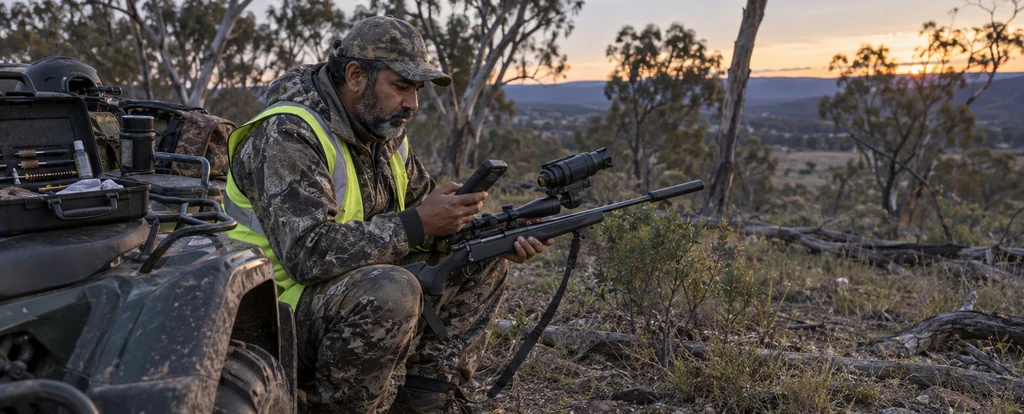
Professional shooters cull feral animals such as foxes, rabbits, pigs and deer for landholders, conservation agencies and pest control contractors.
- Median salary*
- $67,600
4.2%vs last year, before tax
- People employed
- 260
13.3%vs last year
- Projected growth
- +4.2%
to 2035
- AI exposure*
- Low
- automation risk
- Average hours
- 46/wk
+6h vs all jobs
- Shortage status*
- Not in shortage
national
Most professional shooters are sole traders who contract to farms, councils, conservation groups and state agencies, working country that ranges from cropping paddocks to national park. The job is often confused with recreational hunting, but the conditions are different: every animal is accounted for, welfare standards apply, and the shooter carries the responsibility for access, safety and public land rules. In some states the work sits close to vertebrate pest control and biosecurity roles, and the reporting and compliance side is a real part of the day.
How much do professional shooters earn?
The median full-time salary for a professional shooter is $67,600 per annum, before tax, up $14,100 since 2018.
Most professional shooters work as sole traders or contractors rather than employees, so income follows the job: per-head bounties, daily rates or a contract fee for a property. Government agencies and larger conservation bodies offer the steadiest arrangements, while private landholder work swings with the season and the pest numbers. Your firearms licence categories, any public land accreditation and your insurance all affect the work you can take on.
What does a professional shooter do day to day?
The list below is what fills most weeks; the exact mix shifts with seniority and whatever stage the current work is at.
- Surveying properties for pest activity, reading tracks, scats, diggings and camera images to work out where the animals are
- Planning a cull around the season, moonlight, weather and the landholder's stock, then checking the site and confirming access
- Shooting feral animals on foot, from a vehicle or from a hide, often after dark with night vision or thermal equipment
- Recording each animal taken, its location and the method, then reporting cull numbers to the landholder or agency
- Servicing firearms, zeroing optics and keeping night vision, GPS and camera gear working in the field
What skills do professional shooters need?
Employers look for field inspection and testing, environmental assessment, animal care and handling, backed by GPS mapping software fluency and strong safety and compliance awareness.
Specialist skills
- Field inspection and testing
- Environmental assessment
- Animal care and handling
Software and tools
- GPS mapping software
- Ballistic calculator apps
- Night vision equipment
- Trail cameras
- Firearms maintenance kits
General skills
- Safety and compliance awareness
- Physical stamina and dexterity
- Attention to detail
- Written communication
Is the job growing?
About 260 people work as professional shooters in Australia, and employment is projected to grow 4.2% over the decade to 2035. That's modest growth: demand is steady rather than booming.
How do you become a professional shooter?
Here's the path most professional shooters take, step by step.
- 1Get a firearms licence
Apply through your state or territory police firearms registry and complete the required safety course. Pest animal work usually needs the licence categories that cover the species and terrain you'll be shooting, and those categories differ between states.
- 2Build a field record
Most people come into the work through hunting, club shooting or farm jobs, and landholders and contractors want evidence of safe handling and consistent accuracy. Range time, a vermin control record and references from properties you've worked all help here.
- 3Add pest animal and land management training
A Certificate III in Agriculture (AHC30122) or Conservation and Land Management covers vertebrate pest control, chemical use and animal welfare. Public land access often needs extra accreditation, such as the restricted game hunting licence in New South Wales, or an aerial shooting endorsement where that work is offered.
- 4Register as a contractor and insure the work
Since most of the work is contract work, you need an ABN and public liability and professional indemnity cover, usually before a landholder or agency will let you on the property. Some agencies also require you to be a registered contractor with them.
- 5Start with an established operation
A season or two with a contractor, council or landholder group teaches you the reporting, the safety briefings and how properties are scheduled. From there you can tender for your own contracts or take on blocks directly.
Ready to apply as a professional shooter?
Whether you're working toward becoming a professional shooter or already are one and want a hand with the next step (sharpening your resume for ATS screening, tightening your cover letter, or knowing what you'll actually be asked at interview), here are examples grounded in this specific role, not generic templates.
What jobs can a professional shooter move to?
Moving into Park Ranger typically comes with the biggest pay rise, worth $34,000 a year more on average.
| Move to | Typical pay change | Overlap | Retraining |
|---|---|---|---|
| Park Ranger Firearms safety and pest animal control transfer to park management, though a ranger qualification is required. | +$34,000 | 31% | reskill |
| Biosecurity Officer Experience with invasive animals supports biosecurity inspection and surveillance, with retraining in biosecurity regulations. | +$23,400 | 24% | reskill |
| Weeds Officer Pest animal control and field skills carry into weed management and compliance, with retraining in weed control. | +$7,800 | 32% | reskill |
| Fisheries Officer Field compliance and animal control skills suit fisheries enforcement, after retraining in fisheries legislation. | +$1,600 | 21% | reskill |
| Snake Catcher Animal handling and public safety skills transfer to snake removal, with additional training in reptile handling. | +$0 | 39% | reskill |
Moves are chosen from Jobs and Skills Australia's Data on Occupation Mobility, which follows income tax records between 2011-12 and 2020-21, together with entry requirements and skill overlap. A known move is one people were seen making in that data. Pay change compares median full-time pay for the two roles.
Who works as a professional shooter?
The typical professional shooter is 41 years old; 97% are men, 70% work full-time, and full-timers average 46 hours a week.
- 41
- Median age
- 3%
- Female share
- 70%
- Full-time
- +6h
- vs all-jobs avg
What's it like being a professional shooter?
The rhythm is seasonal and weather-driven: foxes and rabbits through winter, pigs after rain, deer in the rut, and a good share of the work done after dark under thermal or night vision. Full-time shooters average 46 hours a week, and the driving between properties can take as long as the shooting itself. The people who stay in it tend to like the autonomy, the accuracy and watching a property's damage fall away over a season.
What people like
- You run your own days. You plan the block, choose the approach and spend most of the shift working alone. Shooters who dislike being managed from an office tend to stay in the job a long time.
- The result is easy to see. A property that was losing lambs to foxes or having paddocks rooted up by pigs changes within a season, and landholders notice the difference.
- Precision is part of the craft. Reading wind, judging distance and taking a clean shot at range is a skill that keeps improving, and it's the part of the job most shooters care about most.
- You see country most people never do. The work takes you onto remote blocks and reserves at dawn and through the night, and the wildlife you're not targeting is part of the interest.
What people find hard
- Income follows the pest numbers. Bounties, daily rates and contract fees all fall away when drought, disease or a good control season cuts the population. Budgeting around an uneven year is part of the work.
- Nights, cold and long drives. Much of the job happens after dark in winter, and the hours between properties can outweigh the hours behind the rifle.
- Rules that change between states. Licence categories, storage requirements, public land accreditation and reporting duties differ by state and are periodically updated, so keeping everything current is an ongoing cost.
- Physical wear and lone work. Carrying gear over rough ground, dragging carcasses and working alone for weeks adds up, and there is nobody nearby if something goes wrong.
Based on our synthesis of professional-body surveys and public accounts of the role, not first-person verified reviews.
Which industries employ professional shooters?
Agriculture, Forestry and Fishing employs the largest share of professional shooters, followed by Manufacturing.
Top employing industries
- 1Agriculture, Forestry and Fishing
- 2Manufacturing
- 3Administrative and Support Services
Ranked by employment share; the source doesn't publish an exact percentage per industry.
| Year 12 or below | 53.9% | |
|---|---|---|
| Certificate III/IV | 33.7% | |
| Bachelor degree | 4.7% | |
| Postgraduate | 3.1% | |
| Diploma / Advanced Diploma | 3.1% |
Will AI replace professional shooters?
This is a low-exposure job: the centre of it is being in the field, reading country and taking a shot, none of which a system can do. Technology has changed the edges, with drone and satellite imagery, thermal and night vision gear and GPS mapping showing where pests are and how they move, and apps handling records. Those tools make planning quicker and reporting tidier, but someone still has to walk the property and decide what happens there.
Share of typical working time by exposure level
- Shooting and humane dispatchThis is physical field work with a firearm, and the decision to take or hold a shot is made in the moment by the shooter.50%low
- Surveying a property for pest activityDrones, thermal cameras and trail camera apps now map sightings and movement, but someone still has to walk the ground and confirm the sign.20%moderate
- Planning the night's cullWeather, moonlight, stock movements and public land rules shape the plan, and mapping and calendar apps help schedule it without being able to assess the site for you.15%moderate
- Recording and reporting cullsHandheld apps and GPS log each animal and its location, and the landholder or agency report is built from that data.15%moderate
Common questions about becoming a professional shooter
Straight answers to the questions people ask most.
How much do professional shooters earn?
Professional shooters earn a median of $67,600 per year before tax, based on full-time workers. Much of the workforce is contracted rather than salaried, so annual earnings depend on how many properties you hold, the bounty rates in your state and how much work the season brings.
How do you become a professional shooter?
You need a firearms licence from your state or territory police registry first, then a record of safe, accurate field work and usually a pest animal control qualification. Most shooters build that through hunting, club shooting or farm work before taking on paid contracts, and public land work in some states needs additional accreditation.
Are professional shooters in demand?
Professional shooters are currently not in shortage, and employment in the role is projected to grow 4.2% over the decade to 2035 over the decade to 2035. About 260 people work in the job, so most contracts are arranged directly with landholders, councils and agencies rather than through advertised vacancies.
Will AI or automation replace professional shooters?
The shooting itself is barely exposed: it is physical field work with a firearm, and the decision to take or hold a shot sits with the person on the ground. Drone and satellite imagery, thermal cameras and GPS mapping have changed how pests are found, and apps now handle much of the cull recording and compliance reporting. Those tools speed up the planning and the paperwork without removing the need to walk the country and read the sign.
What other jobs can a professional shooter move into?
Field and animal control skills carry into weeds officer work, where pay is $7,800 more, and into biosecurity officer or fisheries officer roles, which need retraining in the relevant legislation. Park ranger roles use the same pest animal control and firearms safety background but require a ranger qualification, and pay $34,000 more. Many shooters also stay in the field by building a contracting business, and that is often where earnings grow.
Do you need a licence to work as a professional shooter?
Yes, you need a firearms licence issued by your state or territory police firearms registry. Public land shooting in some states also requires accreditation, such as the restricted game hunting licence in New South Wales, and the categories, storage rules and access conditions vary between states.
Related roles
- Weeds Officer
- Park Ranger
- Biosecurity Officer
- Fisheries Officer
- Snake Catcher
- Aboriginal and Torres Strait Islander Ranger
Not sure this is you? Take the career quiz and get a ranked shortlist of roles that fit how you like to work.