Railway Station Manager
Railway station managers run the day-to-day operations of a station, keeping passengers safe, trains on time and staff supported.
- Median salary*
- $96,200
3.6%vs last year, before tax
- People employed
- 940
4.4%vs last year
- Projected growth
- +12.2%
to 2035
- AI exposure*
- Moderate
- automation risk
- Average hours
- 42/wk
+2h vs all jobs
- Shortage status
- Not in shortage
national
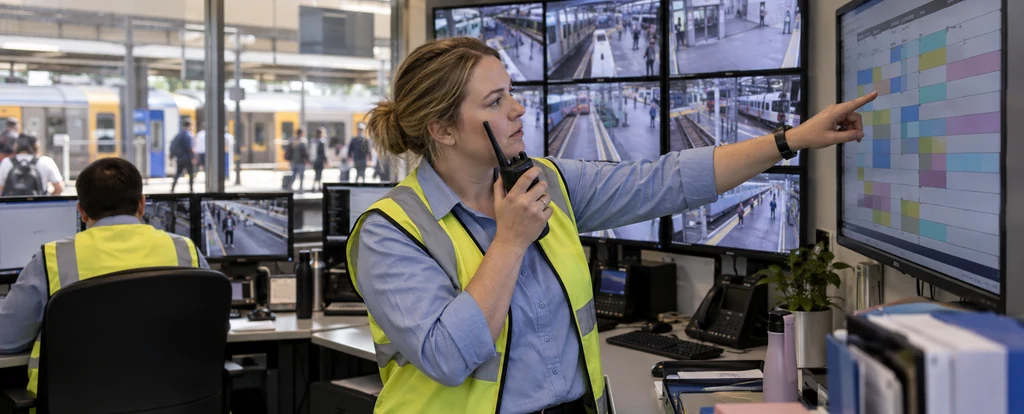
Railway station managers work on the platform as much as in the office, running a station's staff, timetable and safety systems at the same time. The role sits between the people on the ground and the network's control centre, so the manager is often the one who decides what happens when a service is delayed or a passenger needs help. Most are employed by rail operators, and the size of the station shapes the job: a busy metropolitan interchange with a large team runs very differently from a small regional stop with two or three staff.
How much do railway station managers earn?
The median full-time salary for a railway station manager is $96,200 per annum, before tax, up $20,500 since 2018.
Pay for station managers is usually set by an enterprise agreement with a rail operator, so the network you work for and the classification of your station matter more than the title itself. Shift penalties, weekend and public holiday loadings and on-call allowances can add noticeably to the base figure. Large metropolitan interchanges generally sit at higher classifications than small regional stations.
What does a railway station manager do day to day?
The list below is what fills most weeks; the exact mix shifts with seniority and whatever stage the current work is at.
- Rostering station staff across early, late and weekend shifts, and covering gaps when someone calls in sick
- Checking platforms, stairs, lifts and waiting rooms for safety hazards, working signage and accessible access
- Responding when a service is delayed, cancelled or a passenger is taken ill, and keeping everyone informed
- Coordinating with train control, police and emergency services during incidents and writing up what happened
- Managing the station budget, fare compliance and contracts for cleaning and maintenance
What skills do railway station managers need?
Employers look for operations management, rostering and venue operations, backed by Microsoft Office fluency and strong people leadership.
Specialist skills
- Operations management
- Rostering and venue operations
Software and tools
- Microsoft Office
- Kronos Workforce Ready
- CCTV systems
- Two-way radio
- Ticketing systems
General skills
- People leadership
- Customer service
- Safety and compliance awareness
- Problem solving
- Written communication
- Stakeholder management
Is the job growing?
About 940 people work as railway station managers in Australia, and employment is projected to grow 12.2% over the decade to 2035. That's healthy, above-average growth, and the role should stay in solid demand.
How do you become a railway station manager?
Here's the path most railway station managers take, step by step.
- 1Start in a station or onboard role
Many station managers begin as station assistants, customer service officers or guards. These are paid positions that teach you the timetable, the ticketing systems and how a platform runs on a bad day, and most rail operators advertise them without requiring a degree.
- 2Add a qualification in rail operations or management
A certificate IV in rail operations, or a diploma in business or leadership and management, covers the rostering, safety compliance and people side of the job. Some operators support staff through this study while they work.
- 3Take on supervisory duties
Duty manager or team leader shifts are where you learn to run a station rather than work in one, making rostering decisions, handling escalations and acting when the manager is off site.
- 4Apply through an operator's recruitment process
Rail operators run their own assessments for management roles, which usually include an interview, a medical, a police check and sometimes psychometric testing. Internal candidates often hear about openings first, so it helps to be known to the network's managers.
- 5Keep your safety and emergency training current
Rail safety accreditation, first aid and emergency evacuation training are renewed on a cycle, and staying current is part of holding the role rather than a one-off requirement to get in.
Ready to apply as a railway station manager?
Whether you're working toward becoming a railway station manager or already are one and want a hand with the next step (sharpening your resume for ATS screening, tightening your cover letter, or knowing what you'll actually be asked at interview), here are examples grounded in this specific role, not generic templates.
What jobs can a railway station manager move to?
Moving into Train Driver typically comes with the biggest pay rise, worth $59,900 a year more on average.
| Move to | Typical pay change | Overlap | Retraining |
|---|---|---|---|
| Train Driver Rail safety awareness and passenger focus transfer to train driving, though a separate certificate and training are needed.Known move | +$59,900 | 32% | reskill |
| Transport Manager Station managers bring operational oversight of transport schedules and staff, moving into broader transport management with additional study.Known move | +$41,700 | 27% | reskill |
| Customer Experience Manager Passenger service and complaint handling carry into customer experience management, with further study in customer strategy.Known move | +$18,500 | 28% | reskill |
| Train Controller Knowledge of station operations and rail safety supports a move into train control, requiring a certificate and further training.Known move | +$5,200 | 30% | reskill |
Moves are chosen from Jobs and Skills Australia's Data on Occupation Mobility, which follows income tax records between 2011-12 and 2020-21, together with entry requirements and skill overlap. A known move is one people were seen making in that data. Pay change compares median full-time pay for the two roles.
Who works as a railway station manager?
The typical railway station manager is 50 years old; 78% are men, 94% work full-time, and full-timers average 42 hours a week.
- 50
- Median age
- 22%
- Female share
- 94%
- Full-time
- +2h
- vs all-jobs avg
What's it like being a railway station manager?
The job has a steady rhythm set by the timetable, broken regularly by things that don't go to plan: a signal failure, a sick staff member, a passenger who needs help. Managers spend much of the day moving between the office, the platform and the phone, and the work suits someone who likes being visible and making decisions in real time. It is a frontline management role, which means you carry both the operational responsibility and the passenger's frustration when the network lets them down.
What people like
- You see the whole station working. A station is a small operation with staff, cleaning, security and timetable all feeding into each other, and the manager is the one person with a view of all of it.
- No two shifts run the same way. The timetable is fixed but the day rarely is, and the variety of problems that arrive at a station keeps the work from settling into routine.
- Leading a team you know by name. Station teams are small enough that a manager can coach people properly and watch them take on more responsibility over time.
- Authority to fix things on the spot. When a platform needs closing or a service needs holding, the manager can usually make that call and see it happen within minutes.
What people find hard
- Early starts and weekend shifts. Stations open before most people wake up and run seven days, so the roster includes early mornings, nights, weekends and public holidays on rotation.
- Copping frustration you didn't cause. Delays from signalling, weather or another station land on whoever is standing on the platform, and passengers rarely distinguish between the manager and the network.
- The paperwork behind safety. Incident reports, hazard logs, audits and compliance checks take real time, and they still have to be done after a difficult shift.
- Covering shifts at short notice. Sick leave, training days and staff turnover can leave a roster short, and filling the gap often falls to the manager, sometimes by working the shift yourself.
Based on our synthesis of professional-body surveys and public accounts of the role, not first-person verified reviews.
Which industries employ railway station managers?
Transport, Postal and Warehousing employs the largest share of railway station managers.
Top employing industries
- 1Transport, Postal and Warehousing
Ranked by employment share; the source doesn't publish an exact percentage per industry.
| Year 12 or below | 36.1% | |
|---|---|---|
| Certificate III/IV | 21.5% | |
| Bachelor degree | 15.8% | |
| Diploma / Advanced Diploma | 13.7% | |
| Postgraduate | 8.9% |
Will AI replace railway station managers?
The role sits in the middle: systems now handle the routine coordination that used to fill a manager's day, but the job happens where people are. Rostering software, passenger counting sensors and automated platform announcements reduce administrative work and give managers better information, and CCTV analytics can flag crowding before it becomes a safety issue. None of that changes who responds when a person collapses on a platform or a train is held at the signal outside.
Share of typical working time by exposure level
- Running the response to an incidentAn evacuation, a trespasser on the tracks or a medical emergency needs someone to make calls, direct staff and talk to emergency services in the moment.35%low
- Rostering the team across shiftsSoftware builds draft rosters from availability and award rules, but the manager still trades off coverage against cost and handles the swaps and sick leave that arrive daily.25%moderate
- Leading and coaching station staffPerformance conversations, shift handovers and training new starters depend on knowing the people and the station's own history.25%low
- Keeping passengers informedAutomated announcements and app alerts now carry routine timetable and delay messages, leaving the manager to handle the awkward case where the information isn't certain yet.15%high
Common questions about becoming a railway station manager
Straight answers to the questions people ask most.
How much does a railway station manager earn?
Railway station managers earn a median of $96,200 per year before tax. That figure covers full-time workers, and shift loadings, weekend penalties and the classification of the station you manage all move it up or down.
How do you become a railway station manager?
Most station managers come up through a rail operator's own ranks, starting as a station assistant, customer service officer or guard and taking on supervisory duties before applying for a management role. A certificate IV in rail operations, or a diploma in business or leadership and management, covers the rostering, safety and people side of the job. Operators run their own recruitment and assessment processes, including medical and police checks, before appointing a station manager.
Are railway station managers in demand?
Railway station managers are currently not in shortage, and employment in the role is projected to grow 12.2% over the decade to 2035. The occupation is small, so openings tend to come up through individual operators rather than as large intakes, and internal candidates usually hear about them first.
Will AI replace railway station managers?
AI and automation have taken over parts of the role without changing what the job is for. Rostering software drafts shift patterns, CCTV analytics flag crowding on platforms and automated systems handle routine announcements, but none of them can decide to close a platform entrance as a crowd builds before a concert, or send a staff member down to a passenger while a train sits held at the signal.
What can a railway station manager move into?
Broader transport management is a common step, because operational oversight of schedules and staff carries across, and those roles typically pay $41,700 more. Managers who enjoy the passenger side sometimes move into customer experience management, which pays $18,500 more, while train driving pays $59,900 more and draws on rail safety knowledge, though it needs a separate certificate and training.
What hours does a railway station manager work?
Station managers work about 42 hours a week on average, spread across shifts because stations open early and close late. 94% work full time, and the roster usually includes weekend and public holiday coverage.
Related roles
- Transport Manager
- Train Controller
- Customer Experience Manager
- Train Driver
- Railway Station Assistant
- Transport Conductor
Not sure this is you? Take the career quiz and get a ranked shortlist of roles that fit how you like to work.