Shed Builder
Shed builders put up the steel and timber sheds, garages and carports a property uses for storage, machinery and covered work space.
- Median salary*
- $78,000
4.3%vs last year, before tax
- People employed
- 1,300
0.0%vs last year
- Projected growth*
- +4%
to 2035
- AI exposure*
- Low
- automation risk
- Average hours*
- 38/wk
−2h vs all jobs
- Shortage status*
- In shortage
national
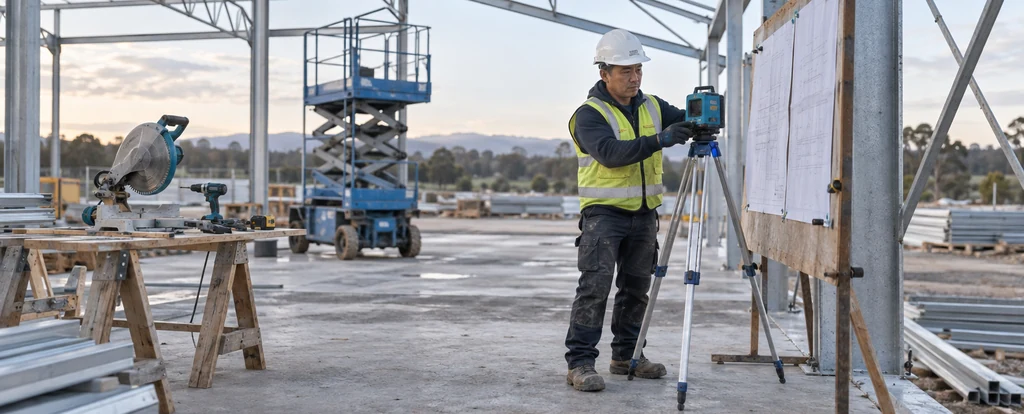
Most shed builders work from prefabricated kits, assembling frames and cladding on site for residential, rural and commercial customers, which separates them from carpenters building a house from scratch. The job usually starts with a slab or footing, then a small crew raises the frame, fixes the roof and walls and hangs the doors. Work takes in farm sheds, machinery sheds and industrial buildings, so a week can mean several sites and some travel.
How much do shed builders earn?
The median full-time salary for a shed builder is $78,000 per annum, before tax, up $16,500 since 2018.
Rates follow the construction award or an enterprise agreement for the level you work at, so a certificate and a few years on the tools generally move you up the scale. On-site work often carries penalty rates for overtime and travel allowances for regional jobs, which can add well beyond the base rate. If you run your own shed business, the quotes you win set your income, so quiet months fall on you rather than an employer.
What does a shed builder do day to day?
The list below is what fills most weeks; the exact mix shifts with seniority and whatever stage the current work is at.
- Reading the plans and marking out the site from the engineer's drawings
- Preparing a slab or footing, or checking one that has already been poured
- Assembling steel frames and trusses, often with a crane or scissor lift
- Fixing roofing and wall cladding and hanging roller doors
- Sealing, flashing and finishing the shed before handover
What skills do shed builders need?
Employers look for reading plans and specifications, hand and power tool work, installation and maintenance, backed by Laser levels fluency and strong physical stamina and dexterity.
Specialist skills
- Reading plans and specifications
- Hand and power tool work
- Installation and maintenance
- Worksite safety management
- Fabrication and finishing
- Plant and equipment operation
- Building codes and standards
Software and tools
- Laser levels
- Power saws
- Scissor lifts
- Impact drivers
- SketchUp
General skills
- Physical stamina and dexterity
Is the job growing?
About 1,300 people work as shed builders in Australia, and employment is projected to grow 4% over the decade to 2035. That's modest growth: demand is steady rather than booming.
How do you become a shed builder?
Here's the path most shed builders take, step by step.
- 1Finish Year 10 or Year 12
Most entrants leave school and go straight onto a site. Maths and a subject that involves reading technical drawings help, because measuring and setting out are daily tasks.
- 2Get a White Card
General construction induction training is required before you can step onto a construction site in every state and territory, and it takes about a day.
- 3Start an apprenticeship or traineeship
The common route is a Certificate III in Carpentry (CPC30220) or a fabrication trade qualification through an Australian Apprenticeship, which is paid and runs about three to four years. Some people start as a labourer with a shed company instead and learn the work on the job.
- 4Learn the shed systems
Kit manufacturers run their own installer training, which is how most people learn the proprietary frame, cladding and bracing systems they will use day to day.
- 5Look at licensing if you go out on your own
Contract work above a set value needs a builder's licence or registration in most states, and the threshold and requirements differ by state, so check your own.
Ready to apply as a shed builder?
Whether you're working toward becoming a shed builder or already are one and want a hand with the next step (sharpening your resume for ATS screening, tightening your cover letter, or knowing what you'll actually be asked at interview), here are examples grounded in this specific role, not generic templates.
What jobs can a shed builder move to?
Moving into Concreter typically comes with the biggest pay rise, worth $36,900 a year more on average.
| Move to | Typical pay change | Overlap | Retraining |
|---|---|---|---|
| Concreter Shed builders bring slab preparation and footing experience to concreting work for outbuildings and structures. | +$36,900 | 67% | minimal |
| Scaffolder Shed builders bring working at heights and structural assembly experience to scaffolding, needing a scaffolder ticket. | +$13,000 | 83% | short course |
| Steel Erector Shed builders bring steel frame assembly and cladding experience to erecting structural steel on larger projects. | +$10,400 | 91% | minimal |
Moves are chosen from Jobs and Skills Australia's Data on Occupation Mobility, which follows income tax records between 2011-12 and 2020-21, together with entry requirements and skill overlap. A known move is one people were seen making in that data. Pay change compares median full-time pay for the two roles.
Who works as a shed builder?
The typical shed builder is 36 years old; 99% are men, 80% work full-time, and full-timers average 38 hours a week.
- 36
- Median age
- 1%
- Female share
- 80%
- Full-time
- −2h
- vs all-jobs avg
What's it like being a shed builder?
The rhythm runs in bursts: a slab or a kit delivery sets the pace, then the crew works to close the shed in before the weather turns. It suits people who like early starts, hands-on work and visible progress, since a bare block becomes a finished building in a few days. The trade-offs are physical and practical, with heights, heat and travel to rural sites, and a late delivery can compress the whole week.
What people like
- You see the result the same week. A shed goes from slab to closed structure in a few days, so there is a finished building to look at rather than a task half done.
- Different sites and customers. Farm, industrial and suburban jobs vary enough that the week does not look the same, and rural work takes you places you would not otherwise see.
- Hands-on and outdoors. Most of the day is spent on the tools and in the open air rather than in an office, which suits people who prefer physical work.
- A clear path to working for yourself. The skills and kit knowledge carry straight over to running your own crew, and many shed builders end up quoting and managing their own jobs.
What people find hard
- Weather decides the day. Rain stops cladding and roofing, and a summer afternoon on a steel frame is hard work with little shade.
- Heights and heavy materials. You will be on ladders, scissor lifts and roofs handling long sheets of cladding, so the physical load and the fall risk are real.
- Travel away from home. Rural and remote jobs can mean very early starts, long drives and nights away, which is difficult with a young family.
- Delays you cannot control. If the slab is not poured or the kit truck is late, your week compresses and the pressure lands on the crew.
Based on our synthesis of professional-body surveys and public accounts of the role, not first-person verified reviews.
Which industries employ shed builders?
Construction employs the largest share of shed builders, followed by Manufacturing.
Top employing industries
- 1Construction
- 2Manufacturing
- 3Agriculture, Forestry and Fishing
- 4Wholesale Trade
Ranked by employment share; the source doesn't publish an exact percentage per industry.
| Certificate III/IV | 34% | |
|---|---|---|
| Diploma / Advanced Diploma | 26% | |
| Bachelor degree | 20% | |
| Year 12 or below | 20% |
Will AI replace shed builders?
This is a low-exposure job, because the core of it is lifting, aligning and fixing heavy components on site, which automation does not reach. Design and quoting software has changed the front end, with 3D models and supplier configurators producing the drawings and material lists a shed builder works from. The tools on site, such as laser levels and impact drivers, speed up the work without changing who does it.
Share of typical working time by exposure level
- Frame, cladding and door installationRaising frames, fixing long sheets of cladding and hanging roller doors is manual work done at height in the weather, with a second pair of hands more useful than a screen.35%low
- Site prep and slab workGround conditions, drainage and levels decide what happens with a slab or footing, and no software can see what is under the surface.25%low
- Setting out and reading plansLaser levels and drawings do part of the job, and modelling software can generate a layout, but you still check the corners, levels and boundary yourself before anything is fixed.20%moderate
- Quoting and ordering the kitSupplier configurators and design software turn a customer's rough dimensions into a material list and a price, which takes hours out of quoting a shed.20%high
Common questions about becoming a shed builder
Straight answers to the questions people ask most.
How much do shed builders earn?
Shed builders earn a median of $78,000 per year before tax, based on full-time workers. What you actually take home depends on whether you are on an award or an enterprise agreement, how much overtime and regional travel is involved, and whether you work for a company or quote your own jobs.
How do I become a shed builder?
The usual route is a White Card, then an apprenticeship or traineeship in carpentry or a fabrication trade, or a start as a labourer with a shed company. Kit manufacturers also run installer training, which is often how people learn the specific frame and cladding systems they will use.
Are shed builders in demand in Australia?
Shed builders are currently in shortage nationally, and employment is projected to grow 4% over the decade to 2035. That points to work for qualified installers, and because the occupation is small, most jobs come through shed companies and local contacts rather than advertised listings.
Will AI replace shed builders?
Very little of the job is exposed, because it means assembling heavy components on site in whatever conditions the day brings. Software has changed the design and quoting end, with 3D models and supplier configurators producing the plans and material lists you work from. Setting out, raising frames and fixing cladding still come down to hands, tools and judgement about the ground in front of you.
What can shed builders move into later?
Shed building experience carries over to erecting structural steel on larger projects, which pays $10,400 more and uses the same frame and cladding skills. Concreting is another nearby option at $36,900 more, since you already prepare slabs and footings. Many shed builders eventually run their own crew or installation business, which is often where earnings grow.
Do shed builders need a licence?
Contract work above a set value needs a builder's licence or registration in most states, and the threshold and the rules differ by state. Working as an employee under someone else's licence is the usual way to start while you build up the experience needed to apply.
Related roles
Not sure this is you? Take the career quiz and get a ranked shortlist of roles that fit how you like to work.