Sugar Cane Grower
Sugar cane growers plant and tend cane on coastal farms and deliver it to a mill, where it becomes raw sugar, ethanol and renewable electricity.
- Median salary*
- $91,000
4.0%vs last year, before tax
- People employed
- 2,500
0.0%vs last year
- Projected growth
- +4.6%
to 2035
- AI exposure*
- Moderate
- automation risk
- Average hours
- 59/wk
+19h vs all jobs
- Shortage status*
- Not in shortage
national
Most cane is grown on family farms along the Queensland coast and in northern New South Wales, on a cycle that runs from planting through to harvest and delivery to the local mill. Unlike growers selling to fresh produce markets, cane growers work to a mill's crushing season, which sets when they harvest, hire and spend. Many also run the business side themselves, from budgets and labour to chemical records and environmental compliance.
How much do sugar cane growers earn?
The median full-time salary for a sugar cane grower is $91,000 per annum, before tax, up $19,000 since 2018.
Pay follows the tonnes of cane delivered and the sugar content of the crop, so a clean harvest and good mill returns matter more than hours in the paddock. Whether the land is owned, leased or share-farmed, and the terms of the cane supply agreement with the mill, change what a grower ends up with. Wet weather that delays harvest or cuts yield is the biggest swing factor from one year to the next.
What does a sugar cane grower do day to day?
The list below is what fills most weeks; the exact mix shifts with seniority and whatever stage the current work is at.
- Preparing paddocks, testing soils and planning fallow rotations between cane cycles
- Planting cane setts and managing nutrition, irrigation and drainage across blocks
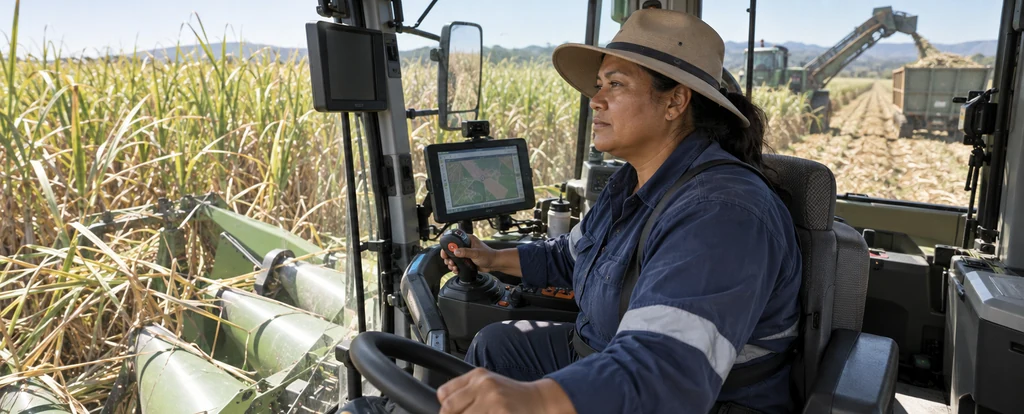
- Operating and maintaining harvesters, haulouts and tractors, often late into the night during the crush
- Walking blocks and inspecting crops for weeds, pests and disease, then applying controls
- Coordinating harvest and haulage with the local mill so cut cane is crushed within a day or so
What skills do sugar cane growers need?
Employers look for operations management, plant and equipment operation, worksite safety management, backed by John Deere Operations Center fluency and strong problem solving.
Specialist skills
- Operations management
- Plant and equipment operation
- Worksite safety management
- Field inspection and testing
- Budgeting and forecasting
- Supply chain planning
- Environmental assessment
Software and tools
- John Deere Operations Center
- Trimble Ag Software
- Climate FieldView
- Microsoft Excel
General skills
- Problem solving
Is the job growing?
About 2,500 people work as sugar cane growers in Australia, and employment is projected to grow 4.6% over the decade to 2035. That's modest growth: demand is steady rather than booming.
How do you become a sugar cane grower?
Here's the path most sugar cane growers take, step by step.
- 1Start with hands-on farm work
Seasonal harvest work, machinery operation or a farmhand job on a cane property teaches the crop cycle, and it is how most growers begin, including those who later run their own blocks.
- 2Study agriculture, usually while working
A Certificate III in Agriculture, often through a traineeship with a grower or harvest contractor, covers soils, machinery and crop production. Around 60% of people in the role have Year 12 or below as their highest qualification, so experience carries as much weight as study.
- 3Add the licences and accreditations
A heavy vehicle licence, a forklift licence and chemical user accreditation for applying herbicides and pesticides are the usual requirements, and the chemical rules are set by state regulators.
- 4Learn the business side
Farm business management, budgeting and cane supply agreements matter because growers own, lease or share-farm the land, and the mill contract determines how the crop is paid for.
- 5Take on land and management
Leasing blocks, share farming or taking over a family property is the step from employee to grower, and it usually arrives with the machinery, capital and debt that go with running a cane farm.
Ready to apply as a sugar cane grower?
Whether you're working toward becoming a sugar cane grower or already are one and want a hand with the next step (sharpening your resume for ATS screening, tightening your cover letter, or knowing what you'll actually be asked at interview), here are examples grounded in this specific role, not generic templates.
What jobs can a sugar cane grower move to?
None of the roles sugar cane growers typically move into pay more than the role itself. Grain Grower is the closest match. If a bigger salary is the goal, moving up into a senior or principal position within the role is usually the faster route than moving sideways.
| Move to | Typical pay change | Overlap | Retraining |
|---|---|---|---|
| Grain Grower Sugar cane growers bring row-crop establishment, harvest logistics and machinery operation to grain growing, adapting to dryland seasons and different equipment. | −$7,800 | 62% | minimal |
| Cotton Grower Sugar cane growers bring broadacre cropping, irrigation and heavy machinery skills to cotton growing, with only minor adjustment to a different crop. | −$18,200 | 70% | minimal |
| Vegetable Grower Sugar cane growers bring irrigation, soil management and cropping machinery to vegetable growing, though different planting and harvest systems need study. | −$18,200 | 44% | reskill |
| Orchardist Sugar cane growers bring crop monitoring, irrigation and machinery skills to orchard work, with short training in tree crop management. | −$18,200 | 48% | short course |
Moves are chosen from Jobs and Skills Australia's Data on Occupation Mobility, which follows income tax records between 2011-12 and 2020-21, together with entry requirements and skill overlap. A known move is one people were seen making in that data. Pay change compares median full-time pay for the two roles.
Who works as a sugar cane grower?
The typical sugar cane grower is 60 years old; 82% are men, 82% work full-time, and full-timers average 59 hours a week.
- 60
- Median age
- 18%
- Female share
- 82%
- Full-time
- +19h
- vs all-jobs avg
What's it like being a sugar cane grower?
The year has a clear shape: planting and growing through the wet season, then the crush, when cane is cut, hauled and sent to the mill in a run that can stretch around the clock. Machinery and weather set the pace, and the busiest weeks are long, with full-time growers averaging around 59 hours. It suits people who like working outdoors with equipment, are comfortable making calls on their own, and can live with a season that does not always go to plan.
What people like
- Seeing a crop through to the mill. Planting, growing and cutting a block over 12 to 18 months gives a clear result, and the cane payment advice shows what the season was worth.
- Running machinery you know inside out. Harvesters, haulouts and tractors are the core tools of the job, and a grower who maintains them well loses less cane and less time.
- Working for yourself on the land. Most growers are owner-operators or share farmers, so decisions about the blocks, the contractors and the crew are theirs to make.
- A small industry where people know each other. Growers work closely with harvesting contractors, mill staff and neighbouring farms, and the local mill area is a genuinely small world.
What people find hard
- Weather decides the season. Wet paddocks stop harvesters, and a cyclone or a long dry spell can cut yield after months of work and expense.
- Long weeks during the crush. Harvest runs to the mill's schedule, so repairs, haulage and late finishes pile up over several months rather than spreading evenly.
- Capital tied up in land and equipment. A harvester, haulouts and blocks of cane land cost a great deal, and the returns depend on world sugar prices, input costs and the mill agreement.
- Records and compliance. Chemical use, runoff management and mill supply reporting all need paperwork, and the requirements vary by state and by mill area.
Based on our synthesis of professional-body surveys and public accounts of the role, not first-person verified reviews.
Which industries employ sugar cane growers?
Agriculture, Forestry and Fishing employs the largest share of sugar cane growers.
Top employing industries
- 1Agriculture, Forestry and Fishing
Ranked by employment share; the source doesn't publish an exact percentage per industry.
| Year 12 or below | 60.2% | |
|---|---|---|
| Certificate III/IV | 25.3% | |
| Diploma / Advanced Diploma | 4.8% | |
| Bachelor degree | 3.8% | |
| Postgraduate | 0.7% |
Will AI replace sugar cane growers?
Sugar cane growing sits in the middle. Guidance systems, yield mapping and mill data already shape how blocks are managed and how cane is paid for, but the crop itself is grown on land in real weather, and machinery still needs an operator who can read a wet paddock. The technology changes how decisions are made, not who has to make them.
Share of typical working time by exposure level
- Operating harvesters and hauloutsAuto-steer takes over the straight runs, but a harvester working a boggy block or a badly laid-out paddock needs an experienced hand on the controls.30%low
- Walking blocks and inspecting cropsSpotting grub damage, disease or a blocked drain still means getting out across the paddocks, often with a agronomist in tow.25%low
- Budgets, mill records and compliance reportingAccounting software and mill portals now handle cane payment statements, chemical records and runoff compliance lodgements that once took days of paperwork.25%high
- Irrigation, nutrition and pest decisionsSoil moisture probes, satellite imagery and mill yield records feed recommendations, but applying them to a particular block is still the grower's call.20%moderate
Moves least exposed to AI
These career moves from sugar cane grower work are rated low for AI exposure:
- Cotton Grower
High skill overlap (70%), little retraining to get there, and a low automation-risk profile.
- Orchardist
Solid skill overlap (48%), short course to get there, and a low automation-risk profile.
Common questions about becoming a sugar cane grower
Straight answers to the questions people ask most.
How much do sugar cane growers earn?
The median for the role is $91,000 per annum, before tax. That is a median rather than a set rate, and individual returns swing with the size of the crop, the sugar content delivered and the terms of the mill agreement.
How do you become a sugar cane grower?
Most people start as farm workers or machinery operators on cane properties and learn the crop cycle on the job. A Certificate III in Agriculture (AHC30122), chemical user accreditation and heavy vehicle or forklift licences help, but taking on land by lease, share farming or family succession is what turns an employee into a grower.
Are sugar cane growers in demand?
Sugar cane growers are currently not in shortage, and employment is projected to grow 4.6% over the decade to 2035. The workforce is small and spread along the coast, so openings tend to come from growers retiring or leaving the land rather than from new cane areas being planted.
Will AI or automation replace sugar cane growers?
Field work is only partly exposed. Auto-steer tractors, yield mapping and soil moisture sensors already guide machinery and irrigation, but harvest timing, block inspections and repairs still depend on someone who knows the paddock, and those calls stay with the grower.
What can sugar cane growers move into?
Cotton growing uses the same broadacre cropping, irrigation and machinery skills and typically pays $18,200 less, while grain growing trades the coast for dryland seasons and pays $7,800 less. People also arrive from the other direction, with agricultural machinery operators and vegetable growers moving into cane. The larger progression is ownership, moving from managing blocks to owning or share-farming cane land, which is often where earnings grow.
Do sugar cane growers work long hours?
Yes, during the crush. Full-time growers average around 59 hours a week across the year, but that is spread unevenly, with long days and night shifts through harvest and quieter periods between cane cycles.
Related roles
Not sure this is you? Take the career quiz and get a ranked shortlist of roles that fit how you like to work.