Video Editor
Video editors turn raw footage into a finished sequence, choosing which shots, sound and pacing carry the story.
- Median salary
- $102,700
4.1%vs last year, before tax
- People employed
- 3,300
3.1%vs last year
- Projected growth
- +19.1%
to 2035
- AI exposure*
- Moderate
- automation risk
- Average hours
- 44/wk
+4h vs all jobs
- Shortage status
- Not in shortage
national
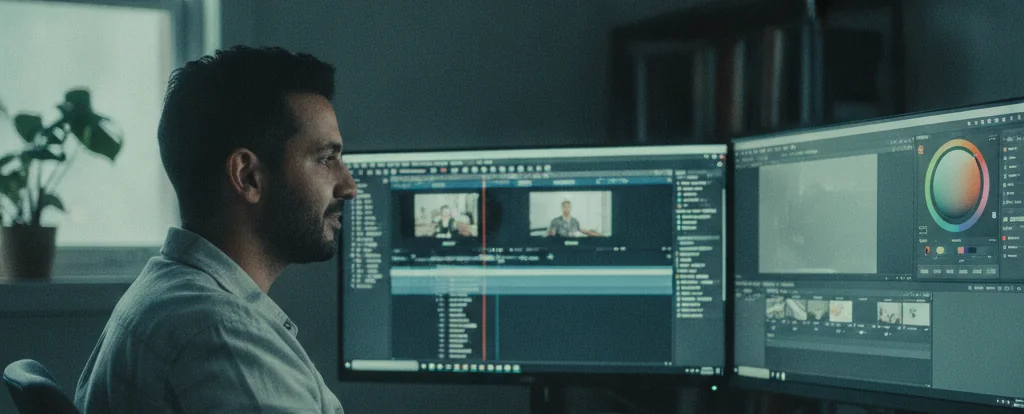
Video editors work after the shoot, cutting raw footage into a finished sequence using software such as Adobe Premiere Pro, Final Cut Pro or DaVinci Resolve. Most work in television, advertising, corporate video or online media, often in a small production team or freelancing across several clients at once. The role is distinct from a colourist or motion graphics artist, though many editors handle basic colour correction and simple effects within the same edit.
How much do video editors earn?
The median full-time salary for a video editor is $102,700 per annum, before tax, up $21,500 since 2018.
Pay depends heavily on the sector and on whether you are on staff or freelance: broadcast, agency and in-house roles tend to bring steady work, while freelance income rises and falls with the clients you keep. Editors with a strong showreel in advertising, drama or high-end online content can charge more than those on routine corporate jobs. Freelancers set their own rates and carry their own costs, including software subscriptions, storage and equipment.
What does a video editor do day to day?
The list below is what fills most weeks; the exact mix shifts with seniority and whatever stage the current work is at.
- Sorting through hours of raw footage to find the handful of clips that actually tell the story
- Cutting a rough sequence together and shaping its pacing before anyone else sees it
- Sitting with feedback from a client, director or producer and working out which notes to act on
- Syncing sound and music and doing the basic colour work that makes a rough cut feel finished
- Exporting and reformatting the same edit for different platforms, durations and delivery specs
What skills do video editors need?
Employers look for content creation and writing, creative software production, project management, backed by Adobe Premiere Pro fluency and strong problem solving.
Specialist skills
- Content creation and writing
- Creative software production
- Project management
Software and tools
- Adobe Premiere Pro
- Final Cut Pro
- DaVinci Resolve
- After Effects
- Avid Media Composer
General skills
- Problem solving
- Attention to detail
- Time and deadline management
- Written communication
Is the job growing?
About 3,300 people work as video editors in Australia, and employment is projected to grow 19.1% over the decade to 2035. That's healthy, above-average growth, and the role should stay in solid demand.
How do you become a video editor?
Here's the path most video editors take, step by step.
- 1Learn the editing software and start cutting
Premiere Pro, DaVinci Resolve, Final Cut Pro and Avid Media Composer are the tools employers name most often, and short courses through TAFE or online cover the basics. Practise on your own footage or free material until you can finish a piece from start to finish.
- 2Study screen production or media
Of the editors working today, 47% hold a bachelor degree, usually in film, screen production or media, and a diploma is the other common route. Study helps most with larger employers, and it gives you access to equipment, crews and student productions to cut.
- 3Take a first job inside a production team
Assistant editor, media wrangler and junior social content roles are paid ways in, and they teach you how a professional edit is organised, labelled and versioned. Corporate and advertising agencies often hire earlier than broadcast does.
- 4Build a showreel and a client list
The reel is what gets you the next job, so keep it short and current. Many editors then specialise in one kind of work, such as short-form social, documentary, drama or advertising, or move into freelancing and running their own editing practice.
Ready to apply as a video editor?
Whether you're working toward becoming a video editor or already are one and want a hand with the next step (sharpening your resume for ATS screening, tightening your cover letter, or knowing what you'll actually be asked at interview), here are examples grounded in this specific role, not generic templates.
What jobs can a video editor move to?
None of the roles video editors typically move into pay more than the role itself. Film and Television Producer is the closest match. If a bigger salary is the goal, moving up into a senior or principal position within the role is usually the faster route than moving sideways.
| Move to | Typical pay change | Overlap | Retraining |
|---|---|---|---|
| Film and Television Producer An editor's sense of story and pacing supports producing, though the move requires broader production and financing skills.Known move | −$6,500 | 38% | reskill |
| Camera Operator Visual storytelling and shot selection carry into camera operation, with a short course covering camera craft.Known move | −$6,800 | 50% | short course |
| Video Producer Editing craft and narrative pacing carry into producing video content, making this a natural step with little extra training.Known move | −$9,100 | 65% | minimal |
| Film and Television Director Storytelling and pacing skills transfer to directing, shaping performances and shots with minimal retraining.Known move | −$22,100 | 71% | minimal |
Moves are chosen from Jobs and Skills Australia's Data on Occupation Mobility, which follows income tax records between 2011-12 and 2020-21, together with entry requirements and skill overlap. A known move is one people were seen making in that data. Pay change compares median full-time pay for the two roles.
Who works as a video editor?
The typical video editor is 33 years old; 72% are men, 67% work full-time, and full-timers average 44 hours a week.
- 33
- Median age
- 28%
- Female share
- 67%
- Full-time
- +4h
- vs all-jobs avg
What's it like being a video editor?
Editing runs on projects: long days to hit a delivery date, then a quieter stretch while the next job is confirmed. Most of the time you are alone with the footage and the software, checking in with a producer, director or client at set points rather than working beside people all day. It suits someone who enjoys solving a story frame by frame and can take notes on their own work without taking them personally.
What people like
- You see the finished thing. An edit turns a pile of unconnected footage into something that works, and you can point to exactly what you contributed.
- The puzzle of finding the story. Working out which shot carries a scene, where to cut and how long to hold a beat is the part that keeps people in the job.
- Craft that carries between clients. The same skills apply to a corporate explainer, a music video, a documentary or a social campaign, so the work rarely narrows to one format for good.
- Close to the whole production. Editors sit near producers, directors and sound designers, which means you see how the parts of a production fit together and often get a say in the final shape.
What people find hard
- Long stretches at a screen. Most of the week is spent sitting, reviewing the same footage repeatedly, which wears on your eyes, back and patience by the end of a delivery week.
- Feedback that reopens finished work. A cut signed off on Tuesday can be back on your desk on Wednesday because a client changed their mind, and the schedule rarely grows to match.
- Tight turnarounds. Social, news and campaign work often means cutting to a same-day deadline, so there is little slack if footage arrives late or a file will not open.
- Quiet gaps between jobs. Freelance work comes in projects, so unpaid time chasing invoices, quoting and finding the next client is part of the arrangement rather than an exception.
Based on our synthesis of professional-body surveys and public accounts of the role, not first-person verified reviews.
Which industries employ video editors?
Information Media and Telecommunications employs the largest share of video editors, followed by Professional, Scientific and Technical Services.
Top employing industries
- 1Information Media and Telecommunications
- 2Professional, Scientific and Technical Services
Ranked by employment share; the source doesn't publish an exact percentage per industry.
| Bachelor degree | 46.7% | |
|---|---|---|
| Year 12 or below | 21.7% | |
| Diploma / Advanced Diploma | 14.9% | |
| Postgraduate | 7.9% | |
| Certificate III/IV | 6.1% |
Will AI replace video editors?
AI already handles parts of an editor's week: transcription-based rough cuts, noise removal, colour matching and automatic reframing for vertical video have all moved into mainstream editing software. That shifts the work towards the decisions a tool cannot make, such as what a scene needs, where a beat should land and how to answer a client who wants the piece to feel different without saying how. The craft is still learned the same way, but the mechanical hours are shrinking.
Share of typical working time by exposure level
- Shaping the fine cut and pacingDeciding how long to hold a reaction, where a joke lands or which take carries a scene comes from watching the footage and knowing the audience.35%low
- Assembling a first rough cutTools that build an assembly from a transcript or a script now produce a usable starting point, so less of the week goes on the first pass.25%high
- Sorting and logging raw footageSpeech recognition and scene detection can transcribe and tag a shoot overnight, but someone still decides which takes carry the story.20%moderate
- Versioning and delivering to platform specsAutomatic reframing and caption generation handle part of the reformatting for social, though delivery specs, naming and final sign-off still run through a person.20%moderate
Moves least exposed to AI
These career moves from video editor work are rated low for AI exposure:
- Film and Television Director
High skill overlap (71%), little retraining to get there, and a low automation-risk profile.
- Camera Operator
Solid skill overlap (50%), short course to get there, and a low automation-risk profile.
Common questions about becoming a video editor
Straight answers to the questions people ask most.
How much do video editors earn?
Full-time video editors earn a median of $102,700 per year before tax. Pay moves with the sector you work in and whether you are on staff or freelance, since broadcast and agency roles are steadier while freelance rates follow the clients you can hold. Specialising in high-end advertising, drama or online content tends to lift rates above routine corporate work.
How do you become a video editor?
Learn the editing software, build a showreel, then get paid work through a production company, an agency or your own clients. A degree or diploma in screen production helps with larger employers, but plenty of editors start by cutting social media content and move up on the strength of their reel. An assistant editor role on a production team is a common paid entry point.
Are video editors in demand?
Video editors are currently not in shortage. Employment is projected to grow 19.1% over the decade to 2035, so the work is there for people with a current showreel and contacts in the industry. Keep in touch with producers and agencies you have worked with, because repeat work is a large part of how editors stay busy.
Will AI replace video editors?
AI is changing parts of the job rather than replacing the editor. Tools can transcribe footage, build a rough assembly, clean up audio and reframe a cut for vertical video, which takes over some mechanical work. Deciding what the piece should say, where a cut lands and how to answer a client's note still belongs to the editor.
What can video editors move into?
Moving into producing uses the editing craft and narrative pacing you already have, with little extra training, and video producers earn $9,100 less. Directing draws on the same sense of story and pacing and pays $22,100 less, while camera operators earn $6,800 less and usually add a short course in camera craft. Many editors also build their own freelance practice or studio, which is often where earnings grow.
Can you work as a video editor from home?
Yes, freelance editors commonly cut at home and send work back over shared storage or a file transfer service. Larger productions usually want you on site for review sessions with the director or client, at least during the stages where the cut is still changing.
Related roles
- Video Producer
- Film and Television Producer
- Film and Television Director
- Camera Operator
- Production Assistant
- Camera Operator
Not sure this is you? Take the career quiz and get a ranked shortlist of roles that fit how you like to work.