Camera Operator
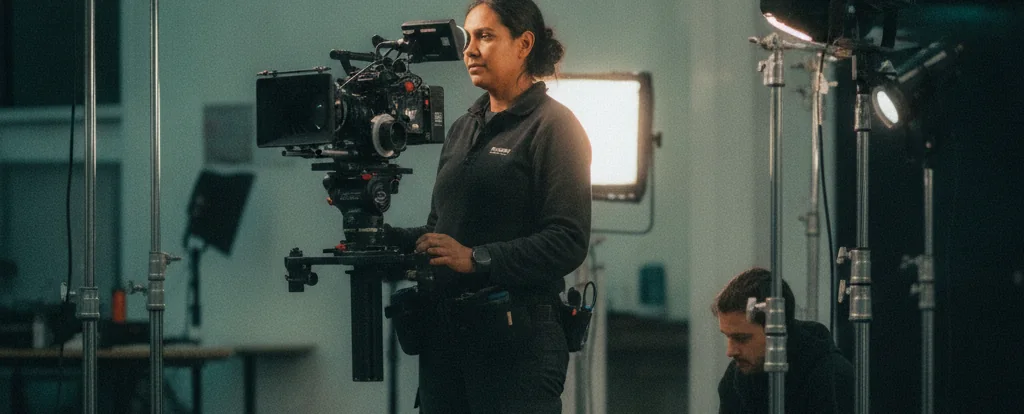
Camera operators capture the footage that becomes a television program, film, advertisement or online video, working to the direction of a director or cinematographer.
- Median salary
- $95,900
3.8%vs last year, before tax
- People employed
- 2,900
0.0%vs last year
- Projected growth
- +8.3%
to 2035
- AI exposure*
- Low
- automation risk
- Average hours
- 45/wk
+5h vs all jobs
- Shortage status
- Not in shortage
national
Camera operators work on set or on location, framing and moving the camera to record what a director wants in the finished footage. The role splits from the cinematographer's: the cinematographer plans the lighting and the overall look, while the operator executes the shot in real time, often while the scene or subject is still moving. Most work comes through television, film and advertising production companies, and much of it is freelance, moving from one production to the next.
How much do camera operators earn?
The median full-time salary for a camera operator is $95,900 per annum, before tax, up $19,900 since 2018.
Most camera operators work freelance and charge a day rate, so annual earnings depend on how many days you book and what each production pays. Commercials, drama and broadcast staff roles generally pay better than corporate, event and community work, and staff positions often sit under an enterprise agreement with overtime and travel allowances. Owning your own kit can lift your rate, but it brings maintenance, insurance and replacement costs.
What does a camera operator do day to day?
The list below is what fills most weeks; the exact mix shifts with seniority and whatever stage the current work is at.
- Rigging and checking the camera, lenses and support gear before a call time that can start well before sunrise
- Holding a frame steady for hours in awkward positions, heat, rain or a crowd
- Pulling focus and adjusting framing on the fly as a scene or a live shot changes
- Following a director's shorthand without breaking a take, and asking when an instruction is unclear
- Backing up and handing over footage at wrap, then packing the kit for the next job
What skills do camera operators need?
Employers look for content creation and writing, visual design, creative software production, backed by Cinema cameras (RED, Alexa, Sony) fluency and strong problem solving.
Specialist skills
- Content creation and writing
- Visual design
- Creative software production
Software and tools
- Cinema cameras (RED, Alexa, Sony)
- Lenses and optical equipment
- Camera stabilisers (gimbal, Steadicam)
- Lighting control software
- Video editing and colour-grading tools
General skills
- Problem solving
- Attention to detail
- Written communication
- Stakeholder management
- Presenting and data storytelling
Is the job growing?
About 2,900 people work as camera operators in Australia, and employment is projected to grow 8.3% over the decade to 2035. That's modest growth: demand is steady rather than booming.
How do you become a camera operator?
Here's the path most camera operators take, step by step.
- 1Learn a camera and shoot anything you can
Student films, community sport, music clips and short courses all build the basic skills in framing, movement and focus. A showreel of finished work is what most employers and producers ask to see first.
- 2Study screen production or media
A Diploma of Screen and Media at TAFE or a film and television degree covers camera craft, lighting and editing, and gives you crew contacts. Around 35% of people working as camera operators hold no post-school qualification, so this is a helpful route rather than a required one.
- 3Start as a camera assistant, runner or production assistant
These are paid entry roles on professional shoots where you learn set protocol, gear handling and how a crew actually runs. Camera assisting in particular puts you next to working operators and often leads to operating work.
- 4Go freelance and build a network
Register with a production database or agent, keep your reel current and stay in touch with producers and crew you have worked with. Work arrives through people who already know you, so the relationships matter as much as the gear.
- 5Specialise in a format
News, live sport, drama, documentary, commercials and corporate video each have their own pace and technique. Picking one or two lets you charge more for the work you are known for.
Ready to apply as a camera operator?
Whether you're working toward becoming a camera operator or already are one and want a hand with the next step (sharpening your resume for ATS screening, tightening your cover letter, or knowing what you'll actually be asked at interview), here are examples grounded in this specific role, not generic templates.
What jobs can a camera operator move to?
Moving into Video Editor typically comes with the biggest pay rise, worth $6,800 a year more on average.
| Move to | Typical pay change | Overlap | Retraining |
|---|---|---|---|
| Video Editor Camera operators bring visual framing and story sense to editing, adding post-production software skills through a short course.Known move | +$6,800 | 50% | short course |
| Cinematographer Camera operators step up to lead photography, carrying lens, lighting and composition knowledge into cinematography with minimal retraining.Known move | +$5,500 | 80% | minimal |
| Television Equipment Operator Camera operators move into broader broadcast equipment work, bringing live production experience and reskilling for television equipment operation.Known move | −$7,500 | 14% | reskill |
Moves are chosen from Jobs and Skills Australia's Data on Occupation Mobility, which follows income tax records between 2011-12 and 2020-21, together with entry requirements and skill overlap. A known move is one people were seen making in that data. Pay change compares median full-time pay for the two roles.
Who works as a camera operator?
The typical camera operator is 33 years old; 88% are men, 55% work full-time, and full-timers average 45 hours a week.
- 33
- Median age
- 12%
- Female share
- 55%
- Full-time
- +5h
- vs all-jobs avg
What's it like being a camera operator?
Camera operating follows the rhythm of production: early call times, long days, short bursts of intense filming and then packing down. Freelance work is common, so the calendar fills and empties with each production, and staff roles in news or broadcast are the steadier alternative. It suits people who like being close to the action, can stay sharp when nothing is happening, and do not mind their plans changing at short notice.
What people like
- You are there when the moment happens. Operating the camera puts you at the take, the goal, the interview or the performance that ends up in the finished piece, rather than hearing about it later.
- No two shoots look alike. One week is a studio interview, the next a muddy location shoot or a live match, so the settings and the problems keep changing.
- The crew you work with. Productions run on small teams who solve problems together across long days, and the people you meet usually lead to the next job.
- A craft you keep improving. Framing, movement and focus reward practice, so there is always a steadier handheld or a smoother tracking shot to work on.
What people find hard
- Work arrives in bursts. Freelance operators can go from a packed month to a quiet one, so bookings and income need managing between productions.
- Long days on your feet. Twelve-hour days are common, and much of it is spent standing, crouching or carrying gear in whatever weather the location delivers.
- A lot of waiting. Sets move slowly between setups, so you can hold readiness for a short burst of filming after hours of standing by.
- You carry the gear. Cameras, lenses, tripods and gimbals are heavy, and loading and unloading falls on the crew at both ends of the day.
Based on our synthesis of professional-body surveys and public accounts of the role, not first-person verified reviews.
Which industries employ camera operators?
Information Media and Telecommunications employs the largest share of camera operators, followed by Professional, Scientific and Technical Services.
Top employing industries
- 1Information Media and Telecommunications
- 2Professional, Scientific and Technical Services
- 3Arts and Recreation Services
Ranked by employment share; the source doesn't publish an exact percentage per industry.
| Year 12 or below | 35% | |
|---|---|---|
| Bachelor degree | 31.4% | |
| Diploma / Advanced Diploma | 15.2% | |
| Certificate III/IV | 10.2% | |
| Postgraduate | 4.6% |
Will AI replace camera operators?
Camera operating is one of the less exposed jobs in screen production, because the work happens live in front of the lens and the shot has to be decided as it unfolds. Automated and robotic camera systems now cover some fixed studio and live sport positions, and autofocus keeps improving for simple shots. Neither reads a scene or reacts when a presenter goes off script, so a person still chooses where the camera sits, how it moves and what the frame needs.
Share of typical working time by exposure level
- Framing and composition on the daySoftware can suggest a crop or follow a subject, but the operator reads the scene, the director's intent and what is about to happen in the frame.30%low
- Operating the camera through a takeHandheld, gimbal and crane moves are performed live, and a robotic head cannot improvise when an actor or presenter leaves the plan.30%low
- Pulling focus and tracking movementAutofocus handles simple shots well, but someone still decides what stays sharp in a crowd or a fast-moving scene.25%low
- Camera prep, media handling and data backupAutomated offload and metadata tools now do much of the copying and logging at wrap, though the operator still checks the card before it is wiped.15%moderate
Common questions about becoming a camera operator
Straight answers to the questions people ask most.
How much do camera operators earn?
Camera operators earn a median of $95,900 per year before tax, but the spread around that figure is wide because so much of the work is freelance. Day rates rise with the budget and profile of the production, and commercials, drama and broadcast staff roles generally pay more than corporate or event work.
How do you become a camera operator?
Most camera operators learn on their own or on student productions, then move up through camera assistant, runner or production assistant roles on professional shoots. A Diploma of Screen and Media or a film and television degree can help, but around 35% of people in the job hold no post-school qualification, and a strong showreel often matters more.
Are camera operators in demand?
Camera operators are currently not in shortage, and employment is projected to grow 8.3% over the decade to 2035 over the decade to 2035. The field is small and heavily freelance, so a current showreel and a working network count for as much as the overall number of jobs.
Will AI replace camera operators?
AI reaches parts of the job but not the core of it, because a person still frames and moves the camera during a take. Automated studio cameras, robotic heads and auto-tracking systems have taken over some fixed live positions, and AI-assisted editing and colour tools speed up post-production. On location and in drama, documentary and advertising, the operator's judgement about the shot is still the product.
What can a camera operator move into?
Experienced operators often step up to cinematography and take charge of a production's look, where pay is about $5,500 more. Others move into video editing, using their eye for framing and continuity with a short course in post-production software, on around $6,800 more. Many stay freelance and grow their income by running their own camera or production business, hiring out kit and crew.
Do camera operators need their own equipment?
Not necessarily, but plenty of freelancers own at least a camera body, lenses and a tripod because it makes them easier to book and can raise their day rate. Larger productions usually supply their own kit, so owning everything is not a requirement to get started.
Related roles
- Video Editor
- Cinematographer
- Television Equipment Operator
- Video Editor
- Television Equipment Operator
- Production Assistant
Not sure this is you? Take the career quiz and get a ranked shortlist of roles that fit how you like to work.