Home Advice Workplace and wellbeing
What your employer can and can't make you wear
Key takeaways
- Dress code labels have no official definition. Check anything in writing, look at what colleagues in your role wear, and ask your manager, because each employer sets its own meaning.
- Employers can set dress rules, but a rule can't discriminate on a protected attribute such as sex, religion, disability or age. Uniform payments depend on your award or agreement, and pay deductions need your written agreement.
- Conventional clothes are not tax deductible, even when compulsory. Compulsory uniforms, occupation-specific clothing and protective clothing generally are.
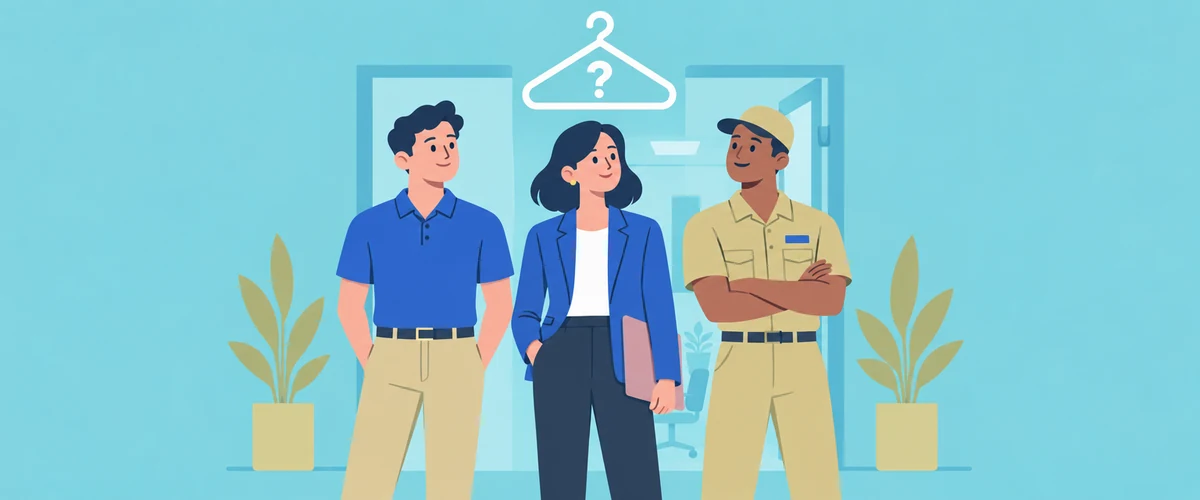
Most workplaces expect a certain standard of dress, and the labels they use, such as neat casual or smart casual, rarely mean the same thing twice.
Employers can set reasonable rules about how you dress at work, but they can't apply them in a way that discriminates, and who pays for a uniform or protective gear depends on your award, agreement and safety laws. This article covers dress once you have the job and for work events.
What the common labels usually mean
No authority defines these terms, so "neat casual" can mean jeans and a collared shirt in one workplace and tailored trousers in another. The descriptions below are how most Australian employers seem to use them, and they are ranges rather than rules. For what to wear to a job interview, see what to wear to an interview.
- Neat casual: clean, tidy everyday clothes. Think chinos or dark jeans without rips, a collared shirt, polo or plain knit, and closed shoes. The point is that nothing looks worn out or too relaxed, such as thongs, gym wear or clothing with large logos or slogans.
- Smart casual: a step up from neat casual. Tailored trousers or a skirt, a shirt, blouse or fine knit, a dress, and leather shoes or neat flats. A blazer or jacket often finishes it. Jeans may be acceptable if they are dark and well fitted, but this is where workplaces differ most.
- Business casual: close to smart casual but nearer to the office end. Often tailored trousers or a skirt with a shirt or blouse, with a jacket for meetings. A tie is usually not expected.
- Business or corporate: a suit, or a jacket with matching tailored trousers or skirt, with a shirt or blouse and formal shoes. Many offices now make ties optional, so check rather than assume.
- Uniform or industry-specific: what the employer supplies or specifies, such as scrubs, a branded shirt, high-visibility clothing or steel-capped boots.
The same label can also change by day. Some workplaces are business casual on client days and neat casual on Fridays, and site visits or events can call for different clothes again.
How to find out what your workplace expects
Start with anything in writing: the offer letter, the employee handbook or staff intranet, and the induction pack. Many employers publish a dress code or appearance policy there, and it may also say how to ask for an adjustment.
If it is not written down, look at what colleagues in your role wear, especially in your first week, and ask your manager or the person running your induction. A question such as "Is there a dress code I should know about, and does it change for client meetings?" is ordinary and easy to answer. If you're between two levels of formality, the more formal is easier to adjust on the day, because you can take off a jacket but you can't add one.
If your workplace has no stated dress code, the norm is usually set by what colleagues wear and what customers or clients expect. Neat, clean, well-fitting clothes suited to the tasks you'll do are a safe default. If someone raises a concern about your clothes, ask which part of the standard they mean and whether it is written down, so you know what to adjust.
Dressing for work events
An invitation that says "smart casual" for a team lunch generally means the same as it does in the office, perhaps with a little more effort. Christmas parties, conferences and client dinners vary more, so check the invitation, ask the organiser or ask a colleague who has been before. "Cocktail" or "lounge suit" usually means more formal than daily office wear. If you're representing your employer at an event, aim for the level of the people you'll be meeting, not the level of your usual day.
What your employer can and can't require
Employers can generally set reasonable rules about dress and appearance. Fair Work lists refusing to follow a lawful and reasonable instruction that is part of your job as an example of serious misconduct, so ignoring a clear dress rule is a risk. If a dismissal does follow, the Fair Work Commission considers whether it was harsh, unjust or unreasonable, including whether there was a valid reason, whether you were given the reason and a chance to respond, and whether you had been warned. See Fair Work's information on unfair dismissal for how that works.
Several limits apply.
- Discrimination: the Fair Work Act makes it unlawful for an employer to take adverse action, including dismissing you or treating you differently from other employees, for a protected attribute. The list includes race, sex, sexual orientation, gender identity, age, disability, family or carer's responsibilities, pregnancy and religion. There are exceptions, such as where the action is based on the inherent requirements of the position, and state and territory anti-discrimination laws have their own rules. If your religion, disability or a medical condition affects what you can wear, you can ask your employer for an adjustment, and if you're unsure of your position you can contact the Fair Work Ombudsman, the Australian Human Rights Commission or the anti-discrimination body in your state or territory. Our guide to workplace discrimination explains the complaint options.
- Who pays for uniforms: the Fair Work Ombudsman says employees may be entitled to a payment or repayment for uniforms, depending on the industry and the job. If you are covered by an enterprise agreement, it will contain those payments, and otherwise they are in your award. An employer also can't force you to use your wages to buy work items if the requirement is unreasonable.
- Safety gear: employers must give workers personal protective equipment (PPE) where it is needed to minimise a risk to health and safety, and workers must use or wear it the way they are trained or instructed. Workers who refuse to wear it could face disciplinary action. Safe Work Australia's guidance describes the model WHS laws, so your state or territory regulator can confirm the rule where you work.
- Deductions from pay: an employer can only deduct money from your pay in limited situations. For a deduction you authorise, you must agree in writing and it must be mainly for your benefit. Deductions are also allowed where an award, agreement, law or order permits them.
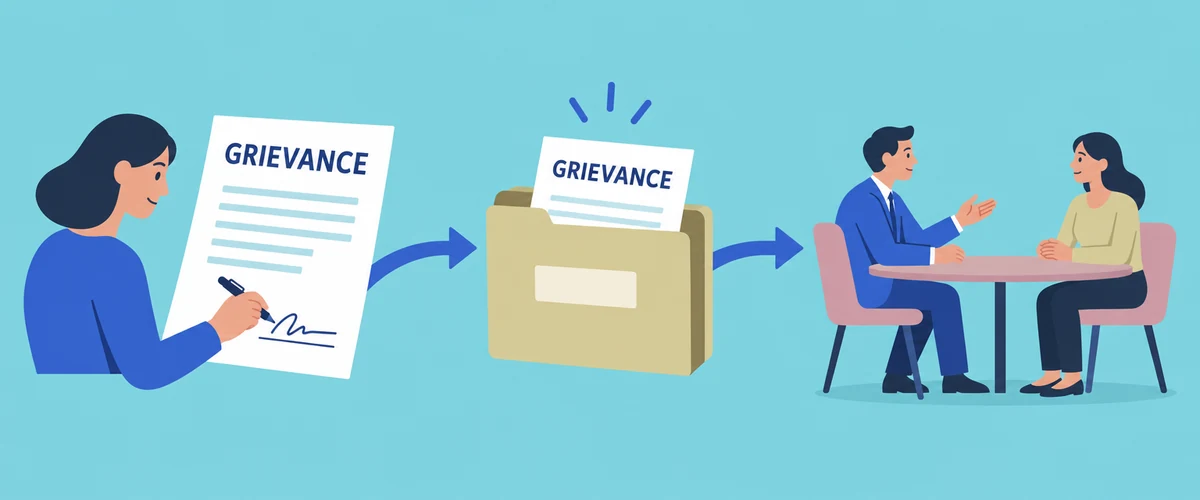
If you believe a rule is unfair or discriminatory, you can raise it with your manager or HR, and our grievance procedure guide explains how to do that formally.
Claiming work clothes on your tax return
The ATO allows deductions for clothing in three groups: occupation-specific clothing that distinctly identifies your occupation (a chef's chequered pants are its example), protective clothing, and a compulsory uniform that identifies you as an employee of a particular organisation. A non-compulsory uniform is deductible only if your employer has registered the design.
It does not allow deductions for conventional clothing, which is everyday clothing worn by people regardless of occupation, even if your employer says it is compulsory. The ATO's examples are black trousers worn by waiters, business attire worn by office workers, and jeans or drill shirts worn by tradespeople. A supermarket worker can claim a shirt with the employer's logo but not the black pants and shoes that go with it. So the neat casual and business clothes in this article are generally not deductible, but a branded uniform or steel-capped boots may be.
You also can't claim if your employer buys, repairs or cleans the clothing or reimburses you. From 2026-27, if you take the standard deduction, anything you claim for clothing and laundry reduces it dollar for dollar. Check the ATO's current clothing, laundry and dry-cleaning expenses page before you claim.
Article sources
Related articles
Raising a formal grievance
A formal grievance is a complaint you put to your employer in writing and ask it to deal with through a set process.

Resolving conflict at work
Most conflict at work is ordinary. Two people want different things, see the same problem differently, or have let a small irritation build up over a few weeks.

What happens when you report workplace bullying
What a Fair Work Commission stop-bullying order can and can't do, who can apply, how long the process usually takes, and where a general protections claim fits.