Air Traffic Controller
Air traffic controllers keep aircraft safely apart, directing them on the ground, around airports and along the routes between them.
- Median salary
- $137,900
4.2%vs last year, before tax
- People employed
- 1,600
0.0%vs last year
- Projected growth
- +13.7%
to 2035
- AI exposure*
- Low
- automation risk
- Average hours
- 38/wk
−2h vs all jobs
- Shortage status
- In shortage
national
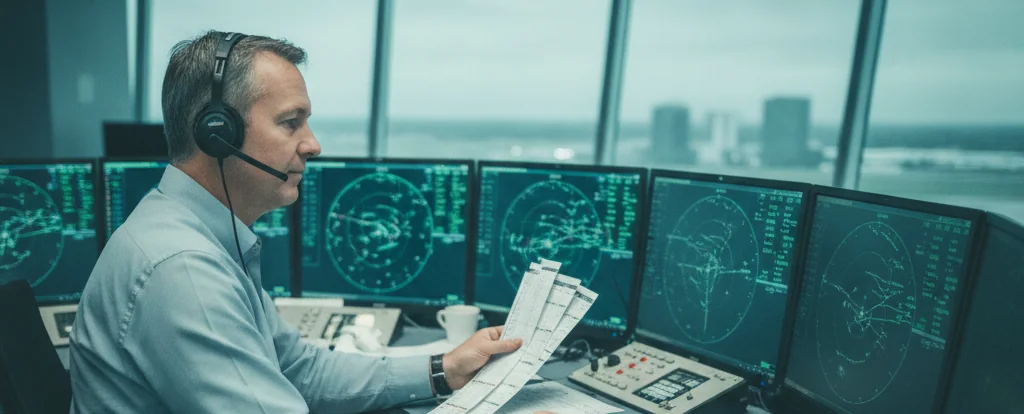
Air traffic controllers direct aircraft from the ground, using radar and radio and, in a tower, a direct view of the runway. Most work for Airservices Australia or the Department of Defence in one of three settings: a tower at an airport, an approach unit handling arrivals and departures, or an en route centre managing aircraft between airports. The job differs from a pilot's, because a controller keeps several aircraft safely separated at once while a pilot flies one.
How much do air traffic controllers earn?
The median full-time salary for an air traffic controller is $137,900 per annum, before tax, up $29,000 since 2018.
Pay is set by enterprise agreements at Airservices Australia and the Department of Defence, so rates move together across the workforce rather than varying much from one employer to another. Penalty rates for night, weekend and public holiday shifts lift total earnings above the base rate, since the roster runs around the clock. Controllers who take on on-the-job training, supervisory or operations management roles are paid at a higher classification.
What does an air traffic controller do day to day?
The list below is what fills most weeks; the exact mix shifts with seniority and whatever stage the current work is at.
- Watching a radar display or the view from the tower and building a picture of where every aircraft is, how fast it is moving and what it intends to do next
- Issuing clearances and separation instructions over the radio through a peak period, when several aircraft want an answer in the same minute
- Handing traffic to the next sector, tower or approach unit as aircraft cross a boundary, so nothing is left unmonitored
- Rotating off a high-concentration position after an hour or two, taking the mandated break and returning to a different position
- Reacting on the spot when an aircraft declares an emergency, weather closes a route or a flight plan changes mid-flight
What skills do air traffic controllers need?
Employers look for operations management, risk and internal controls, emergency response, backed by Radar Display Systems fluency and strong written communication.
Specialist skills
- Operations management
- Risk and internal controls
- Emergency response
Software and tools
- Radar Display Systems
- Radio Communication Equipment
- Flight Data Processing Systems
- Aeronautical Charts and Publications
- Strip Marking Equipment
General skills
- Written communication
- Problem solving
- Attention to detail
- Time and deadline management
- Stakeholder management
Is the job growing?
About 1,600 people work as air traffic controllers in Australia, and employment is projected to grow 13.7% over the decade to 2035. That's healthy, above-average growth, and the role should stay in solid demand.
How do you become an air traffic controller?
Here's the path most air traffic controllers take, step by step.
- 1Check that you meet the entry requirements
Airservices Australia recruits trainee controllers directly, and a university degree is not required to apply. Year 12 with passes in English and maths is the usual minimum, and a security clearance is needed, which in practice usually means Australian citizenship or a long residency history.
- 2Sit the aptitude and assessment process
Selection includes cognitive and aptitude testing, a group exercise and interviews, plus an aviation medical. The tests look for spatial reasoning, fast mental arithmetic and the ability to hold several pieces of information at once, which is the core of the job rather than a hurdle to clear once.
- 3Complete the training program
Successful applicants are employed as trainees and paid while they study the Diploma of Aviation (Air Traffic Control) (AVI50115) through Airservices' own training organisation. The course runs for around a year to 18 months and mixes classroom work, simulators and time on live positions under close supervision.
- 4Earn your first rating
You then train on the job until you qualify for a rating in one of the disciplines: aerodrome (tower) control, approach control or en route control. Ratings are tied to specific positions and endorsements, so moving to a busier airport or a new sector means further training.
- 5Keep your rating current
Controllers complete recurrent training and competency checks, hold a current aviation medical and maintain their security clearance. Defence runs a separate pathway for military controllers, who train through the Australian Defence Force and can later move into civil air traffic control.
Ready to apply as an air traffic controller?
Whether you're working toward becoming an air traffic controller or already are one and want a hand with the next step (sharpening your resume for ATS screening, tightening your cover letter, or knowing what you'll actually be asked at interview), here are examples grounded in this specific role, not generic templates.
What jobs can an air traffic controller move to?
Moving into Defence Force Officer typically comes with the biggest pay rise, worth $46,300 a year more on average.
| Move to | Typical pay change | Overlap | Retraining |
|---|---|---|---|
| Defence Force Officer Air traffic controllers bring airspace management and procedural control skills, and can move into military air operations with a short conversion course. | +$46,300 | 52% | short course |
Moves are chosen from Jobs and Skills Australia's Data on Occupation Mobility, which follows income tax records between 2011-12 and 2020-21, together with entry requirements and skill overlap. A known move is one people were seen making in that data. Pay change compares median full-time pay for the two roles.
Who works as an air traffic controller?
The typical air traffic controller is 41 years old; 83% are men, 83% work full-time, and full-timers average 38 hours a week.
- 41
- Median age
- 17%
- Female share
- 83%
- Full-time
- −2h
- vs all-jobs avg
What's it like being an air traffic controller?
The work runs on a rotating roster, because air traffic runs around the clock, so a controller might work a morning, an evening and a night shift within the same fortnight. Positions rotate every 45 minutes to two hours with mandated breaks between them, and the concentration stays intense for as long as you are on a live position. It suits someone who likes clear rules and quick decisions, and who can stay level while several things compete for attention at once.
What people like
- The results are immediate. You issue an instruction and hear the aircraft answer and turn, so the outcome of a decision shows up within seconds rather than months.
- Clear procedures and no take-home work. Almost every situation has a written procedure behind it, and when your shift ends the traffic passes to the next controller. Controllers do not carry casework home with them.
- Small teams and direct communication. You work alongside a handful of people and hand traffic to the next sector or shift, so the working relationships are close and the radio keeps everything explicit.
- Rosters that can be planned around. Shift work is hard on sleep, but rosters are published well ahead, which makes it possible to organise time off around study, family or sport.
What people find hard
- Nights, weekends and public holidays. Air traffic runs 24 hours, so overnight and holiday shifts are part of the job, and managing fatigue around them is a constant consideration.
- You cannot step away mid-traffic. Once you take a position you stay with it until the rotation, which can mean holding a complicated sequence together while you are tired or a colleague needs something.
- Training and postings can mean moving. Trainees and newly rated controllers are generally sent where the positions are, which may be a different city from the one they applied in.
- Very few employers. Airservices Australia and the Department of Defence employ the country's controllers, so there is little scope to side-step to another organisation if a location or a roster stops suiting.
Based on our synthesis of professional-body surveys and public accounts of the role, not first-person verified reviews.
Which industries employ air traffic controllers?
Transport, Postal and Warehousing employs the largest share of air traffic controllers, followed by Public Administration and Safety.
Top employing industries
- 1Transport, Postal and Warehousing
- 2Public Administration and Safety
Ranked by employment share; the source doesn't publish an exact percentage per industry.
| Diploma / Advanced Diploma | 43.9% | |
|---|---|---|
| Bachelor degree | 34.6% | |
| Postgraduate | 8.2% | |
| Year 12 or below | 7.9% | |
| Certificate III/IV | 2.7% |
Will AI replace air traffic controllers?
Air traffic control is one of the less exposed jobs to AI, because separating aircraft still rests on a licensed controller issuing a clearance and hearing the pilot confirm it in real time. Flight data processing and arrival sequencing software already do much of the background work, and remote digital towers let controllers watch an airport from another location. Those tools sharpen the picture a controller works from, but they do not take the traffic.
Share of typical working time by exposure level
- Keeping aircraft separated on radar and out the tower windowThe turn, climb or hold instruction comes from the controller and is read back by the pilot, which no system in Australian airspace does on its own today.35%low
- Managing flight data strips and the electronic displayAutomated flight data processing and electronic strips already sort, sequence and update most of this information, leaving the controller to check and correct it.25%high
- Talking to pilots on the radioRadio exchanges are clipped, accented and sometimes urgent, and clarifying a readback or a request in a second is still a human job.20%low
- Coordinating handovers with the next sector or towerThe verbal handover carries detail about weather, traffic and aircraft performance that strips and screens do not show.20%low
Common questions about becoming an air traffic controller
Straight answers to the questions people ask most.
How much do air traffic controllers get paid?
The median full-time pay for air traffic controllers is $137,900 per year before tax. Pay is set by enterprise agreements at Airservices Australia and the Department of Defence, and penalty rates for nights, weekends and public holidays push total earnings above the base rate.
How do you become an air traffic controller in Australia?
Apply for a trainee intake with Airservices Australia, or through the Australian Defence Force if you want to train as a military controller. Training is paid and leads to the Diploma of Aviation (Air Traffic Control) (AVI50115), followed by on-the-job training until you earn a rating in tower, approach or en route control. A degree is not required, though strong maths and science helps with the aptitude testing.
Are air traffic controllers in demand?
Air traffic controllers are currently in shortage nationally, and employment is projected to grow 13.7% over the decade to 2035 over the decade to 2035. The workforce is small, so the number of openings in any given year depends on retirements and on how many trainees complete the program. If you are weighing up an application, the practical step is to ask the recruiter how many intakes are planned and where the positions are based.
Will AI replace air traffic controllers?
Automation already handles flight data processing and arrival sequencing, and digital tower technology lets controllers watch an airport from a room somewhere else, but the separation instruction over the radio is still issued by a licensed controller. AI is likely to keep changing the tools a controller works with rather than remove the position.
What can an air traffic controller move into?
Controllers who leave civil air traffic services can move into military air operations as a defence force officer, since airspace management and procedural control carry across and the conversion training is short. Within the profession, experienced controllers often step into on-the-job training, supervision and operations management roles.
What are the hours like?
Controllers work a rotating roster covering 24 hours, holding a position for about 45 minutes to two hours before a mandated break. Average full-time hours are around 38 a week, and rosters are published in advance so shift patterns can be planned around.
Related roles
- Defence Force Officer
- Airport Ground Crew
- Railway Signaller
- Vessel Traffic Service Operator
- Train Controller
- Train Driver
Not sure this is you? Take the career quiz and get a ranked shortlist of roles that fit how you like to work.