Vessel Traffic Service Operator
Vessel traffic service operators keep ship movements in a port or harbour in order, tracking vessels on radar and radio and giving masters and pilots the clearances and advice they need to move safely.
- Median salary*
- $88,400
4.2%vs last year, before tax
- People employed*
- 750
7.1%vs last year
- Projected growth*
- +1.5%
to 2035
- AI exposure*
- Moderate
- automation risk
- Average hours*
- 38/wk
−2h vs all jobs
- Shortage status*
- Not in shortage
national
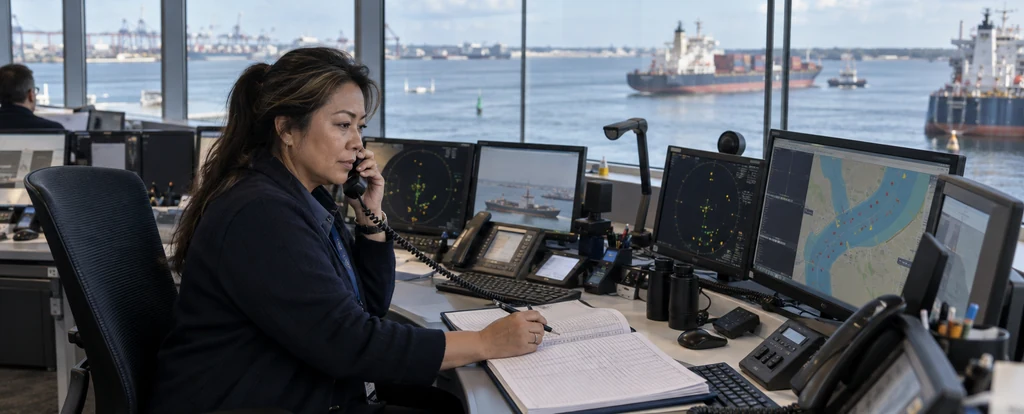
Most work from a control room overlooking the port or a coastal waterway, watching a radar and AIS picture and talking to ships on VHF radio. Unlike a harbour master, who holds wider authority over the whole port, a vessel traffic service operator concentrates on the traffic picture and the advice given in real time. Port authorities and state maritime safety agencies are the main employers, and the work usually runs on a rotating roster that covers nights, weekends and public holidays.
How much do vessel traffic service operators earn?
The median full-time salary for a vessel traffic service operator is $88,400 per annum, before tax, up $18,600 since 2018.
Pay is set by the port authority or maritime agency you work for, so it varies between a large commercial port and a smaller regional harbour. Shift penalties and allowances for nights, weekends and public holidays usually add to the base rate, because the service runs around the clock. Experience and the level of responsibility on watch, including supervisor or watch manager roles, move pay further.
What does a vessel traffic service operator do day to day?
The list below is what fills most weeks; the exact mix shifts with seniority and whatever stage the current work is at.
- Watching the radar and AIS picture for vessels approaching a channel or anchorage
- Talking to masters, pilots and tug operators on VHF radio to confirm intentions and positions
- Issuing traffic clearances and navigational advice, such as which side of a channel to pass on or when to hold
- Coordinating the response when a vessel drags anchor, loses power or a person goes overboard
- Recording traffic movements, radio transmissions and decisions in the port log and incident reports
What skills do vessel traffic service operators need?
Employers look for operations management, emergency response, backed by VHF radio fluency and strong written communication.
Specialist skills
- Operations management
- Emergency response
Software and tools
- VHF radio
- Automatic Identification System (AIS)
- Radar display software
- Port management information systems
- Closed-circuit television (CCTV) systems
General skills
- Written communication
- Attention to detail
- Problem solving
- Safety and compliance awareness
- Digital literacy
- Stakeholder management
Is the job growing?
About 750 people work as vessel traffic service operators in Australia, and employment is projected to grow 1.5% over the decade to 2035. That's modest growth: demand is steady rather than booming.
How do you become a vessel traffic service operator?
Here's the path most vessel traffic service operators take, step by step.
- 1Build a maritime base
A Certificate IV or Diploma of Maritime Operations (MAR50320), or a degree in nautical science or marine operations, gives you the vocabulary the job runs on. Some operators come from sea time as a deck officer or coxswain instead, which teaches how a vessel handles and how a bridge team works.
- 2Get experience around ships and ports
Watchkeeping at sea, pilot boat work, tug operations or a port operations role all build the familiarity with berths, channels, tides and weather that a control room depends on.
- 3Apply to a port authority or maritime safety agency
Vessel traffic services are run by port authorities, port corporations and state maritime safety bodies, and those employers advertise their own vacancies rather than listing them on general job boards.
- 4Complete vessel traffic service operator training
Training is usually delivered in-house or through an IALA-aligned course, covering radar and AIS interpretation, radio procedure, collision regulations and simulator exercises, followed by a supervised period on watch before you work a console alone.
- 5Keep your certificates and endorsements current
Refresher training, radio qualifications and medical checks are part of staying on a watch roster, and they are also what you need if you later move into a supervisor or watch manager role.
Ready to apply as a vessel traffic service operator?
Whether you're working toward becoming a vessel traffic service operator or already are one and want a hand with the next step (sharpening your resume for ATS screening, tightening your cover letter, or knowing what you'll actually be asked at interview), here are examples grounded in this specific role, not generic templates.
What jobs can a vessel traffic service operator move to?
Moving into Harbour Master typically comes with the biggest pay rise, worth $46,800 a year more on average.
| Move to | Typical pay change | Overlap | Retraining |
|---|---|---|---|
| Harbour Master A vessel traffic service operator's port traffic and channel knowledge suits harbour master, though the role requires registration and wider port authority responsibility. | +$46,800 | 63% | requalify |
| Deck Officer Vessel traffic service operators bring watchkeeping and collision regulation knowledge to deck officer roles, with sea service and certification needed. | +$46,800 | 50% | short course |
| Marine Surveyor Knowledge of vessel movements and port compliance helps a move to marine surveying, which needs further study in inspection and survey practice. | +$26,000 | 19% | reskill |
Moves are chosen from Jobs and Skills Australia's Data on Occupation Mobility, which follows income tax records between 2011-12 and 2020-21, together with entry requirements and skill overlap. A known move is one people were seen making in that data. Pay change compares median full-time pay for the two roles.
Who works as a vessel traffic service operator?
The typical vessel traffic service operator is 45 years old; 78% are men, 88% work full-time, and full-timers average 38 hours a week.
- 45
- Median age
- 22%
- Female share
- 88%
- Full-time
- −2h
- vs all-jobs avg
What's it like being a vessel traffic service operator?
The job follows the port clock rather than the office one: shifts are typically eight or twelve hours on a rotating roster, with a handover at each changeover so the incoming operator knows which ships are moving and what is unresolved. Long spells of routine monitoring break when a schedule bunches up, fog closes in or a berth is delayed, and that is when the radio gets busy. It suits people who stay calm in a quiet room, take procedures seriously and like getting a message across in a few clear words.
What people like
- You see the whole port at once. From the control room you watch ships, tugs and pilots as a single picture, and you know within minutes whether the advice you gave worked.
- The radio rewards precision. Short, clear transmissions keep traffic moving, and the skill shows immediately when a crowded channel sorts itself out.
- A defined watch and a clear handover. Each shift has a start and a finish with a structured handover, which suits people who like their working day clearly bounded.
- Your advice changes what happens on the water. A clearance given at the right moment keeps a pilot boarding safe or stops two ships meeting in a narrow channel, and you see the result out the window.
What people find hard
- Nights, weekends and public holidays. The service runs around the clock, so a rotating roster is part of the job and the unpopular shifts fall to everyone in turn.
- Long stretches of routine watching. Much of a quiet watch is spent monitoring a screen, and the concentration that takes is easy to underestimate until something develops.
- The record is examined when something goes wrong. After an incident, investigators review your transmissions and log entries, so the wording of advice given in a hurry can be scrutinised months later.
- Weather and congestion compress decisions. Fog, strong wind or a delayed berth can stack several ships into the same window, and you have minutes rather than hours to resequence them.
Based on our synthesis of professional-body surveys and public accounts of the role, not first-person verified reviews.
Which industries employ vessel traffic service operators?
Port and harbour operations employs the largest share of vessel traffic service operators, followed by Water transport.
Top employing industries
- 1Port and harbour operations
- 2Water transport
- 3Public administration (maritime safety)
- 4Transport support services
- 5Defence
Ranked by employment share; the source doesn't publish an exact percentage per industry.
| Bachelor degree | 38% | |
|---|---|---|
| Diploma / Advanced Diploma | 24% | |
| Certificate III/IV | 20% | |
| Postgraduate | 10% | |
| Other | 8% |
Will AI replace vessel traffic service operators?
Vessel traffic service operators work with systems that already do a good deal of the tracking for them: radar and AIS feeds are fused onto a single display, alerts flag close-quarters situations and lost targets, and voice recordings and automatic logs capture routine traffic. That leaves the operator to judge what a developing situation means and to tell a master what to do about it, which is radio work rather than screen work. The role sits at a moderate level of exposure, with the monitoring and record-keeping parts automating steadily while the communication and decision-making stay human.
Share of typical working time by exposure level
- Tracking vessels on radar and AISThe display already combines both feeds and highlights contacts that look like a collision risk, but an operator still decides which of those contacts matter in a crowded channel.30%moderate
- Radio communication with masters and pilotsStandard phrases cover most routine traffic, yet clarifying an unusual request or settling a worried bridge team is spoken work that software does not take on.25%low
- Logging, incident reports and recordsVoice transcription and automatic traffic logs do most of the drafting, leaving the operator to check the entries against what actually happened and sign them off.25%high
- Sequencing and clearing trafficScheduling tools can suggest an order, but the operator weighs draft, tide, pilot boarding times and a delayed tug before deciding who moves first.20%moderate
Moves least exposed to AI
These career moves from vessel traffic service operator work are rated low for AI exposure:
- Harbour Master
High skill overlap (63%), requalify to get there, and a low automation-risk profile.
Common questions about becoming a vessel traffic service operator
Straight answers to the questions people ask most.
How much does a vessel traffic service operator earn?
$88,400 per year before tax for full-time work, based on the median for the role. Pay varies with the port or agency that employs you, and shift penalties for nights, weekends and public holidays are a normal part of the package, so total earnings often sit above the base rate.
How do you become a vessel traffic service operator?
Most people arrive with a maritime background, either a Certificate IV or Diploma of Maritime Operations (MAR50320) or a nautical science degree, and often some sea time as a deck officer or coxswain. The traffic service training itself is usually delivered in-house by the port authority, with simulator assessment and a supervised period on watch before you work a console alone.
Are vessel traffic service operators in demand?
Vessel traffic service operators are currently not in shortage, and employment is projected to grow 1.5% over the decade to 2035. With a workforce of about 750 people nationally, openings are worth tracking directly with port authorities and state maritime safety agencies rather than waiting for them to appear on a job board.
Will AI replace vessel traffic service operators?
Parts of the job are already automated: radar and AIS feeds are combined into one display, software flags close-quarters situations and lost targets, and recordings capture most routine record-keeping. What stays with the operator is judging what a developing situation means and telling a master what to do about it, which is radio work under time pressure.
What can a vessel traffic service operator move into?
A harbour master role builds on the same port traffic and channel knowledge and pays $46,800 more, though it carries wider responsibility for the port and usually requires registration. Going to sea as a deck officer pays $46,800 more and uses the same watchkeeping and collision regulation knowledge, with sea service and certification needed first. Both moves draw on the port and watchkeeping experience you already have rather than starting again.
Is it shift work?
Most vessel traffic services run around the clock, so operators work a rotating roster of day, night and weekend watches, usually in blocks of eight or twelve hours. Rosters are set well ahead, which makes the pattern predictable even when the hours are not standard.
Related roles
- Harbour Master
- Deck Officer
- Marine Surveyor
- Train Driver
- Air Traffic Controller
- Railway Station Assistant
Not sure this is you? Take the career quiz and get a ranked shortlist of roles that fit how you like to work.