Audiovisual Technician
Audiovisual technicians set up, operate and maintain the sound, video, lighting and projection equipment that keeps live events, broadcasts and meetings running.
- Median salary*
- $75,400
3.9%vs last year, before tax
- People employed*
- 6,100
0.0%vs last year
- Projected growth*
- +6%
to 2035
- AI exposure*
- Moderate
- automation risk
- Average hours*
- 40/wk
matches all-jobs average
- Shortage status*
- Not in shortage
national
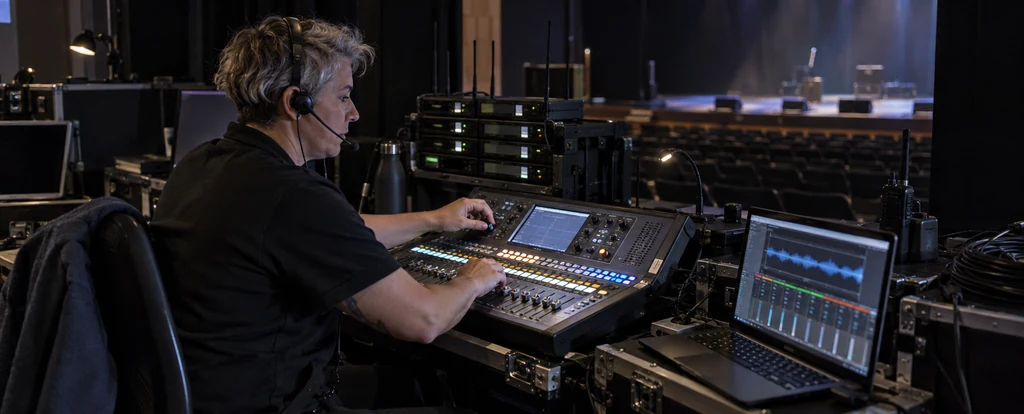
Audiovisual technicians work wherever sound and vision need controlling: theatres, concert venues, broadcast studios, corporate meeting rooms, schools and outside broadcast sites. The job splits between installing and configuring systems in a building and operating that gear during a show, service or meeting. Most work in small crews alongside lighting technicians and stagehands, and much of it happens outside standard hours.
How much do audiovisual technicians earn?
The median full-time salary for an audiovisual technician is $75,400 per annum, before tax, up $15,700 since 2018.
Pay follows the award or enterprise agreement covering the venue or production company, and evening, weekend and public holiday shifts carry penalty rates that lift the total. Freelance technicians quote by the day or the shift and cover their own equipment, insurance and quiet weeks, while in-house roles in broadcasting, education and corporate sites tend to be steadier. Experience with a particular console, control system or network audio platform is often what moves someone into the better-paid work.
What does an audiovisual technician do day to day?
The list below is what fills most weeks; the exact mix shifts with seniority and whatever stage the current work is at.
- Setting up and testing microphones, speakers, screens, projectors and control gear before an event
- Operating mixing desks, video switchers and projection or lighting control during live performances, broadcasts and presentations
- Installing and configuring audiovisual systems in venues, meeting rooms, classrooms and studios, including cabling and network audio
- Tracing faults in cabling, speakers, screens and control equipment, which often has to happen mid-show while an audience waits
- Talking through technical requirements with clients, performers and venue staff, then adjusting the setup to suit the room
What skills do audiovisual technicians need?
Employers look for installation and maintenance, plant and equipment operation, backed by QLab fluency and strong problem solving.
Specialist skills
- Installation and maintenance
- Plant and equipment operation
Software and tools
- QLab
- Dante Controller
- Shure Wireless Workbench
- Crestron Toolbox
- Adobe Premiere Pro
General skills
- Problem solving
- Attention to detail
- Written communication
- Customer service
- Stakeholder management
Is the job growing?
About 6,100 people work as audiovisual technicians in Australia, and employment is projected to grow 6% over the decade to 2035. That's modest growth: demand is steady rather than booming.
How do you become an audiovisual technician?
Here's the path most audiovisual technicians take, step by step.
- 1Finish Year 12 or an equivalent
There is no single prerequisite, but maths, IT, electronics or drama subjects give you a head start, and a school production or community radio gig is good experience to talk about at interview.
- 2Take a Certificate III or IV in live production and technical services, or in screen and media
Courses run from about 12 months to two years at TAFE and private colleges and include work placement, which is often how people get their first paid crew calls. A Certificate III or IV is held by 34% of the technicians currently working in the field.
- 3Join a casual crew and take the shifts you can get
Production companies, equipment hire firms, conference centres and venues all run casual crews, and this is where most technicians learn to work fast in a real room. Getting on several lists matters more than getting on one, because work comes in bursts.
- 4Specialise and learn the platforms employers ask for
Sound, vision, lighting or control systems each have their own consoles and software, and vendor training or short courses in QLab, Dante Controller, Shure Wireless Workbench or Crestron Toolbox are the usual way to stand out from the casual pool.
- 5Apply for in-house and installation roles
After a few years on crews, in-house positions at venues, universities, broadcasters and large employers offer steadier hours, while installation and commissioning work for integrators builds the system design experience that leads to senior technical roles.
Ready to apply as an audiovisual technician?
Whether you're working toward becoming an audiovisual technician or already are one and want a hand with the next step (sharpening your resume for ATS screening, tightening your cover letter, or knowing what you'll actually be asked at interview), here are examples grounded in this specific role, not generic templates.
What jobs can an audiovisual technician move to?
Moving into Technical Director typically comes with the biggest pay rise, worth $39,000 a year more on average.
| Move to | Typical pay change | Overlap | Retraining |
|---|---|---|---|
| Technical Director Experienced audiovisual technicians can step up to technical director, coordinating sound, vision and staging across productions, though further study is needed. | +$39,000 | 14% | reskill |
| Telecommunications Field Engineer Audiovisual signal flow and cabling skills transfer to telecommunications field engineering, but a diploma is required for the move. | +$26,000 | 53% | reskill |
| Computer Hardware Technician Electronic fault-finding and equipment setup skills carry into computer hardware support, with a short course bridging the two roles. | +$0 | 59% | short course |
| Calibration Technician Precision testing and electronic adjustment experience suits calibration work, and a short course covers the measurement standards. | +$0 | 53% | short course |
| Lighting Technician Lighting technicians and audiovisual technicians share live production equipment, so an audiovisual technician can specialise in lighting with further training. | −$5,200 | 33% | reskill |
Moves are chosen from Jobs and Skills Australia's Data on Occupation Mobility, which follows income tax records between 2011-12 and 2020-21, together with entry requirements and skill overlap. A known move is one people were seen making in that data. Pay change compares median full-time pay for the two roles.
Who works as an audiovisual technician?
The typical audiovisual technician is 37 years old; 83% are men, 70% work full-time, and full-timers average 40 hours a week.
- 37
- Median age
- 17%
- Female share
- 70%
- Full-time
- +0h
- vs all-jobs avg
What's it like being an audiovisual technician?
The job moves between quiet preparation and high-pressure showtime: setting up and testing through the afternoon, then operating live in the evening with little room for error. Technicians tend to be people who like solving practical problems under time pressure and who don't mind the work being invisible when it goes well. The trade-off is that the hours follow the events, not the calendar.
What people like
- Every job is a different room. One week is a conference centre, the next a festival stage or a television studio, and each one brings its own gear, acoustics and people to work with.
- You can hear and see the result. When the mix sits right and the vision cuts cleanly, the audience never notices the work, which is exactly the point.
- The skills travel. Signal flow, cabling, fault-finding and control systems turn up in broadcast, corporate audiovisual, education and telecommunications, so you are not locked into one industry.
- The gear keeps changing. New consoles, network audio and wireless systems mean there is always another platform or certification worth learning.
What people find hard
- Evenings, weekends and public holidays. Most of the work happens when audiences are free, so it is hard to plan a regular social or family schedule around it.
- Faults appear at the worst moment. A cable that tested fine in the afternoon can fail two minutes into a keynote, and the fix has to happen while everyone waits.
- Long days on your feet. Load in and pack down mean lifting, rigging and running cable, often in hot or cramped spaces, at the end of a day that already started early.
- Freelance income is uneven. Crew work comes in bursts, so quiet weeks, chasing invoices and covering your own insurance and gear are part of the freelance side.
Based on our synthesis of professional-body surveys and public accounts of the role, not first-person verified reviews.
Which industries employ audiovisual technicians?
Arts and Recreation Services employs the largest share of audiovisual technicians, followed by Administrative and Support Services.
Top employing industries
- 1Arts and Recreation Services
- 2Administrative and Support Services
- 3Information Media and Telecommunications
- 4Education and Training
- 5Professional, Scientific and Technical Services
Ranked by employment share; the source doesn't publish an exact percentage per industry.
| Certificate III/IV | 34% | |
|---|---|---|
| Diploma / Advanced Diploma | 26% | |
| Bachelor degree | 20% | |
| Year 12 or below | 20% |
Will AI replace audiovisual technicians?
Audiovisual work sits in the middle for automation: software already handles parts of the job, and more of it is coming. Auto-mixing, camera tracking, remote system monitoring and generated documentation all reduce the time spent on routine setup and paperwork. What they do not replace is being in the room, running cable, finding a fault under time pressure and deciding what to do during a live show.
Share of typical working time by exposure level
- Loading in, cabling and riggingPulling cable, rigging speakers and hanging screens in a new room each time is physical work on unfamiliar gear, and remote monitoring can flag a fault but not walk over and fix it.30%low
- Configuring control systems and network audioCrestron and Dante setups are increasingly templated and auto-discovered, so configuration takes less time, though someone still has to match the system to the room and the client's expectations.25%moderate
- Operating live sound and visionScene automation, auto-mixing and camera tracking handle routine cues, but a live room still needs a person deciding when a microphone is too hot or a camera is pointed at the wrong speaker.25%moderate
- Documentation, system drawings and quotesAsset lists, rack drawings and client quotes are now largely generated from system data and previous jobs, turning hours of drafting into a review pass.20%high
Moves least exposed to AI
These career moves from audiovisual technician work are rated low for AI exposure:
- Technical Director
Some skill overlap (14%), reskill to get there, and a low automation-risk profile.
- Telecommunications Field Engineer
Solid skill overlap (53%), reskill to get there, and a low automation-risk profile.
Common questions about becoming an audiovisual technician
Straight answers to the questions people ask most.
How much does an audiovisual technician earn?
The median for full-time audiovisual technicians is $75,400 per year before tax. Award and enterprise agreements, penalty rates for nights and weekends, and whether you work in-house or freelance move that figure considerably. The median covers full-time workers, so it does not capture the casual day rates common in this field.
How do you become an audiovisual technician?
Most people start with a Certificate III or IV in live production and technical services, or in screen and media, then build experience on casual crews at venues, hire companies and production houses. Specialising in sound, vision, lighting or control systems and picking up vendor certifications is what turns casual shifts into a steady role.
Are audiovisual technicians in demand?
Audiovisual technicians are currently not in shortage, and employment is projected to grow 6% over the decade to 2035. Demand follows the events, broadcast and building sectors, so openings cluster where venues, studios and large employers are active. Taking shifts across several employers is a practical way to stay booked when one sector is quiet.
Will AI replace audiovisual technicians?
Parts of the job are already automated, but the role itself is not. Auto-mixing, camera tracking, remote system monitoring and generated documentation cut time on routine work, while installing gear, tracing a fault in an unfamiliar room and making calls during a live show still need someone on site.
What can an audiovisual technician move into?
Experienced technicians can step up to technical director, coordinating sound, vision and staging across a production, which pays $39,000 more and usually needs further study. The cabling and signal flow skills also transfer to telecommunications field engineering, which pays $26,000 more and asks for a diploma. A shorter bridge is computer hardware technician, where the pay is about the same and a short course covers the gap.
Do you need a degree to work as an audiovisual technician?
No, and most people in the job do not have one. Vocational qualifications are the common route, with a Certificate III or IV held by 34% of workers and a diploma or advanced diploma by 26%. A degree can help later if you move into system design or management.
Related roles
- Lighting Technician
- Technical Director
- Telecommunications Field Engineer
- Computer Hardware Technician
- Calibration Technician
- Stagehand
Not sure this is you? Take the career quiz and get a ranked shortlist of roles that fit how you like to work.