Automation Technician
An automation technician installs, programs and repairs the control systems that keep industrial plant running.
- Median salary*
- $98,800
3.5%vs last year, before tax
- People employed*
- 11,500
0.0%vs last year
- Projected growth*
- +7%
to 2035
- AI exposure*
- Moderate
- automation risk
- Average hours*
- 40/wk
matches all-jobs average
- Shortage status*
- In shortage
national
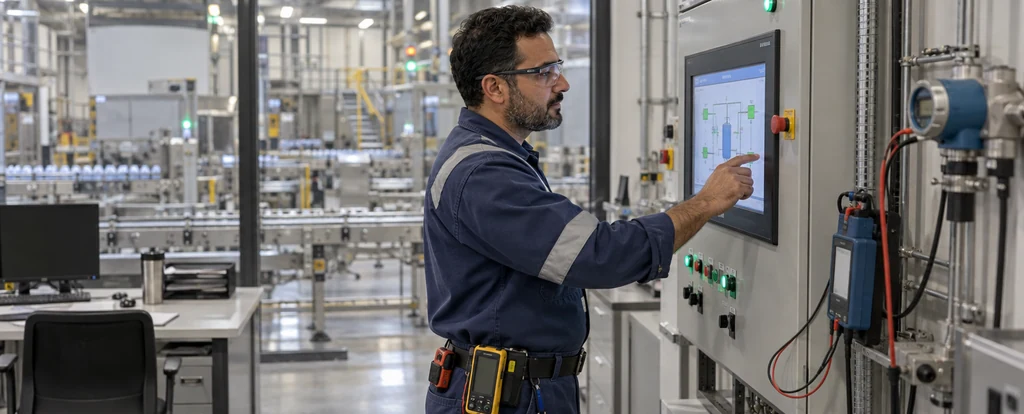
Automation technicians work on the plant floor and at a laptop, in factories, water and waste treatment plants, mines and food processing sites. They sit between the electricians who wire a machine and the engineers who design it, commissioning new equipment and keeping existing control systems working. Most are employed by manufacturers, utilities or specialist automation and electrical contractors, usually as part of a maintenance or projects team.
How much do automation technicians earn?
The median full-time salary for an automation technician is $98,800 per annum, before tax, up $21,000 since 2018.
Automation technicians usually work under an award or enterprise agreement, so what you take home depends on the sector and the shifts you accept. Mining, utilities and heavy manufacturing generally pay above the maintenance rates in light manufacturing, and on-call allowances, overtime and site allowances can add a lot to a base rate. Holding an electrical licence and being able to work on fixed wiring also opens roles that pay more than programming and support positions.
What does an automation technician do day to day?
The list below is what fills most weeks; the exact mix shifts with seniority and whatever stage the current work is at.
- Installing and commissioning PLCs, sensors, drives and control panels on production lines and plant
- Programming and modifying PLC, HMI and SCADA applications when a process changes
- Fault finding on live equipment, tracing electrical and control faults back to their cause
- Calibrating instruments and testing safety interlocks and emergency stops
- Recording program changes and keeping control system drawings and documentation current
What skills do automation technicians need?
Employers look for programming and software development, installation and maintenance, plant and equipment operation, backed by Siemens TIA Portal fluency and strong problem solving.
Specialist skills
- Programming and software development
- Installation and maintenance
- Plant and equipment operation
- Process improvement
Software and tools
- Siemens TIA Portal
- Rockwell Studio 5000
- Ignition SCADA
- HMI terminals
- Multimeters and loop calibrators
General skills
- Problem solving
- Safety and compliance awareness
- Attention to detail
Is the job growing?
About 11,500 people work as automation technicians in Australia, and employment is projected to grow 7% over the decade to 2035. That's modest growth: demand is steady rather than booming.
How do you become an automation technician?
Here's the path most automation technicians take, step by step.
- 1Start with a trade or a technical qualification
The most common entry is a Certificate III in Electrotechnology (Electrician) apprenticeship, which takes about four years and is paid, or a Certificate IV in instrumentation, control or automation for people coming from a related trade or an engineering background.
- 2Get your electrical licence if you will work on fixed wiring
Electrical licensing is handled by state and territory regulators and the requirements differ, so check the rules where you plan to work. A licence opens installation and maintenance roles that programming-only positions cannot offer.
- 3Learn the control platforms employers use
Most sites run on Siemens or Rockwell platforms, with SCADA packages such as Ignition layered on top. Much of this is learned on the job, but a short vendor course or a diploma unit gets you past the first filter when you are applying.
- 4Build time on live plant
Diagnostic judgement comes from working on real equipment, so a start as a maintenance or commissioning assistant, or a traineeship with an automation contractor, is worth more than extra classroom hours. Fault finding under production pressure is the part employers test at interview.
- 5Add a diploma or degree if you want to move up
A diploma or advanced diploma, or a mechatronics or electrical engineering degree, opens design, project and senior maintenance work. The most common qualification among automation technicians is a Certificate III/IV, held by 34%.
Ready to apply as an automation technician?
Whether you're working toward becoming an automation technician or already are one and want a hand with the next step (sharpening your resume for ATS screening, tightening your cover letter, or knowing what you'll actually be asked at interview), here are examples grounded in this specific role, not generic templates.
What jobs can an automation technician move to?
Moving into ROV Pilot typically comes with the biggest pay rise, worth $36,400 a year more on average.
| Move to | Typical pay change | Overlap | Retraining |
|---|---|---|---|
| ROV Pilot An automation technician's electronics and control skills suit remote vehicle work, and the offshore role needs additional remote systems training. | +$36,400 | 41% | reskill |
| Chemical Plant Operator Automation technicians know process control and plant equipment, so they can move into chemical plant operations with a short course. | +$7,800 | 47% | short course |
| Instrumentation Technician Automation technicians already tune and maintain control loops, so moving into instrumentation builds on that base but needs the instrumentation apprenticeship. | +$0 | 52% | requalify |
Moves are chosen from Jobs and Skills Australia's Data on Occupation Mobility, which follows income tax records between 2011-12 and 2020-21, together with entry requirements and skill overlap. A known move is one people were seen making in that data. Pay change compares median full-time pay for the two roles.
Who works as an automation technician?
The typical automation technician is 40 years old; 92% are men, 92% work full-time, and full-timers average 40 hours a week.
- 40
- Median age
- 8%
- Female share
- 92%
- Full-time
- +0h
- vs all-jobs avg
What's it like being an automation technician?
The job runs on two rhythms: planned maintenance and improvement work you can schedule, and breakdowns that arrive without warning. When a line stops, production staff are standing around waiting for you, so the pressure is real but usually short lived. It suits someone who enjoys tracing a fault through a system and does not mind splitting the week between a laptop, a switchboard and a plant floor.
What people like
- The fault nobody else could find. Intermittent faults that have defeated everyone else often land with the automation technician, and working back through the logic and wiring until the cause shows itself is the satisfying part of the job.
- Seeing the plant run again. Your work has a visible result. A line that was stopped, a pump that would not start or a batch that was drifting comes back under control because of what you changed.
- Something different every week. A typical month mixes scheduled servicing, a commissioning project and unplanned breakdowns, and many technicians move between sites rather than staying in one plant.
- Working with your hands and your head. The role suits people who like wiring a panel as much as writing logic, and who would rather solve a problem on the equipment than only on paper.
What people find hard
- Callouts and shift rosters. Many plants run around the clock, so the role can mean rotating shifts or a phone that rings at 2am when a critical line goes down.
- Pressure while production waits. When the line is stopped, the cost climbs by the minute and several people are watching you work. The job is to stay methodical rather than rush a diagnosis.
- Legacy systems and thin documentation. Older plants often run controllers that are decades old, with drawings that no longer match the machine, so part of the work is working out what was actually built.
- Sitting between trades and engineering. You are not quite an electrician and not quite an engineer, which can mean negotiating permits, access and sign-offs with both groups before you can touch the equipment.
Based on our synthesis of professional-body surveys and public accounts of the role, not first-person verified reviews.
Which industries employ automation technicians?
Manufacturing employs the largest share of automation technicians, followed by Mining.
Top employing industries
- 1Manufacturing
- 2Mining
- 3Electricity, Gas, Water and Waste Services
- 4Construction
- 5Transport, Postal and Warehousing
Ranked by employment share; the source doesn't publish an exact percentage per industry.
| Certificate III/IV | 34% | |
|---|---|---|
| Diploma / Advanced Diploma | 26% | |
| Bachelor degree | 20% | |
| Year 12 or below | 20% |
Will AI replace automation technicians?
AI tools already help with the parts of this job that happen on screen: drafting and checking PLC code, laying out HMI screens and writing up changes. They change how quickly the programming work gets done, but someone still has to wire the panel, calibrate the instrument and prove the safety interlock works on the real machine. That split is why the role sits at moderate exposure rather than high.
Share of typical working time by exposure level
- Fault finding on live equipmentTracing an intermittent fault through a panel means a multimeter, a wiring diagram and your hands; diagnostic software narrows the search but will not find a loose terminal.30%low
- Installing and commissioning sensors, drives and panelsMounting, wiring and loop checking happen on the plant, and no software tool can torque a terminal or notice a cable run that will interfere with a drive.30%low
- Programming and modifying control codeAn AI assistant can draft ladder logic or suggest a fix for a routine sequence, but the technician still decides what the machine should do and tests it on plant.25%moderate
- Documentation and reportingUpdating drawings, program backups and maintenance records is already partly automated, and AI tools can summarise a change and generate the paperwork that goes with it.15%high
Common questions about becoming an automation technician
Straight answers to the questions people ask most.
How much does an automation technician earn?
Automation technicians earn a median of $98,800 per year before tax, and half earn more than that and half earn less. The sector you work in, plus shift loadings and on-call allowances, moves that figure more than years of experience alone.
How do I become an automation technician?
Most people start with a Certificate III in Electrotechnology as an electrical apprentice, then add a Certificate IV or diploma in instrumentation, control or automation. A traineeship or cadetship with an automation contractor is another route, and it pays while you learn. Engineering graduates can move in as well, but employers usually want hands-on electrical or plant experience alongside the degree.
Are automation technicians in demand?
Automation technicians are currently in shortage nationally, and employment is projected to grow 7% over the decade to 2035, from a base of about 11,500 people. Much of the work is keeping existing plant running, so sites need technicians whether or not they are expanding.
Will AI take over automation technician work?
AI is changing the design side of the job rather than removing the role. Code drafting, screen layout and documentation are increasingly assisted, while installation, calibration and fault finding on live plant stay with the technician. The practical effect is that programming takes less time and the hands-on work matters more.
What can an automation technician move into?
Instrumentation technician is a close step, since you already tune and maintain control loops, though it usually means completing the instrumentation apprenticeship to requalify, and the pay is about the same. Chemical plant operation is quicker to reach, with a short course bridging your process control knowledge, and it pays $7,800 more.
Do I need an electrical licence to work as an automation technician?
Not always, but it widens your options considerably. Fixed wiring and electrical work are licensed by state and territory regulators, so roles that involve installing or repairing mains equipment require one, while programming and control support roles may not. Many technicians finish an electrical apprenticeship precisely so this does not become a limit later on.
Related roles
- Instrumentation Technician
- ROV Pilot
- Chemical Plant Operator
- Electronics Technician
- Calibration Technician
- Boiler Operator
Not sure this is you? Take the career quiz and get a ranked shortlist of roles that fit how you like to work.