Television Equipment Operator
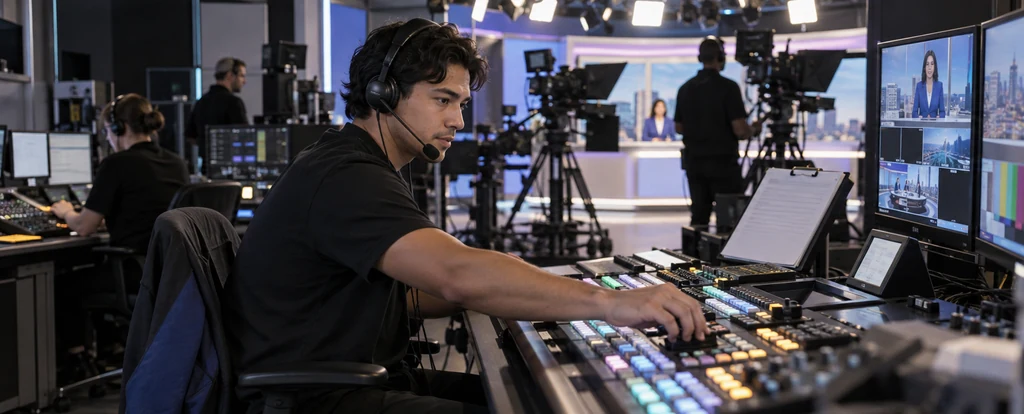
Television equipment operators run the cameras, audio and vision equipment that puts a broadcast or recording to air.
- Median salary*
- $88,400
4.0%vs last year, before tax
- People employed
- 90
10.0%vs last year
- Projected growth
- +8.3%
to 2035
- AI exposure*
- Moderate
- automation risk
- Average hours
- 31/wk
−9h vs all jobs
- Shortage status
- Not in shortage
national
They work in studios, outside broadcast vans and on location at stadiums, courts and news events, setting up and operating the technical side of a production. The role is broader than camera operating, because the same person might build a camera position in the morning and mix vision or monitor audio in the afternoon. It is a small occupation, with about 90 people working in it across networks, production companies and sports broadcasters.
How much do television equipment operators earn?
The median full-time salary for a television equipment operator is $88,400 per annum, before tax, up $18,400 since 2018.
Pay depends heavily on whether you are a staff member of a network or a casual on a crew, with casual rates usually carrying loadings and penalty rates for nights, weekends and public holidays. Enterprise agreements set the bands at the ABC and the commercial networks, while freelance rates are negotiated per production or per day. Specialist skills, particularly vision mixing and RF or transmission work, tend to sit at the higher end.
What does a television equipment operator do day to day?
The list below is what fills most weeks; the exact mix shifts with seniority and whatever stage the current work is at.
- Setting up and testing cameras, tripods, lenses and cabling at a studio or outside broadcast site
- Operating vision mixers and audio consoles through live news bulletins, sport and entertainment programs
- Rigging and adjusting lighting and sound equipment to match the look and sound a director wants
- Taking cues from directors and producers over talkback and calling shots to air in the right order
- Tracing faults such as a dropped feed, a dead microphone or a camera that will not tally, either before or during a broadcast
What skills do television equipment operators need?
Employers look for plant and equipment operation, operations management, backed by Sony studio cameras fluency and strong written communication.
Specialist skills
- Plant and equipment operation
- Operations management
Software and tools
- Sony studio cameras
- Ross Video vision mixers
- Grass Valley switchers
- Riedel intercom systems
- Adobe Premiere Pro
General skills
- Written communication
- Attention to detail
- Problem solving
- Time and deadline management
- Digital literacy
Is the job growing?
About 90 people work as television equipment operators in Australia, and employment is projected to grow 8.3% over the decade to 2035. That's modest growth: demand is steady rather than booming.
How do you become a television equipment operator?
Here's the path most television equipment operators take, step by step.
- 1Start with a screen and media qualification
A Certificate III or IV in Screen and Media at TAFE covers camera, audio and lighting basics and usually includes studio time, and entry generally needs Year 12 or mature age entry.
- 2Get on a crew in any role you can
Casual work as a production assistant, runner or broadcast crew member on outside broadcasts, community television and sports coverage is how most people get their first hours on real equipment.
- 3Choose a speciality and get good at it
Regular shifts come from being the person who can mix a bulletin, run audio for a panel show or build a camera position quickly, so pick one area and practise it across different formats.
- 4Add the licences a site or rig requires
Rigging work may need a high risk work licence, outside broadcasts on construction sites need a White Card, and broadcasters run their own induction and safety training on top of either.
- 5Move from casual work to staff or regular bookings
Networks and production companies draw staff from crews they already use, so a few seasons of reliable casual work is usually the route into a permanent job or a regular freelance booking.
Ready to apply as a television equipment operator?
Whether you're working toward becoming a television equipment operator or already are one and want a hand with the next step (sharpening your resume for ATS screening, tightening your cover letter, or knowing what you'll actually be asked at interview), here are examples grounded in this specific role, not generic templates.
What jobs can a television equipment operator move to?
Moving into Video Editor typically comes with the biggest pay rise, worth $14,300 a year more on average.
| Move to | Typical pay change | Overlap | Retraining |
|---|---|---|---|
| Video Editor Television equipment operators bring production workflow, shot selection and technical timing to video editing, though editing software skills require further study.Known move | +$14,300 | 20% | reskill |
| Camera Operator Television equipment operators bring set discipline, camera handling and broadcast timing to camera operator work, though formal training is needed.Known move | +$7,500 | 14% | reskill |
| Broadcast Transmitter Operator Television equipment operators bring broadcast signal knowledge and equipment fault-finding to transmitter operation, though transmission systems training is required.Known move | −$2,600 | 44% | reskill |
Moves are chosen from Jobs and Skills Australia's Data on Occupation Mobility, which follows income tax records between 2011-12 and 2020-21, together with entry requirements and skill overlap. A known move is one people were seen making in that data. Pay change compares median full-time pay for the two roles.
Who works as a television equipment operator?
The typical television equipment operator is 32 years old; 74% are men, 57% work full-time, and full-timers average 31 hours a week.
- 32
- Median age
- 26%
- Female share
- 57%
- Full-time
- −9h
- vs all-jobs avg
What's it like being a television equipment operator?
The job follows the broadcast schedule, so the week is shaped by live news, sport and events rather than a fixed desk day. Set-up, checks and rehearsals fill the hours beforehand, then everything happens at once on air, with almost no room to fix something once it is going out. Crews are small and work closely, which suits people who enjoy a technical problem and can stay steady when a feed drops.
What people like
- You see the result go to air. A bulletin or a match is on air within minutes of the work, so the feedback is immediate and public.
- The set-up changes constantly. A studio day, a stadium outside broadcast and a location shoot each need different equipment and a different plan.
- Small crews with clear roles. You tend to work with the same handful of people on regular jobs, and everyone knows what the others are doing while the show is running.
- Fault-finding against the clock. Tracing a dropped signal or a dead microphone and getting it back before the next shot is a genuine puzzle with a clear answer.
What people find hard
- Call times set by the schedule. Live sport and news mean early starts, late finishes and weekend work, and the schedule rarely moves for anything else.
- Long set-up hours. Crews often rig and test for hours before a short rehearsal or broadcast, and much of that time is waiting around a venue.
- Short contracts and quiet periods. A lot of the work is casual or production by production, so income can be uneven between jobs.
- Equipment fails at the worst moment. Camera and audio problems tend to show up live, when there is no time to stop and an audience is watching.
Based on our synthesis of professional-body surveys and public accounts of the role, not first-person verified reviews.
Which industries employ television equipment operators?
Information Media and Telecommunications employs the largest share of television equipment operators, followed by Arts and Recreation Services.
Top employing industries
- 1Information Media and Telecommunications
- 2Arts and Recreation Services
- 3Professional, Scientific and Technical Services
Ranked by employment share; the source doesn't publish an exact percentage per industry.
| Year 12 or below | 33.4% | |
|---|---|---|
| Bachelor degree | 31.2% | |
| Diploma / Advanced Diploma | 16.1% | |
| Certificate III/IV | 6.5% | |
| Postgraduate | 3.2% |
Will AI replace television equipment operators?
Automation reaches into parts of this job without covering all of it. Robotic camera pedestals and PTZ cameras already hold fixed positions in studios, and software can switch between preset shots in a straightforward bulletin, which is why the exposure sits at moderate rather than high. Live sport, location shoots and the physical work of rigging and cabling still depend on a crew being there.
Share of typical working time by exposure level
- Rigging, cabling and setting up equipmentRunning cable, building camera positions and testing feeds is physical work in real venues, and no software can lay a cable across a stadium.35%low
- Operating cameras on live and recorded productionsRobotic pedestals and remote heads run fixed studio positions, but handheld work, live sport and location shoots still need an operator reacting to what is happening.30%moderate
- Mixing vision and audio during a broadcastAutomated switching copes with a predictable news bulletin, while a panel show or a close match still needs a person judging which shot or microphone to take.20%moderate
- Checking signals and fixing faultsMonitoring tools flag a dropped feed or a failing battery sooner, but someone still has to trace the problem through the chain and fix it before air.15%moderate
Moves least exposed to AI
These career moves from television equipment operator work are rated low for AI exposure:
- Camera Operator
Some skill overlap (14%), reskill to get there, and a low automation-risk profile.
Common questions about becoming a television equipment operator
Straight answers to the questions people ask most.
How much do television equipment operators earn?
Television equipment operators earn $88,400 per annum, before tax. That is a median, so individual pay depends on whether you are on staff or casual, which network or production company you work for, and how much of your week falls on nights and weekends.
How do you become a television equipment operator?
Most people start with a Certificate III or IV in Screen and Media or a screen production degree, then build hours on casual broadcast crews. From there, a speciality such as camera, audio or vision mixing is what turns occasional shifts into regular work.
Do you need a degree to work as a television equipment operator?
Not always. Around 33% of people in the role finished school at Year 12 or below, while a bachelor degree is also common, and broadcasters hire on demonstrated equipment skill as much as formal study.
Are television equipment operators in demand?
Television equipment operators are currently not in shortage, and employment is projected to grow 8.3% over the decade to 2035. The occupation is small, so openings follow the number of networks, production companies and sports broadcasters running regular coverage rather than steady volume, and many roles are casual or production by production, with average full-time hours around 31 a week.
Will AI replace television equipment operators?
Automation already handles parts of the job, particularly robotic studio cameras and automatic switching in predictable formats such as news bulletins. Live sport, location work and the physical set-up of cameras, audio and cabling still need people on site, so the work is changing rather than disappearing.
What can television equipment operators move into?
Camera operating is one route, with camera operators earning $7,500 more, and the two jobs share set discipline, camera handling and broadcast timing. Video editing is another, paying $14,300 more, though it needs editing software skills built on top of production experience. Broadcast transmitter operating pays $2,600 less and draws on the signal knowledge and fault-finding the job already develops.
Related roles
- Camera Operator
- Video Editor
- Broadcast Transmitter Operator
- Broadcast Transmitter Operator
- Production Assistant
- Survey Interviewer
Not sure this is you? Take the career quiz and get a ranked shortlist of roles that fit how you like to work.