Car Detailer
Car detailers clean and recondition vehicles inside and out, protecting paint and trim, lifting resale value and getting cars ready for handover.
- Median salary
- $64,500
3.9%vs last year, before tax
- People employed
- 17,200
0.0%vs last year
- Projected growth
- +1.8%
to 2035
- AI exposure*
- Low
- automation risk
- Average hours
- 41/wk
+1h vs all jobs
- Shortage status*
- Not in shortage
national
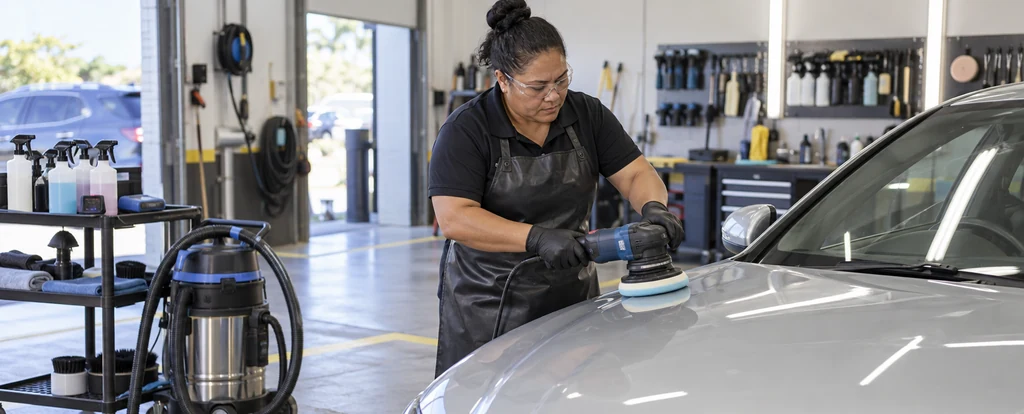
Car detailers work in dealership yards, car washes, rental depots, fleet workshops and mobile vans, cleaning cars and light commercial vehicles by hand and with powered equipment. The job goes well beyond a quick wash, covering stain removal, machine polishing and protective coatings that keep paint and trim in condition. Most detailers learn on the job, and many work for dealerships or rental firms where volume matters as much as finish.
How much do car detailers earn?
The median full-time salary for a car detailer is $64,500 per annum, before tax, up $13,400 since 2018.
Pay is set more by the employer than by the job title, with dealerships, fleet operators and high-end detailing studios generally paying above car washes and self-serve sites. Detailers who take on paint correction, ceramic coating or mobile work with their own van and equipment tend to earn more than general washers, and weekend and public holiday shifts often attract penalty rates.
What does a car detailer do day to day?
The list below is what fills most weeks; the exact mix shifts with seniority and whatever stage the current work is at.
- Washing and rinsing vehicle exteriors with a high-pressure washer and hand mitts
- Vacuuming and shampooing carpets, seats and upholstery, including stain and odour treatment
- Machine polishing painted surfaces to remove swirl marks and light scratches
- Applying waxes, sealants and paint protection coatings
- Cleaning wheels, tyres, glass, door jambs and engine bays, then checking the finished car against a handover list
What skills do car detailers need?
Employers look for cleaning and grounds maintenance, plant and equipment operation, operations management, backed by High-pressure washer fluency and strong customer service.
Specialist skills
- Cleaning and grounds maintenance
- Plant and equipment operation
- Operations management
Software and tools
- High-pressure washer
- Wet and dry vacuum extractor
- Rotary or dual-action polisher
- Steam cleaner
- Paint depth gauge
General skills
- Customer service
- Attention to detail
- Physical stamina and dexterity
- Safety and compliance awareness
Is the job growing?
About 17,200 people work as car detailers in Australia, and employment is projected to grow 1.8% over the decade to 2035. That's modest growth: demand is steady rather than booming.
How do you become a car detailer?
Here's the path most car detailers take, step by step.
- 1Start in a car wash, dealership or rental depot
Most detailers learn on the job and no formal qualification is required to begin. A car wash or dealership yard gives you repetition, supervision and the chance to work up to polishing and interior jobs.
- 2Learn the chemicals and equipment properly
Your employer must train you in the safe use of high-pressure washers, steam cleaners, polishes, solvents and personal protective equipment. Knowing which product suits which surface is the difference between a clean car and a damaged one.
- 3Add a qualification if you want to specialise
A Certificate II in automotive vocational preparation (AUR20720), or a short course at TAFE or a private training provider, helps if you are aiming for dealership pre-delivery work or higher-end detailing.
- 4Build a speciality
Paint correction, ceramic coating and interior restoration pay better than general washing, and several coating manufacturers run their own accredited training for applicators.
- 5Set up on your own if that suits you
Mobile detailing needs an ABN, an equipped van, insurance and a steady flow of bookings, which is easier to arrange after building a customer base with a dealership or rental firm.
Ready to apply as a car detailer?
Whether you're working toward becoming a car detailer or already are one and want a hand with the next step (sharpening your resume for ATS screening, tightening your cover letter, or knowing what you'll actually be asked at interview), here are examples grounded in this specific role, not generic templates.
What jobs can a car detailer move to?
Moving into Vehicle Spray Painter typically comes with the biggest pay rise, worth $33,300 a year more on average.
| Move to | Typical pay change | Overlap | Retraining |
|---|---|---|---|
| Vehicle Spray Painter Car detailers understand surface preparation and masking, yet spray painting requires an apprenticeship to apply finishes safely.Known move | +$33,300 | 22% | requalify |
| Motor Mechanic Car detailers move into mechanic work with vehicle familiarity, though an apprenticeship is required to service engines and diagnose faults.Known move | +$19,800 | 19% | requalify |
| Car Salesperson Car detailers use product knowledge and customer contact to move into sales, with a short course covering sales techniques.Known move | +$3,900 | 5% | reskill |
| Vehicle Accessories Fitter Car detailers bring vehicle care and finish knowledge, but fitting accessories needs a certificate to install and wire components safely.Known move | +$500 | 20% | reskill |
Moves are chosen from Jobs and Skills Australia's Data on Occupation Mobility, which follows income tax records between 2011-12 and 2020-21, together with entry requirements and skill overlap. A known move is one people were seen making in that data. Pay change compares median full-time pay for the two roles.
Who works as a car detailer?
The typical car detailer is 33 years old; 87% are men, 66% work full-time, and full-timers average 41 hours a week.
- 33
- Median age
- 13%
- Female share
- 66%
- Full-time
- +1h
- vs all-jobs avg
What's it like being a car detailer?
The work is steady and physical, with the day built around a list of vehicles that has to be finished before they go out. Volume peaks when rental fleets come back or a dealership prepares a run of handovers, and quiet stretches go into upkeep, stock and equipment. Detailers who enjoy it tend to like working with their hands and seeing a clear result at the end of the shift.
What people like
- Visible results at the end of a job. A car that arrives grimy leaves clean and protected, and the improvement is obvious to you and to the customer collecting it.
- Craft in the polishing and coating work. Correction and coating work rewards practice, and a detailer who can remove swirl marks without burning through the clear coat is hard to replace.
- A trade you can take to different employers. Dealerships, rental depots, car washes and mobile operators all need detailers, so you can change workplace without starting over.
- Working with cars rather than at a desk. If you like vehicles and prefer hands-on work to paperwork, the job keeps you next to cars for most of the day.
What people find hard
- Hard on the body. Long days on your feet, kneeling into footwells and hours of buffing take a toll on backs, knees and wrists.
- Repetition on high-volume jobs. A car wash or rental depot can mean dozens of similar vehicles in a day, with time pressure that leaves little room for careful work.
- Weather and tight handover times. Mobile and yard work happens outdoors in heat, cold and rain, and rental returns or dealership handovers often land in the same busy morning.
- Cleaning chemicals and dust. Polishes, solvents and brake dust make gloves, masks and ventilation necessary, and some people find the fumes and dust unpleasant over time.
Based on our synthesis of professional-body surveys and public accounts of the role, not first-person verified reviews.
Which industries employ car detailers?
Other Services employs the largest share of car detailers, followed by Retail Trade.
Top employing industries
- 1Other Services
- 2Retail Trade
- 3Rental, Hiring and Real Estate Services
Ranked by employment share; the source doesn't publish an exact percentage per industry.
| Year 12 or below | 63% | |
|---|---|---|
| Certificate III/IV | 17.6% | |
| Diploma / Advanced Diploma | 6.2% | |
| Bachelor degree | 5.7% | |
| Postgraduate | 2.3% |
Will AI replace car detailers?
Car detailing has low exposure to AI, because the work happens on physical vehicles that arrive in unpredictable condition. Automatic wash tunnels and self-serve bays have taken over some basic exterior washing, and booking and quoting software now handles most of the paperwork. Polishing, stain removal, coating application and the final finish check still come down to a person's eyes and hands.
Share of typical working time by exposure level
- Washing and drying vehicle exteriorsAutomatic tunnels wash the outside of high-volume fleet cars, but dealership and private customers still expect a hand wash that avoids scratched trim and water spots.35%low
- Machine polishing and paint correctionJudging how far to cut into a clear coat, and stopping before it burns, depends on feel and inspection under the right lighting.30%low
- Interior deep cleaning and stain removalSteam cleaners and extractors do the heavy lifting, but choosing the product and working around fragile trim or upholstery is still a hands-on call.20%low
- Quoting, booking and customer handoverScheduling software and standard price lists can generate most quotes, though explaining what a coating or correction job involves still happens face to face.15%moderate
Common questions about becoming a car detailer
Straight answers to the questions people ask most.
How much does a car detailer earn?
Car detailers earn a median of $64,500 per annum, before tax, for full-time work. What you take home depends heavily on the employer, since dealerships and fleet operators generally pay more than car washes, and weekend or public holiday penalty rates add to hourly rates.
How do you become a car detailer?
Most people start in a car wash, dealership or rental depot and learn on the job, because no formal qualification is needed to begin. A Certificate II in automotive vocational preparation (AUR20720) or a short detailing course helps if you are aiming at dealership pre-delivery or higher-end coating work.
Are car detailers in demand?
Car detailers are currently not in shortage, and employment is projected to grow 1.8% over the decade to 2035 over that period. Most openings come from replacing detailers who leave the trade, so knowing which dealerships, rental firms and wash sites near you hire regularly matters as much as the overall figure.
Will AI take car detailing jobs?
AI and automation have limited reach into this job, because the work is physical and every vehicle arrives in a different condition. Automatic wash tunnels handle some basic exterior cleaning and booking software manages the paperwork, but polishing, stain removal and the final finish check still depend on a person's eyes and hands.
What can a car detailer move into?
Motor mechanic work pays $19,800 more and suits detailers who already know their way around vehicles, though servicing engines and diagnosing faults takes an apprenticeship. Car sales ($3,900 more) uses the product knowledge and customer contact you build on the job, and it asks for little more than a short course in sales technique. Many experienced detailers instead set up their own mobile detailing business, which is often where earnings grow.
Do you need a licence to be a car detailer?
No licence is required to clean and detail cars, and you can start without a qualification. You do need a driver's licence if the role involves moving customer vehicles or driving a mobile van, and forklift or elevated work platform licences occasionally help on fleet sites.
Related roles
Not sure this is you? Take the career quiz and get a ranked shortlist of roles that fit how you like to work.