Vehicle Spray Painter
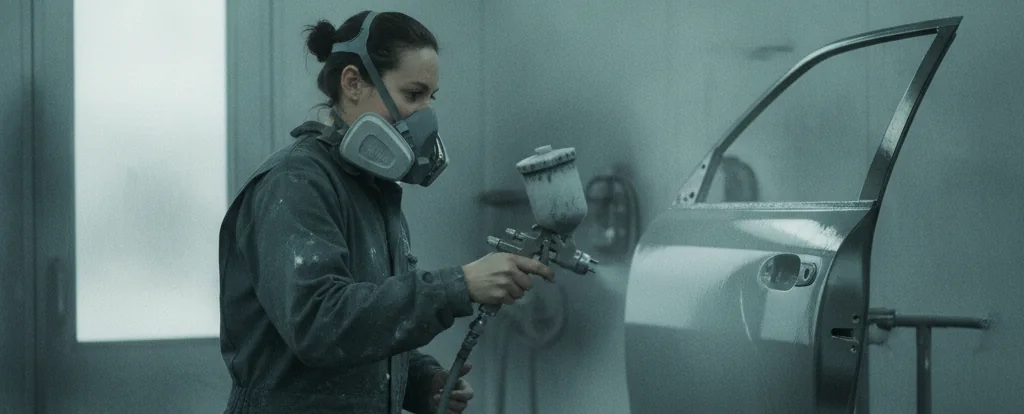
Vehicle spray painters prepare the panels, mix the colour and spray the coats that give a repaired or custom vehicle its finish.
- Median salary
- $97,800
3.8%vs last year, before tax
- People employed
- 9,200
0.0%vs last year
- Projected growth
- +0.2%
to 2035
- AI exposure*
- Moderate
- automation risk
- Average hours
- 42/wk
+2h vs all jobs
- Shortage status
- In shortage
national
Vehicle spray painters work in smash repair shops, dealerships and restoration workshops, usually alongside panel beaters who straighten the body before the car reaches the booth. The two trades are often confused, but the spray painter's work starts once the panel is straight: colour matching, masking and the layers of primer, base coat and clear coat that go over it. Most spraying happens in a dedicated booth, where airflow, temperature and dust are controlled so the finish matches the rest of the vehicle under any light.
How much do vehicle spray painters earn?
The median full-time salary for a vehicle spray painter is $97,800 per annum, before tax, up $20,300 since 2018.
What you earn depends on the award or enterprise agreement covering the shop, and on whether you work in a dealership, a smash repair business or a restoration workshop. Overtime and penalty rates add to the base in busy shops, and a refinisher who specialises in prestige or classic work can command a higher rate. Running your own booth or mobile refinishing business is another route, though materials and equipment come out of your own pocket.
What does a vehicle spray painter do day to day?
The list below is what fills most weeks; the exact mix shifts with seniority and whatever stage the current work is at.
- Sanding and masking panels so the paint has nothing to catch on
- Mixing and colour matching paint until it disappears into the rest of the car
- Laying down primer, base coat and clear coat inside the spray booth
- Cutting and buffing between coats to chase out imperfections
- Checking the finished job under workshop light and daylight before it goes back to the customer
What skills do vehicle spray painters need?
Employers look for hand and power tool work, fabrication and finishing, plant and equipment operation, backed by HVLP spray gun fluency and strong attention to detail.
Specialist skills
- Hand and power tool work
- Fabrication and finishing
- Plant and equipment operation
- Process improvement
Software and tools
- HVLP spray gun
- Orbital sander
- Paint mixing scales
- Spray booth
- Colour matching spectrometer
General skills
- Attention to detail
- Problem solving
- Safety and compliance awareness
Is the job growing?
About 9,200 people work as vehicle spray painters in Australia, and employment is projected to grow 0.2% over the decade to 2035. That's modest growth: demand is steady rather than booming.
How do you become a vehicle spray painter?
Here's the path most vehicle spray painters take, step by step.
- 1Start with a Certificate III in Automotive Refinishing Technology
This is the trade qualification for vehicle spray painting in Australia, delivered through TAFE and other registered training organisations. It covers surface preparation, colour matching, spray application, and the safety rules for working with solvents and two-pack paints.
- 2Get an apprenticeship with a smash repair shop or dealership
The certificate is usually completed as part of a full-time apprenticeship of about three to four years, so you earn while you learn and build a portfolio of finished jobs. Shops take on apprentices when they have the work and a tradesperson free to supervise, so applying directly to local repairers often works better than waiting for an advertised vacancy.
- 3Build the spray booth hours that make you quick and consistent
Most of the learning happens on the job: reading a colour under different light, judging coat thickness by eye, and knowing when a panel needs another pass. Speed matters as much as finish quality, because a booth sitting idle is money lost for the shop.
- 4Consider a licence if your work involves moving vehicles
Some shops ask workers to move cars in and out of the booth and around the yard, which can require a current driver licence. Requirements vary by employer, so check before you apply.
Ready to apply as a vehicle spray painter?
Whether you're working toward becoming a vehicle spray painter or already are one and want a hand with the next step (sharpening your resume for ATS screening, tightening your cover letter, or knowing what you'll actually be asked at interview), here are examples grounded in this specific role, not generic templates.
What jobs can a vehicle spray painter move to?
None of the roles vehicle spray painters typically move into pay more than the role itself. Panel Beater is the closest match. If a bigger salary is the goal, moving up into a senior or principal position within the role is usually the faster route than moving sideways.
| Move to | Typical pay change | Overlap | Retraining |
|---|---|---|---|
| Panel Beater Panel preparation and surface finishing carry into panel beating, but the trade requires additional panel repair training.Known move | −$1,700 | 46% | reskill |
| Motor Mechanic Automotive workshop knowledge and vehicle familiarity help, but motor mechanics need a separate mechanical apprenticeship.Known move | −$13,500 | 32% | reskill |
| Industrial Spray Painter Mixing, masking and spray application carry into industrial coating work, though industrial systems need further training.Known move | −$26,000 | 33% | reskill |
| Painter Surface preparation, masking and paint application transfer to building painting, with a painting trade qualification needed.Known move | −$26,100 | 22% | requalify |
Moves are chosen from Jobs and Skills Australia's Data on Occupation Mobility, which follows income tax records between 2011-12 and 2020-21, together with entry requirements and skill overlap. A known move is one people were seen making in that data. Pay change compares median full-time pay for the two roles.
Who works as a vehicle spray painter?
The typical vehicle spray painter is 36 years old; 97% are men, 93% work full-time, and full-timers average 42 hours a week.
- 36
- Median age
- 3%
- Female share
- 93%
- Full-time
- +2h
- vs all-jobs avg
What's it like being a vehicle spray painter?
The job runs to the rhythm of the booth: long stretches of preparation and masking, then a short, concentrated burst of spraying where everything has to go right. Shops that do insurance work run on tight turnaround times, so a painter is often working to a deadline set by an assessor rather than by the job itself. It suits someone who likes visible results, is patient with repetitive prep, and does not mind the heat, the solvents and the protective gear that come with a spray booth.
What people like
- You can see what you made. At the end of a job there is a finished car in front of you, and on a restoration or custom build that result can be on the road for decades.
- Colour matching is its own puzzle. Getting a faded or repaired panel to blend invisibly into the rest of the car takes a good eye and a feel for how the formula behaves, and it is satisfying when it clicks.
- The trade is hands-on and tool-based. Spray guns, sanders, mixing scales and spectrometers are the working kit, and skill with them builds steadily over an apprenticeship.
- Quiet concentration inside the booth. Once the doors close, the job is you, the gun and the panel, with no meetings or interruptions until the coats are down.
What people find hard
- The prep takes longer than the paint. Sanding, filling and masking can fill most of a day for a spray that takes twenty minutes, and skipping any of it shows up later in the finish.
- Comebacks undo your work. If a colour does not match or dust lands in the clear coat, the panel has to be stripped back and redone, usually without extra time in the schedule.
- Solvents and safety gear are constant. Two-pack paints and thinners need proper respirators, gloves and booth maintenance, and the work is unpleasantly hot in summer.
- The workload swings with the insurance cycle. Some weeks the yard is full of damaged cars and the booth is booked solid, and other weeks it is quiet and hours are shorter.
Based on our synthesis of professional-body surveys and public accounts of the role, not first-person verified reviews.
Which industries employ vehicle spray painters?
Other Services employs the largest share of vehicle spray painters, followed by Manufacturing.
Top employing industries
- 1Other Services
- 2Manufacturing
Ranked by employment share; the source doesn't publish an exact percentage per industry.
| Certificate III/IV | 67.7% | |
|---|---|---|
| Year 12 or below | 25.9% | |
| Diploma / Advanced Diploma | 2% | |
| Bachelor degree | 1.4% | |
| Postgraduate | 0.2% |
Will AI replace vehicle spray painters?
Vehicle spray painting sits in the middle. Automated spray lines handle high-volume production work, but repair and restoration jobs involve cars in wildly different condition, so preparation, colour judgement and the final finish still come down to a person with a gun. Software has taken over much of the estimating, colour formula retrieval and job tracking that used to be done at a bench.
Share of typical working time by exposure level
- Spraying primer, base coat and clear coatGun distance, overlap and coat thickness are judged from experience, and a machine cannot read the panel and adjust mid-pass the way a tradesperson does.35%low
- Sanding, filling and masking panelsPrep work on a repaired panel is shaped by feel and by what the car in front of you needs, and robotic sanding has not made it into general repair shops.30%low
- Colour matching and mixing paintA spectrometer and mixing software suggest a starting formula, but the painter still adjusts it by eye to match the way the rest of the car has aged.20%moderate
- Job sheets, insurance estimates and ordering paintEstimating software already prices repairs from photos and parts lists, so the paperwork side of the job is increasingly automated.15%high
Moves least exposed to AI
These career moves from vehicle spray painter work are rated low for AI exposure:
- Panel Beater
Solid skill overlap (46%), reskill to get there, and a low automation-risk profile.
Common questions about becoming a vehicle spray painter
Straight answers to the questions people ask most.
How much does a vehicle spray painter earn?
The median for full-time vehicle spray painters is $97,800 per year before tax. Shop size, location, overtime and the type of work you specialise in all move that figure, so treat it as a middle point rather than a starting rate.
How do you become a vehicle spray painter?
Most people enter through an apprenticeship and complete a Certificate III in Automotive Refinishing Technology (AUR32420) over about three to four years. Applying directly to smash repair shops and dealerships in your area is the usual way to find one, since apprenticeships are advertised less often than other trade roles.
Are vehicle spray painters in demand?
Vehicle spray painters are currently in shortage nationally, and employment is projected to grow 0.2% over the decade to 2035. Total numbers are changing little, so where you live and how busy the local repair trade is will matter more to your job search than the national figure.
Will AI or automation replace vehicle spray painters?
Partly, but not the whole job. Robotics and automated spray lines are already used in high-volume vehicle manufacturing, while repair work on individual cars still depends on hand preparation, reading a colour against an existing panel and judging coverage by eye. Software does more of the quoting, colour formula lookup and job tracking, which trims the paperwork rather than the time in the booth.
What can a vehicle spray painter move into?
Panel beating shares the surface preparation and finishing work and pays $1,700 less, though it needs extra training in panel repair. Industrial spray painting applies the same mixing, masking and spray skills to steelwork, tanks and machinery, with further training in industrial coating systems, and pays $26,000 less. Running your own refinishing shop or mobile paint repair business is a common longer-term move, and it is often where earnings grow.
Do you need good colour vision to be a spray painter?
Yes, matching paint to a panel that has faded or been repaired relies on judging subtle differences in shade and tone. Colour blindness does not automatically rule the trade out, but it makes blending and custom work far harder, so it is worth testing before you commit to an apprenticeship.
Related roles
Not sure this is you? Take the career quiz and get a ranked shortlist of roles that fit how you like to work.