Home Manufacturing & Production
Cheesemaker
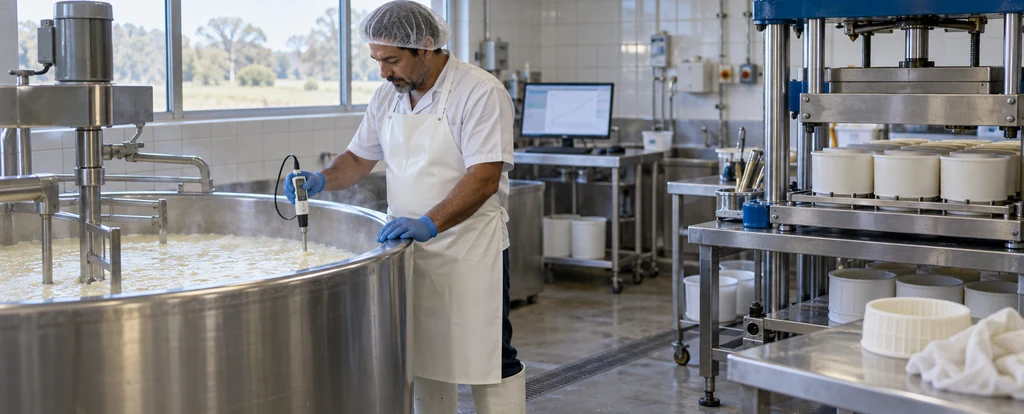
Cheesemakers turn milk into cheese by controlling the cultures, curds and maturation that decide how a batch tastes and how long it keeps.
- Median salary*
- $65,000
4.2%vs last year, before tax
- People employed*
- 2,600
0.0%vs last year
- Projected growth*
- +1%
to 2035
- AI exposure*
- Moderate
- automation risk
- Average hours*
- 40/wk
matches all-jobs average
- Shortage status*
- Not in shortage
national
Cheesemakers work in dairy factories, farm creameries and small artisan rooms, where a day's batch might be a few hundred litres or tens of thousands. What sets the job apart from other food production work is the waiting: cultures and a maturation room do much of the work, and the maker's task is to keep conditions right over weeks or months. Most are employed in dairy product manufacturing rather than in hospitality or retail.
How much do cheesemakers earn?
The median full-time salary for a cheesemaker is $65,000 per annum, before tax, up $13,700 since 2018.
Pay depends on the employer and the shift: large dairy manufacturers usually pay under an enterprise agreement with loadings for nights, weekends and public holidays, while small creameries tend to pay closer to the award. Moving into quality assurance, production planning or a head cheesemaker role is the usual way the figure rises, and a Certificate III or IV in food processing supports that step. How big the plant is and what hours it runs matter more than where it is.
What does a cheesemaker do day to day?
The list below is what fills most weeks; the exact mix shifts with seniority and whatever stage the current work is at.
- Pasteurising milk and adding starter cultures, rennet and salt
- Cutting, stirring and heating curds to control how much moisture stays in the finished cheese
- Draining, hooping and pressing curds into moulds and vats
- Turning, brushing and brining wheels as they mature
- Testing pH, temperature and humidity and recording batch results so a fault can be traced later
What skills do cheesemakers need?
Employers look for food safety and hygiene, food preparation and cooking, plant and equipment operation, backed by Cheese vat fluency and strong attention to detail.
Specialist skills
- Food safety and hygiene
- Food preparation and cooking
- Plant and equipment operation
- Operations management
- Process improvement
Software and tools
- Cheese vat
- pH meter
- Curd mill
- Cheese press
- Dairy batch records software
General skills
- Attention to detail
- Safety and compliance awareness
Is the job growing?
About 2,600 people work as cheesemakers in Australia, and employment is projected to grow 1% over the decade to 2035. That's modest growth: demand is steady rather than booming.
How do you become a cheesemaker?
Here's the path most cheesemakers take, step by step.
- 1Get into a dairy plant, often through a traineeship
The most common way in is a traineeship with a dairy manufacturer or creamery, which combines paid work on the production floor with study. You finish with a Certificate III in food processing (FBP30121) and a year or more of real batches behind you.
- 2Complete the dairy and cheese units
Food processing qualifications include units on milk handling, starter cultures, curd making, pressing and maturation. Some TAFEs deliver these as part of a dairy traineeship, and larger manufacturers run their own internal training for new starters.
- 3Learn the craft beside an experienced maker
Judging a curd set by hand, reading whey acidity and deciding when to mill take practice, and most of it is passed on at the vat. Expect a year or more before you are trusted with a style on your own, and longer for a slow-maturing cheese.
- 4Add food safety training
Food safety supervisor training is required in some states and expected by most employers, and it is what qualifies you to sign off batch records and cleaning schedules.
- 5Study food science or dairy technology if you want to specialise
A Diploma of Food Science and Technology (FBP50121) or a degree in food science opens roles in product development, quality management and technical management. It is a common route for people moving up from the production floor rather than an entry requirement.
Ready to apply as a cheesemaker?
Whether you're working toward becoming a cheesemaker or already are one and want a hand with the next step (sharpening your resume for ATS screening, tightening your cover letter, or knowing what you'll actually be asked at interview), here are examples grounded in this specific role, not generic templates.
What jobs can a cheesemaker move to?
Moving into Brewer typically comes with the biggest pay rise, worth $20,600 a year more on average.
| Move to | Typical pay change | Overlap | Retraining |
|---|---|---|---|
| Brewer Cheesemakers bring fermentation control, hygiene and batch consistency to brewing, with a short course covering brewery systems. | +$20,600 | 54% | short course |
| Distiller Cheesemakers bring fermentation control, hygiene and sensory judgement to distilling, with a short course on still operations. | +$5,200 | 50% | short course |
| Smallgoods Maker Cheesemakers bring curing, fermentation and food safety knowledge to smallgoods making, though the trade requires an apprenticeship. | +$0 | 67% | requalify |
| Coffee Roaster Cheesemakers bring batch processing, hygiene and sensory evaluation to coffee roasting, needing little extra training. | +$0 | 62% | minimal |
Moves are chosen from Jobs and Skills Australia's Data on Occupation Mobility, which follows income tax records between 2011-12 and 2020-21, together with entry requirements and skill overlap. A known move is one people were seen making in that data. Pay change compares median full-time pay for the two roles.
Who works as a cheesemaker?
The typical cheesemaker is 41 years old; 66% are men, 82% work full-time, and full-timers average 40 hours a week.
- 41
- Median age
- 34%
- Female share
- 82%
- Full-time
- +0h
- vs all-jobs avg
What's it like being a cheesemaker?
Cheesemaking runs on the dairy calendar: milk arrives daily, cultures need adding on time, and the vat does not wait while you finish something else. Much of the craft is repetitive and physical, with stirring, lifting and turning, but the decisions themselves are sensory ones, judged by touch, smell and taste as much as by the meter. People who stick with it tend to like the mix of hands-on work and slow, measurable results.
What people like
- You can taste the result of a decision. Change a pressing weight or a maturation time and you can follow it through to the finished wheel. Few production jobs give feedback that direct.
- The craft is slow to master. There are hundreds of styles and endless small variables, so the work keeps teaching you. Experienced makers are valued for judgement that cannot be written into a procedure.
- Small teams and a clear daily rhythm. Most sites run with a handful of people on a shift, and the day follows the milk rather than a client's inbox. That suits people who like finishing a physical batch and going home.
- Work tied to a place and a supplier. Cheese carries the district it comes from, so makers at farm creameries often work with the same herds and farmers for years and can see the effect of a season in the milk.
What people find hard
- Early starts and shift work. Milk is processed when it arrives, so days often begin before dawn, and larger plants run shifts that include weekends and public holidays.
- Cold, wet and physical conditions. You spend hours standing on wet concrete, lifting moulds and turning wheels, and the maturation room is cold by design.
- Long waits before a mistake shows up. Some cheeses are sold within weeks, but a cheddar or a washed rind can take months or years to mature, so an error in the vat surfaces long after the batch has moved on.
- Food safety paperwork. Every batch needs records for pH, temperature and cleaning, and an audit or a recall turns those records into the first thing anyone asks to see.
Based on our synthesis of professional-body surveys and public accounts of the role, not first-person verified reviews.
Which industries employ cheesemakers?
Dairy product manufacturing employs the largest share of cheesemakers, followed by Agriculture, forestry and fishing.
Top employing industries
- 1Dairy product manufacturing
- 2Agriculture, forestry and fishing
- 3Food and beverage manufacturing
- 4Retail trade
- 5Accommodation and food services
Ranked by employment share; the source doesn't publish an exact percentage per industry.
| Certificate III/IV | 34% | |
|---|---|---|
| Diploma / Advanced Diploma | 26% | |
| Bachelor degree | 20% | |
| Year 12 or below | 20% |
Will AI replace cheesemakers?
Cheesemaking sits at a moderate level of exposure: sensors, automated vats and batch record software handle the measurement and repetition, while the sensory calls and the physical handling of the cheese stay with the maker. Larger plants run more of the process automatically and small creameries much less, so what the technology changes depends on where you work.
Share of typical working time by exposure level
- Starter culture and vat workAutomated vats hold temperatures and cut curds to a set programme, but deciding when the curd is ready and adjusting for the day's milk still comes down to the maker.30%moderate
- Pressing, brining and turning wheelsLarge plants use automated handling for some of this, yet moving, turning and brushing wheels stays physical work in most creameries, particularly for washed rind and blue styles.25%low
- Maturation and gradingHumidity and temperature control in the maturation room is automated and data logged, but judging the rind, smell and flavour of a wheel to decide when it leaves the room is not.25%moderate
- Milk testing and batch monitoringInline sensors and dairy batch records software log temperature, pH and yield automatically, so routine readings that were once taken by hand are increasingly handled by the system.20%high
Moves least exposed to AI
These career moves from cheesemaker work are rated low for AI exposure:
- Brewer
Solid skill overlap (54%), short course to get there, and a low automation-risk profile.
- Distiller
Solid skill overlap (50%), short course to get there, and a low automation-risk profile.
Common questions about becoming a cheesemaker
Straight answers to the questions people ask most.
How much do cheesemakers earn?
Cheesemakers earn a median of $65,000 per year before tax. Pay is shaped by the employer and the shift pattern: large dairy manufacturers pay enterprise agreement rates with loadings for nights and weekends, while small creameries tend to pay closer to the award. Taking on quality, production planning or head cheesemaker duties is the usual way the figure moves up.
How do you become a cheesemaker?
Most cheesemakers start in a dairy plant through a traineeship that combines paid work with a Certificate III or IV in food processing, then learn the craft beside an experienced maker. Artisan creameries sometimes hire on aptitude and train on the job, with a short cheesemaking course and food safety training as the entry point. A degree in food science or dairy technology is only needed for technical and product development roles.
Are cheesemakers in demand?
Cheesemakers are currently not in shortage, and employment is projected to grow 1% over the decade to 2035. It is a small occupation, so openings tend to come up through traineeships, internal moves within a dairy plant, or a direct approach to a creamery rather than through advertised vacancies. Training somewhere that makes a range of styles gives you experience that travels between employers.
Will AI and automation replace cheesemakers?
Automation reaches the measured and repeated parts of the job, which is why cheesemaking sits at a moderate level of exposure rather than a high or low one. Inline sensors, automated vats and batch software now handle much of the temperature, pH and yield monitoring, and larger plants rely on them to keep runs consistent. What stays with the maker is the sensory call, deciding when a curd is ready, how a wheel smells and whether a batch is worth releasing, along with the physical handling of the cheese itself.
What can a cheesemaker move into?
The closest moves are into other fermented food and drink: brewing and distilling use the same culture control, hygiene and batch discipline, and a brewer earns $20,600 more, with a short course covering brewery systems. Smallgoods making draws on the same curing and fermentation knowledge, though that trade needs an apprenticeship to enter. Starting a small creamery or farmhouse cheese business of your own is another route, and often where earnings grow.
How is artisan cheesemaking different from working in a dairy factory?
Artisan creameries make smaller batches and a wider range of styles, so you touch the cheese more and follow it from vat to shop. Factory work is more standardised, with bigger volumes, tighter specifications and usually better pay and conditions under an enterprise agreement. At a small creamery you are also more likely to handle packaging, markets and sales yourself.
Related roles
Not sure this is you? Take the career quiz and get a ranked shortlist of roles that fit how you like to work.