Home Manufacturing & Production
Clay Products Machine Operator
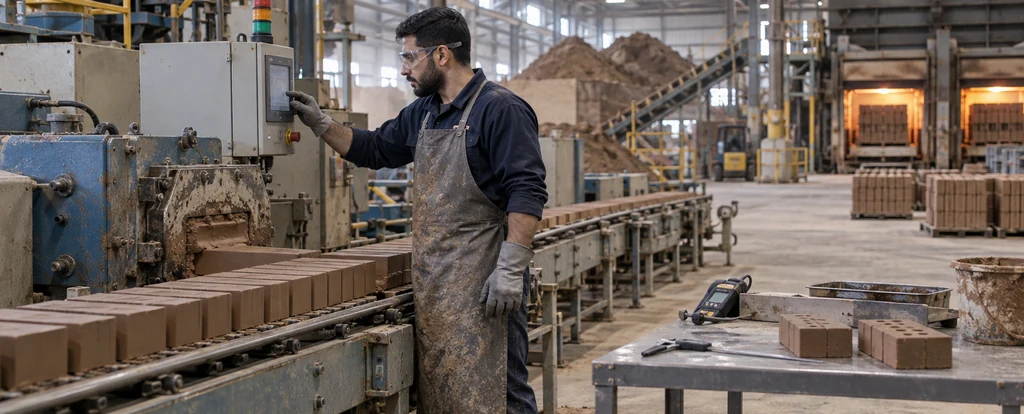
Clay products machine operators run the extruders, presses and kilns that turn clay into bricks, roof tiles and pipes, keeping a plant's output steady and to size.
- Median salary*
- $65,000
4.3%vs last year, before tax
- People employed
- 480
4.0%vs last year
- Projected growth*
- −5%
to 2035
- AI exposure*
- Moderate
- automation risk
- Average hours*
- 38/wk
−2h vs all jobs
- Shortage status*
- Not in shortage
national
The work happens on a production floor, usually at a brick, tile or pipe plant, where the day is built around a continuous line rather than individual pieces. What sets this role apart from other machine operating jobs is the firing stage: clay has to be dried and fired at controlled temperatures, so the operator watches the kiln as closely as the press. Employers are brick and tile works, ceramic and refractory manufacturers, and the larger building products sites, and a shift crew is usually small.
How much do clay products machine operators earn?
The median full-time salary for a clay products machine operator is $65,000 per annum, before tax, up $13,700 since 2018.
Rates are set mainly by the enterprise agreement or award at the plant, so pay moves with the site and the shift pattern more than with the job title. Afternoon, night and weekend shifts usually attract penalty rates, and operators who take on kiln control or maintenance responsibilities often sit at the higher end of the band. Smaller plants may pay above the award to hold on to someone who can keep a kiln running.
What does a clay products machine operator do day to day?
The list below is what fills most weeks; the exact mix shifts with seniority and whatever stage the current work is at.
- Setting up extruders, presses and moulding dies at the start of a run
- Loading and mixing clay and raw materials, then checking moisture before forming
- Watching kiln and dryer temperatures and adjusting controls to keep product within specification
- Inspecting bricks, tiles and pipes for cracks, warping and size faults as they come off the line
- Cleaning, lubricating and doing minor repairs on presses, conveyors and kiln equipment between runs
What skills do clay products machine operators need?
Employers look for plant and equipment operation, process improvement, cleaning and grounds maintenance, backed by PLC and HMI control panels fluency and strong safety and compliance awareness.
Specialist skills
- Plant and equipment operation
- Process improvement
- Cleaning and grounds maintenance
- Installation and maintenance
Software and tools
- PLC and HMI control panels
- Extrusion press controls
- Digital vernier calipers
- Moisture testing meters
- Kiln monitoring systems
General skills
- Safety and compliance awareness
- Attention to detail
- Physical stamina and dexterity
Is the job growing?
About 480 people work as clay products machine operators in Australia, and employment is projected to decline 5% over the decade to 2035. That's a real decline, worth weighing carefully before training into the role.
How do you become a clay products machine operator?
Here's the path most clay products machine operators take, step by step.
- 1Get a start as a factory hand or process worker at a clay products plant
Most operators come in this way, because the presses, dies and kilns are specific to the site and are learned on the job rather than in a classroom.
- 2Complete a Certificate III in Process Manufacturing
This covers production processes, quality checks and safe machine operation, and employers often support it part time while you work. Around 34% of the people in the role hold Certificate III/IV.
- 3Learn the plant's control systems and kiln operation
Internal training on the PLC and HMI panels, extrusion press controls and kiln monitoring is what moves you from tending the line to running it.
- 4Add the licences and qualifications the site requires
A forklift licence is common, and some plants ask for a high risk work licence, confined space training or first aid. Requirements differ between sites, so check what your employer provides.
Ready to apply as a clay products machine operator?
Whether you're working toward becoming a clay products machine operator or already are one and want a hand with the next step (sharpening your resume for ATS screening, tightening your cover letter, or knowing what you'll actually be asked at interview), here are examples grounded in this specific role, not generic templates.
What jobs can a clay products machine operator move to?
Moving into Boiler Operator typically comes with the biggest pay rise, worth $27,600 a year more on average.
| Move to | Typical pay change | Overlap | Retraining |
|---|---|---|---|
| Boiler Operator Clay products machine operators bring kiln and process control experience, with a short course in boiler operation and safety. | +$27,600 | 50% | short course |
| Paper Machine Operator Clay products machine operators bring continuous process and machine monitoring experience, with a short course in paper making and web handling. | +$10,400 | 58% | short course |
| Concrete Products Machine Operator Clay products machine operators bring moulding and curing experience, with reskilling in concrete mix design and product handling. | +$2,600 | 36% | reskill |
| Glass Production Operator Clay products machine operators bring high-temperature process and moulding skills, with reskilling in glass forming and annealing. | +$0 | 43% | reskill |
| Plastics Machine Operator Clay products machine operators bring machine tending and process control skills, with a short course in plastics moulding equipment. | +$0 | 47% | short course |
Moves are chosen from Jobs and Skills Australia's Data on Occupation Mobility, which follows income tax records between 2011-12 and 2020-21, together with entry requirements and skill overlap. A known move is one people were seen making in that data. Pay change compares median full-time pay for the two roles.
Who works as a clay products machine operator?
The typical clay products machine operator is 45 years old; 92% are men, 92% work full-time, and full-timers average 38 hours a week.
- 45
- Median age
- 8%
- Female share
- 92%
- Full-time
- −2h
- vs all-jobs avg
What's it like being a clay products machine operator?
The rhythm of a shift follows the line: checks and setup at the start, then long stretches of watching and adjusting, and cleaning and handover at the end. The pressure comes from holding a continuous process within tolerance, because clay that is too wet, too dry or fired at the wrong temperature comes out cracked or warped in large numbers. The work suits people who like machinery and a steady routine, and who are comfortable with heat and noise around them.
What people like
- You can see what you made. Bricks, tiles and pipes leave the line stacked, counted and ready to go, so the output of a shift is obvious rather than buried in a system.
- The process rewards attention. Reading a kiln curve or noticing clay that feels wrong before it reaches the press is a skill you build over months, and it shows in the reject rate.
- Small crews and hands-on work. Most shifts run with a handful of people, and maintenance tasks break up the time spent watching the line.
- The routine stays predictable. Shift patterns are set well ahead, which makes it easier to plan around work than in roles with changing deadlines and projects.
What people find hard
- Heat, dust and noise. Kilns and dryers keep the floor warm, and clay dust and machinery noise are constant, so hearing protection and dust masks are part of the job rather than optional.
- Shift work and rosters. Plants often run around the clock, which means nights, weekends and public holidays on a rotating roster.
- Faults you can't fully control. Wet weather changes how clay behaves, and a kiln that drifts can spoil a whole run before anyone notices, so some problems are managed rather than solved.
- Long stretches of monitoring. Between setups and stoppages there is a lot of watching dials and gauges, which some people find tedious.
Based on our synthesis of professional-body surveys and public accounts of the role, not first-person verified reviews.
Which industries employ clay products machine operators?
Clay Brick and Tile Manufacturing employs the largest share of clay products machine operators, followed by Ceramic Product Manufacturing.
Top employing industries
- 1Clay Brick and Tile Manufacturing
- 2Ceramic Product Manufacturing
- 3Cement, Lime, Plaster and Concrete Product Manufacturing
- 4Refractory Manufacturing
Ranked by employment share; the source doesn't publish an exact percentage per industry.
| Certificate III/IV | 34% | |
|---|---|---|
| Diploma / Advanced Diploma | 26% | |
| Bachelor degree | 20% | |
| Year 12 or below | 20% |
Will AI replace clay products machine operators?
This is a moderately exposed role. Control panels and kiln monitoring systems already regulate much of the forming and firing process, so the operator supervises a line that largely runs itself. The hands-on side is harder to automate, since dies have to be changed, blockages cleared, faults traced and product checked by eye and touch, and plants tend to add sensors and remote monitoring rather than remove the operator from the floor.
Share of typical working time by exposure level
- Running the extruder or press lineControl panels hold speeds and pressures steady, but the operator still sets up dies, clears blockages and adjusts when the clay changes.35%moderate
- Maintenance, die changes and cleaningSwapping worn dies, greasing conveyors and clearing wet clay out of a press are physical jobs that need hands on the machine.25%low
- Controlling kiln and dryer conditionsTemperature and moisture are logged automatically, and the operator steps in when a reading drifts or a batch needs a different firing curve.20%moderate
- Checking product for faultsCracks, warping and size faults are still picked up by eye and with calipers and gauges, though cameras now handle some of the first pass.20%moderate
Common questions about becoming a clay products machine operator
Straight answers to the questions people ask most.
How much do clay products machine operators earn?
The median for clay products machine operators is $65,000 per year before tax. Pay is set by the plant's enterprise agreement or award, so it varies between sites, and shift penalties for nights and weekends lift take-home pay. Operators who take on kiln control or maintenance duties usually earn towards the top of the band.
How do you become a clay products machine operator?
Most people start as a factory hand or process worker at a clay products plant and learn the line on the job. A Certificate III in Process Manufacturing (MSM30116) helps, and internal training on the plant's presses and kiln controls is usually what makes you an operator rather than a labourer.
Are clay products machine operators in demand?
Clay products machine operators are currently not in shortage, and employment is projected to decline 5% over the decade to 2035. That means openings are more likely to come from experienced operators leaving than from new plants opening, so knowing which local sites are still running matters as much as the qualification.
Will AI or automation replace clay products machine operators?
Automation already runs much of a clay products line: PLC and HMI panels manage the extruder, and kiln monitoring systems hold firing temperatures steady. What changes least is the physical work around the machine, including die changes, cleaning, fault finding and judging whether a batch looks right.
What other jobs can a clay products machine operator move into?
Experience with extrusion, kiln control and continuous production transfers well to other process plants. Paper machine operator pays $10,400 more and boiler operator pays $27,600 more, while concrete products machine operator is $2,600 more. Paper and boiler work usually need a short course first.
What hours do clay products machine operators work?
Full-time clay products machine operators average 38 hours a week, and 92% work full time. Most plants run shifts, so you may be rostered on afternoons, nights or weekends, with penalty rates added to those hours.
Related roles
- Concrete Products Machine Operator
- Glass Production Operator
- Paper Machine Operator
- Boiler Operator
- Plastics Machine Operator
- Process Worker
Not sure this is you? Take the career quiz and get a ranked shortlist of roles that fit how you like to work.