Home Manufacturing & Production
Cooper
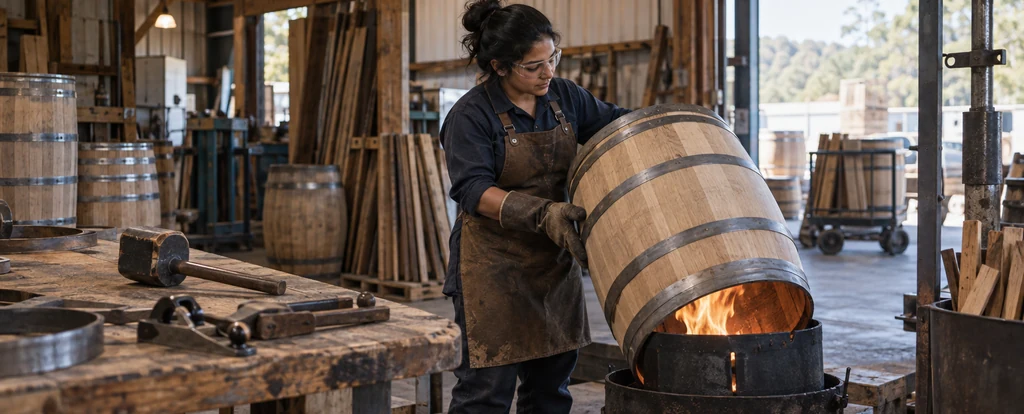
Coopers build and repair the wooden barrels that wineries and distilleries use to age wine and spirits.
- Median salary*
- $67,600
3.5%vs last year, before tax
- People employed*
- 250
16.7%vs last year
- Projected growth*
- −2%
to 2035
- AI exposure*
- Low
- automation risk
- Average hours*
- 40/wk
matches all-jobs average
- Shortage status*
- Not in shortage
national
Most coopers work in a cooperage attached to a winery or distillery, or in a small independent workshop that makes and repairs barrels for the drinks industry. The work is closer to joinery than to factory production: staves are shaped and fitted by hand so the finished barrel holds liquid without leaking. Coopers also spend a good share of their time on repairs, replacing staves and hoops on casks that have been sitting in a cellar for years.
How much do coopers earn?
The median full-time salary for a cooper is $67,600 per annum, before tax, up $14,400 since 2018.
What a cooper earns depends heavily on the employer: a full-time position in a winery or distillery cooperage usually comes with an enterprise agreement and penalty rates, while independent barrel repair work is often charged by the job. Skill matters too, since coopers who can raise and fire large casks or work on premium barrels are harder to replace.
What does a cooper do day to day?
The list below is what fills most weeks; the exact mix shifts with seniority and whatever stage the current work is at.
- Selecting and seasoning oak staves, sorting them by grain and density
- Shaping staves with hand planes and a cooper's jointer so the edges meet tightly
- Raising the barrel and firing it over an open flame to bend the staves into shape
- Driving metal hoops onto the barrel and testing it for leaks
- Repairing and refurbishing casks by replacing staves, hoops and heads
What skills do coopers need?
Employers look for hand and power tool work, craft and handmade production, fabrication and finishing, backed by Hand planes fluency and strong attention to detail.
Specialist skills
- Hand and power tool work
- Craft and handmade production
- Fabrication and finishing
- Plant and equipment operation
- Worksite safety management
Software and tools
- Hand planes
- Cooper's jointer
- Hoop driver
- Croze
- Barrel shave
General skills
- Attention to detail
- Problem solving
Is the job growing?
About 250 people work as coopers in Australia, and employment is projected to decline 2% over the decade to 2035. That's a real decline, worth weighing carefully before training into the role.
How do you become a cooper?
Here's the path most coopers take, step by step.
- 1Build a timber trade grounding
A Certificate III in joinery (CPC31920), cabinet making or another wood trade at TAFE teaches the tool work and timber knowledge cooperages look for, and it gives you a fallback if coopering work is thin.
- 2Find a cooperage to train in
Australia has no dedicated cooperage qualification, so most people learn on the job under an experienced cooper, often through a traineeship arranged directly with a winery, distillery or independent cooperage.
- 3Learn the barrel work itself
Stave selection, jointing, firing and hooping are picked up at the bench over several years, and the test of progress is how rarely a finished barrel leaks or needs reworking.
- 4Get to know the wine and spirits side
Understanding how oak, toast levels and barrel size affect what is aged inside helps you talk through orders with the winemakers and distillers who buy the barrels.
Ready to apply as a cooper?
Whether you're working toward becoming a cooper or already are one and want a hand with the next step (sharpening your resume for ATS screening, tightening your cover letter, or knowing what you'll actually be asked at interview), here are examples grounded in this specific role, not generic templates.
What jobs can a cooper move to?
Moving into Joiner typically comes with the biggest pay rise, worth $5,200 a year more on average.
| Move to | Typical pay change | Overlap | Retraining |
|---|---|---|---|
| Joiner Cooper's stave shaping and tight joint work carry into joinery, with extra study needed for building codes. | +$5,200 | 57% | reskill |
| Cabinet Maker Cooper's precise wood shaping, assembly and finishing skills suit cabinet making, though formal furniture training is needed. | +$5,200 | 48% | reskill |
| Wood Machinist Cooper's ability to cut and shape timber accurately transfers to wood machining, with study needed for powered machinery. | +$2,600 | 57% | reskill |
| Wood Turner Cooper's skill with shaping curved timber and hand tools transfers to wood turning, with lathe training required. | −$2,600 | 52% | reskill |
| Furniture Finisher Cooper's finishing and surface preparation experience suits furniture finishing, with training in modern coatings needed. | −$2,600 | 48% | reskill |
Moves are chosen from Jobs and Skills Australia's Data on Occupation Mobility, which follows income tax records between 2011-12 and 2020-21, together with entry requirements and skill overlap. A known move is one people were seen making in that data. Pay change compares median full-time pay for the two roles.
Who works as a cooper?
The typical cooper is 45 years old; 95% are men, 90% work full-time, and full-timers average 40 hours a week.
- 45
- Median age
- 5%
- Female share
- 90%
- Full-time
- +0h
- vs all-jobs avg
What's it like being a cooper?
Cooperage is heavy, hands-on work, usually done in a small team in a workshop beside a winery or distillery. The rhythm runs from rough preparation through to firing and finishing, with repair jobs fitted around vintage and barrel turnover. Coopers tend to be people who like working timber by eye and hand and don't mind heat, noise and lifting.
What people like
- Making something that holds. A finished barrel is filled and checked for leaks, and that seal is the whole verdict on the job you've just done.
- Skills you can watch improve. Stave jointing and firing take years to get right, and the difference shows up in how little rework your barrels need.
- Close to wine and spirits. Coopers work alongside winemakers and distillers, and often see casks they made still in use in a cellar years later.
- Variety between new barrels and repairs. A week can move between raising new casks and pulling damaged ones apart for fresh staves and hoops.
What people find hard
- Hard physical work. Staves and full barrels are heavy to handle, the workshop is hot near the fire, and the noise of driving hoops adds up over a day.
- Few employers. Cooperages cluster around wine and spirits regions, so the work often means moving or travelling to where the barrels are.
- An unforgiving material. A stave jointed slightly out of true will leak, and finding the fault can mean taking the barrel apart again.
- Demand follows the drinks industry. New barrel orders track what wineries and distilleries are buying, so the balance between building and repairing shifts with them.
Based on our synthesis of professional-body surveys and public accounts of the role, not first-person verified reviews.
Which industries employ coopers?
Wine and Other Alcoholic Beverage Manufacturing employs the largest share of coopers, followed by Spirit Manufacturing.
Top employing industries
- 1Wine and Other Alcoholic Beverage Manufacturing
- 2Spirit Manufacturing
- 3Beer Manufacturing
- 4Wooden Container Manufacturing
- 5Repair and Maintenance
Ranked by employment share; the source doesn't publish an exact percentage per industry.
| Certificate III/IV | 34% | |
|---|---|---|
| Diploma / Advanced Diploma | 26% | |
| Bachelor degree | 20% | |
| Year 12 or below | 20% |
Will AI replace coopers?
Cooperage is a low-exposure trade. Selecting staves, jointing by eye and firing a barrel over an open flame are hand skills with no automation in reach, and the small scale of Australian cooperages gives little reason to invest in it. Larger cooperages use computer-controlled saws to mill staves and software to track barrel stock, which speeds up the rough preparation but leaves the shaping and the assembly to the cooper.
Share of typical working time by exposure level
- Jointing and shaping stavesThe cooper's jointer and hand plane are set and driven by feel, and machine-milled staves still need fitting by hand before a barrel will seal.30%low
- Raising and firing the barrelBending staves over an open flame to the right degree is watched and adjusted in the moment, and no production line does this at cooperage scale.30%low
- Selecting and seasoning stavesJudging grain, density and moisture is done by eye and hand, though moisture meters and stock records now log what is sitting in the yard.20%low
- Fitting hoops, testing and repairHoops are still driven on by hand, but leak test results and barrel histories are increasingly logged in winery inventory systems rather than on paper.20%moderate
Common questions about becoming a cooper
Straight answers to the questions people ask most.
How much do coopers earn?
Full-time coopers earn a median of $67,600 per year before tax. Pay is usually higher in a winery or distillery cooperage covered by an enterprise agreement than in a small repair workshop, and coopers who can raise and fire large casks can command more.
How do you become a cooper in Australia?
Most coopers learn the trade on the job, because Australia has no dedicated cooperage qualification. A Certificate III in a wood trade such as joinery or cabinet making gives you the tool skills and timber knowledge employers look for, and from there stave selection, firing and hooping are built up under an experienced cooper over several years.
Are coopers in demand?
Coopers are currently not in shortage, and employment is projected to decline 2% over the decade to 2035 over the decade to 2035. The trade is small and spread across wine and spirits regions, so openings tend to appear when experienced coopers retire or move on, which makes knowing the cooperages near you more useful than watching job boards.
Will AI replace coopers?
Cooperage is a low-exposure trade: shaping staves, firing barrels and driving hoops are done by hand and judged by eye, and the work is too varied and too small-scale for automation to take over. Milling staves and tracking barrel stock are already computerised in larger cooperages, which changes how the rough work is prepared but not the assembly.
What other jobs can a cooper move into?
Cabinet making and joinery are the closest moves, because stave shaping and tight joint work carry over, and both pay $5,200 more than cooperage. Wood machining is another option using the same timber cutting and shaping skills, and it pays $2,600 more. Some experienced coopers instead run their own cooperage or barrel repair business, which is often where earnings grow.
What are the hours like?
Coopers typically work a 40-hour week, mostly in a workshop during ordinary business hours. Repair work and vintage timing bring busier stretches, and some coopers travel between wineries and distilleries rather than staying at one site.
Related roles
Not sure this is you? Take the career quiz and get a ranked shortlist of roles that fit how you like to work.