Deckhand
Deckhands handle the lines, cargo and maintenance that keep a commercial vessel running, working under the direction of the master and officers.
- Median salary
- $89,400
3.6%vs last year, before tax
- People employed
- 2,500
0.0%vs last year
- Projected growth
- +3%
to 2035
- AI exposure*
- Low
- automation risk
- Average hours
- 58/wk
+18h vs all jobs
- Shortage status
- Not in shortage
national
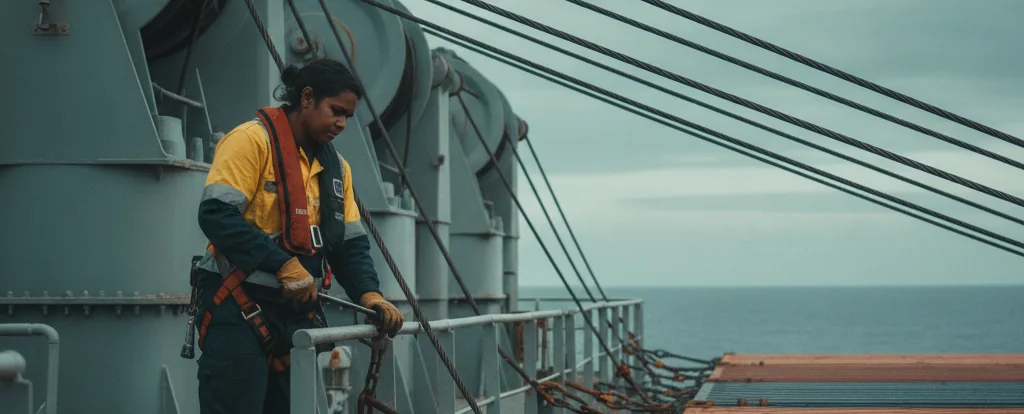
Deckhands work aboard ferries, tugs, fishing boats, charter vessels and cargo ships, doing the hands-on jobs that keep a vessel running: mooring, securing cargo, cleaning and maintaining the deck. It sits at the bottom of the crew ladder, taking direction from the master and officers, and it is also the usual way into a maritime career. The nearest role, a deck officer, holds a certificate of competency and keeps watch, while a deckhand does the physical work that supports the vessel's day.
How much do deckhands earn?
The median full-time salary for a deckhand is $89,400 per annum, before tax, up $19,000 since 2018.
What a deckhand takes home depends more on the sector and the roster than on the job title. Harbour ferry and tug work usually sits under an enterprise agreement with penalty rates for nights, weekends and public holidays, while fishing crews are often paid a share of the catch that swings with the season and the trip. Certificates such as Coxswain or Master lift pay, as do offshore and specialist roles that carry away-from-home allowances.
What does a deckhand do day to day?
The list below is what fills most weeks; the exact mix shifts with seniority and whatever stage the current work is at.
- Handling mooring lines and rigging as the vessel arrives and departs, in whatever weather the schedule runs through
- Loading, securing and checking cargo with turnbuckles and lashings so it stays put once the vessel is under way
- Cleaning and maintaining the deck, from pressure washing and sanding to touch-up painting between the larger jobs
- Standing watch, keeping radio contact with the bridge and shore, and writing up movements in the vessel's log
- Taking on stores and fuel, and keeping safety gear from lifejackets to fire equipment checked and ready
What skills do deckhands need?
Employers look for hand and power tool work, plant and equipment operation, worksite safety management, backed by Winches and davits fluency and strong attention to detail.
Specialist skills
- Hand and power tool work
- Plant and equipment operation
- Worksite safety management
Software and tools
- Winches and davits
- Cargo securing devices (turnbuckles, lashing)
- Deck maintenance equipment (pressure washers, paint systems)
- Radio communication systems
- Personal protective equipment (lifejackets, harnesses)
General skills
- Attention to detail
- Written communication
- Problem solving
- Physical stamina and dexterity
Is the job growing?
About 2,500 people work as deckhands in Australia, and employment is projected to grow 3% over the decade to 2035. That's modest growth: demand is steady rather than booming.
How do you become a deckhand?
Here's the path most deckhands take, step by step.
- 1Take the basic safety training
Most employers want a short safety course before you step aboard: Elements of Shipboard Safety for domestic work, or the Certificate of Safety Training under STCW if you are aiming at international vessels.
- 2Complete a Certificate I in Maritime Operations (General Purpose Hand)
This entry qualification from a registered training organisation covers line handling, deck maintenance and safety, and gives you a recognised credential. Plenty of deckhands learn on the job instead, though the certificate helps with a first job.
- 3Sort out your cards and medical
You will usually need a Maritime Security Identification Card to work in secure port areas and an AMSA certificate of medical fitness, and holding first aid from the start makes you easier to roster.
- 4Apply to operators directly
Ferry and tug companies, tourism and charter operators, fishing businesses and port services all hire deckhands, often casually or seasonally at first. Sea time accumulates from there.
- 5Build sea time towards a certificate of competency
With enough logged sea time you can study for a Coxswain Grade 1 Near Coastal or Master under 24 metres certificate, which is the step that turns deck work into officer work.
Ready to apply as a deckhand?
Whether you're working toward becoming a deckhand or already are one and want a hand with the next step (sharpening your resume for ATS screening, tightening your cover letter, or knowing what you'll actually be asked at interview), here are examples grounded in this specific role, not generic templates.
What jobs can a deckhand move to?
Moving into Ship Captain typically comes with the biggest pay rise, worth $85,600 a year more on average.
| Move to | Typical pay change | Overlap | Retraining |
|---|---|---|---|
| Ship Captain Deckhand operational experience on vessels builds towards ship captain, though a master's certificate and requalification are required.Known move | +$85,600 | 3% | requalify |
| Deck Officer Deckhand vessel routines and deck experience support progression to deck officer, with further study and certification required.Known move | +$45,800 | 16% | reskill |
| Commercial Diver Deckhand water work and vessel familiarity suit commercial diving, with a diving certificate and short course required.Known move | +$25,000 | 75% | short course |
| Defence Force Member Deckhand sea time and vessel teamwork suit defence maritime roles, though recruitment and further training are required.Known move | −$2,000 | 12% | reskill |
| Fishing Hand Deckhand line handling and deck work transfer directly to fishing, with a short safety course required for commercial fishing.Known move | −$22,800 | 47% | short course |
Moves are chosen from Jobs and Skills Australia's Data on Occupation Mobility, which follows income tax records between 2011-12 and 2020-21, together with entry requirements and skill overlap. A known move is one people were seen making in that data. Pay change compares median full-time pay for the two roles.
Who works as a deckhand?
The typical deckhand is 39 years old; 84% are men, 73% work full-time, and full-timers average 58 hours a week.
- 39
- Median age
- 16%
- Female share
- 73%
- Full-time
- +18h
- vs all-jobs avg
What's it like being a deckhand?
The shape of the job is set by the roster rather than the clock: many deckhands work days or weeks aboard followed by an equivalent stretch off, and full-time deckhands average 58 hours a week. The work is physical, often wet, and the crew is small enough that everyone notices how a person pulls their weight. People who like being outdoors, working with their hands and seeing a task finished tend to settle into it, while those who want regular hours at home find the rosters hard.
What people like
- The setting changes constantly. Different berths, tides, weather and passengers mean the day rarely looks the same twice, and the work happens outdoors rather than at a desk.
- The results are visible. A deck you have scrubbed, a load you have lashed down, a berth made cleanly: the output of the job is something you can see at the end of a watch.
- A small crew that relies on each other. Deckhands work in teams of a few, so the relationships are close and the day goes better when everyone pitches in.
- You can start without a degree. Entry runs through short safety courses and on-the-job training rather than years of study, which suits people who want to be working and earning quickly.
What people find hard
- Long stretches away from home. Rosters of days or weeks aboard mean missed birthdays, holidays and family events, and it is a common reason people leave the industry.
- Weather and seasickness. Schedules run whatever the conditions, so you will work in rain, heat and heavy swell, and some people never quite get their sea legs.
- Physical wear and repetition. Pressure washing, painting, hauling lines and lifting stores take a toll over a long season, and much of the maintenance is the same job again next week.
- Pay and hours follow the roster. Casual and seasonal starts are common, and the gap between a settled harbour ferry roster and a fishing crew paid by catch share is wide.
Based on our synthesis of professional-body surveys and public accounts of the role, not first-person verified reviews.
Which industries employ deckhands?
Transport, Postal and Warehousing employs the largest share of deckhands.
Top employing industries
- 1Transport, Postal and Warehousing
Ranked by employment share; the source doesn't publish an exact percentage per industry.
| Year 12 or below | 35.2% | |
|---|---|---|
| Certificate III/IV | 31.7% | |
| Diploma / Advanced Diploma | 9.8% | |
| Bachelor degree | 8.2% | |
| Postgraduate | 1.4% |
Will AI replace deckhands?
Deckhand work is largely hands-on, which keeps exposure to AI low. Mooring, maintenance, cargo lashing and passenger handling all happen on a moving vessel in weather, where balance, strength and quick judgement matter more than any tool. Software has reached the admin side, with load planning, digital logbooks and maintenance scheduling, but it changes how the paperwork is done rather than who does the deck work.
Share of typical working time by exposure level
- Deck and hull maintenancePressure washing, sanding, painting and rust treatment are done with tools the crew carries, and scheduling software only decides when the work happens.30%low
- Mooring and line handlingLines are hauled by hand and made fast to bollards while wind and tide push the vessel, and no automated system on a working deck takes that over.25%low
- Watchkeeping, radio calls and log recordsStanding watch and the radio remain human tasks, though digital logbooks and reporting systems have taken over much of the writing up.25%moderate
- Cargo and equipment securingLoad planning software can suggest where cargo sits and how it is restrained, but turnbuckles and lashings are still checked and tightened by hand.20%moderate
Common questions about becoming a deckhand
Straight answers to the questions people ask most.
How much do deckhands earn in Australia?
Full-time deckhands earn a median of $89,400 per year before tax. The figure moves with the sector and roster: enterprise agreements with penalty rates push harbour and tug work higher, while fishing crews paid a share of the catch can earn more in a good season and less in a poor one.
How do you become a deckhand?
You start with a short safety course, usually Elements of Shipboard Safety for domestic vessels or the STCW Certificate of Safety Training for international ones, then apply directly to operators. A Certificate I in Maritime Operations (General Purpose Hand) helps with a first job, and a Maritime Security Identification Card and a medical fitness certificate are standard requirements.
Are deckhands in demand in Australia?
Deckhands are currently not in shortage, and employment is projected to grow 3% over the decade to 2035. Crews are hired by individual operators, so it pays to approach ferry, tug, tourism and fishing companies directly as well as watching advertised vacancies.
Will AI replace deckhands?
Little of this job is exposed to automation: mooring, line handling, deck maintenance and passenger work all depend on hands, balance and judgement on a moving vessel. Software has changed the paperwork side, with load planning, digital logs and maintenance scheduling, but the physical work stays with the crew.
What can a deckhand move into?
Moving up to deck officer is one route, and it earns $45,800 more, though it needs further study and a certificate of competency. Commercial diving suits people comfortable in the water and earns $25,000 more, while a move across to fishing work takes a short safety course.
What are the hours and rosters like?
Many deckhands work rotating rosters, days or weeks aboard followed by an equivalent stretch off, and full-time deckhands average 58 hours a week. Nights, weekends and public holidays are part of the roster because vessels run around the clock, and living aboard is normal on longer trips.
Related roles
Not sure this is you? Take the career quiz and get a ranked shortlist of roles that fit how you like to work.