Fishing Hand
Fishing hands catch, sort and stow seafood on commercial boats, work that supplies fish markets, processors and exporters.
- Median salary*
- $66,600
4.2%vs last year, before tax
- People employed
- 2,700
0.0%vs last year
- Projected growth
- +3%
to 2035
- AI exposure*
- Low
- automation risk
- Average hours
- 54/wk
+14h vs all jobs
- Shortage status
- Not in shortage
national
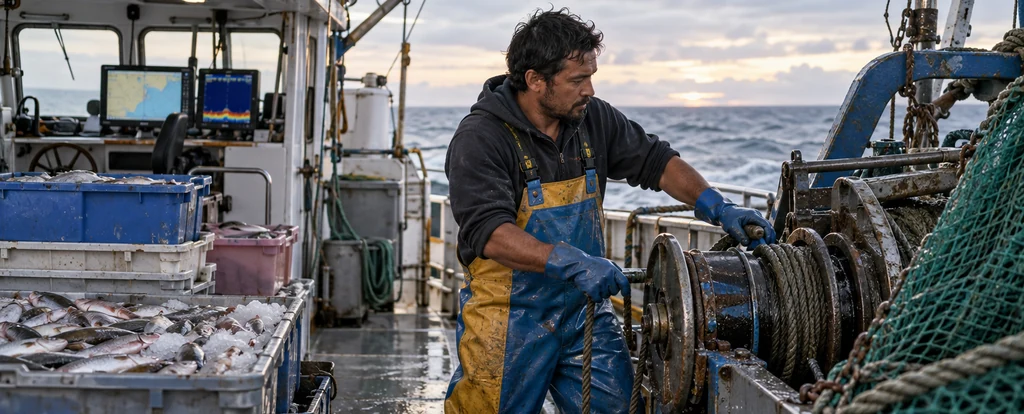
Fishing hands work on trawlers, longliners and smaller line and trap boats, setting and hauling gear and handling the catch at sea. Trips range from a day out of port to several weeks, and the schedule is set by weather, seasons and quota. The title overlaps with deckhand on many boats, though deckhand covers crew work on any vessel while fishing hand refers specifically to commercial fishing.
How much do fishing hands earn?
The median full-time salary for a fishing hand is $66,600 per annum, before tax, up $14,000 since 2018.
Crew pay varies with the vessel, the fishery and the season, and many fishing hands are paid a share of the catch rather than a flat wage, so a poor season shows up directly in the pay packet. The size of the boat, the length of trips and the licences a hand holds all make a difference. Earnings also depend on days actually spent at sea, which the weather can cut short at little notice.
What does a fishing hand do day to day?
The list below is what fills most weeks; the exact mix shifts with seniority and whatever stage the current work is at.
- Setting and hauling nets, lines, traps and pots
- Sorting, grading and icing the catch in the hold
- Operating deck winches, net haulers and lifting gear
- Cleaning, gutting and packing fish so the catch lands in condition
- Maintaining ropes, deck gear and vessel cleanliness while following safety procedures on deck
What skills do fishing hands need?
Employers look for plant and equipment operation, worksite safety management, food safety and hygiene, backed by Deck winch and net hauler fluency and strong physical stamina and dexterity.
Specialist skills
- Plant and equipment operation
- Worksite safety management
- Food safety and hygiene
- Cleaning and grounds maintenance
Software and tools
- Deck winch and net hauler
- GPS chartplotter
- Echo sounder
- Marine VHF radio
- Automatic identification system (AIS)
General skills
- Physical stamina and dexterity
- Written communication
- Attention to detail
Is the job growing?
About 2,700 people work as fishing hands in Australia, and employment is projected to grow 3% over the decade to 2035. That's modest growth: demand is steady rather than booming.
How do you become a fishing hand?
Here's the path most fishing hands take, step by step.
- 1Complete sea safety training
Employers expect a safety and survival course before you join a crew, such as an elements of shipboard safety course from a registered training organisation, along with first aid. Some operators arrange it for a new hand, but already holding it makes you easier to hire.
- 2Ask around the fleet for crew work
Most fishing hands start by approaching skippers, port cooperatives and seafood processors directly, since skippers tend to hire people they have met or who come recommended. No formal qualification is required for entry.
- 3Learn the work on deck
New hands pick up gear handling, catch sorting and safety on the job, usually starting with the least skilled tasks and taking on more as they learn the boat's routine and the fishery's seasons.
- 4Add a certificate if you want a formal grounding
A certificate in fishing operations or seafood processing, where a local TAFE or training provider offers one, suits people who want recognised training rather than learning entirely on the job.
- 5Build sea time toward a coxswain qualification
Taking command of a vessel depends on logged sea time and an AMSA Coxswain or Master qualification, so keeping a record of your trips and hours from the start makes that step possible later.
Ready to apply as a fishing hand?
Whether you're working toward becoming a fishing hand or already are one and want a hand with the next step (sharpening your resume for ATS screening, tightening your cover letter, or knowing what you'll actually be asked at interview), here are examples grounded in this specific role, not generic templates.
What jobs can a fishing hand move to?
Moving into Ship Captain typically comes with the biggest pay rise, worth $108,400 a year more on average.
| Move to | Typical pay change | Overlap | Retraining |
|---|---|---|---|
| Ship Captain Fishing hands with extensive sea service can work toward ship captain, though officer certification and command experience are required.Known move | +$108,400 | 0% | requalify |
| Fishing Skipper Experienced fishing hands can progress to fishing skipper after gaining command certification and sea time.Known move | +$27,000 | 17% | reskill |
| Deckhand Fishing hands already handle lines, catch and deck gear, so moving to deckhand builds on that experience with a short course.Known move | +$22,800 | 47% | short course |
| Process Worker Fishing hands can move into process work, using seafood handling and hygiene skills, though a food processing qualification may be needed.Known move | +$12,400 | 17% | reskill |
| Aquaculture Worker Fishing hands can move to aquaculture work, applying vessel and fish handling skills with a certificate in aquaculture.Known move | −$1,600 | 19% | reskill |
Moves are chosen from Jobs and Skills Australia's Data on Occupation Mobility, which follows income tax records between 2011-12 and 2020-21, together with entry requirements and skill overlap. A known move is one people were seen making in that data. Pay change compares median full-time pay for the two roles.
Who works as a fishing hand?
The typical fishing hand is 45 years old; 94% are men, 62% work full-time, and full-timers average 54 hours a week.
- 45
- Median age
- 6%
- Female share
- 62%
- Full-time
- +14h
- vs all-jobs avg
What's it like being a fishing hand?
The job runs on weather and seasons rather than a fixed roster. Trips can start before dawn for a day's work or keep the crew at sea for weeks, and the routine on deck is set by the gear and the catch. It suits people who are comfortable on the water, like physical work in a small team and can be away from home for long stretches.
What people like
- Days on the water. The work happens outdoors, often in the early light, and conditions change from one trip to the next.
- A small crew where your job is clear. Boats run with a handful of people, so you know exactly what you are responsible for and the others rely on you doing it.
- The catch is the result. You see the trip's work in the hold, graded and iced, rather than in paperwork or meetings.
- Skills that build toward command. Gear handling and sea time are the groundwork for a coxswain or master qualification later on.
What people find hard
- Weather decides the schedule. Trips are cancelled or cut short when the sea picks up, which can mean days ashore at short notice.
- Long stretches away from home. Multi-week voyages mean cramped quarters, shared bunks and little contact with family while you are out.
- Hard physical work in wet conditions. Repetitive lifting, hauling and gutting on a moving deck take a toll, and gear and ropes cause real injuries.
- Seasickness and fatigue. Working through rough weather on long shifts wears most people down, at least in the early trips.
Based on our synthesis of professional-body surveys and public accounts of the role, not first-person verified reviews.
Which industries employ fishing hands?
Agriculture, Forestry and Fishing employs the largest share of fishing hands.
Top employing industries
- 1Agriculture, Forestry and Fishing
Ranked by employment share; the source doesn't publish an exact percentage per industry.
| Year 12 or below | 52.2% | |
|---|---|---|
| Certificate III/IV | 26.1% | |
| Diploma / Advanced Diploma | 3.8% | |
| Bachelor degree | 3.4% | |
| Postgraduate | 1% |
Will AI replace fishing hands?
Fishing hand work is rated low for AI exposure because most of it happens at sea, with your hands. Chartplotters, echo sounders and AIS make it easier to find fish and keep track of position, but they do not set a net, gut a fish or clear a snagged line. The physical handling of gear and catch still needs a person on deck.
Share of typical working time by exposure level
- Setting and hauling gearWinches and net haulers take some of the strain, but someone still has to run the gear by hand on deck, clear snags and mend damaged nets.45%low
- Sorting, grading and icing the catchCamera and weight-based grading is used ashore in processing plants, but sorting at sea is still done by eye and hand as the catch comes aboard.20%moderate
- Safety, watchkeeping and navigation on deckChartplotters and AIS give position and collision warnings, but keeping watch and working safely on a moving deck remain a person's job.20%low
- Catch records and reportingLogbooks and catch returns are increasingly filed electronically, and vessel monitoring systems record position, effort and catch without anyone writing it down.15%high
Common questions about becoming a fishing hand
Straight answers to the questions people ask most.
How much does a fishing hand earn?
A full-time fishing hand earns $66,600 per annum, before tax, as a guide. Crew pay varies with the vessel and fishery, and many hands are paid a share of the catch rather than a flat wage, so a strong season and a bigger boat can pay more.
How do you become a fishing hand?
Most fishing hands start by asking skippers, port cooperatives and seafood processors directly for crew work, since no formal qualification is required. A sea safety and survival course plus first aid makes you easier to put on a crew, and the rest is learned on deck.
Are fishing hands in demand?
Fishing hands are currently not in shortage, and employment is projected to grow 3% over the decade to 2035 over the decade to 2035. With about 2,700 people in the role, openings tend to come through skippers and operators hiring crew they know or who come recommended, so calling in at the port in person helps.
Will AI or automation replace fishing hands?
Automation reaches fishing work mainly through chartplotters, echo sounders and autopilot for finding fish and tracking position, and through electronic catch reporting. Setting and hauling gear, sorting and icing the catch, gutting and deck maintenance still take hands on a moving deck, which keeps the role's exposure low.
What are the hours like?
Full-time fishing hands average about 54 hours a week, worked in long days at sea rather than a standard roster. Trips range from day runs to multi-week voyages, and the pace picks up when the fish are running.
Where can fishing hands move next?
Experienced hands most often move into skippering, deckhand work on bigger vessels or aquaculture. Skippering builds on the same sea time and needs command certification, and it pays $27,000 more, while some hands eventually buy or run their own boat, which is often where earnings grow.
Related roles
Not sure this is you? Take the career quiz and get a ranked shortlist of roles that fit how you like to work.