Marine Pilot
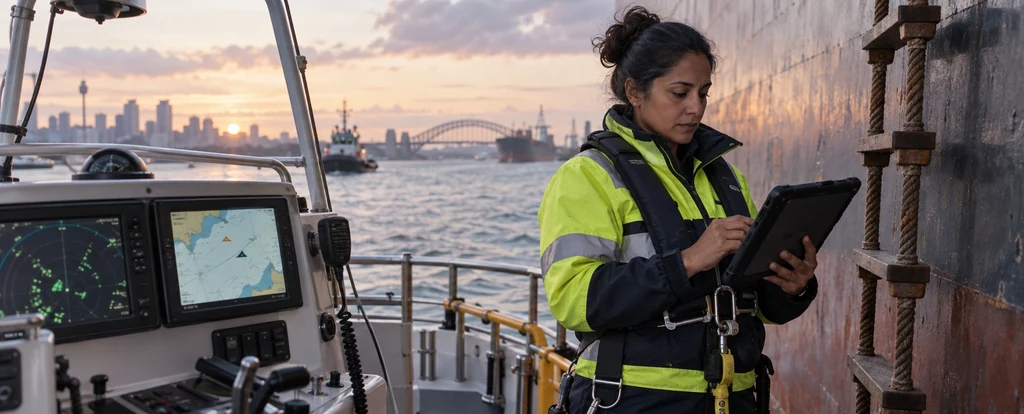
Marine pilots board ships to guide them through ports and harbours, using local knowledge of depths, tides and traffic to bring them in and out safely.
- Median salary*
- $145,600
4.5%vs last year, before tax
- People employed
- 1,000
0.0%vs last year
- Projected growth*
- +4%
to 2035
- AI exposure*
- Low
- automation risk
- Average hours*
- 42/wk
+2h vs all jobs
- Shortage status*
- In shortage
national
Marine pilots are licensed mariners who join a ship for the short stretch through a port, harbour or other restricted waterway and take conduct of it for that passage. The master stays in command, but the pilot's knowledge of the local depths, tides and traffic decides how the ship gets in and out. Most work for a port authority or a dedicated pilotage service, and pilots are licensed for individual ports rather than for the country as a whole.
How much do marine pilots earn?
The median full-time salary for a marine pilot is $145,600 per annum, before tax, up $30,900 since 2018.
Pay is usually set by an enterprise agreement with the port authority or pilotage provider, so the port, the size of ships it handles and the amount of shift and on-call work all shape what you earn. Loadings for night, weekend and public holiday transits make up a real part of the total. Holding a licence for more than one port, or for larger tonnage, also pushes pay up.
What does a marine pilot do day to day?
The list below is what fills most weeks; the exact mix shifts with seniority and whatever stage the current work is at.
- Boarding ships at sea or at anchor, often by pilot ladder from a launch, to take conduct of the vessel.
- Conning ships through channels, berths and harbour entrances in whatever wind, tide and traffic the day brings.
- Coordinating tugs, mooring crews and vessel traffic services by radio through each transit.
- Briefing the master and bridge team on the passage plan, local hazards and tidal conditions.
- Recording the transit, reporting incidents and completing the paperwork the port authority requires.
What skills do marine pilots need?
Employers look for operations management, backed by Portable Pilot Units (PPU) fluency and strong written communication.
Specialist skills
- Operations management
Software and tools
- Portable Pilot Units (PPU)
- Electronic Chart Display and Information System (ECDIS)
- Automatic Identification System (AIS)
- VHF Radio
- Radar
General skills
- Written communication
- Attention to detail
- Problem solving
- Time and deadline management
- People leadership
- Safety and compliance awareness
Is the job growing?
About 1,000 people work as marine pilots in Australia, and employment is projected to grow 4% over the decade to 2035. That's modest growth: demand is steady rather than booming.
How do you become a marine pilot?
Here's the path most marine pilots take, step by step.
- 1Start at sea as a deck cadet or deck officer
You need sea service before anything else. A maritime cadetship or a nautical science degree at an AMSA-approved provider gets you a certificate of competency as a watchkeeper, with your time at sea logged in a training record book.
- 2Work up to chief mate and then master
Pilotage employers look for command experience, so the usual route is watchkeeper to chief mate to master, each step needing more sea service and an oral examination with AMSA.
- 3Build harbour and pilotage-adjacent experience
Time in tugs, harbour towage, dredging or regular port calls teaches you how ships handle at low speed, which is what pilotage is mostly about.
- 4Complete port-specific pilotage training
Each state or port authority licenses its own pilots. Training covers the local channels, berths, tidal windows and ship handling, with simulator work and supervised transits before you take a ship alone.
- 5Hold and maintain a pilot licence for the port
Licences are renewed with check pilotage, medical and eyesight requirements, and pilots are often expected to qualify for additional ports or larger tonnage over time.
Ready to apply as a marine pilot?
Whether you're working toward becoming a marine pilot or already are one and want a hand with the next step (sharpening your resume for ATS screening, tightening your cover letter, or knowing what you'll actually be asked at interview), here are examples grounded in this specific role, not generic templates.
What jobs can a marine pilot move to?
None of the roles marine pilots typically move into pay more than the role itself. Harbour Master is the closest match. If a bigger salary is the goal, moving up into a senior or principal position within the role is usually the faster route than moving sideways.
| Move to | Typical pay change | Overlap | Retraining |
|---|---|---|---|
| Harbour Master Marine pilot's local waterway knowledge and ship handling transfer to overseeing port safety and berthing as harbour master, with further study. | −$10,400 | 44% | reskill |
| Marine Surveyor Marine pilot's seamanship and regulatory knowledge support vessel inspections and surveys as a marine surveyor, with further study. | −$31,200 | 22% | reskill |
| Vessel Traffic Service Operator Marine pilot's port traffic and navigation awareness suit monitoring vessel movements from shore as a vessel traffic service operator, needing a short course. | −$57,200 | 50% | short course |
Moves are chosen from Jobs and Skills Australia's Data on Occupation Mobility, which follows income tax records between 2011-12 and 2020-21, together with entry requirements and skill overlap. A known move is one people were seen making in that data. Pay change compares median full-time pay for the two roles.
Who works as a marine pilot?
The typical marine pilot is 49 years old; 96% are men, 79% work full-time, and full-timers average 42 hours a week.
- 49
- Median age
- 4%
- Female share
- 79%
- Full-time
- +2h
- vs all-jobs avg
What's it like being a marine pilot?
Marine pilotage is a short, high-stakes job repeated many times over: you join a ship, run one transit, hand conduct back and go on to the next one. The rhythm is set by shipping schedules and weather rather than office hours, so the pressure is concentrated into the hour or two a ship is under your conduct. It suits people who like solving a physical problem in real time and are comfortable carrying the responsibility for it.
What people like
- Every transit is a different problem. Wind, tide, draft and the way a particular ship answers her helm change from job to job, so the work does not settle into routine.
- You keep working on the water. Most of the job happens on a bridge, a launch or a wharf rather than at a desk, which appeals to people who want to stay at sea with more time at home than deep-sea trading allows.
- The jobs are short and clearly finished. Once the ship is berthed or past the breakwater your part is done, you sign off and move to the next arrival.
- You work with people who know the port. Tug masters, lines crews, vessel traffic services and ships' officers do this every day, so radio exchanges are brief and practical.
What people find hard
- Boarding happens in whatever the weather is doing. A pilot ladder transfer from a launch in a swell is the most physically dangerous part of the job, and the transit still has to go ahead.
- The roster runs around the clock. Ships arrive at night, on weekends and on public holidays, and on-call shifts are part of the job rather than an occasional extra.
- A bad decision has serious consequences. A grounding can shut a port, and every transit is recorded and reviewed afterwards.
- You work inside someone else's command. The master keeps command of the ship, so a pilot sometimes has to persuade an officer who disagrees rather than simply direct.
Based on our synthesis of professional-body surveys and public accounts of the role, not first-person verified reviews.
Which industries employ marine pilots?
Port and Water Transport Terminal Operations employs the largest share of marine pilots, followed by Marine Pilotage Services.
Top employing industries
- 1Port and Water Transport Terminal Operations
- 2Marine Pilotage Services
- 3Water Transport Support Services
- 4Defence
- 5Government Administration
Ranked by employment share; the source doesn't publish an exact percentage per industry.
| Bachelor degree | 38% | |
|---|---|---|
| Diploma / Advanced Diploma | 24% | |
| Certificate III/IV | 20% | |
| Postgraduate | 10% | |
| Other | 8% |
Will AI replace marine pilots?
Marine pilotage has low exposure to AI and automation, because the job is a person boarding a ship and handling it through one specific port in real conditions. Navigation software, portable pilot units and AIS have made planning and monitoring more precise, and they have not changed who takes conduct of the vessel or who answers for the transit.
Share of typical working time by exposure level
- Working the transit with tugs, lines crews and vessel traffic servicesOrders and timing are negotiated by radio in real time, and the plan changes when a gust or a delayed berth does.35%low
- Passage planning with a portable pilot unit and ECDISThe software plots the track, predicts drift and shows surrounding traffic, but the pilot still chooses the turn points that suit that ship's draft and handling.25%moderate
- Reporting and record keepingTransit reports, near-miss notes and port paperwork are increasingly drafted or checked by software, which is the most exposed part of the role.25%high
- Boarding a ship and taking conduct on the bridgeClimbing a pilot ladder from a launch and taking the con happens in real sea and traffic conditions, and no system does that part.15%low
Common questions about becoming a marine pilot
Straight answers to the questions people ask most.
How much do marine pilots earn?
Marine pilots earn a median of $145,600 per year before tax. Pay is normally set by an enterprise agreement with the port authority or pilotage provider, so the port, the tonnage it handles and the amount of shift and on-call work move the figure.
How do you become a marine pilot?
You need a certificate of competency as a master from AMSA first, which means years of sea service and examinations, then port-specific pilotage training with the authority that runs the port. Almost everyone comes through the deck officer and ship's master route rather than starting in pilotage.
Are marine pilots in demand?
Marine pilots are currently in shortage nationally, and employment is projected to grow 4% over the decade to 2035. Pilot numbers are tied to shipping traffic at each port, so a licence for a busy port is generally easier to build a career on than one for a quiet harbour.
Will AI replace marine pilots?
Pilotage is one of the least exposed jobs to automation, because the core of it is a person boarding a ship and making decisions about that vessel in that wind and tide. Portable pilot units, ECDIS and AIS give better position and drift information than ever before, but they inform the pilot rather than replace the decision. Taking conduct of a ship remains a physical, local and legally accountable act.
What careers can marine pilots move into?
The closest shore-side move is harbour master, overseeing port safety, berthing and traffic, where local waterway knowledge transfers directly and pay is $10,400 less. Vessel traffic service operator is another, monitoring movements from shore after a short course, though it pays $57,200 less. Both swap the ship handling for a shore-based roster with more predictable hours.
What hours do marine pilots work?
The average full-time week is about 42 hours, but the work runs to a 24-hour roster of shifts, nights and on-call cover. Rest hours are regulated, which shapes how the roster can be built and how much notice you get of a late arrival.
Related roles
- Harbour Master
- Vessel Traffic Service Operator
- Marine Surveyor
- Deck Officer
- Ship Captain
- Railway Station Assistant
Not sure this is you? Take the career quiz and get a ranked shortlist of roles that fit how you like to work.