Depot Manager
A depot manager runs the daily operations of a transport or distribution depot, making sure freight, vehicles and staff are where they need to be on schedule.
- Median salary*
- $79,000
4.4%vs last year, before tax
- People employed*
- 8,200
0.0%vs last year
- Projected growth*
- +2.8%
to 2035
- AI exposure*
- Moderate
- automation risk
- Average hours*
- 42/wk
+2h vs all jobs
- Shortage status*
- Not in shortage
national
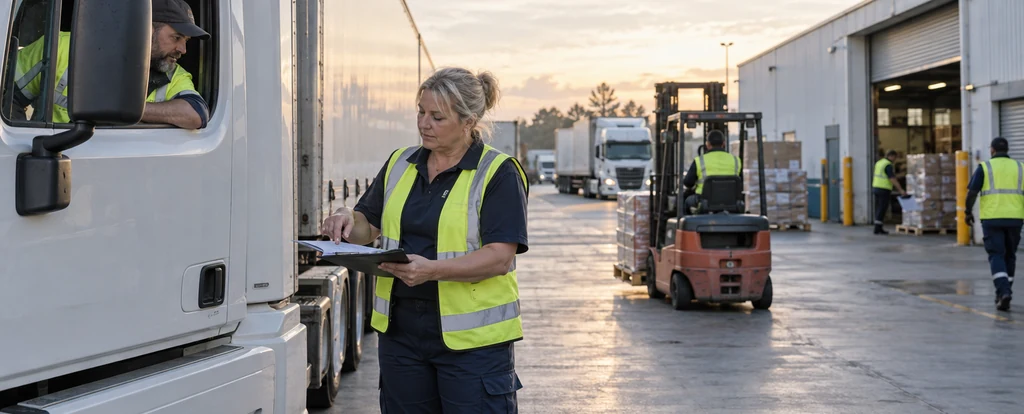
Depot managers run a single site: a transport depot, distribution centre or courier hub, coordinating the drivers, warehouse staff and vehicles that move freight in and out each day. The role sits below a transport or logistics manager, who usually oversees several sites or a wider network, and above the supervisors and drivers working the floor. Most depots sit within road transport, warehousing or postal and courier services, so the manager also answers to the safety and compliance rules specific to that industry.
How much do depot managers earn?
The median full-time salary for a depot manager is $79,000 per annum, before tax, up $16,700 since 2018.
What a depot manager earns depends heavily on the operator and the agreement covering the site: large freight companies and major retailers usually pay above the road transport award, while a small courier hub pays less. Shift patterns move the figure too, because early starts, afternoon shifts and weekend coverage often attract loadings, and bonuses are commonly tied to on-time performance, cost per consignment or safety results. A bigger depot with more staff, more vehicles and a larger budget usually pays more than a small one.
What does a depot manager do day to day?
The list below is what fills most weeks; the exact mix shifts with seniority and whatever stage the current work is at.
- Planning vehicle routes and staff rosters so the day's deliveries go out on time
- Monitoring stock levels and coordinating what comes in and out through receiving and dispatch
- Managing the depot budget and overseeing maintenance on vehicles and equipment
- Supervising, training and performance managing drivers, warehouse staff and depot administration
- Liaising with clients, transport operations teams and regulators on service and compliance issues
What skills do depot managers need?
Employers look for operations management, project management, budgeting and forecasting, backed by Depot management software fluency and strong people leadership.
Specialist skills
- Operations management
- Project management
- Budgeting and forecasting
Software and tools
- Depot management software
- Transport scheduling systems
- WMS (warehouse management system)
- GPS fleet tracking
- Microsoft Excel
General skills
- People leadership
- Problem solving
- Stakeholder management
- Time and deadline management
Is the job growing?
About 8,200 people work as depot managers in Australia, and employment is projected to grow 2.8% over the decade to 2035. That's modest growth: demand is steady rather than booming.
How do you become a depot manager?
Here's the path most depot managers take, step by step.
- 1Start on the depot floor
Most depot managers begin in a warehouse, dispatch or driving role, which is where you learn how freight actually moves and how long each part of the job takes. A forklift licence or a heavy vehicle licence helps you get that first job and is useful later when you are the one signing off on loading and vehicle checks.
- 2Move into supervision
A team leader or shift supervisor role is the usual next step, often after two to four years on the floor. This is where rostering, handovers and performance conversations start, and it is the experience employers look for when they hire a depot manager.
- 3Add a qualification
A Certificate IV in Logistics or a Diploma of Logistics covers scheduling, inventory, transport law and site management, and both can be done part time while you work. Larger operators may ask for a bachelor degree in logistics, supply chain or business; among people currently working as depot managers, 38% hold a bachelor degree.
- 4Learn the compliance side
Chain of responsibility, fatigue management, work health and safety and dangerous goods rules are the parts a depot manager is personally accountable for. Short courses through TAFE or industry bodies cover them, and employers expect you to know them before you take charge of a site.
- 5Apply for a depot manager role
Depot manager jobs are filled by internal promotion or by moving between operators, and most people reach their first site after five or more years in the industry. Starting at a smaller depot is a common way to get the title and then move to a larger one.
Ready to apply as a depot manager?
Whether you're working toward becoming a depot manager or already are one and want a hand with the next step (sharpening your resume for ATS screening, tightening your cover letter, or knowing what you'll actually be asked at interview), here are examples grounded in this specific role, not generic templates.
What jobs can a depot manager move to?
Moving into Logistics Manager typically comes with the biggest pay rise, worth $68,400 a year more on average.
| Move to | Typical pay change | Overlap | Retraining |
|---|---|---|---|
| Logistics Manager Overseeing depot freight flows leads naturally to managing wider logistics networks, with a short course covering broader supply chain duties. | +$68,400 | 58% | short course |
| Supply Chain Manager Depot operations feed into supply chain planning, so scheduling and inventory skills transfer with extra training in procurement and forecasting. | +$68,400 | 50% | short course |
| Transport Manager A depot manager's freight scheduling, staff supervision and vehicle coordination carry directly into running a transport operation. | +$58,900 | 81% | minimal |
| Fleet Manager Managing depot vehicles gives a base in fleet compliance and maintenance, though fleet management needs specialist study in asset and driver systems. | +$58,900 | 36% | reskill |
| Production Manager Running a depot builds scheduling, staffing and throughput skills that transfer to overseeing production lines in manufacturing. | +$40,500 | 65% | minimal |
Moves are chosen from Jobs and Skills Australia's Data on Occupation Mobility, which follows income tax records between 2011-12 and 2020-21, together with entry requirements and skill overlap. A known move is one people were seen making in that data. Pay change compares median full-time pay for the two roles.
Who works as a depot manager?
The typical depot manager is 44 years old; 68% are men, 94% work full-time, and full-timers average 42 hours a week.
- 44
- Median age
- 32%
- Female share
- 94%
- Full-time
- +2h
- vs all-jobs avg
What's it like being a depot manager?
The job has a strong daily rhythm: the depot opens early, the freight has to leave on time, and by the end of the shift you know whether the plan held. Much of the work is coordination and problem solving under time pressure, sorting out a late truck, a missing pallet or a driver who has called in sick, while keeping the crew and the network head office on side. It suits someone who likes running a small operation, is comfortable making quick calls, and would rather walk the yard than sit at a desk all day.
What people like
- You see the day's work leave the yard. A depot's output is visible: by the end of the shift the freight has gone and you know whether the runs went out on time. That feedback comes daily rather than at the end of a long project.
- The problems are concrete. A broken truck, a late run, a short-staffed afternoon shift. Most issues have a fix you can put in place the same day, which keeps the work from piling up unresolved.
- You run your own site. Within the network's rules, the depot manager decides how the roster is built, how the yard is laid out and how the crew works. That autonomy is the main step up from supervising a single shift.
- It is a mix of desk and floor. You are not at a screen all day, and you are not on the tools all day either. Rostering and reporting sit alongside walking the yard, checking loads and talking to drivers as they come in.
What people find hard
- Early starts and shift cover. Depots run before dawn, so a 5am start is normal. When someone calls in sick an hour before their shift, it is the manager's phone that rings and the manager who fills the gap or reworks the run.
- Caught between drivers and head office. You carry network targets and cost pressures down to a crew dealing with traffic, weather and tight run times. Holding both sides of that conversation is a steady part of the job.
- Compliance paperwork. Chain of responsibility, fatigue records, mass limits, maintenance schedules and incident reports all need to be accurate and current. It is necessary work, but it takes time away from the floor.
- Budgets with little slack. Fuel, overtime, agency staff and vehicle repairs all draw on the same budget. A bad month for breakdowns or a run of sick leave can put the site behind, and the manager is the one explaining it.
Based on our synthesis of professional-body surveys and public accounts of the role, not first-person verified reviews.
Which industries employ depot managers?
Road transport employs the largest share of depot managers, followed by Warehousing and storage.
Top employing industries
- 1Road transport
- 2Warehousing and storage
- 3Postal and courier services
- 4Air and space transport
Ranked by employment share; the source doesn't publish an exact percentage per industry.
| Bachelor degree | 38% | |
|---|---|---|
| Diploma / Advanced Diploma | 24% | |
| Certificate III/IV | 20% | |
| Postgraduate | 10% | |
| Other | 8% |
Will AI replace depot managers?
Depot management sits in the middle: scheduling software, warehouse management systems and GPS tracking now handle much of the route planning, consignment tracking and report generation that once filled a manager's day. What they do not do is move freight, manage a crew through a bad morning or take responsibility for safety on site, so the job is reshaped rather than removed. The managers who benefit most are those who use the systems for the routine work and spend the time saved on the floor.
Share of typical working time by exposure level
- Site safety, compliance and equipment maintenanceSoftware logs fatigue records and maintenance schedules, and some inspections use cameras or sensors, but someone still has to walk the yard, check the load restraints and sign off that the site is safe.35%moderate
- Supervising and coaching depot staffA rostering tool can show who is on, but shift handovers, training a new forklift operator and sorting out a dispute between two drivers stay with the manager.30%low
- Planning routes and driver rostersScheduling systems already build viable runs from order data, so the manager's work moves to the exceptions: a breakdown, a road closure or three drivers off sick on the same morning.20%high
- Tracking freight and reporting depot performanceWarehouse management systems and GPS tracking produce consignment status and cost per run automatically, which leaves the manager interpreting the numbers and explaining them to clients and head office.15%high
Common questions about becoming a depot manager
Straight answers to the questions people ask most.
How much does a depot manager earn?
A depot manager earns $79,000 per year before tax on average, though the range around that figure is wide. Award coverage, shift loadings, the size of the depot and whether a bonus is tied to on-time performance or safety results all shift it, and large freight operators generally pay above the road transport award.
How do you become a depot manager?
Most depot managers start on the floor in warehousing, dispatch or driving, move into a team leader role, then take on a site of their own after five or more years. A Certificate IV or Diploma of Logistics (TLI50224) helps, and larger operators may prefer a degree in logistics or supply chain.
Are depot managers in demand?
Depot managers are currently not in shortage, and employment is projected to grow 2.8% over the decade to 2035. Demand follows freight volumes rather than the wider jobs market, so the work is tied to how much is being moved, and openings usually come from turnover and internal promotion rather than new sites.
Will AI change the depot manager's job?
Moderate parts of the role are already being reshaped by depot management software, transport scheduling systems and GPS fleet tracking, which now build routes and track consignments automatically. What remains with the manager is the physical side, coordinating people and vehicles on site, and handling the exceptions that software cannot resolve.
What can a depot manager move into next?
Moving into transport manager uses the same freight scheduling, staff supervision and vehicle coordination in a wider operation, and pay is $58,900 more. Logistics manager pays $68,400 more and brings in broader supply chain planning, with a short course covering procurement and forecasting. Production manager pays $40,500 more, for managers who want the scheduling and throughput side in a manufacturing setting.
What hours does a depot manager work?
Depot managers work about 42 hours a week on average, and 94% work full time. Sites generally open early, so starts before 6am are common, and most managers take a turn covering afternoon or weekend shifts when the roster needs it.
Related roles
- Transport Manager
- Logistics Manager
- Supply Chain Manager
- Fleet Manager
- Production Manager
- Logistics Coordinator
Not sure this is you? Take the career quiz and get a ranked shortlist of roles that fit how you like to work.