Fishing Guide
Fishing guides take paying clients fishing, handling the boat, the safety briefing and the local knowledge that puts them onto fish.
- Median salary*
- $62,400
4.0%vs last year, before tax
- People employed
- 110
10.0%vs last year
- Projected growth
- +12%
to 2035
- AI exposure*
- Low
- automation risk
- Average hours
- 44/wk
+4h vs all jobs
- Shortage status
- In shortage
national
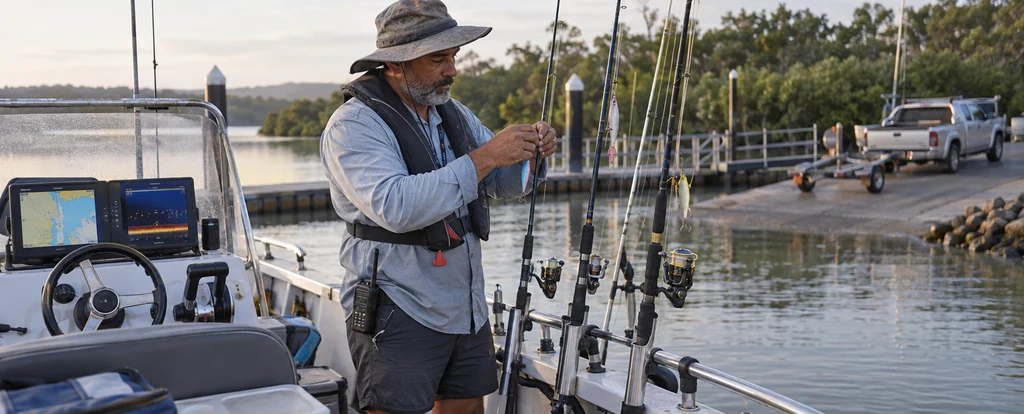
Fishing guides work from charter boats and on foot in estuaries, rivers and beaches, taking clients to spots they know hold fish. The role is part skipper, part instructor and part host, because you run the boat and the safety while also teaching tackle and keeping the day moving when the bite is slow. Many work for charter operators or tourism businesses, usually alone or with one deckhand, and running your own charter is a common step for those who stay in the work.
How much do fishing guides earn?
The median full-time salary for a fishing guide is $62,400 per annum, before tax, up $13,000 since 2018.
How you work changes the money more than anything else: guides employed by a charter operator are usually paid a day rate, while owner-operators take the trip fees and carry the fuel, bait, insurance, maintenance and mooring costs themselves. Season length and how many trips you can run in the good months shape the annual figure more than the rate for a single trip. Popular tourist areas fill the calendar for longer, but the pattern is still seasonal.
What does a fishing guide do day to day?
The list below is what fills most weeks; the exact mix shifts with seniority and whatever stage the current work is at.
- Briefing clients on safety, life jackets and the fishing rules that apply to the day
- Driving or walking the group to a mark, reading tide, wind and the sounder to decide where to stop
- Rigging rods, bait and lures for the target species, and changing them as the conditions shift
- Coaching clients through casting, setting the hook and fighting a fish without losing it at the boat
- Filleting and bagging the catch, cleaning down the boat and rebooking clients before they leave the ramp
What skills do fishing guides need?
Employers look for operations management, plant and equipment operation, backed by Garmin chartplotter fluency and strong customer service.
Specialist skills
- Operations management
- Plant and equipment operation
Software and tools
- Garmin chartplotter
- VHF marine radio
- Fish finder (sounder)
- BOM weather app
- Online booking system
General skills
- Customer service
- Safety and compliance awareness
- Written communication
- Problem solving
- Physical stamina and dexterity
Is the job growing?
About 110 people work as fishing guides in Australia, and employment is projected to grow 12% over the decade to 2035. That's healthy, above-average growth, and the role should stay in solid demand.
How do you become a fishing guide?
Here's the path most fishing guides take, step by step.
- 1Spend real time fishing and working on the water
Hours on the water are what clients pay for, so build them up through recreational fishing, then paid work as a deckhand on charter boats, in a tackle shop or at a marina. That also tells you whether the early starts and wet weather suit you.
- 2Get the marine qualification to skipper a commercial vessel
To take paying clients out, the skipper generally needs a Coxswain Grade 1 Near Coastal certificate issued through AMSA, plus a current first aid certificate. The certificate covers boat handling, navigation, stability and sea survival, and it is the qualification most employers ask for first.
- 3Apply for the fishing licence your state requires
Taking clients fishing for reward needs a charter fishing licence from the state or territory fisheries authority, and the vessel usually has to be surveyed for commercial use. Rules differ between states, so check the requirements where you plan to operate before you buy anything.
- 4Add a guiding or outdoor leadership qualification
A Certificate III or IV in Outdoor Leadership, or a shorter guiding course, adds instruction and group management skills to your fishing knowledge. Employers in tourism value a qualification on paper even when your fishing experience is stronger.
- 5Build a client base, with an operator or on your own
Most guides start with an established charter business and learn how trips are sold, priced and run, then either stay on or buy their own boat. Repeat clients and referrals do most of the marketing in a small industry, so the first seasons matter.
Ready to apply as a fishing guide?
Whether you're working toward becoming a fishing guide or already are one and want a hand with the next step (sharpening your resume for ATS screening, tightening your cover letter, or knowing what you'll actually be asked at interview), here are examples grounded in this specific role, not generic templates.
What jobs can a fishing guide move to?
Moving into Abalone Diver typically comes with the biggest pay rise, worth $33,800 a year more on average.
| Move to | Typical pay change | Overlap | Retraining |
|---|---|---|---|
| Abalone Diver Fishing guides bring boat and water safety skills, though commercial diving requires extra training. | +$33,800 | 60% | short course |
| Outdoor Adventure Guide Fishing guides bring outdoor leadership and risk management, though broader adventure guiding needs further training. | +$5,100 | 14% | reskill |
| Rafting Guide Fishing guides bring water safety, boat handling and client management skills to rafting guide work. | −$2,600 | 47% | short course |
| Dive Instructor Fishing guides bring water safety and boat skills, but dive instruction needs additional certification. | −$2,600 | 41% | reskill |
Moves are chosen from Jobs and Skills Australia's Data on Occupation Mobility, which follows income tax records between 2011-12 and 2020-21, together with entry requirements and skill overlap. A known move is one people were seen making in that data. Pay change compares median full-time pay for the two roles.
Who works as a fishing guide?
The typical fishing guide is 45 years old; 97% are men, 57% work full-time, and full-timers average 44 hours a week.
- 45
- Median age
- 3%
- Female share
- 57%
- Full-time
- +4h
- vs all-jobs avg
What's it like being a fishing guide?
The job follows the weather and the season rather than a fixed timetable: early departures, days that run long, and stretches when the wind keeps everyone on shore. Guides who enjoy it tend to like being outdoors in changeable conditions and get real satisfaction from teaching, because clients judge the day largely by what they catch. The pressure is steady rather than dramatic, since you are managing safety, gear, expectations and the boat at the same time.
What people like
- The office is on the water. Most working days happen on estuaries, reefs, rivers or beaches rather than indoors, and the plan changes with the tide and the wind.
- You get to teach. Coaching someone through their first cast or their first decent fish is a large part of the satisfaction, and it is the part clients remember.
- Repeat clients and referrals. A good trip brings the same people back and they bring friends, which carries more weight than advertising in a small industry.
- You run the day your way. Guides with their own boat choose where to fish and when to head home, and that freedom is a big reason people stay in the work.
What people find hard
- Weather cancels trips. Wind and swell call off bookings, often at short notice, and a cancelled trip usually means no income for that day.
- The catch is not guaranteed. Clients measure the day by what comes over the side, and you carry that even when the conditions are against you and the fish simply are not biting.
- Long days on the water. Full-time guides average around 44 hours a week, with pre-dawn starts and boat cleaning and gear maintenance after the clients have gone.
- Income follows the season. In much of Australia the work is concentrated in the warmer months, so the quiet season calls for savings, another job or maintenance work.
Based on our synthesis of professional-body surveys and public accounts of the role, not first-person verified reviews.
Which industries employ fishing guides?
Transport, Postal and Warehousing employs the largest share of fishing guides, followed by Agriculture, Forestry and Fishing.
Top employing industries
- 1Transport, Postal and Warehousing
- 2Agriculture, Forestry and Fishing
- 3Administrative and Support Services
Ranked by employment share; the source doesn't publish an exact percentage per industry.
| Year 12 or below | 41.6% | |
|---|---|---|
| Certificate III/IV | 35.4% | |
| Bachelor degree | 6.2% | |
| Diploma / Advanced Diploma | 6.2% | |
| Postgraduate | 4.4% |
Will AI replace fishing guides?
AI and automation reach this job only lightly. Booking systems, chartplotters and weather apps handle scheduling and take some of the guesswork out of navigation, but the core of the work is reading tides, swell and fish behaviour on the day, and handling a boat with paying clients aboard. That remains hands-on, and clients are buying a person to spend the day with.
Share of typical working time by exposure level
- Boat handling and navigationA chartplotter shows the channel and the reef, but crossing a bar or holding position in a swell is done by hand.30%low
- Finding fish on the dayA sounder marks structure and fish, yet the decision to move marks comes from tide, wind and how the water has been fishing that week.30%low
- Coaching clients and rigging tackleTying a lure for the target species, explaining the retrieve and talking someone through a fish at the boat are all one-to-one work.25%low
- Bookings, payments and trip adminOnline booking systems and weather apps take much of the scheduling work, though a guide still decides whether a trip runs and rearranges clients when the wind comes up.15%moderate
Common questions about becoming a fishing guide
Straight answers to the questions people ask most.
How much does a fishing guide earn?
The median for full-time fishing guides is $62,400 per year before tax. What you take home depends on whether you are paid a day rate by an operator or keep the trip fees as an owner, and on how many trips the season allows. Owner-operators carry fuel, insurance and maintenance out of that figure.
How do you become a fishing guide?
You need a commercial marine qualification such as the Coxswain Grade 1 Near Coastal certificate, a state or territory charter fishing licence, and first aid. From there, most people start as a deckhand or with an established charter business to learn how trips are run, priced and sold.
Are fishing guides in demand?
Fishing guides are currently in shortage nationally, and employment is projected to grow 12% over the decade to 2035 over the decade to 2035. About 110 people work in the occupation, so openings come up through operators and word of mouth rather than volume hiring. Many positions are seasonal, and a guiding or tourism qualification helps when you apply.
Could AI or automation replace fishing guides?
Very little of the job is exposed. Booking systems, chartplotters and weather apps handle scheduling and take some of the guesswork out of navigation, but reading the water, handling the boat in a swell and coaching a client through a fight are done by hand. Clients are also paying for a person to spend the day with.
What other jobs can a fishing guide move into?
Rafting guide is a close move, because river safety, boat handling and client management carry across and only a short course is needed. Dive instructor uses the same water skills but requires additional certification, and outdoor adventure guide draws on your risk management and leadership, though the work is broader. Many guides instead build their own charter business, which is often where earnings grow.
Do you need a licence to work as a fishing guide?
Yes. Skippering a commercial vessel requires a Coxswain Grade 1 Near Coastal certificate from AMSA, and taking clients fishing for reward needs a charter fishing licence from the state or territory fisheries authority. Requirements vary by state, so check the rules where you intend to operate.
Related roles
- Rafting Guide
- Dive Instructor
- Outdoor Adventure Guide
- Abalone Diver
- Rafting Guide
- Outdoor Adventure Guide
Not sure this is you? Take the career quiz and get a ranked shortlist of roles that fit how you like to work.