Fishing Skipper
A fishing skipper commands a commercial fishing boat, deciding where and when to fish and making sure the crew, the vessel and the catch come back safely and legally.
- Median salary*
- $93,600
4.5%vs last year, before tax
- People employed
- 580
3.3%vs last year
- Projected growth
- +12%
to 2035
- AI exposure*
- Moderate
- automation risk
- Average hours
- 57/wk
+17h vs all jobs
- Shortage status
- In shortage
national
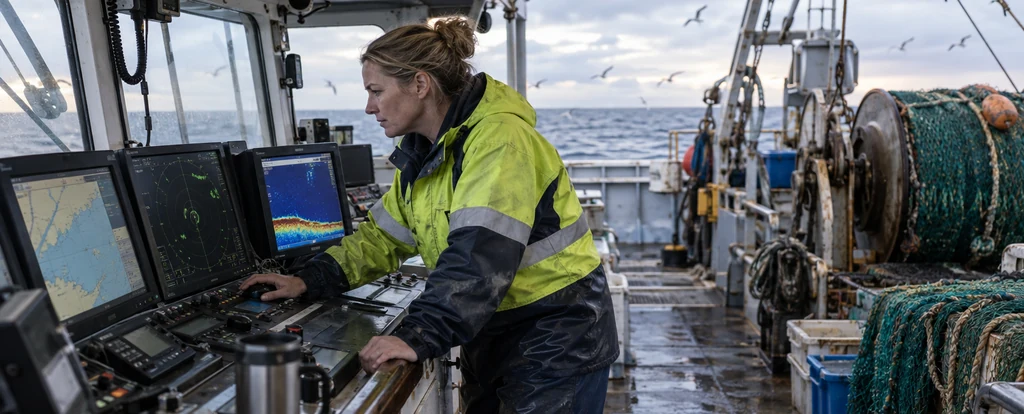
Fishing skippers work at sea for days or weeks at a time on trawlers, longliners, purse seiners and smaller inshore boats. The skipper is the master of the vessel, so legal responsibility for the crew, the seaworthiness of the boat and the legality of the catch sits with them, and in Australia that means holding a certificate of competency from the Australian Maritime Safety Authority. Most boats are small operations, so a skipper often works the deck and the engine room alongside the crew rather than staying in the wheelhouse.
How much do fishing skippers earn?
The median full-time salary for a fishing skipper is $93,600 per annum, before tax, up $19,900 since 2018.
For many skippers, pay is a share of the catch rather than a wage, so a good season on a well-priced species pays well and a closed fishery or a run of bad weather does not. Skippers on larger company boats are more likely to be on a salary or an enterprise agreement that includes leave and super. Owning the boat and holding the quota is where the larger earnings sit, along with the fuel, maintenance and licence costs that come with them.
What does a fishing skipper do day to day?
The list below is what fills most weeks; the exact mix shifts with seniority and whatever stage the current work is at.
- Navigating to fishing grounds with radar, GPS and the echosounder, and changing the plan when the weather turns
- Directing the crew as nets, lines or traps are set, hauled and sorted
- Choosing where to shoot the gear next, based on earlier catches, fuel range and the price the market is paying
- Keeping the logbook and electronic catch records accurate and staying inside quota, size and area limits
- Checking the engine, hydraulics and safety equipment, and repairing what breaks while the boat is at sea
What skills do fishing skippers need?
Employers look for operations management, regulatory compliance, plant and equipment operation, backed by Marine chartplotter and GPS systems fluency and strong people leadership.
Specialist skills
- Operations management
- Regulatory compliance
- Plant and equipment operation
Software and tools
- Marine chartplotter and GPS systems
- Radar and AIS equipment
- Echosounder and sonar
- Autopilot and engine monitoring systems
- Electronic catch reporting software
General skills
- People leadership
- Attention to detail
- Problem solving
- Safety and compliance awareness
Is the job growing?
About 580 people work as fishing skippers in Australia, and employment is projected to grow 12% over the decade to 2035. That's healthy, above-average growth, and the role should stay in solid demand.
How do you become a fishing skipper?
Here's the path most fishing skippers take, step by step.
- 1Start on deck and build sea time
Almost everyone begins as a deckhand or fishing hand, and the sea service recorded there is what a certificate of competency is built on. The work is paid, physical and unpredictable, and it is also where you learn how a boat handles in a sea and how a crew operates.
- 2Complete pre-sea safety training
Before AMSA will issue a certificate you need an approved safety and sea survival course and a current first aid certificate. These run over a few days at a maritime training college and are usually done alongside your first deck job.
- 3Get your certificate of competency from AMSA
The class depends on the vessel and how far offshore you work, with Coxswain Grade 1 Near Coastal for smaller sheltered-water boats and Master Class 5 or Master less than 24 metres near coastal for larger or longer trips. You need recorded sea time, a medical and an oral exam, and the certificate has to be revalidated.
- 4Learn the business and fisheries rules
Fishing licences, quota and vessel registration sit with the owner or operator and are administered by state fisheries and marine authorities, so a new skipper needs to know the rules of the fishery they work in. Licence and quota ownership is usually what decides whether you can eventually run your own operation.
Ready to apply as a fishing skipper?
Whether you're working toward becoming a fishing skipper or already are one and want a hand with the next step (sharpening your resume for ATS screening, tightening your cover letter, or knowing what you'll actually be asked at interview), here are examples grounded in this specific role, not generic templates.
What jobs can a fishing skipper move to?
Moving into Ship Captain typically comes with the biggest pay rise, worth $81,400 a year more on average.
| Move to | Typical pay change | Overlap | Retraining |
|---|---|---|---|
| Ship Captain Fishing skippers bring vessel command, navigation and crew management to ship captain roles, though a master mariner certificate and sea service are required. | +$81,400 | 41% | requalify |
| Marine Engine Driver Fishing skippers can move to marine engine driver roles, applying their machinery knowledge and sea time with minimal extra training. | +$5,200 | 63% | minimal |
Moves are chosen from Jobs and Skills Australia's Data on Occupation Mobility, which follows income tax records between 2011-12 and 2020-21, together with entry requirements and skill overlap. A known move is one people were seen making in that data. Pay change compares median full-time pay for the two roles.
Who works as a fishing skipper?
The typical fishing skipper is 48 years old; 99% are men, 69% work full-time, and full-timers average 57 hours a week.
- 48
- Median age
- 1%
- Female share
- 69%
- Full-time
- +17h
- vs all-jobs avg
What's it like being a fishing skipper?
Fishing skippers average 57 hours a week, usually in blocks at sea rather than a daily commute, and the rhythm of the job follows the season, the weather and the opening of the fishery. Decisions are made with incomplete information: the fish move, the forecast changes and the market price is not known until the boat lands. It suits someone who is comfortable in a small crew, can handle machinery and heavy weather, and does not mind being the person who has to make the call.
What people like
- You make the call. Once the boat is out, the skipper decides where to fish, when to move on and when to head home, with nobody above to overrule the plan.
- A catch you can see. A full hold is an unambiguous result, and you can trace it back to your own decisions on grounds, gear and timing.
- A small crew you know well. Most boats run with a handful of people, so you learn each person's strengths, train them on the gear and rely on them in heavy weather.
- The job changes through the year. Different species, grounds and gear come into play across the seasons, so the work is not the same trip repeated.
What people find hard
- Long trips away from home. Days or weeks at sea at a time, with the return date set by the fish and the weather rather than by a roster.
- An income that moves with the season. On share arrangements, a closed fishery, poor prices or a stretch of bad weather comes straight out of your own pay.
- Fatigue and physical risk. Heavy gear, wet decks, winches and machinery on a moving boat are the source of most injuries in the industry, and tired crews make mistakes.
- Regulation and paperwork. Quota, size limits, closed areas and electronic catch reporting are part of every trip, and getting the records wrong carries legal consequences.
Based on our synthesis of professional-body surveys and public accounts of the role, not first-person verified reviews.
Which industries employ fishing skippers?
Agriculture, Forestry and Fishing employs the largest share of fishing skippers, followed by Transport, Postal and Warehousing.
Top employing industries
- 1Agriculture, Forestry and Fishing
- 2Transport, Postal and Warehousing
Ranked by employment share; the source doesn't publish an exact percentage per industry.
| Certificate III/IV | 38.3% | |
|---|---|---|
| Year 12 or below | 29.1% | |
| Diploma / Advanced Diploma | 7.8% | |
| Postgraduate | 1.9% | |
| Bachelor degree | 1.9% |
Will AI replace fishing skippers?
Fishing skippers sit in the middle of the range for AI exposure. Modern electronics already handle a lot of what used to be manual work: chartplotters and autopilots steer the boat, sounders and sonar suggest where the fish are, and electronic catch reporting logs details that once went into a paper book. What remains is the physical and judgement-heavy part of the job, hauling gear, fixing machinery, managing a tired crew and deciding when to run for shelter.
Share of typical working time by exposure level
- Deck work and machinerySetting and hauling nets, lines or traps, sorting catch and repairing hydraulics or an engine in a swell are still done by hand and by eye.40%low
- Navigation and watchkeepingChartplotters, radar and autopilots hold the course and adjust for tide, but someone still has to watch for traffic, gear and uncharted rocks.25%moderate
- Finding fishSounders, sonar and catch-data models narrow down the grounds, then the skipper's own history and reading of the marks decides where the gear goes.20%moderate
- Catch recording and complianceElectronic catch reporting and onboard camera monitoring now log species, weight and position automatically, leaving the skipper to check and submit the record.15%high
Moves least exposed to AI
These career moves from fishing skipper work are rated low for AI exposure:
- Marine Engine Driver
High skill overlap (63%), little retraining to get there, and a low automation-risk profile.
Common questions about becoming a fishing skipper
Straight answers to the questions people ask most.
How much do fishing skippers earn?
Fishing skippers earn a median of $93,600 per year before tax. Many are paid a share of the catch rather than a wage, so annual income moves with the season, the species and the price it fetches, while skippers on larger company vessels are more often on a salary or an enterprise agreement. Owning the boat or the quota is where earnings grow further, along with the costs that come with them.
How do you become a fishing skipper?
You need a certificate of competency from the Australian Maritime Safety Authority, which requires recorded sea service, safety training, a medical and an oral exam. Most people build that sea time as a deckhand or fishing hand over several years before stepping up. The class of certificate depends on the size of the vessel and how far offshore you work.
Are fishing skippers in demand?
Fishing skippers are currently in shortage nationally, and employment is projected to grow 12% over the decade to 2035. The commercial fleet is small and scattered, so vacancies often go to people an operator already knows, which makes sea time and a good reputation on deck as useful as a formal application. A certificate of competency is what lets you take any of those jobs.
Will AI replace fishing skippers?
The role is more likely to change than disappear: chartplotters, autopilots, sonar and electronic catch reporting already handle much of the navigation, fish finding and record keeping, and those tools keep improving. Setting and hauling gear, repairing machinery in a swell and deciding whether to ride out weather or run for port are still done by people on the boat. Technology changes the routine rather than removing the skipper.
What jobs can a fishing skipper move into?
Fishing skippers can move to marine engine driver roles, where their machinery knowledge and sea time cover most of the work and pay is $5,200 more. Moving to ship captain pays $81,400 more but means requalifying with a master mariner certificate and building sea service on larger vessels. Many skippers instead buy into a boat or quota and run their own operation, which is often where earnings grow.
How many hours do fishing skippers work?
Fishing skippers average 57 hours a week, and the hours come in long blocks at sea followed by time ashore. Trips are shaped by the season, the weather and how the fishing is going, so a week is rarely nine to five. Shore time usually goes on maintenance, paperwork and preparing the boat for the next trip.
Related roles
Not sure this is you? Take the career quiz and get a ranked shortlist of roles that fit how you like to work.